Uk politics

The Spectator podcast: David Cameron’s purge of the posh

To subscribe to The Spectator’s weekly podcast, for free, visit the iTunes store or click here for our RSS feed. Alternatively, you can follow us on SoundCloud. Naming the best columnist in Britain is like naming you’re the best Beatles song: it varies, depending on what kind of mood you’re in. But who would deny that Matthew Parris is in the top three? The quality of his writing is, itself, enough to put him into the premier league but that’s just part of the art. What sets Matthew apart is his sheer range, and his originality. You never know what he’ll be writing about, whether you’ll agree with him, or

Why the opinion polls still matter

This EU referendum is a particularly difficult contest to poll and after the general election we all should be wary of treating them as gospel. But there’s no getting away from the fact that the mood in Westminster—and on the two campaigns—is heavily influenced by the polls. The recent good numbers for Leave have put a string in its step. They have also ensured that Vote Leave’s focus on immigration in the last few days isn’t seen as the last roll of the dice but as an attempt to focus on one of its strongest areas. Interestingly, influential figures on the Remain side privately accept that the referendum appears to

Every pro-EU argument boils down to not being able to trust the ‘plebs’

We all know that the Remain camp has peddled the politics of fear. But what is the object of their fear? What’s the thing that makes them so scared, so convinced that a litany of social and political horrors will befall Blighty if we pull out of Brussels? It’s you, and me; all ordinary people. It’s the public. It’s our unpredictable passions. When the pro-EU lobby frets about a post-EU Britain having Boris as a PM, becoming a right-wing cesspool, getting rid of workers’ rights, becoming less eco-friendly, and / or becoming vulnerable to neo-fascistic forces, what they’re saying is: ‘You can’t trust the public. You can’t leave politics to

What China’s pragmatism teaches us about the Brexit debate

Dr Johnson said that if anyone truly wanted to understand themselves, they should listen to what their enemies say about them. And whilst China is not an enemy of the EU, it is certainly highly critical of it. Why then did China’s President Xi Jinping wade into the Brexit debate and call on Britain to stay put? What would possibly make him support something that criticises his country on human rights, trade issues and market access? One reason is simply because, for all their differences with western democracies, Chinese leaders and policy makers are very pragmatic. They view Europe predominantly as an economic actor, not a security one. And as

How Vote Leave plan to persuade the electorate that there are real risks to staying in the EU

The IN campaign’s plan for victory in this EU referendum is relatively simple.  ‘Do you want the status quo or the riskt alternative?’, is how one Cameron ally sums it up. To date, Remain—aided by the various government dossiers—have been pretty effective at pushing this message. That is why they are ahead in the polls. So, Vote Leave know that they need to push the risks of staying in, up the agenda. I write in The Sun this morning that their message in the coming weeks will be that ‘wages will be lower and taxes will be higher if stay in the EU’. Their argument will be that the continuing

Vote Leave’s £50 million question

If you ask most people if they wanted to win £50 million, the answer would be: where do I sign up? That’s why Vote Leave has launched a competition this morning (here’ the link to enter) offering £50 million to anyone who can correctly predict the result of every game in this summer’s European football championship, if no-one scoops the whole prize,£50,000 will go the person who came closest. Why is the prize £50 million? Because that’s what Vote Leave say the UK sends to the European Union each day. Vote Leave hope that this competition will get one of its key messages, the cost of EU membership, out to

Immigration dominates first BBC EU debate

The Lincoln-Douglas debate it was not, but we have just had the first prime time TV debate of this EU referendum. With Alex Salmond and Alan Johnson for In and Liam Fox and the UKIP MEP Diane James for Out speaking to an audience of 18 to 29 year olds in Glasgow. Many in the audience wanted to complain about the tit for tat tactics of the two sides in this referendum campaign or to condemn the scaremongering by both sides; interestingly, they seemed very sceptical of the Treasury’s forecasts of economic pain if the UK left the EU. One audience member, though, seemed to object to the idea that

Confirmed: the junior doctors’ strike was about money, not patient safety

Everyone respects doctors. Some people even love them. They may not be quite as nobly exalted as nurses but they’re still worthier-than-thee. And why not? It’s a job that’s as demanding as it is vital. Everyone knows this too, which is one reason why no-one objects to the fact that doctors with modest seniority are amongst the top 20 percent of earners and those with greater experience still higher up the income scale. It is a profession and deserves to be rewarded as such. Rewards come in different forms, of course, and respect is just as important as cold, hard, cash. Junior doctors felt disrespected by the terms of the

Brexit odds – live updates on percentage chance of UK leaving the EU

With opinion polls showing dazzling range – from Leave being 4 points ahead to Remain 13 points ahead – it’s worth looking at the betting markets. The below is a live chart, which will update every time you revisit this page. It updates several times throughout the day. At the time of writing, the graph underlines a basic point about referenda: no matter what the polls say, the status quo has a huge in-built advantage. Or, at least, a lot of people are betting that voters will stay with the status quo. Mind you, this time last year, the betting markets gave David Cameron a 10pc chance of winning a majority. Greater than the

PMQs Sketch: Osborne managed to fight off Labour’s pocket Boadicea

The only MP who doesn’t want Angela Eagle to be the next Jeremy Corbyn is Jeremy Corbyn. He was away today — thank Gawd! — leaving Eagle to take on George Osborne who replaced the PM. Eagle is quality. Her low stature, her kindly, nunnish face and her merry eyes give her a huge advantage in debate because she appears to be without defences. What weapon could this sweet-natured tinky-winky milkmaid possibly wield? A roll of grease paper? A warm scone? A rubber duck? When she strikes, as she does, the blow arrives invisibly. She has a slangy northern tongue that can easily make an Oxbridge toff look like a

PMQs: After a strong start, Angela Eagle lost her way

It was George Osborne v Angela Eagle at PMQs today, with David Cameron at the G7 in Japan. Eagle, who is a far better despatch box performer than Jeremy Corbyn, started off by contrasting Osborne’s handling of Google’s tax affairs with the French authorities raiding the company’s Paris office. She then went on to do what Jeremy Corbyn won’t, or can’t do, exploiting Tory divisions over the EU referendum. She asked Osborne if he agreed with Priti Patel or Len McCluskey on the EU and workers’ rights. But after this Eagle lost her way, her questions turned into mini-speeches and Osborne batted them away with increasing ease. By the end of

Hilton: Brexit would be the crowning achievement of Tory modernisation

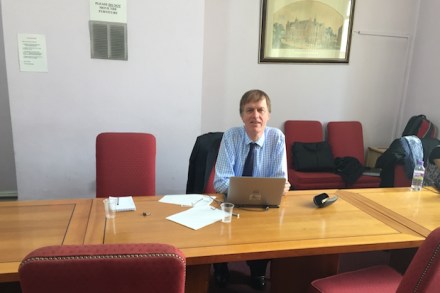
In a speech to Policy Exchange today, Steve Hilton—David Cameron’s former senior adviser—will make the case that ‘any intellectual rigorous examination makes it impossible for a Tory moderniser to support staying in the EU’. He argues that Tory modernisation was about trusting people, and that the EU does not; that modernisation was about localism, and that the EU is inherently centralising; and that the EU helps the rich and not the rest. I think there’s much to be said for Hilton’s analysis. (Though, of course, it should be recognised that there are Tory modernisers on both sides of the argument.) But where Hilton is surely right is that the EU

How good government often goes unnoticed and unrewarded

What make a good minister? Is it how well they perform at the Dispatch Box in the Commons? Or their ability to field questions on Newsnight? Or even their ability to be a good lunch guest for a member of the lobby? The truth is that often we don’t know whether someone has been a good government minister until years after they’ve left the department and the policies they introduced have actually run their course, rather than just enjoyed a bit of media limelight. Take the 1999 Teenage Pregnancy Strategy. Launched in June of that year by Tony Blair, the strategy examined a study by the Social Exclusion Unit and

Project Fear 2 is a rubbish sequel. But it will still work

Sometimes, in this game, it’s tempting to over-complicate things. The lesson of Talleyrand’s death – What did he mean by that? – has been all too well absorbed. And so we search for hidden meanings and a deeper truth whenever a politician says something. The real story always lurks beneath the surface, nothing should be taken at face value and everyone is always thinking three moves ahead. It’s an appealing thought right enough. The trouble is it’s also often nonsense. Sometimes even politicians just mean what they say. Nicola Sturgeon’s visit to London yesterday offered a case in point. The First Minister insisted, as she has always insisted, that she wants the

Is the Leave campaign going around in circles?

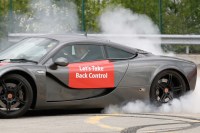
Boris Johnson took in a car factory as part of his day of campaigning for Vote Leave in Yorkshire. The former Mayor did the usual politician’s thing of touring the workshops of Ginetta, pointing at various pieces of equipment and asking the workers what it was that they were doing, before hopping in one of the carmaker’s vehicles – branded with Vote Leave insignia – for a spin. He drove it out of the factory before handing the wheel over to a proper driver, who proceeded to whizz him around in tight donuts in the car park outside, sending up a large amount of smoke from the burning rubber. ‘We’re

Could Brexit solve the housing crisis?

It is, at times, unclear that George Osborne is aware that the under-30s are voting in this EU referendum. When he talks about house prices plummeting post-Brexit, he talks as if this will strike fear into everyone’s hearts. For older people seeking to downsize, this might be true – but for almost everyone else, it’s not. And when I hear the In side arguing that we should all be terrified of Brexit because it will cause house prices to fall, I can’t help but wonder if this is the best single reason to vote ‘out’. For most people my age, one of the worst changes in Britain has been the

al-Baghdadi, luvvies and affordable housing: the worst predictions of the EU referendum

It’s that time of the week again, when I promised to round up the worst contributions to the Brexit debate. The Prime Minister got the week off to a good start by claiming that Abu Bakr al-Baghdadi, the famed head of ISIS, is a supporter of ‘Vote Leave’.  In fact the putative world Caliph has yet to come out for either side in the UK referendum, though the attacks in Paris last November suggest that the EU’s weak external borders and absent internal borders have been working out nicely for the terrorist chief.  As a result the smart money is on al-Baghdadi coming out for ‘Remain’, though I’m sure nobody

Even religious polemics can’t inject any life into the Brexit debate

Churches are generally ideal venues for public debates. But there’s a slight chance that a speech about the perils of EU membership will be interrupted by a homeless person doing a pee in the corner. At a debate on Christian responses to the EU at St James the Less church in Pimlico last night, Giles Fraser left off quoting his hero Tony Benn on the evil of unaccountable power in order to do his muscular Christian duty and help eject the man, who spluttered invective as he departed. Did I imagine it or did he shout ‘Fexit Brexit’? A bit earlier, his opponent Ben Ryan had set out an optimistic

The Boris, Cameron ruck over EU

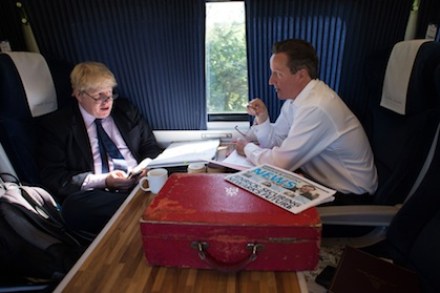
David Cameron and Boris Johnson are the two biggest beasts in the Tory jungle. But they are currently involved in an increasingly undignified scrap over Brexit. As I say in The Sun today, it is hard to see how it ends well for both of them or the Tory party.  As one Cabinet Minister lamented to me recently, ‘it is a personal fight’ between Cameron and Boris and that ‘the Conservative party is on a hiding to nothing.’ Boris and Brexit is the itch that Cameron can’t resist scratching. When Iain Dale asked him about Boris going Out, Cameron—in effect—accused the former Mayor of putting his personal ambition ahead of

Government accepts rebel amendment on Queen’s Speech to stave off defeat

So Number 10 has yielded and decided to stave off the Queen’s Speech rebellion by accepting the rebel amendment to it, thereby stopping the first defeat of a government on its legislative programme since 1924. A spokesman said: ‘As we’ve said all along, there is no threat to the NHS from TTIP. So if this amendment is selected, we’ll accept it.’ So job done, rebellion gone. But it is still a bloody nose for the government from eurosceptics, who are forcing the Prime Minister and the rest of the executive to support something that regrets that they failed to table a bill exempting the NHS from something they have been