Uk politics

Nicky Morgan’s wrong trousers

From our UK edition

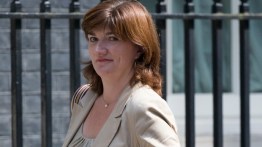
Does Theresa May understand what life is like for the just-managing families she purports to stand for? The Tory party has seen a fair bit of snipping over the past few days over whether the Prime Minister’s £995 Amanda Wakeley trousers, which she wore for a newspaper interview and was then ridiculed about by one of the Cabinet ministers she sacked. Nicky Morgan told the Times that ‘I don’t think I’ve ever spent that much on anything apart from my wedding dress’ and that the pricey garb had been ‘noticed and discussed’ in party circles. You might expect that in order to look the part on the world stage, a leader would want to ensure his clothes were well-tailored and impressive.

Supreme Court judges want it both ways

From our UK edition

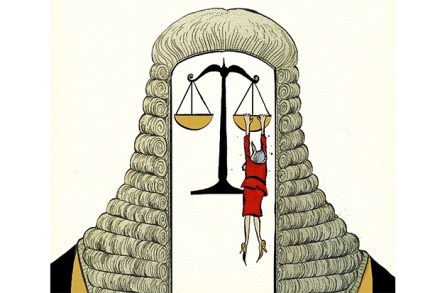
The Article 50 case has at last woken people up to the power of the Supreme Court. On Monday, at Policy Exchange, I appeared on a panel which included the former Supreme Court judge Lord Hope. He seems a dear and distinguished man, so I felt for him when he complained that current ‘vicious’ press attacks on the judges had gone ‘far too far’. When judges gave lectures these days, their words were ‘picked over’, their sentences ‘taken out of context’. Although he is right that judges should be treated courteously, I was stunned by Lord Hope’s failure to realise that the rudeness they have recently encountered is the inevitable result of their new activist stance as opponents of the executive.

We need a Zac’s law: MPs who trigger a by-election should not be allowed to stand again

From our UK edition

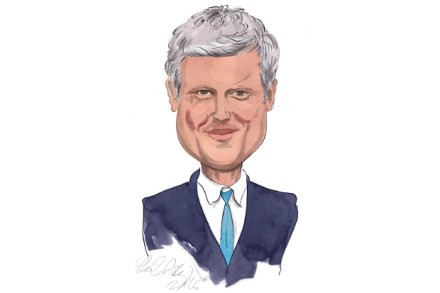
Even I can’t say I’m upset that Zac Goldsmith has lost his seat. For the last few days, now, my journey into work has been an assault course created by cheery Liberal Democrat activists campaigning in Richmond - they earned their victory. Not once did I see anyone campaigning for Zac Goldsmith. Not that I wanted to see any of them:  this whole by-election was an elaborate hissy fit by Zac. Voters were being used as political props, to add extra theatricality to his flouncing out of the Tory Party. If he wanted to resign the whip to fight Heathrow, he should have done so. But to resign his seat and stand again put everyone to the trouble of having to vote again – it was an act of self-indulgence that was rightly punished by voters.

Barometer | 1 December 2016

From our UK edition

Autumn Budgets Philip Hammond announced that in future the Budget will be held in autumn rather than spring. This is not as revolutionary as some have made out. — In his 1992 Budget Norman Lamont announced that there would be two budgets in 1993, one in spring and one in autumn, and that from then on the date would switch to autumn for good. — The Budget was delivered every November from then until 1996. In 1997, Gordon Brown held his first Budget in July, before reverting to a spring date. — Denis Healey also delivered a November Budget in 1974, soon after the second general election of that year. Tickets please The Department for Transport says it will force train companies to make passengers aware if there is a cheaper ticket available for their journeys.

Immigration reaches record high – but what does that really tell us about Brexit Britain?

From our UK edition

How much do the net migration figures mean these days? The Office for National Statistics released its latest migration estimates today, which put immigration to the UK in the year to June 2016 at a record high of 650,000 - up 11,000 on the previous year. Net migration was at 335,000. That figure comprises 189,000 EU citizens and 196,000 non-EU citizens who came to Britain, and 49,000 Brits who left this country. But these figures mostly cover the period before the EU referendum. The ONS includes three months of data following June’s vote in today’s release. And the estimates for the year that follows will also reflect Britain’s current immigration arrangements, not the ones that Britons voted for in the referendum, whatever those arrangements may be.

Brexiteers won’t now admit it, but removing EU citizens was a key part of Vote Leave’s campaign

From our UK edition

Who could have predicted that the fate of millions of people from EU member states presently residing in the United Kingdom remains uncertain? There may be something deplorable about treating their future as though it was a card to be played in the negotiations to determine the terms and conditions of Britain's departure from the EU but, deplorable or not, there is little that is surprising about it. This is so even though treating these people in this way leaves many people, including many Leave voters, feeling distinctly queasy. If nothing else it offends an inchoate sense of fair-play. But negotiations change previously accepted realities.

Labour’s Matt Damon problem

From our UK edition

One of the crueller caricatures in the 2004 satirical film ‘Team America: World Police’ is a little puppet of Matt Damon who is only able to say ‘Matt Damon’ in a rather feeble and pointless fashion. The actor himself felt he was being cruelly parodied because of his opposition to the Iraq War, and was ‘bewildered’ by the suggestion that he was barely able to say his own name when he was able to learn entire scripts. But the point from the screenwriters seemed to be that beyond his own name, Damon wasn’t really offering anything to the debate about the war. Labour has a Matt Damon problem on immigration at the moment.

PMQs Sketch: Striking attitudes in the Chamber

From our UK edition

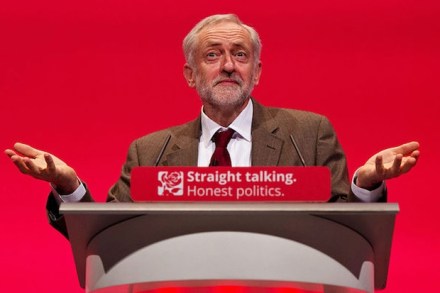
Sometimes PMQs is about policy. Sometimes it’s about posturing. Today everyone was striking attitudes like mad. Jeremy Corbyn over-stated the levels of suffering in the country. He painted a picture of workhouse Britain where ‘four million children’ live ‘in poverty’. He means ‘relative poverty’, an elastic term, which covers every child in the land, including those of David Cameron who are ‘poor’ relative to the children of Bill Gates. God-squad veteran, Chris Bryant, argued that the state shouldn’t just improve our lives but our deaths as well. He took us back to a funeral he once conducted during an adolescent phase when he thought he was a vicar. ‘Everyone was in tears,’ he boasted.

This St Andrew’s Day, Scottish Tories should count their blessings

From our UK edition

As is traditional, St Andrew's Day will be marked in the proper style by expatriate Scots gathering to bless what they’ve left behind. For most of the rest of us it’s just another dreich November day. There is something cheering about this and at least we have spared ourselves the tomfoolery that’s made St Patrick’s day such a toe-curling embarrassment. Still, that’s not to say the day passes without interest. For instance, the Times today publishes a YouGov poll indicating that support for independence is, broadly speaking, back where it was in September 2014. Just (sic) 44 percent of Scots would vote for independence if given the chance tomorrow.  It must be allowed, I think, that the Brexit-bounce the SNP expected has not materialised.

Why wait for Merkel? Theresa May should guarantee the status of EU nationals now

From our UK edition

The news that Theresa May offered to do a deal on expats – only to be rebuffed by Angela Merkel – is unsurprising. The Prime Minister has ended up in a pretty bad, unbecoming position on EU nationals using them as bargaining chips in a way that has appalled her critics (and even some of her supporters). So it’s not surprising that she wanted to get this awful business over with in her recent meeting with Merkel. She suggested: let’s just agree an EU-wide deal whereby everyone’s expats can stay where there are. But, again unsurprisingly, Merkel rebuffed her. Before their meeting, Merkel said publicly that they would not and could not talk about Brexit, due to the strict rule on not negotiating in any way until the invocation of Article 50.

The pound has fallen 13pc. Might the IMF have been right to say it was 13pc overvalued?

From our UK edition

When the pound plunged a few weeks ago, Andrew Marr opened his Sunday show by saying that this might be a good thing because ‘it had been too high for too long’. It was a minority opinion, and one not seen much in the hysterical reporting of the pound’s plunge. At the Spectator’s post-Autumn Statement briefing last week, kindly sponsored by Old Mutual Global Investors, we raised this a bit. The pound’s fall might make overseas holidays more expensive for Britons, but it also makes our goods far cheaper for the rest of the world. We worry about a worst-case WTO scenario of 10 per cent tariff on cars, for example, but a 13 per cent currency plunge rather makes up for that. So was the pound overvalued?

Boris is fed up with being the butt of the government’s jokes

From our UK edition

In the autumn statement, Philip Hammond chose to mock Boris’ failed leadership bid. This wasn’t the first time that one of the Foreign Secretary Cabinet’s colleagues had had a laugh at his expense. At our parliamentarian of the year awards, Theresa May joked that Boris would be put down when he was no longer useful. But Boris and his circle are getting rather fed up with him being the butt of the joke, as I say in The Sun today. Those close to Boris feel that these gibes undercut him on the world stage. 'If they want the UK to be taken seriously, they need to back him not mock him’ one close ally of his tells me.

The trouble with ‘independent’ inquiries

From our UK edition

‘Independent’ is becoming an excuse-word in government. The inquiry into historical child abuse is called the Independent Inquiry into Child Sexual Abuse (IICSA). This lets the government wash its hands of it. Although Theresa May set it up, with its hopeless remit, she keeps it at a distance now. So does her Home Office successor, Amber Rudd. In the Commons debate on the IICSA’s latest travails this week, the government fielded only a very junior minister, Sarah Newton. She, too, hid behind the point that the inquiry is independent. Of course the government should not be running it. But if no chairman — the fourth one is now being undermined — and no senior lawyers can stay the course, don’t its inventors have to try something else?

How worried is Philip Hammond about Theresa May’s JAMs?

From our UK edition

'Theresa May and I have made it clear that we are very committed to returning the public finances to balance,' said Philip Hammond on the Today programme this morning. But his Autumn Statement did the reverse. It abolished the deadline for balancing the books, and talks instead about keeping the overspend to about 2pc of GDP. It’s a significant change, and a move away from austerity. The massive shift in debt, towards 90pc of GDP, is something he is choosing with his £23bn discretionary infrastructure splurge. To govern is to choose and as Nick Robinson rightly said, the Chancellor has chosen infrastructure over extra support for the ‘just about managing’.

Brexit to cut immigration by 80,000 a year – and other OBR observations

From our UK edition

Once, journalists trawled the Red Book (ie, the Budget statement) for stories. Now, the Office for Budget Responsibilities does this for us. There will be plenty in it for Brexiteers and Remainers. The former will be delighted that the OBR pretty much trashes the main assumptions made in HM Treasury’s now-notorious dossier on jobs, recession, house prices etc. But then again the OBR estimates a Brexit effect on the deficit: £3bn this year, peaking at £15.4bn in 2018/19. This has delighted Remain campaigners who now, at long last, have ammunition to write about the costs of Brexit - especially if you add the figures together and come up with a £50-odd billion Brexit effect. Expect plenty of this in the papers tomorrow.

Brexit-bashers like Blair and Branson are the real enemies of the people

From our UK edition

Here’s a tip for judges, businessmen, peers, politicians and former PMs who don’t like being called ‘enemies of the people’: stop behaving like enemies of the people. This week it is reported that Tony Blair is polishing his toothy grin to make a comeback into British politics, potentially as thwarter, or just tamer, of the ‘catastrophe’ of Brexit.

Philip Hammond and John McDonnell go head-to-head – but are we any clearer on Brexit?

From our UK edition

This morning’s Marr show was something of a financial matter, with the Chancellor, Philip Hammond, and Shadow Chancellor John McDonnell sharing the sofa. As Andrew Marr pointed out, having the pair of Chancellors share a sofa is a ‘great tradition’, but one that had a stop put to it when George Osborne was in charge. Now the tradition has come back – but it this morning’s performance might be a good example of why Osborne chose to put a stop to it in the first place. The general consensus seems to be that McDonnell came out on top – with commenters saying that he ran rings around Hammond. Naturally, lots of the talk was about Brexit. But Hammond stayed fairly quiet on the topic, refusing to reveal the government’s negotiating cards.

Is patriotism a virtue?

From our UK edition

Michael Gove makes a semi-persuasive case for patriotism in The Times this week. Brexit and Trumpism are largely just assertions of the basic, healthy human impulse to love one’s homeland, and to defy the international structures, and liberal sneering, that denigrate this impulse. The reality is that the moral status of patriotism depends on which nation you belong to. It depends whether your nation espouses liberal values. If it does, then your patriotism is linked to a wider-than-national creed. If it does, then your allegiance is also to an international cause: you respect and love your country as a particular expression of this creed. After fascism, the idea of national allegiance subtly shifted in the West.

Tory Brexiteers pressure May to quit EU single market and customs union

From our UK edition

Normally, the Saturday before an autumn statement would be dominated by speculation about what is in it. But, as I say in The Sun today, both Number 10 and the Treasury are emphasising that while there’ll be important things on productivity, infrastructure and fiscal rules in Wednesday’s statement, there’ll be no rabbits out of hats. Partly, this is because of  Philip Hammond’s personality: he’s not a political showman. But it is also because he’s not got much room for manoeuvre.  As he has emphasised to Cabinet colleagues, the growth forecasts might not be dramatically lower than they were in March, but cumulatively they have a big effect—limiting what the government can spend.

Poor mental health care is a ‘stain’ on our country. But whose fault is that?

From our UK edition

Today’s warning from every former Health Secretary from the past 20 years about inadequate mental health provision raises a number of questions. The first is whether the government really is serious about its pledge to make parity of esteem between physical and mental health a priority. Mental health has become more of a political issue in recent years, which is a good thing: parties now worry about their standing on the issue because society has become better at talking about mental illness, and therefore more people are aware of the shockingly inadequate treatment that their friends and family are receiving when they fall ill. The Tories became anxious in 2015 that the Lib Dems had owned mental health as an issue.