Uk politics

Why are we handing gongs to people who are just doing their jobs?

From our UK edition

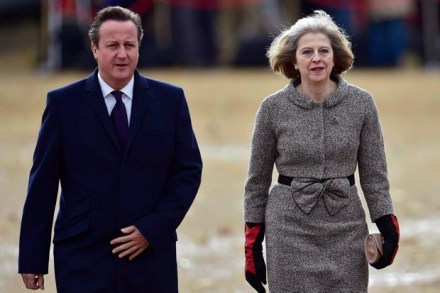
Every year closes with ‘fury’ as the press reacts to yet another honour for a ‘mandarin’ who has been doing something they disagree with, and 2016 is no exception. This year’s villainous recipient of a gong is Sir Mark Lowcock, Permanent Secretary of the Department for International Development. Much of the anger directed as Lowcock’s gong is really frustration with the government’s policy on aid spending, which is that 0.7 per cent of national income is spent on development projects around the world every year. That’s not Lowcock’s decision, but something that the Coalition Government introduced and that this majority Conservative Government under David Cameron and then Theresa May has remained committed to.

Why Leave voters are my heroes of 2016

From our UK edition

It’s rare that an opinion poll brings a tear to my eye. But this week one did. It was the CNN/ComRes poll published on Monday. It found that 47 per cent of British adults would vote Leave if the EU referendum was held today, and 45 per cent would vote Remain (eight per cent said they didn’t know how they’d vote). This means, as the CNN headline put it, that ‘Six months on, Brits stand by EU referendum decision’. Leavers haven’t budged. Regrexit is a myth. Even after months of being branded as idiots, libelled as racists, and charged with bringing about a hike in hate crime and possibly the end of decent politics as we knew it, Leavers remain devoted to their choice, convinced of their cause.

Podcast: Will Tories or Ukip profit from abandoned Labour voters?

From our UK edition

The Copeland by-election will be a fascinating test of whether Brexit can open up more votes for the Tories in the north – the topic of my Daily Telegraph column today. Labour is slowly abandoning its working class voters, with their unfashionable views on human rights and immigration. This was happening under Ed Miliband, and the forces wresting traditional Labour voters away from the Labour Party were laid out in detail by a strikingly prescient report by the Fabian Society entitled 'Revolt on the Left'. It identified the various groups of voters moving away from Labour: typically the low-waged and less prosperous pensioners. Those in work tended to resent those who were not. They resented Labour for losing control of immigration and the abuse of welfare.

Is an oath to ‘British values’ really such a bad idea?

From our UK edition

Most commentators have been over-hasty in ridiculing Sajid Javid’s proposal of an oath of allegiance to British values, to be sworn by those holding public office. It’s an opportunity to go right back to basics and ask a huge and naïve-sounding question. What is our public creed? What do we as a society hold in common? Some sneer that there is nothing particularly British about respect for the law, tolerance, human rights. True enough, but the alternative is to call them ‘Western values’ which is more contentious, more clash-of-civilisations-ey. Those who rubbish any attempt to articulate such values make the mistake of implying that such values are just natural, shared by all decent folk everywhere. They are not.

Nicola Sturgeon’s Baldrick moment

From our UK edition

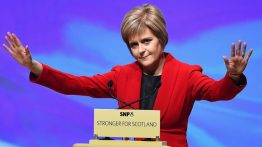
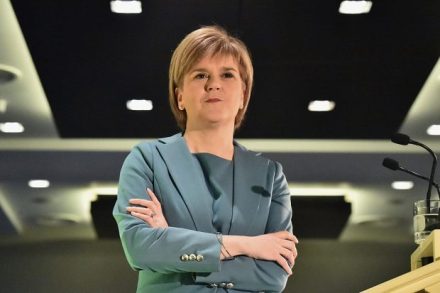
Yesterday, the Scottish government published its ‘plan’ for life after Brexit. It was, at 60 or so pages, more detailed than anything we have yet seen from Theresa May’s ministry. But then it would be, given that Nicola Sturgeon will not be leading the UK’s negotiations as and when they begin. Still, plenty of nationalists crowed that, whatever else might be said of the Scottish government’s document, at least Sturgeon has a plan. But so did Baldrick.  That a plan exists does not make it a good plan. Or even an achievable one. And since we are still in the early stages of the Brexit waiting game the Scottish government’s proposals have the advantage of novelty but freshness is not enough either.

Theresa May answers her own questions as MPs try to grill her on Brexit

From our UK edition

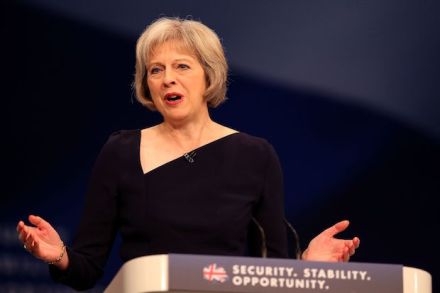
‘So… was that a yes or a no?’ A number of MPs on the Liaison Committee asked the Prime Minister that question during her evidence question today. They weren’t doing it to make a point: Theresa May spent most of the hour and a half stubbornly answering a set of questions that she had clearly decided in advance with lines also decided in advance, regardless of whether those questions were very close at all to the ones being asked in the Committee room. She was most opaque on the question of whether Parliament will get a vote on Brexit, circling around the issue by listing the opportunities for MPs to discuss Brexit.

Just because you disagree with someone, it doesn’t make them a ‘fascist’

From our UK edition

The worst thing about 2016 — an otherwise bracing year of political upset and oligarchical tears — has been the mainstreaming of the insult ‘fascist’. Anyone who sticks it to the status quo, whether by rejecting the EU or plumbing for Trump over Clinton, risks being smeared with the F-word. Even the normally measured New York Times flirted with the idea that loads of Americans and Europeans might be fascists, or at least facilitators of fascism. Trump’s victory speaks to a possible ‘revival of fascism’, it said, echoing the fears of an army of observers and tweeters who see in Brexit and Trump the stirrings of a kind of Nazism. The terrifying casualness with which the F-word is now flung about could be glimpsed in the Michael Sheen controversy.

‘White men’: the most dehumanising insult of our times

From our UK edition

The one good thing about Twitterstorms is that they tend, witlessly, to prove the point of the person they’re hounding. In the very act of whipping up fume and fury against someone who’s said something you’re not meant to say, these virtual pitchfork gangs confirm that person’s point, which was normally something like: ‘Have you ever noticed how risky it has become to express your thoughts on [some heated issue]?’ ‘You can’t say that!’, hollers the Twittermob in response. Well, yes, quite. So it was for Simon Jenkins this week. He wrote a column in the Guardian saying the one group of people you’re allowed to hate these days is old white men.

Strikes shouldn’t be able to shut down key railway lines

From our UK edition

300,000 people were hit by Aslef and the RMT’s strike on Southern Rail yesterday. The bad news for commuters is that things will get worse in the New Year. The unions have a six day strike planned for January, that means a whole working week of commuters not being able to get to their jobs, specialist medical appointments being missed and families being put under pressure. I argue in The Sun today that the government needs to act to help commuters. What it should do is ask parliament to pass a law that would impose minimum service requirements on the rail unions and the train operators. Never again should a whole line be able to be taken out by strike action. I understand from those MPs pushing for this, that Chris Grayling is supportive.

Number 10 shows an odd lack of control at EU summit

From our UK edition

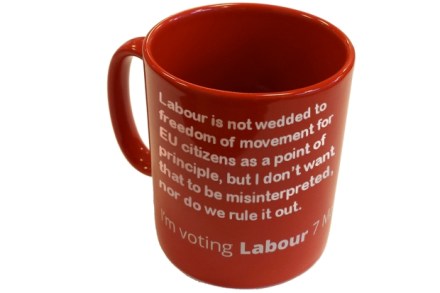
Theresa May looking embarrassed and awkward as European leaders appear to make a point of ignoring her at last night’s EU summit is such a good symbol of Britain’s place in the world that Number 10 is going to struggle to shake it. The footage, of course, was rather selective, with other clips showing the Prime Minister deep in conversation with European colleagues. But the picture plays in to anxieties about Britain’s standing after Brexit, and also anxieties about whether May will really be able to sweet talk EU leaders into giving her the deal that she wants. The Prime Minister told leaders that she wanted an early deal on the status of Britons who live in Europe and EU citizens who live in the UK.

We must empower teachers to deliver financial education

From our UK edition

Last week the Joseph Rowntree Foundation released a report, Monitoring Poverty and Social Exclusion 2016, which revealed that more than seven million people in the UK are living in poverty, despite being part of a working family. Among the identifiable factors behind these figures were the rising costs of private renting, stagnating wages and cuts to benefits, with Helen Barnard, head of analysis at the foundation saying that 'the economy is not working for low-income families'. As a financial education charity, we would offer another important factor – stubbornly low levels of financial literacy, which affect families from across every social stratum. The effects of this are all around us, from spiralling personal debt to falling savings levels.

Britain’s foreign policy is now dictated by our politicians’ feelings

From our UK edition

The 'price of non-intervention’ is becoming one of those awful Westminster clichés. It is a phrase which, we can be sure, will be used to justify another half-cocked and disastrous military intervention in the not-too-distant future. There is growing consensus among the political class that, had wicked Ed Miliband not scuppered brave David Cameron and George Osborne’s plans to throw some bombs at the Syrian problem in 2013, the horrors of Aleppo would have been averted. Some nice, clean surgical air strikes would have sorted out that whole President Assad problem. But Parliament got cold feet, and as a result the people of Aleppo are dying, horribly. So, shame on you non-interventionists — you have blood on your hands.

Could Labour give the Boris Johnson row the attention it deserves?

From our UK edition

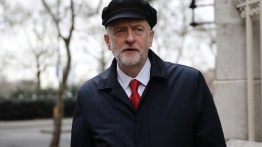
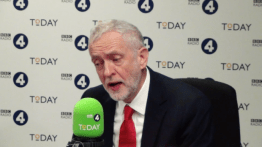
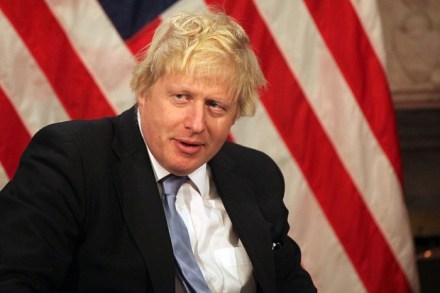
What could Jeremy Corbyn attack Theresa May with this week at Prime Minister’s Questions? The Labour leader has already had a go at the crisis in social care funding, which the government is trying to patch up this week by raising the council tax precept from 2 per cent to 4 per cent. He could have another go, given what has long been a serious issue is starting to become a political row too. The problem is that the Labour leader so often retreats to social care and the NHS as a comfort blanket that his attacks are a little blunter than they could be. One row that really hasn’t had as much attention as it deserves is the one over Boris Johnson’s remarks about Saudi Arabia.

On Syria, it is easier for MPs to reflect on their past mistakes than confront the present

From our UK edition

Whose fault is the bloodshed in Aleppo? Yesterday the House of Commons discussed this at some length in an emergency debate on the onslaught by Syrian and Russian planes on the city. One of the most powerful speeches came from George Osborne who spoke about the impact that the 2013 Commons vote had on Syria and on American politics. It is worth reading in full. ‘Of course, once this House of Commons took its decision, I believe it did have an impact on American politics,’ he told MPs. ‘We cannot have it both ways - we cannot debate issues such as Syria and then think that our decisions have no impact on the rest of the world. I think that did cause a delay in the American Administration’s actions and did cause Congress to get cold feet.

We’re seeing the sad death of the once noble Labour party

From our UK edition

Sleaford wasn’t terribly good for Labour, was it? Nor indeed Richmond Park. Sleaford was never very Labour friendly – although, even given that, the party’s performance was staggeringly abject. Richmond has not been historically Labour-friendly – but given its current trajectory, towards the achingly liberal and affluent London upper class, you might have expected a better performance than the one they turned in (with an excellent candidate, incidentally, in Christian Wolmar). It has long been a given that Labour will lose vast numbers of seats in the north of England (and the midlands), in a similar fashion to its capitulation, north of the border, to the SNP.

Here’s how Theresa May can grant assurances to all Britain’s EU nationals

From our UK edition

In the chaos after the Brexit vote, no one really noticed when Theresa May adopted an odd position on EU nationals*. Throughout the campaign, everyone – from Ukip to the Lib Dems, Boris Johnson to Andy Burnham – had been clear that the Brexit debate was not about deporting anyone. Those EU nationals who were in Britain should stay here. In a fractious debate, it was a note of rare consensus: no one's status was in question. But days after the referendum, the then Home Secretary sat down on Robert Peston’s sofa and suggested that EU nationals might not be safe after all, and that she might use them as bargaining chips in her negotiation. (A plan which would later backfire badly.) It was baffling, bizarre and – to many - appalling.

Labour has even bigger problems than Jeremy Corbyn these days

From our UK edition

Want proof of how bad things are for Labour? Jeremy Corbyn and his disastrous leadership is not even its biggest problem anymore. I write in The Sun that Labour’s biggest problem, and it is potentially an existential one, is that its reaction to the Brexit vote is threatening to make it a political irrelevance More than 60 percent of Labour seats voted to leave the EU. In these constituencies, being the party that is trying to block Brexit would be electoral suicide. That’s why the Labour leadership felt compelled to accept the government’s amendment this week saying Theresa May should start the formal, two-year process for leaving the EU by the end of March. But Labour MPs in heavily Remain seats have different interests.

Commons votes in favour of invoking Article 50 by the end of March

From our UK edition

461 MPs have just voted for Theresa May to invoke Article 50 by the end of March. The Tory amendment to Labour’s opposition day motion passed comfortably with only 89 MPs opposing it—and Ken Clarke the only Tory amongst them with 20-odd Labour Mps joining the SNP and the Lib Dems in voting against. Now, this vote is not binding and if the government loses its appeal to the Supreme Court will not be sufficient to satisfy the courts. But it does indicate that the government will be able to get an Article 50 bill through the Commons without too much trouble. It does make you wonder why Theresa May didn’t simply ask parliament to pass an Article 50 resolution before the Gina Miller case made it to the High Court.

Labour remembers what it’s like to be an effective opposition

From our UK edition

Is Labour actually managing to do its job as a decent opposition? Yesterday, the party forced the government into a U-turn over whether the Prime Minister must reveal her plan for Brexit negotiations before triggering Article 50. This was over an Opposition Day debate, which leads to a vote that is not binding on the government, and is therefore normally safe to ignore. Ministers have been even more relaxed about these debates over the past few months given Labour has little political heft at the moment, and has on occasion used its Opposition Day slots as a means of internal party management, such as the debate on Yemen.

In defence of Niall Ferguson | 7 December 2016

From our UK edition

Niall Ferguson’s belated decision to back Brexit has aroused a lot of mockery today. Unkind souls are presenting him as a historian in a muddle, but for followers of his writing his new pro-Brexit stance really isn’t so surprising. He says that he had been inclined to support David Cameron and George Osborne, his friends. A noble reason. But it led him into making arguments inconsistent with those that he has been making most of his career. “Brexit woke me up, and reminded me that I needed to pay much more attention to what the non-elite majority of voters were feeling. And on the issue of EU performance, I think they were right," he said (see video, above).  In backing Remain, Niall Ferguson was doing a very un-Ferguson thing.