Uk politics

Iran’s useful idiots, Gordon Brown’s second term & the Right’s race obsession

43 min listen

As the world watches events in Iran, and wonders whether the US will intervene, the Spectator’s cover this week examines ‘British complicity in Tehran’s terror’. When thinking about what could happen next in the crisis, there is a false dichotomy presented between regime survival and revolution; the reality is more complicated, though there is no doubt that this is the biggest threat to the theocratic regime in decades.  For this week’s Edition, host Lara Prendergast is joined by political editor Tim Shipman, columnist Rachel Johnson and features editor – and Edition co-host – William Moore. They commend the bravery of Iran’s protestors but criticise the ‘inept, naive and wrong’ response of the Foreign Office.

What's the future of the Scottish Tories?

19 min listen

The leader of the Scottish Conservatives, Russell Findlay MSP, sits down with James Heale to look ahead to May’s pivotal Holyrood elections. He pushes back against the threat from Reform, arguing that Nigel Farage is trying to be ‘all things to all people’, and he is scathing about the lack of loyalty shown by those who have defected from the party – not just to Reform, but to the Liberal Democrats too. But with the collapse of the support Labour received in the 2024 general election – which Findlay calls their ‘loveless landslide’ – why aren’t the Tories benefitting more? Plus, how did being the victim of a vicious acid

Compulsory digital ID is dropped

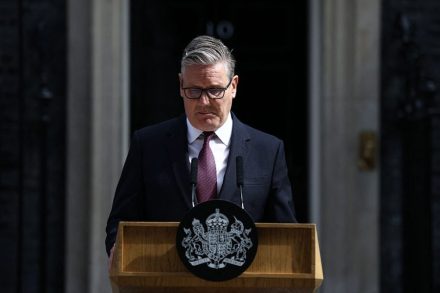
Keir Starmer has just made his 13th u-turn since taking the No. 10 keys. The government, this evening, decided that the digital ID scheme would no longer be compulsory. The IDs were to be used to verify if job applicants had the right to work in the UK – something that is currently done using passports and National Insurance numbers. But, according to the Times, Starmer has now dropped the compulsory aspect of the scheme because of fears it was causing distrust in the principle of digital ID. Under the changed plans there will be an entirely optional digital ID, or workers can use digital versions of existing documents – such

Why Ed Davey is happy being boring

15 min listen

The Liberal Democrats have unveiled a new strategy on the NHS. Sir Ed set out his big, bold plan this morning: scrapping the UK–US pharmaceutical deal to redirect £1.5 billion into social care. It sounds like a substantial sum – until you remember it amounts to less than 1 per cent of the NHS’s annual budget. In today’s podcast, the team discuss why Ed Davey is leaning into being deliberately boring, in an effort to appeal to the perceived sensibilities of Middle England. Meanwhile, with the dust settling after Nadhim Zahawi’s defection, is Reform at risk of losing its outsider appeal, given that his resignation from government caused such a

Sunday shows round-up: Heidi Alexander: UK hoping for ‘peaceful transition’ in Iran

Protests have swept across Iran in the last couple of days, and reports suggest hundreds of people may now have been killed by the regime’s ensuing crackdown. On Sky News this morning, Transport Secretary Heidi Alexander said the UK government has ‘always viewed Iran as a hostile state’, and that the priority is to ‘stem the violence’ against protesters. She told Trevor Phillips that Iran has a ‘destabilising effect on the world’, and said the UK would like to see a peaceful transition where Iranians can enjoy ‘fundamental freedoms’ and ‘proper democratic values’. Kemi Badenoch: ‘Greenland… is a second order issue’ President Trump has suggested the US needs to ‘own’

Stormy seas, Trump’s revolution & Gen Z’s sex recession

43 min listen

Can Farage plot a route to Number 10, asks Tim Shipman in our cover article this week. He might be flanked by heavyweights – such as his head of policy Zia Yusuf and Conservative Party defector Danny Kruger MP – but he will need a lot more people to pull off his biggest upset for British politics yet. Where will they come from? And what’s the balance he needs to strike between being radical enough to win power but also without alienating significant chunks of the electorate? Plus, as former UK ambassador to the US Peter Mandelson breaks his silence – in this week’s Spectator – to argue that Europe

International statesman or 'never here Keir'?

18 min listen

From ‘regime change’ in Venezuela to Russia’s war in Ukraine, the Labour government is trying to navigate complicated situations across foreign affairs. Having appeared to weather the domestic reaction to the situation in Venezuela, Keir Starmer is in Paris today to discuss Ukraine alongside Chancellor Merz and Presidents Macron and Zelensky. This is undoubtably important – but to what extent will this fuel the criticism that the Prime Minister spends too much time abroad? And how can Starmer reconcile the demands of foreign affairs with his domestic priorities? James Heale and Tim Shipman join Patrick Gibbons to discuss. Produced by Patrick Gibbons.

The long history of kidnapping Latin American Chieftains

One of the few benefits of being an anthropologist is the uncanny exhilaration one feels watching novel current events as re-runs from previous episodes in the history of mankind. Donald Trump’s capture of Nicolas Maduro, President of Venezuela, is no exception. Kidnapping Latin American emperors is a continental tradition. It’s simply the most practical method for breaking the chain of command in the region. It triggers succession chaos, enables the extraction of resources, and keeps the rest of the hierarchy more or less intact. In earlier centuries, it was Spain and Portugal. Today, it’s the United States. In the colonial era, the objective was to secure enough gold to beat

The 'boring twenties', population decline & happy new year

35 min listen

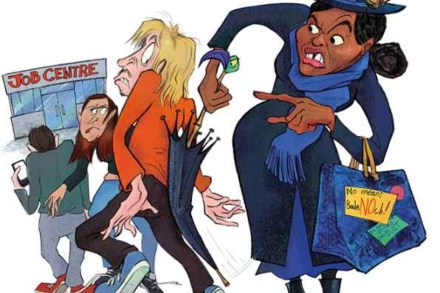
A far cry from the ‘roaring twenties’ of the early 20th Century, the 2020s can be characterised as the ‘boring twenties’, argue Gus Carter and Rupert Hawksley in our new year edition of the Spectator. Record numbers of young people are out of work but even those with jobs face such a dire cost-of-living situation that they have no money left over to spend on fun. Traditional cultural outings – like going to the theatre – are increasingly confined to older, richer generations. This is long-standing issue, but compounded by Labour’s economic policies. A slightly downbeat start to the new year here at the Spectator, but at least the episode provides a free dose

From Porn Britannia to Political Chaos: The Spectator’s Year in Review

31 min listen

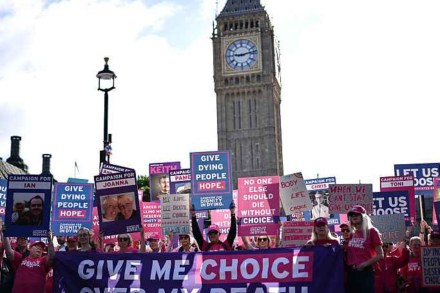
The Spectator’s senior editorial team – Michael Gove, Freddy Gray, Lara Prendergast and William Moore – sit down to reflect on 2025. From Trump’s inauguration to the calamitous year for Labour, a new Pope and a new Archbishop of Canterbury, and the ongoing wars in Gaza and Ukraine, the year has not been short of things to write about. The team take us through their favourite political and cultural topics highlighted in the magazine this year, from the Assisted Dying debate, the ongoing feud over Your Party and Reform’s plan for power, to Scuzz Nation, Broke Britain – and Porn Britannia. Produced by Patrick Gibbons.  

Stephen Flynn on Reform, Sturgeon & a second referendum

26 min listen

The SNP’s Westminster leader Stephen Flynn, MP for Aberdeen South, joins Lucy Dunn for a special episode to assess the place of the SNP in British politics as we approach the end of 2025. The SNP were ‘decimated’ to just nine MPs at the 2024 general election – yet, if polls are to be believed, they are on course for another record win in the 2026 Holyrood elections. But can the SNP really frame this election as a ‘fresh start’? Flynn explains what he made of the ‘bleak fallout’ of 2024, why he is standing for election to Holyrood next year and what he makes of SNP heavyweights such as

With Michael Gove

30 min listen

Surely needing no introduction to Spectator listeners, Michael Gove has been a staple of British politics for almost two decades. As a Christmas treat, he joins Lara Prendergast to talk about his memories of food including: the ‘brain food’ he grew up on in Aberdeen, his favourite Oxford pubs and the dining culture of 1980s Fleet Street. He also shares his memorable moments from his time in politics from dining with Elizabeth Hurley and Donald Trump’s first state visit to his reflections on food policy as a former Education and also Environment Secretary. Plus – what has he made of the Spectator’s parties since joining as editor? Produced by Patrick

Why Britain needs to wake up to extremism

16 min listen

As the world reacts to the attacks on Bondi Beach in Australia, Conservative peer Paul Goodman joins Tim Shipman and James Heale to discuss the failure of successive British governments to properly tackle extremism – especially Islamist extremism – over the past two decades. In the post ‘War On Terror’ era, there was a reluctance by some to discuss the problem openly as it got tied up in other polarising topics like immigration. Though that reluctance appears to be fading, Paul argues that there is a ‘communalist air of voting’ in British politics now, and he warns of the dangers that face British politics if fragmentation becomes entrenched in party

Will Scotland switch course in 2026? with Gordon McKee

18 min listen

The Spectator heads into Christmas a little bit less Scottish as we bid farewell to our political correspondent Lucy Dunn. Before Lucy leaves for STV, she joins Coffee House Shots – with fellow Scots Michael Simmons and Labour MP Gordon McKee – for one final episode reflecting on the state of Scottish politics. They discuss whether the SNP has stabilised Scottish politics this year, make predictions for what could happen at the 2026 Holyrood elections and ponder whether the Scottish influence in Westminster has grown stronger under Starmer. Plus, from Reform to the SNP – how new is the threat of populism in Scotland? Produced by Patrick Gibbons.

From The Queen to Bonnie Blue: The Spectator’s Christmas Edition 2025 

40 min listen

The Spectator’s bumper Christmas issue is a feast for all, with offerings from Nigel Farage, Matthew McConaughey and Andrew Strauss to Dominic Sandbrook, David Deutsch and Bonnie Blue – and even from Her Majesty The Queen. To take us through the Christmas Edition, host Lara Prendergast is joined by deputy political editor James Heale, associate editor Damian Thompson and writer of the Spectator’s new morning newsletter, Morning Press, Angus Colwell.  They discuss: the state of British politics as we leave 2025 behind, and who will have a worse year ahead between Kemi and Keir; what physicist David Deutsch’s enthusiasm for humanity can teach us all in the age of AI; why the Sherlock Holmes

Kemi wins PMQs

12 min listen

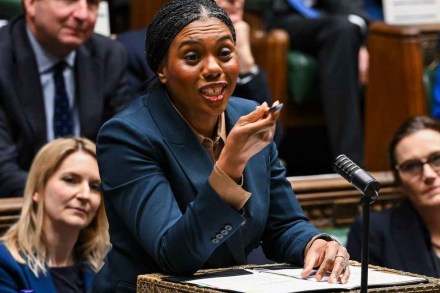
Kemi Badenoch’s good form continues at Prime Minister’s Questions. The Tory leader was once more visibly enjoying herself today as she feasted on Labour misfortune, and she did a good job in covering the breadth of problems in the government. She used her six questions to ask about different departments and how they were faring: an approach that can often risk diluting the overall attack. But today, Badenoch had an overarching theme to those questions, which was that the Prime Minister and his colleagues are failing to meet their own promises.  To discuss, James Heale is joined by Tim Shipman and Michael Simmons.

Brexit's back – and so is Truss

16 min listen

There has been a flurry of UK-European activity across Britain this week, with the German state visit in London, the Norwegian Prime Minister signing a defence agreement in Scotland and the British-Irish council meeting in Wales today. Perhaps then it’s inevitable that speculation over closer ties between the UK and the EU has re-emerged. Could Labour seek to rejoin the Customs Union? Would this help or hinder Reform? And would the EU even stomach it? Plus – Liz Truss launches a new show today. Will she say anything new? James Heale and Charles Grant from the Centre for European Reform join Patrick Gibbons to discuss. Produced by Patrick Gibbons.

Disraeli to Reeves: how each Chancellor drank their way through the Budget

34 min listen

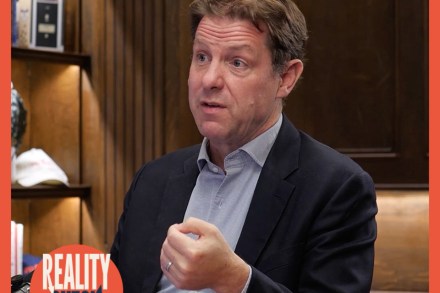
Throughout the years, the only person permitted to drink inside the House of Commons is the Chancellor, so what has been the tipple of choice for each resident of Number 11 dating back to Benjamin Disraeli? Following Rachel Reeves Budget this week, Michael Simmons and James Heale drink their way through the ages, discuss the historical context of each Budget, and question whether Rachel Reeves has the toughest job of them all. This episode was originally recorded for Michael Simmons’s new podcast Reality Check. Search Reality Check wherever you subscribe to your podcasts.

Why Reeves's smorgasbord Budget won't fix Britain

14 min listen

James Nation, managing director at Forefront Advisers, and Michael Simmons join James Heale to analyse what we know, one day ahead of the Budget. James – a former Treasury official and adviser to Rishi Sunak – takes us inside Number 11, explains the importance of every sentence and defends the Budget as a fiscal event. Plus, Michael takes us through the measures we know so far – but is the chaotic process we’ve seen so far just symptomatic of ‘broken Britain’? Produced by Patrick Gibbons.

Benjamin Disraeli to Rachel Reeves – how each Chancellor drank their way through the Budget

Rachel Reeves is due to deliver her budget this Wednesday. Throughout the years, the only person permitted to drink inside the House of Commons is the Chancellor. What has been the tipple of choice for each Chancellor dating back to Benjamin Disraeli? Michael Simmons and James Heale drink their way through the ages, discuss the historical context of each budget, and question whether Rachel Reeves has the toughest job yet.