Uk politics

Barry Gardiner disrupts Labour’s uneasy Brexit truce

From our UK edition

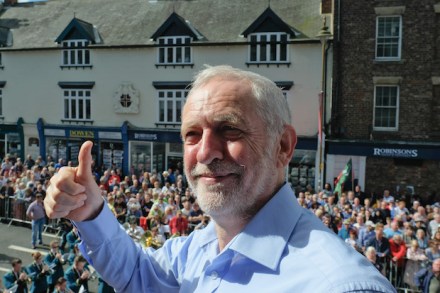
Although Labour MPs have much to disagree with their leader on of late, one thing many have been buoyed by is the fact that Jeremy Corbyn appears to be softening the party's Brexit position. The Labour leader's big Brexit speech in February voicing support for some form of permanent customs union was widely seen as a step forward in uniting the two sides - and the result of lobbying from Keir Starmer, the shadow Brexit secretary. Since then an uneasy truce has formed within the party over Brexit. Owen Smith was the first to break it – using an article to diverge from Labour policy and call for a referendum on the final Brexit deal. He was subsequently sacked from the front bench for breach of shadow cabinet collective responsibility.

Morrissey’s reading list

From our UK edition

Morrissey caused a stir last month when he used a blog post to lambast the Indy for an article - aka 'an extreme Hate Piece so loaded with vile bile that it almost choked on its own endless capacity to be appalled' – daring to criticise him. Happily, the former Smiths frontman's latest entry is more jolly – with Morrissey discovering a tome he actually wants to read: 'We plan a release for our Back on the chain gang single for August - if the wind remains at our backs and in our sails. If you find yourself at a loose end until then, please read Douglas Murray’s The strange death of Europe.

The next big Brexit battle: protectionists vs free marketeers

From our UK edition

Although politicians and pundits have learnt the hard way not to take polls as gospel, the latest Opinium/Independent poll on free trade ought to give the government some cause for alarm. New polling has found that when asked whether ditching current food standards would be a price worth paying for a deal, 82 per cent of those surveyed said keeping current regulations in place should take priority – even if that meant no deal. Meanwhile, just 8 per cent said a free trade agreement with the US should take priority. Of course this is just one poll and the stark findings could in part be down to the phrasing of the question. But regardless, it touches on what the next big Brexit debate will be: the battle between the protectionists and the free marketeers.

Listen: Home Office minister’s police numbers blunder

From our UK edition

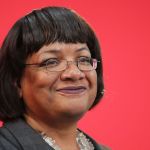
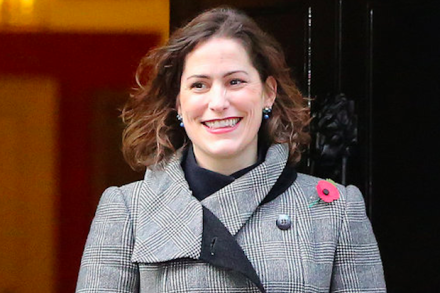
As shadow home secretary, Diane Abbott has earned a reputation for getting her numbers in a muddle. Now it seems that there is also an issue on the government side. Appearing on LBC, Victoria Atkins came up short when asked how many police offices are in the country. The Home Office minister responded by telling Nick Ferrari how many there are in London – before having to admit she didn't have the figure he was looking for: NF: But the whole of the country. You'll be aware of the figure, won't you Minister? VA: You're testing me, Nick. I'm not going to hazard a guess, I'm just going to front up and say I'm so sorry. That number's slipped my mind. NF: You are a Home Office Minister, Minister. Wouldn't it be a good idea to have the figures? VA: It would be.

The Tories’ reputation for law and order is in tatters

From our UK edition

Historically the Conservative party has been known as the party of law and order. It is now in the process of losing that reputation and Home Secretary Amber Rudd’s recent remarks show why. Stung by complaints that cutting the number of police officers by over 20,000 since 2010 has contributed to the rise in violent crime, she said: ‘In the early Noughties, when serious violent crimes were at their highest, police numbers were rising. In 2008, when knife crime was far greater than the lows we saw in 2013/14, police numbers were close to the highest we’d seen in decades.’ Reduced resources were not, therefore, to blame for rising violence.

What will Theresa May do on Syria?

From our UK edition

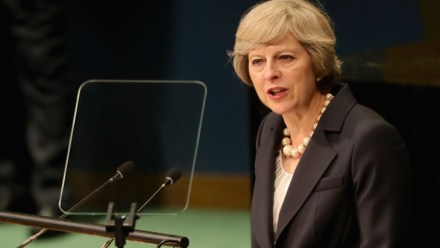
The suspected poison gas attack in Syria that killed dozens of people at the weekend continues to send shockwaves through Westminster. Speaking on an official trip to Sweden, the Prime Minister said she 'utterly' condemned the 'barbaric' attack. As for what action to take, Theresa May said that if it was confirmed as the doing of President Bashar al-Assad both his regime and its backers, including Russia, must be 'held to account'. May said Britain is 'discussing with our allies what action is necessary'. But just as news of a chemical attack in Syria comes with a sense of déjà vu, so does the UK response. Ever since MPs rejected David Cameron's call to intervene in 2013, inaction has been the best word to describe the British policy.

Labour spokesperson’s very curious Syria statement

From our UK edition

The UN Security Council will meet on Monday to discuss a suspected chemical attack in Syria on the rebel-held town of Douma. With dozens of people killed, today there has been widespread outrage, with President Trump one of many to criticise Syrian President Bashar al-Assad and his allies Russia and Iran – saying there will be a 'big price to pay'. However, over in Labour HQ a more vague response is underway. The Labour press office have today issued a statement which is so bold as to suggest that 'anyone found responsible' for using chemical weapons should be 'brought to justice'. It goes on to criticise the atrocities of this war 'whether committed by the Assad regime' or the 'Jihadist militias'.

A party that’s in the centre is a party that stands for nothing

From our UK edition

Not this again. How many new parties have been proposed now? Andrew Rawnsley says 34 have registered with the Electoral Commission since January. A political party is for life, not just for a twitterstorm. Still, the Tories' annexation by Ukip and Labour's transformation into some hideous fusion of CND and the BNP has left those of us who mosey around the centre ground electorally homeless. Why shouldn't we have a party that articulates our worldview? That seems to be the thinking behind a new group touted on the front page of the Observer. In the works since 2016 (and still there, since there are no plans beyond a few meetings and some WhatsApp threads), the 'Centre Party' is said to have access to £50 million from wealthy benefactors.

How should the police and the politicians respond to this spate of murders?

From our UK edition

With more than fifty murders in London already this year and knife crime up by 21% in England and Wales according to the latest figures, there’s a clear need for action on violent crime. As I write in The Sun this morning, the government’s long awaited violent crime reduction strategy is out next week. The Home Secretary Amber Rudd briefed the Cabinet on this strategy a few weeks ago. Cabinet Ministers tell me that it is impressive but very much focused on early intervention: the aim is to stop people from turning into violent criminals in the first place. This is a sensible strategy. But there is a need for action now. First, there needs to be more use of the Section 60 power which allows the police to stop anyone in a given area.

No, David Miliband isn’t the Messiah

From our UK edition

Rachel Sylvester of the Times is a brilliant journalist. I am proud to have given her her first Lobby job. But I cannot help smiling at her columns as she searches desperately for signs that a party which she thinks virtuous — centre-left, pro-European, with ‘open’ values — could rise from the dead (this, literally, is her metaphor in Easter week). Rachel’s current candidate for Messiah is David Miliband, who lives in New York. She quotes ‘one friend’ of his as saying, ‘David is still attracted to Britain.’ That is big-hearted of him, but the bigger question is, ‘Is Britain still attracted to David?’ One must recognise how deeply Blairism lies in ashes before one can find a phoenix to rise from them.

Corbynista MP: Tories using Salisbury poisoning as ‘smokescreen’

From our UK edition

Here we go again. Although John McDonnell advised his Labour comrades to boycott Russia Today following the Salisbury poisoning, not everyone is willing to take heed of his advice. On Thursday, Chris Williamson – a key Corbyn ally – took to the airwaves of the Kremlin-funded broadcaster to cast doubt on the government's handling of the nerve agent attack on a former Russian double agent. With Moscow claiming it has nothing to with them, the Labour MP said that it was diplomatic row with Russia was 'very convenient for the Government' and had been used 'not so much as a smoking gun but as a smoke screen' to divert attention from Brexit and austerity.

Watch: David Lammy’s interview fail

From our UK edition

David Lammy has just popped up on BBC News to complain about the lack of police on Britain’s streets. Unfortunately for the Labour MP, as he was doing so Mr S couldn’t help but notice who was standing behind him: a police officer. Lammy told the BBC: 'We haven’t seen a police while I’ve been here and I’ve been here for a little while.

Should the government share full intelligence with Corbyn?

From our UK edition

Ben Wallace has caused a stir today with an interview on the Today programme. The security minister confirmed that the government had not shared full intelligence on the Skripal poisoning with Jeremy Corbyn – insisting that the 'circle' of those with access to the highly sensitive information should be restricted to only a small number: 'This is serious stuff and the circle of who gets to see very sensitive information is very small, because if you leak it or it gets out, people’s lives are put at risk. The best example is Mr Skripal; that’s what happens to people if other countries to decide to take actions or they have enemies.' Wallace's comments appear to imply that the government do not trust the Labour leader with this information.

Ruth Davidson’s advice for London Tories

From our UK edition

In this week's issue of The Spectator, Will Heaven reports that the beleaguered Tories in London mooted formally breaking away from the national party and become a separate entity with their own brand and leader, like the Scottish Tories under Ruth Davidson, in a bid to avoid electoral catastrophe in the upcoming local elections. Although the majority agreed it would create clear water between them and a ‘very provincial’ Theresa May, central command disagreed and vetoed the idea. Still keen for some help, the Conservative party then asked Ms Davidson if her team — after their outstanding performance at the general election — would consider heading south to mastermind the London campaign. Alas, the answer was a polite but firm ‘no’.

What Brexit Britain can learn from German Reunification

From our UK edition

Obscured by the hubbub of rolling news and the cacophony of Twitter, an important anniversary has passed by virtually unnoticed. The Berlin Wall has now been down for longer than it was up. Berlin’s ‘Anti-Fascist Protection Barrier’ (as the Communists used to call it) stood for 28 years and three months, from August 1961 to November 1989. It’s now been down for 28 years and four months. Its fall reunited the two Germanies, and changed the course of history. So, 28 years on, what can Brits learn from German Reunification? What lessons does the Wiedervereinigung hold for us today? I filed my first report from Berlin in the first year of Reunification. Since then, I’ve returned to eastern Germany more times than I can count.

Karl Marx’s sinister legacy of anti-Semitism

From our UK edition

When I lived in the Soviet Union in my early twenties, I developed a personal hostility to socialism. I saw the misery it had visited on that society – the political, spiritual and economic harm. I understood at first-hand how the secret police corrupted personal and public life, how state propaganda denied freedom of thought and how the regime hid the slaughter and imprisonment of millions of its own people. I came to the conclusion that whichever totalitarian power had survived World War II – Nazi Germany or the Soviet Union – they would probably have looked much the same by the time of their demise.

The Guardian letter defending Jeremy Corbyn is a sham

From our UK edition

Yesterday I wrote about a letter that was in the Guardian on Monday defending Jeremy Corbyn from accusations of anti-Semitism. In particular I noted that the signatories of that letter, who the Guardian described as being ‘forty senior academics’, were nothing of the sort. By way of example I gave readers one William Proctor from the University of Bournemouth, whose field of expertise turned out to be One Direction and Star Wars. Sadly he is not alone.

There is no crack in Theresa May’s case against Russia

From our UK edition

Theresa May has never published her case blaming Russia for the Salisbury poisoning. She has reason to be wary of Blair-style intelligence dossiers, and she didn’t need to make everything public to win the support of allies. But as things stand, her case against Russia is open to misinterpretation by the Kremlin. As we have seen with this morning’s headlines. Yesterday, Sky News interviewed Gary Aitkenhead, chief executive of Porton Down, who said: “We were able to identify it as Novichok, to identify it was a military-grade nerve agent. We have not verified the precise source, but we have provided the scientific information to the government, who have then used a number of other sources to piece together the conclusions that they have come to.

Gender pay gap hysteria could make things worse for women

From our UK edition

Next time I hear a government minister on radio or television bemoaning Britain’s poor record on productivity I request that the interviewer puts to them a simple question: can you tell us how many man-hours have been spent by large British firms in fulfilling their legal duty to provide data on their gender pay gap – something which they must do by midnight tonight? Whatever happened to that grand talk about taking advantage of Brexit in order to deregulate, to attract investment by giving businesses the freedom to run their own affairs and by getting the government off their backs? In January last year Philip Hammond made a speech in Germany saying how Britain was prepared to ditch its European-style social democratic model.