Uk politics

No 10’s Novichok damage control

From our UK edition

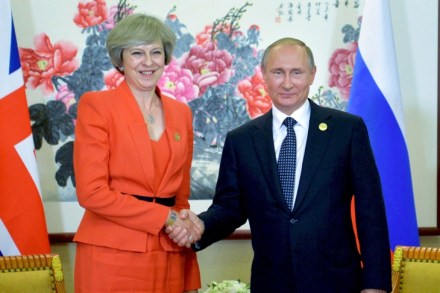
Theresa May's widely-praised handling of the Salisbury poisoning hit a bump in the road this afternoon with the news that British scientists at Porton Down have not been able to establish that the Novichok nerve agent used to poison Sergei and Yulia Skripal was made in Russia. In a clumsy interview, Gary Aitkenhead, the chief executive of the Defence Science and Technology Laboratory at the facility in Wiltshire, said although the nerve agent was identified as Novichok, scientists had not been able to prove it was created in Russia. The government were quick to go into damage control mode - making clear that this was 'only one part of the intelligence picture' and it did not alter their verdict that the only plausible explanation was that Russia was responsible for the attack.

The truth about the ‘senior academics’ defending Corbyn

From our UK edition

The Guardian has published a letter headlined ‘Stop Jeremy Corbyn’s trial by media over antisemitism.’  The paper explains: ‘More than forty senior academics write to condemn what they see as an anti-Corbyn bias in media coverage of the antisemitism debate.’  Mark. Not just forty academics, but forty senior academics. Why this quantity of Regius professors should be writing to the Grauniad about Jeremy Corbyn’s treatment in the media I have no idea. But I read on, and wade my way through the sixth-form politics letter to see who has signed. Scanning the list I cannot recognise one name. Well, I think, perhaps they are not in fields I am acquainted with. Yet it is not just that.

Watch: Gender pay gap row – Stella Creasy vs Kate Andrews

From our UK edition

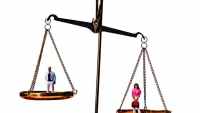
Oh dear. On Bank Holiday Monday, Stella Creasy took to the airwaves to promote the #PayMeToo campaign launched to close the gender pay gap. The campaign claims to give working women advice on how to tackle the gender pay where they work. Alas, the Labour MP appeared to be taken by surprise to find the Institute of Economic Affair's Kate Andrew not only take issue with the campaign – and its close name association to the #MeToo campaign on sexual harassment – but also with Creasy's use of data. Mr S will leave readers to decide who won this tussle...

David Miliband to the rescue

From our UK edition

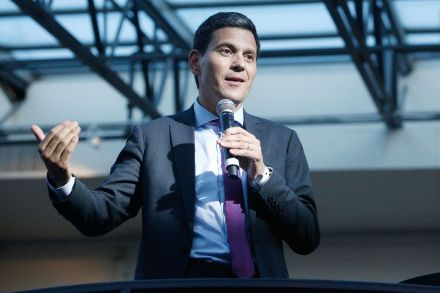
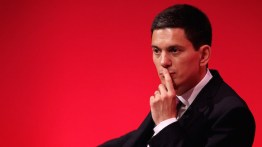
There are some things in life that are inevitable: the sun rising in the east, the bus always being late and Labour centrists suggesting David Miliband is the saviour of British politics. Today Rachel Sylvester has delivered on the latter. Writing in the Times, Sylvester suggests that the answer to the lack of centre in British politics at the moment is... the Miliband rejected in the 2010 leadership contest. The former Labour MP – who is now stationed in New York – would supposedly be just right to lead a 'socially and economically liberal' party: 'Imagine if David Miliband announced that he was returning to Britain to set up a new party. It would be socially and economically liberal, internationalist and domestically reforming, including of capitalism.

Jeremy Corbyn and the far left’s anti-Semitism doublespeak

From our UK edition

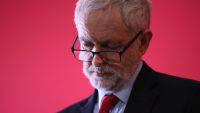
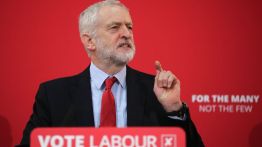
The supporters of Jeremy Corbyn are meant to comprise the most cultish movement British politics has seen. Yet on the issue of left anti-Semitism they do not blindly follow their leader. For once in their lives, they give every impression of thinking for themselves. Corbyn has come as close as he can to admitting a mistake – which by most people’s standards is not close at all. Like Stalin airbrushing his own history, he has deleted his Facebook account. He did not explain how he found himself a member of Facebook groups that featured Holocaust denial, or defending  medieval fanatics who believe Jews drink the blood of Christian children, or endorsing Nazi-style propaganda.

Shadow minister: I’m not endorsing Corbyn’s leadership

From our UK edition

Oh dear. The Labour party is once again divided thanks to the unfolding row over allegations of anti-Semitism. Although Jeremy Corbyn has insisted there is no place in the party for anti-Semitic views, the Labour leader has antagonised many of his MPs further with his decision to attend a Jewdas – ‘radical Jewish diaspora group’ – event on Sunday evening. Now it seems even his own front-bench are having doubts about their leader. In an interview with Julia Hartley-Brewer on Talk Radio, Stephen Pound – the shadow minister for Northern Ireland – said he doesn't endorse Corbyn's leadership on a 'personal basis': JHB: By serving on his [Corbyn's] frontbench you are endorsing his leadership. SP: Of course I’m not endorsing his leadership...

Jacob Rees-Mogg, radical feminist?

From our UK edition

OK the headline isn’t serious, but it got your attention. It also highlights a serious point about the politics of transgender rights which might have been missed over the Easter weekend. The Mail on Sunday this week carried an interview with Jacob Rees-Mogg. The paper didn’t make much of it, but it contained quite an important line: He is uneasy about some aspects of the transgender rights debate. ‘If you have people who have no intention of changing sex but think it would be fun to go into the women’s changing room, we cannot ignore that.’ In other words, JRM is worried about self-identification, which the Government is – nominally – committed to exploring in a consultation.

Jeremy Corbyn’s handling of Labour’s anti-Semitism row goes from bad to worse

From our UK edition

After a weekend of horrid headlines for Labour over anti-Semitism, Jeremy Corbyn is keen to be seen to be talking tough on the issue. The Labour leader has told Channel 4 news that his party will not be 'tolerating anti-Semitism in any form' and Momentum – the pro-Corbyn grassroots group – has acknowledged that 'accusations of anti-Semitism should not and cannot be dismissed simply as right-wing smears'. Only, despite this, Corbyn appears to have gone one step forward and two steps back. Guido reports that the Labour leader tonight attended a Seder in Islington held by 'Jewdas'. Jewdas are a 'radical Jewish diaspora group' who sit on the fringes of the Jewish community. Jewdas have previously said Israel 'needs to be properly disposed of'.

Carole Cadwalladr’s mixed messages

From our UK edition

One of the most important ingredients for success in politics, journalism, campaigns and advertising is to have a clear message. So, spare a thought for Carole Cadwalladr's Observer investigation which appears to have failed this test over the weekend. Over the past few months Cadwalladr has launched an investigation into alleged collusion and data misuse in the US election and the EU referendum. She claims that Cambridge Analytica has undisclosed links to the Canadian digital firm AggregateIQ that played a pivotal role in the official Vote Leave campaign. In this week's Observer she runs a new instalment on AggregateIQ 'the obscure Canadian tech firm' used by Vote Leave and 'the puzzle of the company's links to Cambridge Analytica': Only it must be quite some puzzle.

What do Corbyn and Thatcher have in common?

From our UK edition

The late Alan Watkins was so right that no half-hour spent with Who’s Who is ever wasted. This is partly because it is complete in certain categories — MPs, peers, bishops, judges, generals etc — and therefore dependable; partly because no one can be removed from it except by death, so that it builds up a picture of the past 50 years or so; and partly because each entry is self-composed, so that one can read character between the lines. It takes a certain buoyancy, for example, to dare to fill an entire column of the book with your own entry.

Watch: Andrew Neil’s beginner’s guide to anti-Semitism

From our UK edition

A Times/YouGov poll at the weekend found that nearly eight out of ten Labour members believe that accusations of anti-Semitism within the Labour party in the last fortnight are being exaggerated to damage Jeremy Corbyn and prevent criticism of Israel. So, it seems an opportune time to share Andrew Neil's helpful explainer on what anti-Semitism is and where it leads, from This Week: 'An evil demon we thought had been slain – anti-Semitism – pollutes society on both sides of the channel once more. I was told today that polls and focus groups show that many Brits, not just the young, don't know what anti-Semitism is. Well, gather round. Mireille Knoll was 85 in a wheelchair suffering from Parkinsons, she'd survived the holocaust.

Good news for Labour moderates as Christine Shawcroft quits NEC

From our UK edition

After a torrid few weeks for the Labour party over alleged incidents of anti-Semitism, there is finally a light at the end of the tunnel – at least for the party's moderates. As allegations of anti-Semitism in Labour spiralled, Corbyn’s close ally Christine Shawcroft had to resign on Wednesday as chair of Labour’s disputes panel for defending a candidate who posted a Holocaust denial article. Now Shawcroft has also resigned from her position on the party's ruling committee.

The question Labour moderates must ask themselves

From our UK edition

A question for Labour's moderates, however we define the term and assuming they are still sizeable enough to merit the plural: Do you want to see Jeremy Corbyn become Prime Minister? Specifically, do you think he possesses the character and temperament of a national leader? Does the prospect of a Corbyn-led Labour government fill you with hope? I'm not asking how you'd feel finally to be rid of this hopeless government, with its prodigious incompetences and petty cruelties. I'm not asking about the Labour Party in your heart but about the one out here, in the world, standing before the voters. That is Jeremy Corbyn's Labour Party and it is the only one on offer. Do you want this Labour Party to come to power? Answering is not easy but your response is important.

The political weather has changed

From our UK edition

It might be raining outside but the political weather has changed, I say in The Sun this morning. Theresa May is now in the strongest position she’s been in since the general election, and Jeremy Corbyn the weakest. When May addressed the 1922 Committee of Tory backbenchers on Wednesday, she received a—rather unusual—standing ovation. She herself was in upbeat form telling the meeting that the economy had turned a corner. This, perhaps, explains why the government is now prepared to talk about extra money for the NHS and defence. The Prime Minister who cut such a reduced figure after the election is now marshalling the Western coalition that is pushing back against Russian President Vladimir Putin.

For today’s young, the holocaust is ancient history – which poses huge danger

From our UK edition

The first news about the Nazi annihilation camps began to spread in the crucial year of 1942. They were vague pieces of information, yet in agreement with each other: they delineated a massacre of such vast proportions, of such extreme cruelty and such intricate motivation that the public was inclined to reject them because of their very enormity. It is significant that the culprits themselves foresaw this rejection well in advance: many survivors (among others, Simon Weisenthal in the last pages of The Murderers Are Among Us) remember that the SS militiamen enjoyed cynically admonishing the prisoners: ‘However this war may end, we have won the war against you; none of you will be left to bear witness, but even if someone were to survive, the world will not believe him.

UK investment is at a record high. So why has almost no one reported it?

From our UK edition

Why is it that whenever some organisation comes up with some half-baked prediction of doom for the UK economy post-Brexit it is splashed all over the news, yet real data on the economy gets ignored? Yesterday, the ONS quietly released the latest figures for Gross Fixed Capital Formation (GFCF) which covers investment across the whole economy, public and private sectors, manufacturing, construction, services and extractive industries. They showed that contrary to the received wisdom that investors have fled the UK following the Brexit vote, investment grew by 1.1 per cent in the fourth quarter of 2017, to a total of £84.1 billion. Over the course of 2017 it grew by 4 per cent compared with 2016. This was higher than for any other G7 country – with Italy following on 3.

A Scottish Tory government is no longer wishful thinking

From our UK edition

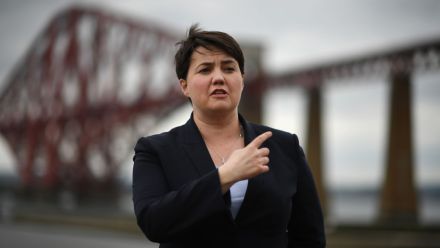
'The Scottish Conservatives aspire to lead the next government of Scotland,' proclaims Ruth Davidson in a pamphlet setting out the party's thinking.  Could it really happen? Could the Tories go from wipeout in 1997 to triumph in 2021 – from resisting devolution to effectively running the show in a generation? Too long; didn't read answer? Yes. More complex answer: Yes, if...  Scottish, Conservative, Unionist is a 'Yes, if' document, informed by an understanding that the party cannot sit back and wait for voters to come to it. Muhammad must launch a charm offensive on the mountain. The booklet features contributions from leading lights and rising stars.

Labour’s pockets of anti-Semitism: the evidence

From our UK edition

This week, Jeremy Corbyn said he was 'sincerely sorry' for the pain that had been caused to the Jewish community by anti-Semitism in 'pockets' within the Labour Party. Alas, his apology wasn't enough to stop protesters – including some of his party colleagues – gathering in Parliament Square on Monday to voice their concerns. Nor were Corbyn's comments enough to dissuade some of his more loyal supporters that allegations of anti-Semitism aren't always an MSM smear designed to keep the Tories in No 10. So that readers can make up their own mind as to the size of those 'pockets', below is a list which has been compiled detailing alleged incidents on the matter: 1.