Uk politics

George Osborne learns his lesson

From our UK edition

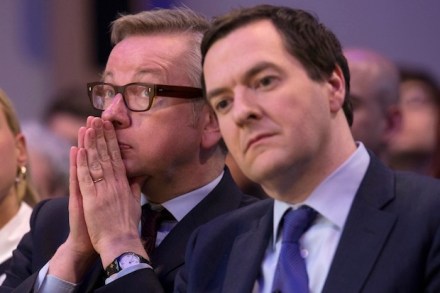
While David Cameron has reportedly busied himself of late telling friends how his old mate Michael Gove is 'mad' and behaved like a 'lunatic' during the EU referendum, his comrade George Osborne appears to take a rather different view. Rather than hold a grudge, the former Chancellor was spotted on holiday with Gove last month. Osborne and Gove embarked on a lads' holiday which consisted of taking in four Wagner operas on four consecutive days. While some have been quick to poke fun at their idea of fun, Mr S is just glad that Osborne and Gove have learnt their lesson.
The latest green belt warning highlights the choice facing the Tories

From our UK edition

Good news for people who want the government to make it easier to build homes? The papers today carry news that local authorities are proposing nearly half a million (459,000) homes on green belt land, up from 425,000 a year ago. While on the surface more homes at a time of housing shortages might seem like welcome news, there are two problems. According to the report by the Campaign to Protect Rural England, (a) the bulk of it isn't aimed at struggling first time buyers (b) it risks making Britain's green spaces an endangered species in the long term. The report claims that the green belt is being sacrificed to build expensive homes that young families may never be able to afford.

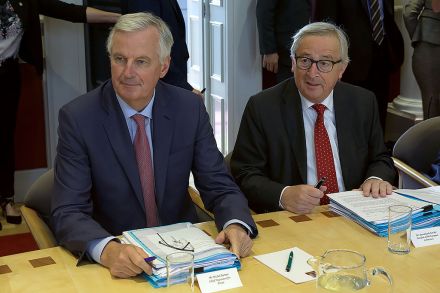
Juncker and Barnier have made me rethink my Remain vote

From our UK edition

I completely agree with David Harris. Like him a Remain voter and a Londoner, I was utterly shocked by the result of the referendum, spending some hours trawling the online results in an attempt to understand what had happened. It was a salutary experience, yielding many surprises (Sevenoaks voted out!) and forced me to reappraise my initial generalised assumptions about the vote. We on the Remain side lost, and fairly. Since then I have been so angered and repelled by the behaviour of Messrs Juncker and Barnier that should we be obliged to vote again I will vote to Leave.

Jeremy Corbyn’s cut and paste job

From our UK edition

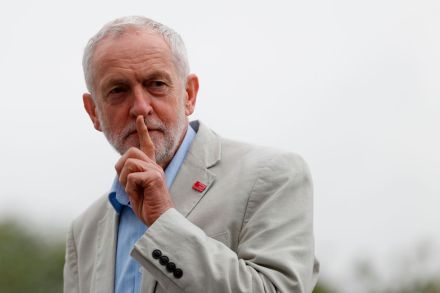
You have a tight deadline and if you miss it there will be trouble. Only it's a Friday and you've got plans so you do a slapdash job and copy and paste from a previous piece of work hoping no-one will notice. This at least appears to be what happened to Jeremy Corbyn on Friday. After a week of tawdry allegations of anti-Semitism, the Labour leader attempted to stem the anger growing at his handling of the situation by penning an article for the Guardian. Only readers were quick to point out that it bears a striking resemblance to the last article on anti-Semitism he wrote for the Evening Standard. Guardian, August 2018: 'Denying the continuing problem doesn’t help.

The Labour party is no longer a place for a Jew

From our UK edition

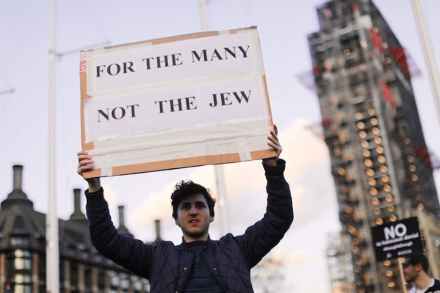
As I’m writing this, I can’t stop thinking about my sixteen year old self: a naïve, optimistic teenager who had just joined the Labour party, sure that Ed Miliband was going to put the country to rights, and that being one of the party members who would help him do that was an honour and a duty. How times have changed. In the wake of Labour's anti-Semitism scandal, I've now left the party. Here's why. I should start by saying I’m Jewish. When I was growing up, I thought that that meant that I belonged to the religion of Judaism, and that I couldn’t eat bacon.

Corbyn breaks his silence on anti-Semitism row – will it make any difference?

From our UK edition

After a tawdry week for Labour which saw a flurry of fresh allegations of anti-Semitism in the party's upper ranks, Jeremy Corbyn has finally broken his silence. Writing an op-ed for the Guardian, the Labour leader admits that there is a 'real problem' – and says the party has been too slow in tackling anti-Semitism within its ranks. He promises that things will change: 'I want Jewish people to feel at home in the Labour party and be able to play their full part in our work to take our country forward. And I appreciate that this cannot happen while anti-Semitic attitudes still surface within Labour, and while trust between our party and the community is at such a low ebb.

Forced marriage is the MeToo generation’s ‘no go’ subject

From our UK edition

By now you've probably heard of Marie Laguerre. The 22-year-old student was punched in the face last week by a passer-by, a sickening attack that was caught on CCTV and has since gone viral. It's caused uproar around the world, and is being seen as evidence of the physical and verbal abuse with which Frenchwomen have to contend all too often. Laguerre was struck because she gave short shrift to the obscene comments of a man who crossed her path on a busy Parisian street.

BBC presenter takes a swipe at the Today programme

From our UK edition

Oh dear. The Today programme has been in the news this week for the wrong reason after new data showed that the BBC's flagship current affairs radio show had lost nearly a million listeners in the past year. The show's editor Sarah Sands has been quick to go into damage limitation mode – arguing that this isn't a sign of any problem with the show. Instead, it reflects the difficulties all broadcasters currently experience. But does everyone agree? It would seem not. Former Today presenter Sarah Montague entered the debate on Twitter where she made the point that her new gig – the World at One – had not lost listeners: https://twitter.

Michel Barnier attempts to reassert his Brexit red lines

From our UK edition

This morning a number of reports in the papers prompted talk of a small breakthrough in the Brexit negotiations. Among them, the Financial Times – a paper not known for always seeing the sunny side of the referendum result – reported that the mood in Brussels was changing with the EU now more willing to ‘fudge’ certain aspects of the negotiations in order to avoid no deal. With Theresa May en route to visit Emmanuel Macron at his holiday retreat tomorrow in the south of France, things appeared to be looking up for No 10. So, perhaps it should come as little surprise that right on cue the rigid European Commission have popped up to pour cold water on any such claims.

Labour’s anti-Semitism row has left Jeremy Corbyn isolated within his own party

From our UK edition

When Labour’s leadership and the NEC were debating how to tackle anti-Semitism in the party, Andrew Murray – Jeremy Corbyn’s close adviser and chief of staff to Unite’s general secretary Len McCluskey – argued that Labour should embrace a much simpler and less contentious code of conduct than what its ruling National Executive ultimately adopted. His recommendation, I understand, was that the Labour Party should employ the widely used IHRA definition of anti-Semitism with all-but-one of its examples – rather than seeking, as it has done, to resile from four of the examples, and create its own illustrations of anti-Semitic language and conduct.

The City’s resilience after Brexit could be bad news for the EU

From our UK edition

The Gherkin would be re-zoned as social housing. The Walkie Talkie would be turned into a massive TK Maxx with a couple of fried chicken shacks at ground level. Canary Wharf would be paved over and turned into a giant trampoline park, while houses in the better parts of Chelsea and Notting Hill would fall in price so much that just about anyone could buy them again. When the UK voted to leave the EU, it was confidently predicted that the City of London would be wiped out, with the loss of tens of thousands of jobs and billions in tax revenues. And what happened? According a report by the City of London Corporation, due to be released in September, the number of jobs lost might be as low as 5,000, and will probably be no higher than 10,000. Five thousand.

Cabinet Brexiteers want May to ready her Brexit back up plan

From our UK edition

Number 10 have long been convinced that if they could talk to the member states, rather than the Commission, they’d have a better chance of getting a reasonable Brexit deal. So, the Salzburg meeting on the 20th of September, where May will get to speak to the leaders of the EU27 directly, has taken on huge importance. But, as I say in the magazine this week, while the heads of government might be more understanding of May’s political predicament, they still won’t accept her Chequers plan. Rather, they’ll—at best—push for further concessions from her. What May must decide over the summer, is what she’ll do when they ask for this. The remaining Brexiteers in her Cabinet take the view that Chequers mustn’t be seen as merely an opening offer.

Chris Williamson turns on Momentum

From our UK edition

While the likes of Owen Jones are finally realising that it might not be a wise idea to back Peter Willsman following his rant about anti-Semitism, the same can’t be said for all prominent Corbyn supporters. Step forward, Chris Williamson. The Labour MP is doubling down on his endorsement for Willsman, in defiance of calls from Momentum for Willsman to resign from Labour's National Executive Committee. In a show of solidarity, Williamson has updated his Twitter biography to ‘JC9’ – a reference to Willsman’s election to the NEC. But he hasn't stopped there.

Jeremy Hunt’s wife gaffe goes from bad to worse

From our UK edition

Jeremy Hunt started his new job as Foreign Secretary with a bang on Monday with a gaffe that rivalled those of his predecessor Boris Johnson. On a visit to China, Hunt told his hosts that his wife was Japanese. The problem? She is Chinese: ‘Erm, my wife is Japanese. My wife is Chinese, sorry. That is a terrible mistake to make’ Hunt was quick to apologise – and even documented his attempts to make it up to his wife by buying her flowers: https://twitter.com/Jeremy_Hunt/status/1024305946275790849 However, Mr S suspects one bouquet won't cut it. It turns out that Hunt's wife has justification to be more than just a little bit annoyed at Hunt's slip of the tongue.

The dilemma facing Labour MPs at the next election

From our UK edition

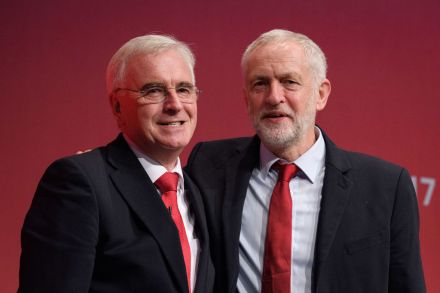
John McDonnell’s response to the latest episode in Labour’s anti-Semitism scandal is another reminder of how he grasps the political danger of this to the Corbyn project so much better than Corbyn himself does. The shadow Chancellor appears to get, in a way that Corbyn doesn’t, just how much this issue could damage Labour. One of the striking things about politics right now is that the Corbynite economic agenda has become relatively uncontroversial within the Labour party. At the start of Corbyn’s leadership, the party committing itself to a universal basic income would have caused a major row. But today’s announcement has passed off without controversy. Rather, what is causing problems is Jeremy Corbyn’s personal worldview.

Watch: Jeremy Corbyn dodges questions on anti-Semitism

From our UK edition

Labour’s anti-Semitism problem isn’t going away. But it seems Jeremy Corbyn is hoping it will do. When the Labour leader was asked whether he was the man to patch things up between the Jewish community and the party, Corbyn was somewhat lost for words: Reporter: 'Are relations between the Labour leadership and the British Jewish community broken beyond repair? ...Can you fix the relationship, Mr Corbyn?' Jeremy Corbyn: 'Good morning, nice to see you. Goodbye…Can you close the window please.' https://twitter.com/SkyNews/status/1024649953782767618?ref_src=twsrc%5Etfw Mr S. thinks this is hardly the best way for Corbyn to reassure people that he is taking the problem seriously...

Fewer British workers are sick, so why isn’t the Guardian celebrating?

From our UK edition

I know the Guardian is desperate to stop Brexit and will dredge up anything to try to back its case – daily running fanciful predictions of economic Armageddon made by think-tanks as if they were fact, even though those same think tanks have been hopelessly wrong in the past. But honestly, there comes a point when even the newspaper’s editors must be beginning to realise that their demented doom-mongering is making them look ridiculous.     This week the Office of National Statistics (ONS) put out figures showing yet another decline in the number of days lost to sickness by British workers. It is now down to an average of 4.1 days per annum compared with 7.2 days in 1993.

Why Boris Johnson is now the favourite to succeed Theresa May

From our UK edition

As Theresa May and her ministers spend their summer holiday trying to convince European leaders of the merits of her widely-panned Chequers Brexit blueprint, one of her departed ministers has cause for celebration. According to the latest ConservativeHome poll of Tory members, since resigning as Foreign Secretary Boris Johnson has become the favourite among party members to be the next leader. Supported by nearly a third of members, this is an impressive turnaround given that a month ago – when he was still in government – he was backed by only 8 per cent of members.   However, it's also not that surprising. As I said in the i paper last week, Johnson looks to be on course to turn Theresa May’s Brexit disaster into his big opportunity.