Uk politics

Alex Salmond: why I have resigned from the SNP

From our UK edition

I truly love the SNP and the wider independence movement in Scotland. They have been the defining commitment of my life. But today I have written to the National Secretary of the party resigning my membership. I read carefully Nicola Sturgeon's statement on Sunday and watched her television interview of a couple of days ago. She made it clear that the SNP have never received a single complaint about my personal conduct in my many decades of membership. And the Scottish Government have confirmed that they did not have any such complaint before this January, more than three years after I left office as first minister. That is the record of 30 years of public service. So let me be clear again. I refute these two complaints of harassment and I absolutely reject any suggestion of criminality.

Revealed: Paul Dacre’s fond farewell

From our UK edition

After 26 long years at the helm of one of Britain’s most influential newspapers, Paul Dacre’s last day as editor of the Daily Mail has finally arrived. Not that staff were given the chance to say their goodbyes. It appears that Dacre wasn’t keen on bidding farewell in person. Instead, he left a note on the noticeboard: Mr S suspects this line will be of particular interest to incoming editor Geordie Grieg: 'There was never going to be an easy way to say goodbye and thank you. Particularly as I'm not leaving.

Is there any point infiltrating the Tory party?

From our UK edition

The recurring story of the summer recess – aside from allegations of anti-Semitism and Islamophobia within the main two parties – has been reports of an influx of Ukip-esque members to the Tories. Today tensions reached boiling point. Following reports that pro-EU Tory MPs are seeing sharp rises in applications to join their local parties amid fears of deselection attempts, Anna Soubry called on Tory chairman Brandon Lewis to suspend a membership drive. He is yet to do so – but a leaked memo to Guido shows CCHQ officials have been offering advice to local Tory organisers on the best methods for refusing membership requests. The whole incident is curious for a number of reasons.

Is Jeremy Corbyn preparing to back down over Labour’s anti-Semitism row?

From our UK edition

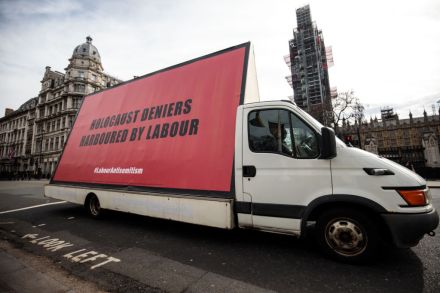
Labour is belatedly about to adopt the IHRA anti-Semitism definition with all its examples, according to three members of its ruling NEC. They tell me this should happen at the next full NEC meeting on 4 September. This would seem to represent a big climbdown by Labour’s leader, Jeremy Corbyn, in the face of great pressure from many in the Jewish community. In particular, he and his closest advisers, led by Seumas Milne, have been fervently resisting the IHRA examples which define as anti-Semitic any statement that the Israeli state is racist or that question the right of Jewish people to national self determination. “It looks like we will adopt the IHRA wording and examples in their entirety” said a senior Labour member. But there is a but.

Return of the Maybot: Theresa May in conversation with ITV News

From our UK edition

Theresa May's visit to Africa has helped to remind voters just what type of leader the Prime Minister is – a rather awkward one. First, May won attention for dancing out of step with South African school children. Now, she has given an iconic Maybot interview to ITV News. Here's what the Prime Minister had to say: On her dancing this morning: ITV: If you were a judge on Strictly Come Dancing, how would you score your dancing this morning? TM: I suspect my dancing this morning might not make it on to Strictly. On BoJo: ITV: Have you noticed how much Boris Johnson wants your job? TM: I was very pleased that Boris was my Foreign Secretary for the period he was Foreign Secretary. ITV: But doesn’t he want your job?

Theresa May says she’s ‘in this for the long term’ – what does she mean by that?

From our UK edition

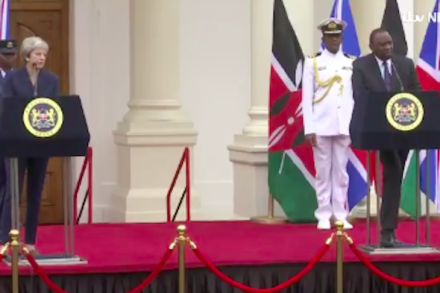
Until 5pm this evening, the main news from Theresa May's first trip to Africa as Prime Minister was that she isn't much good at dancing – after she attempted to join in on a dance with school children in Cape Town. However, the Maybot has since managed to set the news agenda alight by telling hacks that when it comes to her premiership she is 'in this for the long term'. Asked by the accompanying press pack, whether it was still her intention to lead her feuding party into the next election, May said she was in it for the 'long term' – adding that her focus right now is on delivering 'what the British people want'.

Shami Chakrabarti’s new support for independent inquiries

From our UK edition

Mr Steerpike couldn’t help but do a double take this afternoon when Labour shadow attorney general Shami Chakrabarti suggested that the government should launch an independent judge-led inquiry into allegations of historical torture. In a Labour press release, Baroness Chakrabarti of Kennington lamented the fact that the government had missed a self-imposed deadline to form an inquiry and opined: ‘After eight years and two inadequate inquiries fettered by Whitehall interference, a fully independent judge-led inquiry is the only way to bring comprehensive resolution to this scandal.’ While the formation of an inquiry might be sensible, Mr S wonders if Chakrabarti is best placed to decide what an independent investigation should look like.

Watch: Theresa May puts on her dancing shoes

From our UK edition

With Brexit negotiations stuck at a stalemate and a warring cabinet to contend with in the UK, the famously robotic Theresa May could be forgiven for wanting to let her hair down as she begins her tour of South Africa today. Which could possibly explain why she decided to throw caution to the wind, and join in with a spot of dancing when visiting a senior school in Cape Town this morning: https://twitter.com/DIRCO_ZA/status/1034341700532142085 Although, Mr Steerpike thinks if her dance moves are anything to go by, the ‘Maybot’ may be struggling to fully let go of her inhibitions.

Revealed: the People’s Vote’s three-point plan to trigger a second referendum

From our UK edition

After a weekend of politicians feuding over the merits of a second referendum, Barry Gardiner, Andy Burnham and Conor Burns have become the latest politicians to criticise the People's Vote campaign to do just this. Meanwhile the BBC reports of a leaked memo which shows that the group has its eye on changing Labour policy – encouraging MPs and activists to submit a motion at Labour conference next month. As I reveal in this week's Spectator, the People's Vote campaign – which argues the public should have a say on the final deal – has a three-point Parliamentary strategy when it comes to bringing about a second referendum.

Vince Cable’s message discipline

From our UK edition

When the Liberal Democrats unveiled their new slogan – 'Demand better' –earlier this month, critics were quick to point out that it might not have the desired effect. One Lib Dem source soon snarked to Mr S that many Lib Dems do want to demand better – at least, of their lacklustre leader Sir Vince Cable. So with party conference now just weeks away and the prospect of Cable having to stand next to a lectern which reads 'demand better' nearing, it appears Cable may have taken the message to heart. Reports are swirling that the Lib Dem leader will signal next month that he plans to step aside before the next general election. What's more, he will try to change party rules in an attempt to create a mass membership movement and allow a non-MP to take charge.

The case for a second Brexit referendum

From our UK edition

Between shows at the Edinburgh fringe I find myself addressing a rally supporting a People’s Vote on the final Brexit deal. I have some sympathy for Theresa May — she keeps going to Switzerland, Dignitas keeps sending her back — but her white paper published this summer is in effect the second draft of a Brexit manifesto (the first being her Lancaster House speech in January 2017, snubbed at the subsequent election). It is therefore the first time in my experience that the manifesto has turned up more than two years after the vote. Time for another, then. People may object this is a betrayal of democracy. I believe it would be an affirmation of informed democracy. There can be no doubt that we are better informed and more aware of the issues than we were in 2016.

Jeremy Corbyn says he likes my journalism – so why does he want to muzzle the press?

From our UK edition

Any local reporter would be pleased to hear a leading politician stand up for public interest journalism. Jeremy Corbyn did just that in his speech on media reform yesterday. But let’s not forget that Labour – and Corbyn himself – are adamant supporters of Leveson 2. Make no mistake: this is a dangerous attempt to muzzle local newspapers and expose reporters like me to crippling and needless law-suits. The most worrying aspect of Leveson 2 is Section 40, which would force papers to pay legal costs for people suing them regardless of whether they won their case. This would make the work of journalists much more difficult.

David Lammy turns on Jeremy Corbyn

From our UK edition

David Lammy has always had Jeremy Corbyn’s back, but it seems his patience in the Labour leader might be wearing thin. In a story that emerged yesterday, Corbyn was caught on tape claiming that Zionists ‘don’t understand English irony’ despite them having lived in Britain ‘for a very long time’. It appears that Corbyn’s remarks – which are being taken by some as a reference to Jews, rather than merely Zionists – are a step too far, even for Lammy. The Labour MP condemned the comments and called them ’insidious’: https://twitter.com/DavidLammy/status/1032970292820369408?

The government’s no-deal Brexit plans aren’t scary enough to satisfy Remainers

From our UK edition

The government was always onto a loser whether or not it published the 24 technical notices laying out what would happen in the event of a no-deal Brexit. If it didn’t publish them it would be accused of a cover up. If it did and they were terrifying it would provide ammunition for the Remain brigade. And if it published them and they weren’t terribly frightening? Then Remainers would accuse ministers of having their heads in the sand. The latter scenario is pretty much where we are today. There are few stand-out headlines from the 24 documents for anti-Brexit commentators to get their teeth into.

Jeremy Corbyn’s plan for the media: make it more boring

From our UK edition

It should be said that Jeremy Corbyn’s ideas for shaking up the media aren’t all bad. The Labour leader is right for instance to focus on the need to help out local media; the death of regional newspapers in recent years means that local government is almost entirely unaccountable nowadays. It’s only when things go badly wrong that people actually sit up and pay attention. Corbyn is also right on the need to reform freedom of information laws, which have now been rendered virtually redundant by those in authority who know exactly how to prevaricate and obstruct requests at every turn. But too many of the Labour leader’s other ideas are half-baked and reveal a simple truth: Jeremy Corbyn simply doesn’t understand the media.

‘Social class’ check: Jeremy Corbyn’s top team

From our UK edition

This summer, Jeremy Corbyn has struggled to get much coverage of his plans for domestic policy thanks to the fact Labour's anti-Semitism crisis has dominated the headlines. So the Labour leader can take heart that one of his policy ideas has finally started to make waves. In a speech on the UK press on Thursday, Corbyn will call on the BBC to declare the 'social class' of all its presenters and journalists as part of a bid to improve its diversity – including whether they went to private school and their parent's occupation and education. Mr S has no doubt that Corbyn plans to lead by example and do the same with his office.

Conservatives’ warning from beyond the grave

From our UK edition

The Conservatives were given a reality check today in the form of new Electoral Commission data on the financial health of political parties in 2017. Under Jeremy Corbyn, Labour managed to break previous records and raise just under £56m in a single year – beating the Conservatives by nearly £10m. Adding insult to injury, the Tories received more money from the dead (in the form of bequests) than from the (living) Tory grassroots, with income from membership fees nearly halved. Where Labour received £16.2m in membership fees last year, the Tories managed a paltry £835,000. This touches on a wider issue for the Conservative party: its relationship with the grassroots.

It’s easy for MPs to miss the humiliating treatment of their own constituents

From our UK edition

If you wanted an easy illustration of the importance of a Parliament that looks vaguely like the country it works for, look no further than a tiny consultation issued this week by the Home Office. In it, ministers suggest new guidelines on the treatment of women in custody who are on their periods. This sounds like quite small fry - and the sort of subject that makes at least 50 per cent of readers recoil from going any further. But it’s important, not just in itself, but also because it shows what happens when more women join the House of Commons.

Labour’s noise problem

From our UK edition

Political parties rarely have good summers. If you’re in government, something normally goes wrong just as you’re settling into a deckchair. If you’re in Opposition, a good summer is when something has gone wrong in the government. A disappointing summer is when no-one notices your carefully-planned announcements. A bad summer is when you get plenty of attention, but for all the wrong reasons. Labour has had a bad summer. It has spent much of it making rather wan attempts to calm the row on anti-semitism.

The true cost of the Carillion wreckage

From our UK edition

“We’re not doing a very good job of selling the private sector, are we?” So said an old friend of mine, among the Conservative party’s most senior advisors, as we discussed my upcoming Channel 4 Dispatches documentary on Carillion. Back in January, Jeremy Corbyn declared the implosion of the UK’s second-largest construction firm “a watershed moment” – and, in some ways, he was right. I don’t accept Carillion’s demise seven months ago means private companies should be kept away from providing public services, as the Labour leader has argued, or that Britain now needs wide-ranging nationalisation. The state already employs a fifth of the workforce, accounting for over two-fifths of GDP – which is quite enough.