Uk politics

John McDonnell vs Momentum

From our UK edition

Oh dear. John McDonnell has found himself in hot water this morning after he declared that Labour would support Philip Hammond's budget tax cuts. Given that the Resolution Foundation claims that the tax cuts will benefit the better off, it doesn't seem like the most obvious move for anti-austerity Labour. Labour politicians have been quick to see red – with regional mayor Andy Burnham taking to social media. But the response that should worry the shadow chancellor the most relates to what Momentum – the pro-Corbyn grassroots group - will say. It seems no-one thought to tell them in advance what the shadow chancellor was planning: https://twitter.com/PeoplesMomentum/status/1057207837733122048 Watch this space.

The Budget shows the Tories are now fighting on Corbyn’s turf | 29 October 2018

From our UK edition

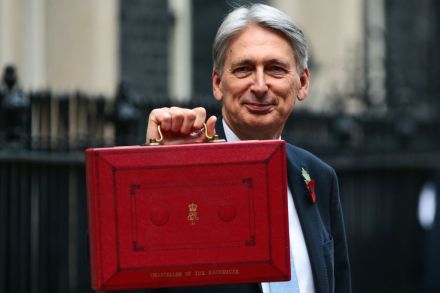
When Theresa May announced at this year's Tory conference that she would put an end to austerity, it's safe to say that her Chancellor hardly looked thrilled as he clapped from the front row of the hall. Philip Hammond is regarded as a fiscal hawk and rather averse to loosening the purse strings. At today's Budget, Hammond tried to get on board with No 10's ending austerity message. But in doing so, he also attempted to put some clear blue water between 'end austerity' Conservatives and anti-austerity Labour. Firstly, Hammond defined what he sees as 'ending austerity'. The Chancellor said that ending austerity meant an above-inflation increase in departmental spending. The Tory version of ending austerity also means no tax rises in the quest to do so.

Full text: Philip Hammond’s Budget statement 2018

From our UK edition

Mr Deputy Speaker, Today, I present to the House a Budget for Britain’s future; A budget that shows the perseverance of the British people finally paying off. A Budget for hard working families, who live their lives far from this place and care little for the twists and turns of Westminster politics. People who get up early in the morning to open up factories, shops, and building sites, to drop their kids off at school to check on elderly relatives and neighbours. The strivers, the grafters and the carers who are the backbone of our communities and our economy.

Hammond’s Halloween Budget fails to excite

From our UK edition

Philip Hammond held the Budget today to avoid a bunch of Halloween jokes about a zombie economy and so on. To compensate, the Chancellor brought a bunch of random sentences in fancy dress as ‘jokes’. There were inexplicable quips about poaching rabbits, a medley of toilet puns accompanying funding for keeping public conveniences open, and the strangest of all: ‘fiscal Phil says fiscal rules, OK.’ What the Chancellor hadn't dressed up, though, were the series of announcements in this Budget. They weren’t fancy. Or radical. There was some political appropriation, with Hammond trying to deal with a few Labour threats by stealing their policies.

Watch: Philip Hammond gets heckled

From our UK edition

Poor old Philip Hammond. In a bid to raise some laughs during his Budget announcement, the Chancellor made a series of gags that fell somewhat flat in the Commons. But there was one big laugh in the chamber. Unfortunately for Hammond, though, it came after he made a reference to his budget next year. 'You won't be here', a Labour MP shouted out. Mr S thinks Spreadsheet Phil should have seen that one coming...

How Cameron’s misreading of Merkel led to Brexit | 29 October 2018

From our UK edition

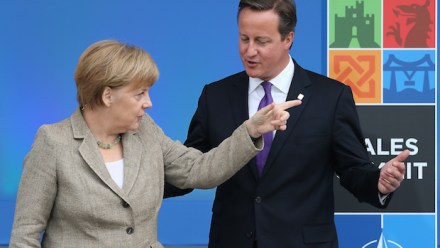
It is impossible to overstate Angela Merkel’s significance, to Germany, to the EU, and to Britain. Others are better qualified than me to talk about the first two of those, but as she announces her (slow, deliberate) departure from office, I offer a thought about Merkel and Britain, which is that the modern history of Britain’s European policy has been a story of misunderstanding Angela Merkel, and therefore Germany. This story starts in 2005, when David Cameron stood for the Tory leadership. As a moderate, he was keen to woo the Right, especially on Europe. So he promised to pull the Tory MEPs out of the European People’s Party grouping in the European Parliament.

Why a no-deal Brexit would require an emergency Budget

From our UK edition

Brexit overshadows this Budget. The story this morning has all been about Number 10 saying that the Budget won’t change in the event of no deal, in apparent contradiction of what Philip Hammond said yesterday. In truth, no deal would—obviously—have consequences for the public finances but the government’s initial reaction would be to try and stimulate the economy. Whatever anyone says now, no government would respond to no deal by taking demand out of the economy. So, yes there would be an emergency Budget. But it would be expansionary, not contractionary. It is not just Brexit though that has left Hammond with limited room for manoeuvre.

Live: Budget 2018 – Philip Hammond announces the end of austerity

From our UK edition

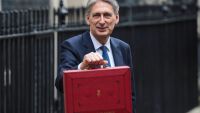
Philip Hammond has delivered his final Budget before Brexit. The Chancellor said that the era of austerity is coming to an end as he pledged extra cash for no deal preparations and slapped a digital services tax on tech giants such as Facebook and Google. He also revealed that the OBR has upped its growth forecast to 1.6 per cent for 2019/20. Here are the key announcements: Government abolishes the use of Private Finance Initiatives Extra £420m to repair potholes An extra £20.

Philip Hammond’s scheduling problem

From our UK edition

Budget day is upon us and it's safe to say that expectations have been set rather low when it comes to Philip Hammond's big moment. The Chancellor has said he plans to remain a fiscal hawk – and warned that there will be a brand new Budget in the new year should a 'no deal' Brexit occur. Perhaps then it's little wonder that the schedulers at the BBC don't seem to regard the event as a showstopper event. In fact, the Times's Patrick Kidd wonders if they are trying to send a message. During BBC2's Budget coverage, BBC1 will be showing 'Money for Nothing', 'Flog it!' and 'Pointless': By around 5pm, the channels could be in sync...

It makes sense to keep Northern Ireland inside the customs union

From our UK edition

Sir: What James Forsyth calls ‘the EU plan’ to keep Northern Ireland in the customs union after Brexit (‘The Irish problem’, 20 October) would no more ‘ease Northern Ireland away from the UK and push it more towards Dublin’s orbit’ than it has already done itself through numerous legislative differences. With regard to social issues such as abortion and same-sex marriage, Northern Ireland is far closer to the Republic (as it once was) than to the rest of the UK. It would therefore be no great stretch to avoid awkwardness of land border checks (and respect the spirit of the Good Friday Agreement) by having such checks at the sea ports.

Will Hammond take this Budget opportunity?

From our UK edition

Monday’s Budget comes at a delicate point in the Brexit negotiations. I say in The Sun this morning, that a bolder government and Chancellor would turn this timing to their advantage. They would use this Budget to give a preview of what the UK would do in the event of no deal. No deal planning shouldn’t just be about logistics, but about how the UK would respond economically to this challenge. Philip Hammond could announce that if it is ‘no deal’ the UK would slash to zero tariffs on manufactured goods from all around the world, bring in complete tax relief on all business investment for the next three years and cut capital gains tax. The EU, which doesn’t want a hyper-competitive economy 26 miles off its coastline, would notice.

How #MeToo could make things worse for victims

From our UK edition

It's over a year since the #MeToo scandal of sexual harassment broke. It has shaken up our culture and relationships in so many ways over the past 12 months. It isn't going away, either, as the allegations about Sir Philip Green this week have shown. But it has now reached a point where it could either improve or severely damage the way in which serious allegations are dealt with justly. The whole movement has been extremely messy. This was inevitable, given the number of people, mostly women, who have had to put up with being ignored or belittled when they complain even about serious sexual assault, let alone more subtle harassment.

Nick Clegg’s move to Facebook makes perfect sense

From our UK edition

Do you remember that brief couple of weeks in British history when we all had to say ‘I agree with Nick’? It seems a long time ago, and now Sir Nick Clegg is off to Silicon Valley to be the head of Facebook’s global affairs and communications team. Some sneer, but the move makes perfect sense. Correctly clocking that he has no future in British politics, and that the European Union is not an area of growth and opportunity, he thinks that the United States has a brighter future than our common European home. I agree with Nick. This article is an extract from Charles Moore's Spectator notes, available in this week's magazine.

Why a no-confidence vote in Theresa May could be closer than she thinks

From our UK edition

The consensus in the Conservative party is that Theresa May's visit to the 1922 Committee last night hasn't materially changed anything. Those who want her gone are still plotting her demise. A larger group of her MPs are very frustrated and unhappy. And there are still a good number of loyalists prepared to make supportive noises about the Prime Minister in the Chamber or 'crunch' meetings like the one last night. What this does suggest is that there won't be another flood of letters calling for a vote of no confidence in the Prime Minister, though the working theory remains that it is more likely that the threshold of 48 is reached by accident rather than as a result of a concerted campaign.

Tories rally round Theresa May, but the difficult decisions remain

From our UK edition

Theresa May should offer to go to the 1922 Committee every week between now and March 2019. Her appearance led to a, predictable, rallying round. There was the usual desk banging and lots of calls for unity. I’m told there were about half a dozen questions on tone and language following the hideous quotes given to the Sunday papers. Tellingly, Steve Baker, the ERG’s lead organiser, tried to turn the tables and present his group as the real loyalists. He asked the Prime Minister if those Tory MPs saying they would vote down no deal were hurting the her negotiating position. She agreed that this was not helpful. As one Cabinet Minister said to me afterwards, if you’re expecting fireworks when the Prime Minister comes to the 1922, you’ll always be disappointed.

Tory MPs give May an easy ride at Prime Minister’s Questions

From our UK edition

Given relations with her own party, Theresa May will have been far more worried about the second half of Prime Minister's Questions than the first. On the basis of the backbench questions that were asked, the session went pretty well. Only one Tory MP raised Brexit at all, and that was Jacob Rees-Mogg, who asked for assurances that the European Court of Justice would not get the final say on cases arising from the Brexit withdrawal agreement. May was able to tell the Chamber that this wasn't true - though the Sun's report this morning on the matter was pretty strong - and that was all for Brexit. Instead, her MPs asked a range of constituency-based questions and didn't cause trouble, which bodes well for tonight's 1922 Committee meeting.

What the 48 ‘no confidence’ letters speculation is missing

From our UK edition

The speculation that Theresa May is perilously close to the 48 letters required for a confidence vote has – as Steerpike documents here – been going on for some time. That's not to say it won't happen. Morale is at low point within the party. But as a consequence of that, the sheer number of downcast MPs means that if May's critics really wanted a confidence vote this week they could make it happen. There are over 48 MPs unhappy with May's leadership – and who think the party would be better off with a new leader. For example, the StandUp4Brexit campaign group alone has now had 50 MPs publicly sign up – meaning they all oppose Chequers: https://twitter.

From Dante’s first circle of hell to Black Wednesday, this week’s Cabinet meeting

From our UK edition

If last week’s Cabinet was a unified affair with everyone agreeing about the problems with the EU’s version of the backstop, today’s was not. On the one hand, you had Geoffrey Cox warning that the backstop would be like being stuck in Dante’s first circle of hell. On the other, you had David Lidington, the effective deputy Prime Minister, telling ministers that he was the only one who had been an MP on Black Wednesday and they couldn’t have that level of chaos again, which—by implication—there would be with no deal. I understand that Jeremy Hunt spoke very forcefully about how the UK couldn’t be stuck in an indefinite backstop and that the EU mustn’t be able to unilaterally stop this country from leaving it.

Why James Dyson isn’t a hypocrite for manufacturing in Singapore

From our UK edition

Remainers’ first response to the news that James Dyson will build his new electric car in Singapore was to accuse him of hypocrisy. Here is a man who expects others to be patriotic, goes the argument, and yet when it comes to his own interests he dumps Britain and takes his business elsewhere. But those who try to make such accusations miss the point entirely. James Dyson has never argued for a protectionist, Britain-first policy. On the contrary, he has always argued for free and open markets. He just happens to think that those markets should extend beyond the borders of Europe. Singapore has won Dyson’s business because it offers a lower-cost location which will enable the company to compete better in international markets.