Uk politics

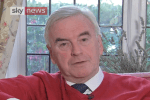
John McDonnell attempts to reinvent himself

From our UK edition

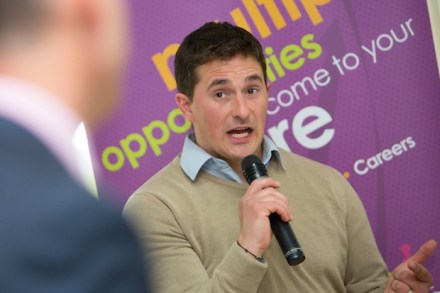
In recent months, there has been speculation that John McDonnell has leadership ambitions – and a rift has formed between the shadow chancellor and his one-time comrade Jeremy Corbyn. So, it won't have gone unnoticed by the Leader's Office that McDonnell today embarked on a charm offensive of the MSM – also know as the Parliamentary Press Gallery. Speaking at a Press Gallery lunch, the socialist politician told hacks that he had decided to address lunch after his local priest suggested he needed to 'soften' his image: 'He persuaded me to do this. He said you need to soften your image. So do Mumsnet and do this…. I’m trying to soften my image.' The republican shadow chancellor even joined in on a toast to the Queen at the start of the lunch.

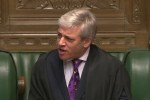
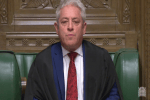
John Bercow finally delivered a Speaker’s masterclass at PMQs

From our UK edition

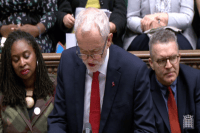
A strange PMQs. Usually the session is dominated by honking throats and empurpled faces. Today there were interesting facts and useful opinions. Amazing! An expertly briefed Jeremy Corbyn put Theresa May on the spot by noting that she’d omitted to say ‘Chequers’ in her conference speech or during recent performances in parliament. So is it dead? No, she said. And the question forced her to mention her orphaned love-child by its baptismal name – ‘the Chequers plan’ – for the first time in weeks. Next, a financial shock. Corbyn asked her to confirm Philip Hammond's warning that quitting without a deal will still land us with a divorce bill of 36 billion smackers. May hedged, but didn’t deny it. Two strikes against her.

Corbyn pinpoints May’s Brexit weak spot

From our UK edition

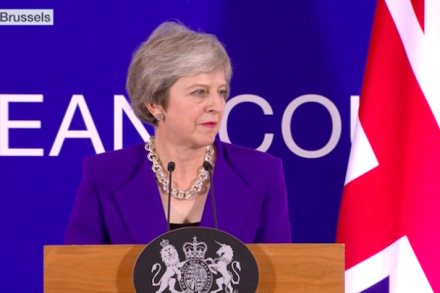
The most testing half an hour of Theresa May’s day won’t be PMQs. Instead it’ll come this evening when she addresses EU leaders on Brexit. Jeremy Corbyn did, though, go on Brexit. The Labour leader rightly identified the December joint report, which Theresa May agreed to, as her biggest area of weakness. Much of what May now says is unacceptable when it comes to Northern Ireland flows from that document. But, as is so often the case, his questioning wasn’t forensic enough. He didn’t pin the Prime Minister down or follow up on her answers. This was a fairly low-key session of PMQs. John Bercow spoke less than usual, perhaps a product of the controversy following the Cox report.

Theresa May’s Mufasa becomes a problem for Downing Street

From our UK edition

Has Theresa May's Mufasa just transformed into No 10's most troublesome minister? Geoffrey Cox – the Attorney General – shot to the public consciousness this month thanks to his star turn as the warm up act for May at Conservative party conference. The seasoned QC gave a barn-storming speech (which drew Lion King comparisons) calling for his fellow Brexiteers to get behind May and prepare to compromise in their quest for a good deal for the UK. As regular Coffee House readers will be aware, this was the second time Cox had thrown May a lifeline. Prior to his appointment to the Cabinet, the Conservative MP demonstrated his loyalty to Theresa May at a difficult 1922 committee after Boris Johnson had resigned over Chequers by defending the Prime Minister’s plans.

Margaret Beckett puts her foot in it

From our UK edition

It's been a curious day in Parliament after Labour MPs en masse came to John Bercow's defence amid a damning report into bullying in Parliament. Despite the report concluding that the Speaker is among those who should consider their position, numerous Labour MPs have said that he should stay in place. It seems that treating employees well pales in comparison to having a chair sympathetic to your party's Brexit opposition. The majority of Labour MPs (see Steerpike's full roll call of shame) have been vague when it comes to their real intentions. However, in an interview with the BBC, Margaret Beckett has broken rank and offered an honest explanation as to why she and her colleagues want Bercow to stay in place: Brexit – which apparently 'trumps' bullying.

Labour chooses party political interest over tackling Commons bullying

From our UK edition

Why has Labour decided to give John Bercow at least a stay of execution as Speaker? Emily Thornberry was asked about whether Bercow should go following Dame Laura Cox's damning report on bullying and harassment in the House of Commons, and argued that she shouldn't go. She told Sky News: 'I think this is absolutely not the time to be changing Speaker. We don't know for example with regard to Brexit as to what is going to happen, whether there's going to be technically an amendable motion or not, whether it'll be the Speaker's discretion as to whether it is. We do need to have all hands to the deck at the moment.' You have to give Thornberry some credit for being totally honest about Labour's motivation here.

Delays to Universal Credit won’t fix its fundamental flaw

From our UK edition

It's rare that a government pauses the implementation of a flagship policy. There's so much ego involved in these matters that to do so is to admit a failing, rather than merely being sensible. But the government has had little choice but to further delay the roll-out of Universal Credit while it sorts out some of the problems with it. The plan had originally been that a further roll-out to four million people would start in January, with more claimants moving in July. But today the Work and Pensions department confirmed that the July deadline has moved to November as a result of fears across Parliament that those who are already receiving the benefit are severely struggling.

Revealed: the truth about the People’s Vote’s Leave voter

From our UK edition

Last week, Mr S pointed out that many (possibly all) of the celebrities who featured on a People’s Vote video pushing for a second Brexit referendum, had in fact not changed their minds’ about Brexit, but voted Remain all along. And it seems as though Mr Steerpike’s article has touched a nerve. In order to prove that they are not solely made up of malcontent Remainers, the People’s Vote released another video this morning, casting a light on those who had voted Leave in 2016 and have now switched sides.

MPs from across the House turn on Theresa May

From our UK edition

In the Prime Minister's statement to the House, Theresa May did her best to insist that despite an impasse in the Brexit negotiations it was business as normal. However, for all May's claims that the differences between the UK and the EU were solvable, the hostile questions that followed from MPs showed just how hard it would be to get any deal through Parliament. Jeremy Corbyn's attempts to say that the government's 'Groundhog Day' Brexit plans would fail Labour's six Brexit tests were met with laughter and derision. The Leader of the Opposition's shouty performance gave the beleaguered Prime Minister little reason for worry. However, the questions from the backbenchers did.

Can Parliament really end its toxic culture of bullying and harassment?

From our UK edition

How could the sort of bullying and sexual harassment detailed in Dame Laura Cox's report on the treatment of House of Commons staff really have gone on for so long? There were policies in place for dealing with complaints, and on paper everything looked as though it was working well to prevent the rise of the 'serial offenders' that Cox refers to. This was the very defence initially mounted by the parliamentary authorities themselves when the allegations first came to light in the press earlier this year, but Cox's report shows how structures and cultures can be very different indeed.

Brexit is the only thing keeping John Bercow in the Speaker’s chair

From our UK edition

John Bercow’s job is being saved by Brexit. Not just because the Brexit drama means that Dame Laura Cox QC’s damning report into the bullying and harassment of parliamentary staff is receiving less attention than it otherwise would, but also because many MPs are prepared to forgive Bercow’s failings because they think he is the Speaker who’ll give them the biggest chance to influence things if the government and the EU fail to reach a deal. The majority of MPs are opposed to no-deal. I suspect that even if the EU refused to budge an inch from its current unreasonable position, there would still be a Commons majority against it. But with parliament having voted to invoke Article 50, no-deal is the default scenario.

Caption contest: Jeremy Hunt and the Brexit maze

From our UK edition

Will Theresa May's government find a way out of the Brexit maze? As the Prime Minister's backstop plans are deemed a dead end by her colleagues, it looks as though Downing Street are fast running out of options. But could inspiration be found in Jeremy Hunt? The Foreign Secretary took to social media to boast that he and his fellow European foreign ministers had managed to navigate Chevening maze in the rain – making the Brexit negotiations seem comparatively straightforward: https://twitter.com/Jeremy_Hunt/status/1051512481435275265 Captions in the comments.

The Chief Whip can’t take your call right now, please leave a message after the tone

From our UK edition

No one has their finger on the pulse in the House of Commons like the government’s chief whip. To make sure every bill gets through parliament unscathed, the whip has to understand exactly how every MP in the party plans to vote, what they're thinking about the government - and work out how they can get rebellious MPs to change their minds. But it looks like Theresa May’s chief whip Julian Smith has drawn up the drawbridge tonight. The man in charge of relations with backbenchers might just have had enough of talking with his own MPs. The government enforcer posted this picture (without caption) on social media at 9 p.m. tonight: https://twitter.com/JulianSmithUK/status/1051567081177698310 What possibly could the whip be receiving this many calls about on a Sunday night?

Sunday shows round-up: Emily Thornberry defends Labour’s Brexit tests

From our UK edition

Iain Duncan Smith - The PM should put £2-3 billion of extra funding back into Universal Credit Sophy Ridge was joined this morning by the former work and pensions secretary Iain Duncan Smith. Duncan Smith resigned from the coalition government two years ago in protest at a lack of funding for his Universal Credit reforms. With Labour now calling for the policy to be scrapped, Duncan Smith outlined how he felt Universal Credit could be saved ahead of the 2018 budget: https://twitter.com/RidgeOnSunday/status/1051395445958856704?ref_src=twsrc%5Etfw IDS: The government has a really really transformative policy on its hands... If you [underfund it] you lose the great benefit of it and then end up starving people of cash...

Hell week 2.0: can Theresa May cling on?

From our UK edition

If last week was 'hell week' for Theresa May, the next few days could be classed as the Prime Minister's trip to the ninth circle. With problems over the Irish border backstop unsolved, No 10 are fighting fire on multiple fronts ahead of a crucial EU Council meeting on Wednesday. The papers are filled with Cabinet resignation threats, rumoured leadership bids and a warning from the DUP that 'no deal' is now the most likely outcome. The Sunday Times puts the number of no confidence letters with 1922 chair Graham Brady at 44 – if four more go in a confidence vote will follow. Should that come to be and May lose, David Davis is now being talked up (once again) as a caretaker PM over Boris Johnson.

Are we heading for a Salzburg-style smash?

From our UK edition

Sunday night was when the deal on the Irish backstop was meant to be done. But, as I say in The Sun this morning, this now seems unlikely to happen. The UK  and the EU are just too far apart on too many issues. There are two big issues at play. One, whether there should be a UK-wide backstop or one for Great Britain and another for Northern Ireland. I am told that at Thursday’s meeting of the inner Cabinet, ministers were told that the EU has not yet agreed to a UK-wide customs backstop. The second question is whether the backstop should be time limited. One member of the inner Cabinet who attended its discussion on Thursday night tells me that the meeting ‘didn’t really settle anything’. I am told that ‘The PM chaired as opposed to opined’.

Will the Tories have the wit to save Universal Credit – and themselves?

From our UK edition

The row over Universal Credit is a reminder that reforming welfare is the toughest job in politics. The question, right now, is whether it’s too tough – and whether the government, distracted by Brexit and unable to defend its own successes, might give up on – or ‘pause’ – its flagship welfare reform. The UK benefits system governs the lives of millions, and its failures meant that a million people were out of work for every one of the Labour boom years. We ended up with a system where those trying to move from welfare to work, or escape low pay, were keeping just 10p of every extra £1 they earned. And they were forgotten, written off as the ‘hard to reach’.