Tv

How a TikTok dance craze turned into a brainwashing cult

From our UK edition

Because you don’t – I hope – use TikTok you will never have heard of the Wilking sisters. But back in the day (2020) they were huge, their homemade videos of dance routines performed at their suburban Michigan home attracting 127 million views. A year later, it all turned sour. Dancing for the Devil: The 7M TikTok Cult opens with one half of the sibling duo, Melanie, talking tearfully about her terrible loss. You think at first that Miranda has died. But no, it’s almost worse, for Miranda has become a living ghost – still present on social media, but dead to her family and friends, and unrecognisable from the girl-next-door she used to be. She has been sucked into a religious cult called the Shekinah Church.

I worry Romesh Ranganathan might not have enough work

From our UK edition

Let’s say, for the purposes of this joke, that I was recently staying in a hotel and kept hearing through the wall a voice shouting, ‘Yes! Yes! Yes!’ At first I assumed it was someone having sex – but I later found out that the next-door room was occupied by Romesh Ranganathan’s agent. This year’s Comic Relief featured a W1A sketch where one of the gags was about how Ranganathan now presents everything on television. But the truth is, apart from that sketch, his only TV gigs so far this year have been presenting The Weakest Link, presenting the Baftas, co-presenting Rob & Romesh Vs…, co-writing and starring in the sitcom Avoidance as well as guest appearances on QI and Would I Lie to You?.

BBC1’s new Rebus is the kind of TV detective they just don’t make any more

From our UK edition

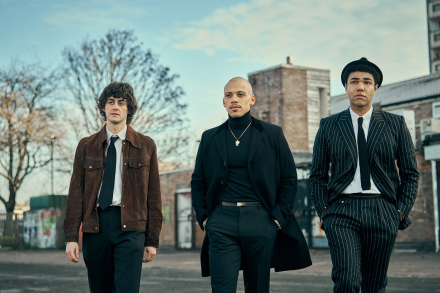
Imagine a new series of Morse in which the real-ale-quaffing, jag-driving opera buff is turned into a speed-snorting mod on a pimped up Lambretta. Or – this one I’d actually like to see – jeune Poirot, featuring a clean-shaven habitué of fin-de-siècle Brussels absinthe dives. This may give you an inkling as to how upset one or two Rebus fans are about the Edinburgh detective’s latest TV incarnation. Confusingly titled Rebus – as opposed to, say, Punk Rebus or Wee Rebussie – the series depicts a protagonist quite a bit younger than his former TV incarnations, grumpy, dishevelled Ken Stott and a mite-too-smooth John Hannah.

Nowhere near as miserable as I remember it: The Beatles – Let It Be reviewed

From our UK edition

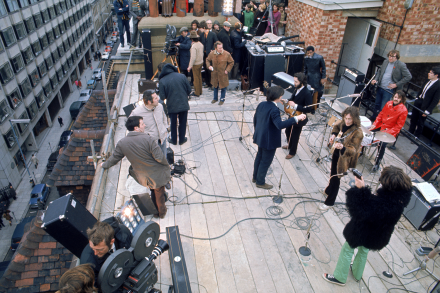
Beatles lore has long held that the film Let It Be was a depressing portrait of the band falling apart. According to the same lore, that’s why Peter Jackson’s Get Back was such a revelation. Revisiting Michael Lindsay-Hogg’s footage of the group at work in January 1969, Jackson discovered there was far more joy around than anyone suspected – including the surviving Beatles. Yoko remains a darkly brooding presence (the revisionism that sees her as benign needs its own revision) All of which, it now turns out, only goes to prove the ever-reliable power of suggestion. I vaguely remember seeing Let It Be on TV in the 1970s, before it disappeared until last week – and finding it as miserable as I already knew everybody said it was. Except that it really isn’t.

Why did C.J. Sansom approve this moronic Disney+ Shardlake adaptation?

From our UK edition

What would C.J. Sansom have made of the Disney+ version of his novel series about 16th-century crookback lawyer Matthew Shardlake? Sadly, because he died just a few days before its release, we’ll probably never hear the full story. But this comment from the show’s producer offers a hefty clue: ‘Chris [Sansom] has been enormously generous and he wants more people to read the books, and this is such a good way.’ Sounds very much like Sansom accepted this atrocity of an adaptation as a necessary evil: his books had been stuck in development hell for nearly two decades (possibly, because his labyrinthine whodunits about monastic reform and court politics in Henry VIII’s England were considered a bit niche for mass audiences) and, in the end, he simply capitulated to moronitude.

How can anyone resist The Piano?

From our UK edition

One challenge facing any novel, drama or film about the Holocaust is to restore its sheer unimaginability. In Thomas Keneally’s Schindler’s Ark – filmed, of course, as Schindler’s List – when news reaches Krakow of what’s happening in Auschwitz, Keneally pauses for some editorialising. ‘To write these things now,’ he says, ‘is to state the commonplaces of history. But to find them out in 1942… was to suffer a fundamental shock, a derangement in that area of the brain in which stable ideas about humankind and its possibilities are kept.’ The Piano shamelessly seeks to move us – and shamelessly succeeds In The Tattooist of Auschwitz, the same fundamental shock is more gradual.

Sordid, ugly and threadbare: Jimmy Carr – Natural Born Killer reviewed

From our UK edition

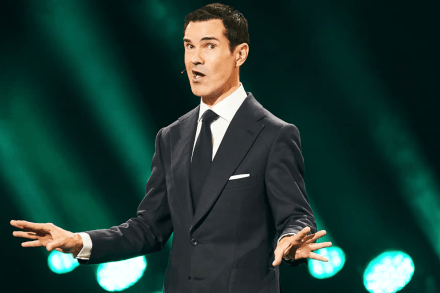
Here’s an offensive joke: ‘Jimmy Carr gets paid to do a Netflix special.’ All right, it’s not original – I nicked it from an online chat forum. And it’s not especially funny. But unlike any of the sordid, ugly, threadbare material in Carr’s excruciating set, it does at least contain a measure of critical insight. Carr vauntingly lists all the ‘did he really go there?’ topics he plans to cover: ‘child abuse, domestic violence, abortion, murder, gun control and trans issues’. But his treatment of these subjects doesn’t feel refreshingly transgressive so much as gratuitously unpleasant. Here’s a sample: ‘Climate change is like my niece. It’s getting hotter every year.

Grey, gloomy, and utterly joyless: Ripley reviewed

From our UK edition

If you’ve spent any time gawping at Netflix over the past half-decade or so, you’ll already know that human culture has reached its final, perfect form. We made a good effort with cave paintings, epic poetry, theatre, literature and the rest of them, but the apex of culture is the bingeable, episodic rabbit-hole Netflix documentary about a sociopathic liar. Maybe we love con artists because they’re the only people still selling something new There have been so many of these now that it’s difficult to tell them apart. There was the one about the man who matched with women on dating websites by pretending to be the playboy scion to an Israeli diamond fortune – but who was really just spending the money he’d conned out of his previous girlfriend.

Dramatic, urgent and intriguing: BBC1’s This Town reviewed

From our UK edition

After conquering the world with Peaky Blinders (and before that by co-creating Who Wants to Be a Millionaire?), Steven Knight was last seen on British television giving us his frankly deranged adaptation of Great Expectations. Happily, he’s now returned to form with a show that, while not a retread exactly, is definitely Peaky-adjacent. In This Town we’re back in a Birmingham – this time in the 1980s – that’s rundown, riven, violent and soul-stifling, yet that Knight presents with unmistakable love. Nor, once again, is there any escaping the overwhelming power of the family as a blessing and a curse.

Compelling and somewhat heartbreaking: Girls State, on Apple TV+, reviewed

From our UK edition

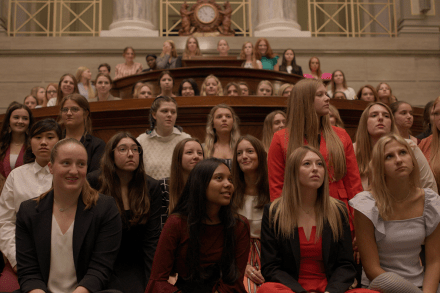
Here’s a fun thought experiment: instead of entrusting the future of American democracy to one of two old men, what if you put it in the hands of 500 teenage girls? Girls State, the sister documentary to Amanda McBaine and Jesse Moss’s award-winning 2020 film Boys State, follows the events of a week-long civic engagement camp where high-schoolers create an all-female democracy from scratch. A feminist manifesto is much easier to compose than a real solution to culturally ingrained inequality Girls State and Boys State programmes have given argumentative American teens an education in the necessary evil of politics since the 1930s.

Fans of torture, dolly birds and fat lines of cocaine will love The Gentlemen

From our UK edition

Guy Ritchie only does one thing but he does it very well: slick, violent, sweary, black comedy capers about the unlikely intersection between toffs and the criminal underworld, invariably starring ex-footballer Vinnie Jones as a loveable tweed-wearing thug. If you were hoping for something different from The Gentlemen, prepare to be disappointed. If, on the other hand, you can never quite get enough of shotguns, stately homes, frantically crowbarred-in but still-quite-amusing one liners, rival gangsters, vast quantities of claret (in both vinous and sanguinary forms), torture, dolly birds, travellers, slightly annoying solecisms, fights, gambling and fat lines of cocaine, then this will be your cup of tea, guvnor, and no mistake, innit, what ho, old chap.

Was Carrie Fisher really ‘a genius’?

From our UK edition

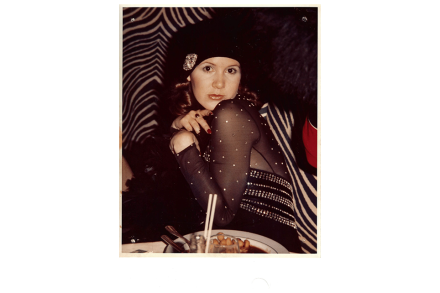
‘People throw the word “genius” around a lot,’ said a talking head on BBC2 this week, ‘but she was a genius, truly.’ If it wasn’t for the heading on this column, I suspect it might have taken you a while to guess the unquestionable genius being referred to here. But then again, for Carrie Fisher: A Life in Ten Pictures, considered analysis and fear of hyperbole would only have got in the way. Not that this prevented the programme from being inadvertently revealing. Granted, if you wanted to know the full story of Fisher’s life – including the fact that she married Paul Simon – you’d have been better off with Wikipedia.

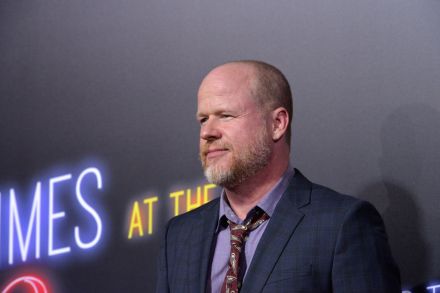
The loss of Joss Whedon

Cheerleaders save the world. Vampires gain souls. Ellen Ripley comes back to life as a half-alien. In the case of Willow Rosenberg, Buffy the Vampire Slayer’s geeky, lesbian BFF, she’s a good witch one year, Southern California’s equivalent of the Wicked Witch of the West the next, and only a year later, the key to stopping an apocalypse. One season, you’re good; the next, you’re bad; then, finally, you’re the savior. This is the world Joss Whedon envisions across six television shows (Buffy the Vampire Slayer, Angel, Firefly, Dollhouse, Marvel’s Agents of S.H.I.E.L.D.

Whedon

Evocative and immaculate: Netflix’s One Day reviewed

From our UK edition

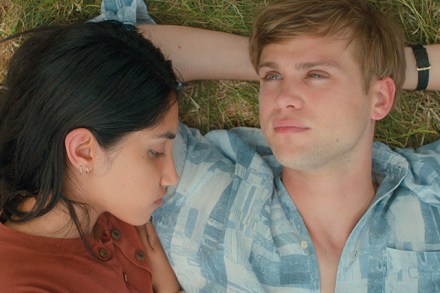
One Day is a bestselling novel with a simple but effective premise: a delightful, made-for-each-other couple meet on their last day at university, narrowly miss getting off with one another, then continue narrowly to miss getting off with one another every year for 14 years until finally, eventually they do. Actually, I’m not sure about the pay off. I never got round to reading David Nicholls’s book, nor did I catch the poorly received movie version with Anne Hathaway playing the love interest. But I’m keeping my fingers crossed and shall be very disappointed if the dénouement doesn’t deliver what the plot seems to be promising. All right, so the episodes – each set, as in the book, on the same date in successive years – are only half an hour long.

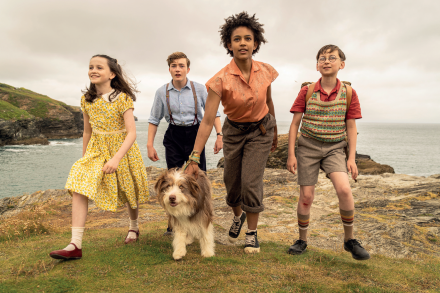
CBBC’s The Famous Five shows you can update a classic without trashing it

From our UK edition

The new Doctor in Doctor Who has blond hair, blue eyes and a firm handshake, dresses in a splendid red coat and has an exciting catchphrase: ‘Hounds are running! Tally ho!’ No, not really. The new Doctor is so very much what you’d expect the new Doctor to be like that you can guess without my telling you. And it’s not that I think that Ncuti Gatwa is going to be bad as the Doctor. On the contrary, from what little I’ve glimpsed of him so far, he seems charismatic, energetic, and fun. But I do wish the BBC commissars responsible for the series would try to make their social programming agenda a bit less insultingly obvious. Like all the best propaganda, Doctor Who is often gripping and visually enticing ‘It’s not aimed at you.

Bowling Alone reads like a nostalgic look at the good ol’ days

In the Phetasy.com book club, we recently read the famous social science tome, Bowling Alone, by Robert Putnam. In it he examines the decline of social capital across various facets of American life. Based on his 1995 essay of the same title, the book was groundbreaking when it appeared in 2000. Putnam had noticed a trend: Americans were spending more and more time alone. His book analyzed the data and contemplated what it meant for our democracy and humanity. Although his observations were a harbinger of the oft-cited “epidemic of loneliness” we are currently living through, in our post-Trump, post-pandemic pre-maggedon reality, Bowling Alone reads like a nostalgic look at the good ol’ days. Days when people still interacted at all.

bowling alone

Still the best thing on TV: Apple TV+’s Slow Horses reviewed

From our UK edition

Slow Horses is the best thing on television. And it’s now so successful and popular it can afford to launch series three with a sequence worthy of James Bond: Istanbul location budget; spectacular chase sequences involving cars and speedboats with some thrillingly dangerous manoeuvres round a huge container vessel; a beautiful, immaculately dressed female agent meeting (spoiler alert, though to be fair you can see this one coming a mile off) a tragically sticky end. Except it’s better than Bond – not that difficult these days, it must be said – because it is missing all that grim portentousness, over-earnestness and pomposity. The cars are beaten up and gadget-free; the stunts look plausible; and the agents behave like real human beings.

A calculated insult to the viewer: Channel 4’s The Princes in the Tower – The New Evidence reviewed

From our UK edition

Major spoiler alert: if you don’t want to know the ending of The Princes in the Tower: The New Evidence, skip the next paragraph. Still with me? Good. The answer is no, Richard III did not order the killing of the two princes. That was just Tudor propaganda. Both boys, the sons of Edward IV, survived, and escaped to Europe. Thence, supported by their aunt Margaret of Burgundy, they made separate, ultimately unsuccessful attempts to regain the throne for the Yorkists, one under the name Lambert Simnel, the other as Perkin Warbeck. I’m telling you this not to be a spoilsport but to spare you 82 minutes of valuable life. Yes, the bare-bones story is fascinating, and researcher Philippa Langley deserves huge credit for her discoveries.

Riveting and heart-wrenching: BBC1’s Time reviewed

From our UK edition

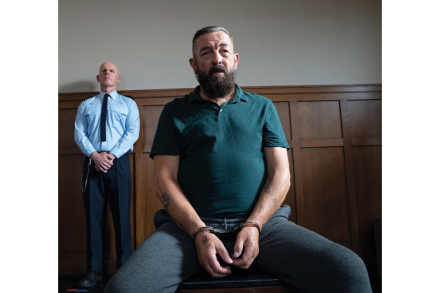
‘Only with women’ is a phrase used by more cynical TV types for a show that takes something that’s been done before with men, but by changing the gender of the characters can pose as ground-breaking. It sprang to mind this week when both of BBC1’s big new dramas unblushingly took the only-with-women approach; the problem for the cynics being that the programmes themselves are rather good. Or, in the case of Time, overwhelmingly so. Jimmy McGovern’s original 2021 series – a heart-wrenchingly effective portrait of life in a male prison – deservedly won a Bafta. Now he’s back to give us a heart-wrenchingly effective portrait of life in a female one.

Only goodwill will get you through this reboot: Paramount+’s Frasier reviewed

From our UK edition

Remember the groans of dismay, possibly including your own, which greeted John Cleese’s announcement in February that he was reviving Fawlty Towers? Happily, there appears to be much more goodwill behind the return of Frasier – the bad news being that, judging from the first three episodes, it might well need it. Kelsey Grammer’s entrance – 39 years after Frasier Crane showed up in Cheers – received a huge audience ovation. All references, however straightforward, to his earlier incarnations got a guaranteed laugh. Nonetheless, for those of us desperately hoping the new series won’t be a letdown, the result so far has required an increasingly effortful keeping of the faith.