Tv

Better than Hollywood: Netflix’s The Eternaut reviewed

From our UK edition

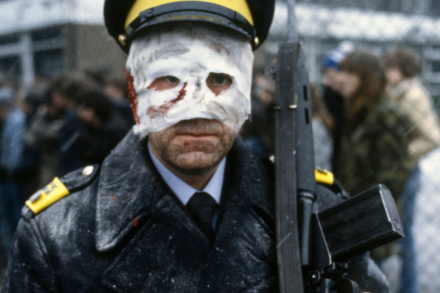
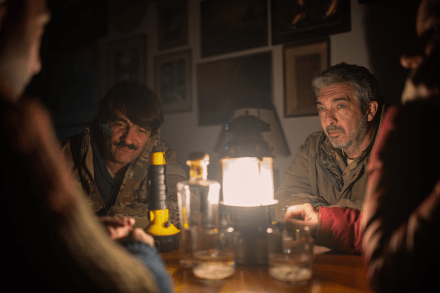
‘Next time you do a review, you’ve got to find something you like. You’ve been far too negative,’ said the Fawn. ‘Well, it’s hardly my fault if everything on TV is crap at the moment. I can’t just call up good stuff to order,’ I said. ‘Try,’ said the Fawn. Luckily – and unwontedly – Netflix has come to my rescue with a dystopian sci-fi series called The Eternaut. Though I’m not totally convinced by the name – a conflation of ‘eternity’ and ‘astronaut’ – it’s a very enjoyable watch, which confirms, yet again, Delingpole’s Iron Law of Television: always go for the shows with subtitles. This one is from Argentina, based on a graphic novel written by Hector German Oesterheld with artwork by Francisco Solano-Lopez.

Confection of sex, bad history and nonsense: Apple TV+’s Carême reviewed

From our UK edition

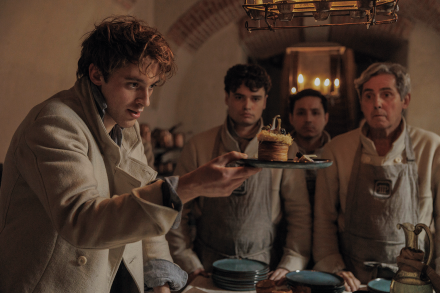
Antonin Carême was known as the ‘chef of kings and the king of chefs’. His patrons and employers included Talleyrand, Napoleon, the Prince Regent, Tsar Alexander and the then richest man in France, James Rothschild. He popularised the tall ‘toque’ hat worn by chefs; he either invented or perfected culinary classics including the vol-au-vent, the profiterole and the mille-feuille, as well as sauces including velouté and béchamel. All this he managed to achieve despite having come from a desperately poor background, raised in a shack in revolutionary France and sent off as a young lad to help make ends meet as a kitchen boy and later as apprentice to Paris’s best patissier. A fascinating rags to riches story, you might think.

How come the only Palestinians Louis Theroux met were non-violent sweeties?

From our UK edition

Louis Theroux: The Settlers was never likely to be a programme with much of a narrative arc – and so it proved. In the first 30 seconds, Louis put it to a Jewish householder on the West Bank that his house was ‘quite deep in what are called the Palestinian Territories’. ‘You call it the Palestinian Territories,’ the man replied. ‘I call it the heart of Judea.’ And that, on the whole, was that. Louis travelled from one Jewish settlement to another, doing his best to challenge the inhabitants with his faux-naif questions and impressive range of quizzical expressions. And yet, of course, none of them budged an inch.

How fun is it being part of an Amazonian tribe? 

From our UK edition

Tribe with Bruce Parry ran for three fondly remembered series in the mid-2000s. Now, upgraded to Tribe with Bruce Parry, it’s back, still championing traditional ways of life – including that of a TV presenter who lives among remote peoples, takes loads of drugs with them and marvels at their closeness to nature. Sunday’s episode featured some other age-old practices, too. Parry, for example, duly travelled up an Amazon tributary to a village where the locals were initially suspicious of ‘the white man’. He then won them over by mucking in with the chores and eating plenty of insects and grubs. His companions this time were the Waimaha, who live in the Colombian rainforest, communing with its spirits.

Dope Thief is a cut above your usual inner-city crime-drama porn

From our UK edition

I really had no interest in watching Dope Thief. It’s another of those crime dramas set in a bleak-looking city – possibly there are some pretty parts of Philadelphia but we only get to see the bad bits – where everyone seems to be on welfare or a drug dealer, or both, everything looks washed out, grimy and grey, and where you could die horribly any second. And I get quite enough of all this on my increasingly rare trips to London. But I was desperate. I’ve finished the second season of Severance (very good; definitely worth the effort); White Lotus will only see you through one night a week; season three of Reacher is so dismal it doesn’t even qualify as ‘so bad it’s good’. So I needed something else and the online reviews for Dope Thief looked decent.

Netflix’s Adolescence is seriously flawed

From our UK edition

Bradley Walsh: Egypt’s Cosmic Code may sound like a pitch by Alan Partridge – but, impressively, the programme itself manages to be even odder than its title. Naturally, Tuesday’s opening episode began with Bradley emphasising that his interest in Ancient Egypt long predates his signing of the contract for the show. Indeed, it was back when he was an apprentice at Rolls-Royce that he first realised ‘whoever built the pyramids, it certainly wasn’t the Ancient Egyptians 4,500 years ago’. Sharing his scorn for this discredited idea was Tony McMahon, an ‘investigative historian’ who showed up now and again to say bonkers things in an authoritative and sonorous manner.

I’m warming to Meghan Markle – only joking

From our UK edition

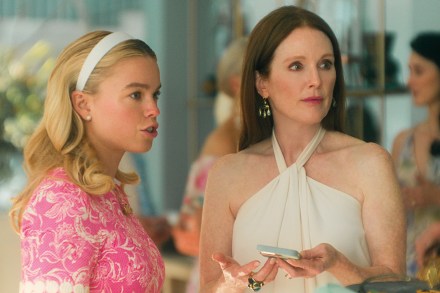
You know that urge when you’ve got friends coming for the weekend and you just have to spend the previous week putting together all the essentials for a successful stay: personalised bags of truffle-flavoured popcorn and pretzel nibbles for their bedside; hand-blended, sensually curated bath salts; layer cake flavoured with honey from your private hives; etc? Well, if you’ve never had that urge, I’ve got some disappointing news: With Love, Meghan may not be the programme for you. Wait, no, actually, it might yet. But not for pleasurable reasons. Only for car crash-TV reasons. It’s like the lifestyle-TV equivalent of one of those rare public appearances by Mark Zuckerberg where he pretends he is not a robot.

Anjelica Huston is comprehensively upstaged in the BBC’s new Agatha Christie

From our UK edition

Coincidentally, two of this week’s big new dramas began with a fourth wall-busting declaration of their narrative methods. At the start of Towards Zero, BBC1’s latest Agatha Christie adaptation, a man we later discovered to be a lawyer addressed the camera. ‘I like a good detective story,’ he told us. ‘But they begin in the wrong place. They begin with the murder’ – which should instead ‘come at the end of a long chain of cause and effect’. Get Millie Black opened with a voice-over explaining that ‘This is just another story about Jamaica… But like all stories in this country, it’s a ghost story’. As it transpired, both programmes followed their own prescripts – but in one case, with distinctly mixed results.

How Armando Iannucci lost his edge

From our UK edition

The BBC celebrated one of its own on Monday night. Armando Iannucci was treated to a fawning retrospective by Alan Yentob, and it opened with a crass piece of TV trickery. ‘Armando Iannucci is not an easy man to pin down,’ said Yentob, as if his quarry were a master criminal or an international terrorist. ‘For ten years, I’ve been trying to talk to one of Britain’s greatest comic talents.’ Iannucci, in his heyday, would have enjoyed dissecting this sort of bombastic hyperbole. This week, he connived in the hoax. Yentob ran through Iannucci’s CV. He was raised by affluent Glaswegians (plenty of colour photographs suggesting a comfortable income), and after studying at Oxford he moved to BBC radio.

I think I’ve found the perfect TV series

From our UK edition

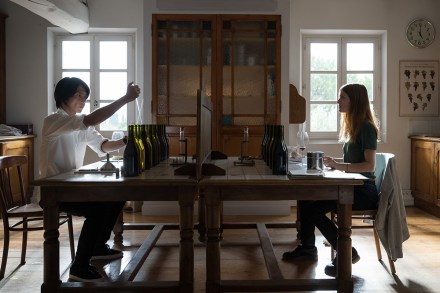
Drops of God is one of those gems of purest ray serene that cable TV prefers to keep hidden in its deep unfathomed caves because it thinks you want something more lowbrow. Try finding it by accident: you won’t. When I looked for it on Apple – which doesn’t have all that many shows – I had laboriously to type in its name. It wasn’t offered to me in the recommendations. If I hadn’t been tipped off by my friends Candy and Diarmuid, I would never have seen it. I had been lamenting, as I often do, the dearth of stuff to watch on TV that doesn’t put you through the emotional wringer.

The White Lotus is off to a shaky start

From our UK edition

The White Lotus, now back for a third series, could perhaps be best described as Death in Paradise for posh people. Most obviously, this is because its plots revolve around murders in an idyllic location – only with a far bigger budget, a much starrier cast and several episodes per story. But there’s also the fact that it follows the same pattern every time. So it was that season three began this week, rather like its predecessors, with some lovely scenery, a dead body and a caption reading ‘One week earlier’. After that, we duly watched a bunch of rich, good-looking Americans arriving at a luxury White Lotus resort where they were welcomed by the resolutely smiling staff and a nervous manager, before gazing round and marvelling at the beauty of it all.

Is work really more fun than fun?

From our UK edition

Wouldn’t it be marvellous if instead of going to work every day we could contract out the tedium to avatars of whose daytime activities we could remain blissfully unaware? This, in essence, is the premise of the dystopian drama Severance, but I’m not sure it’s a fantasy many of us actually nurture. Noël Coward once said: ‘Work is more fun than fun.’ And though I wouldn’t push it quite that far – it would be true only if you were a huntsman or a Master of Fox Hounds – I think most of us would be pretty bereft without the adrenaline buzz of deadlines, the thrill of office flirtations, the rapier play of banter, the juice of gossip and the creativity of fiddling your expenses and getting one over on your fatuous, irritating, know-nothing superiors.

Stately, sly and well-mannered: BBC1’s Miss Austen reviewed

From our UK edition

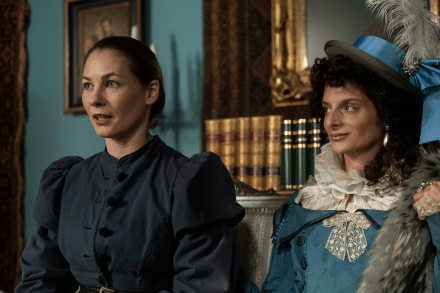
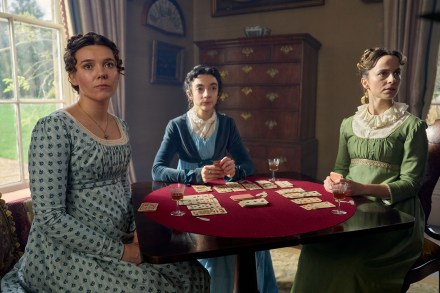
It is a truth universally acknowledged that lazy journalists begin every piece about Jane Austen with the words ‘It is a truth universally acknowledged’, so I’ll fight the temptation. In any case, the Miss Austen at the centre of BBC1’s new Sunday-night drama isn’t Jane, but her beloved sister Cassandra, best known for destroying most of Jane’s letters. Given that this has rendered our knowledge of the woman’s biography tantalisingly sketchy, Cassandra has attracted her fair share of resentment from Janeites. But rather cunningly, Miss Austen both exonerates her and takes full advantage of the sketchiness: high-mindedly questioning our entitlement to snoop into Jane’s private life, while feeling free to speculate on what that private life might have been.

What a sad thing Strictly Come Dancing has become

From our UK edition

Those of a violently masochistic disposition would have heartily enjoyed the Saturday matinée of the Strictly Come Dancing: Live Tour at the Utilita Arena, Birmingham. Talent loses out to glitter and hype, as shrieking vulgarity envelops all What deliciously perverse pleasure was to be drawn on this bleakly cold afternoon from the vast, snaking queues, the blared injunctions from the Tannoy, the drear concrete ambience, the over-priced merchandise tat and the chaos of the ultra-processed catering outlets – not to mention the £15 charge for leaving an empty backpack in the cloakroom. And then there was the show.

Not a complete waste of time: Netflix’s La Palma reviewed 

From our UK edition

Netflix is the television equivalent of pasta and ready-made pesto: a slightly desperate but acceptable enough stand-by when you’ve got home late, you haven’t time to prepare anything more nutritious and at least it fills the gap without too much pain or fuss. It is an adamantine rule of television that foreign-language dramas are always superior La Palma is classic Netflix. You wouldn’t necessarily rave about it to your friends. But if, as I do, you have one of those wives who gets really pissed off if there’s not a programme ready and waiting to be viewed while supper’s still hot and, in a panic, you click on La Palma, you won’t feel at the end of the final episode like your time has been totally wasted. This is due, in part, to the location.

Irritating but watchable: American Primeval reviewed

From our UK edition

American Primeval should really be called Two Incredibly Annoying Women In The Wild West. Yes, the first title is more clickbaity, whetting the prurient viewer’s appetite for the savage, primitive violence that splatters over every other scene. But the second is more accurate. Not since Lily Dale in Trollope’s Chronicles of Barsetshire have I rooted so fervently for the protagonist to meet a sticky end as I have with this series’ two feisty heroines. The Wild West depicted in American Primeval is grotesquely, mindlessly violent One, Sara Rowell (Betty Gilpin), is a mother on the run from the law.

Playing Nice is beautifully done – but they miscalculated the opening scene

From our UK edition

There must have been a time when slow-burn psychological thrillers didn’t start with a scene of high drama followed by a caption that reads ‘Three months earlier’ – but if so, it’s getting hard to remember it. The latest programme to deploy the tactic was Playing Nice, which began with James Norton running towards the sea screaming ‘Theo!’ as a child’s body bobbed, face-down, in the waves. He was next seen, post-caption, laughing with his pre-school son in various picturesque Cornish locations while using the word ‘buddy’ a lot. Not to be outdone in the great-parent stakes, his wife also piled on the cuddles for little Theo. Before long, Miles had developed the habit of glowering menacingly when nobody was watching This idyll, however, didn’t last long.

No one will convince me that Keira Knightley can fight: Black Doves reviewed

From our UK edition

If your heart sinks at the prospect of a thriller series starring Keira Knightley as a highly trained undercover agent with unfeasible martial skills, join the club. The reason I was drawn to Black Doves was when I realised it had been written by that master of tongue-in-cheek, ultraviolent, popcorn TV, Joe Barton (Giri/Haji). However disappointing Knightley might be, I thought, Barton’s mordant humour, surreal imagination and sassy dialogue would more than ease the pain.

Leavisites should stay away: Sky’s Bad Tidings reviewed

From our UK edition

Reviewing Sky’s The Heist before Christmas last year, I suggested that all feature-length festive television dramas begin with credits announcing a starry cast and end with a redeemed protagonist gazing up at some suddenly falling snow. Reviewing Sky’s Bad Tidings this year, I can rather smugly report that there’s no need to revise my theory. But just in case that isn’t enough television tradition to be going on with, here we also get that other Yuletide stand-by: the characters’ plans for the big day go hideously wrong, yet they still end up having the Best Christmas Ever. Viewed pleasantly drunk, I concede, Bad Tidings might just hit the spot The two main stars are Lee Mack and the man with a serious claim to be the breakout celebrity of 2024.

Dune: Prophecy is much worse than you will believe possible

From our UK edition

Do you remember that nagging sense of mild disappointment as you sat through Dune 2? You’d been impressed by Dune: bit of a recondite plot if you hadn’t read the book but great to look at, with an austere art-house aesthetic, like Star Wars for people with an IQ. But then the sequel sold out. It turned a minor character from the book into the heroine of a stereotypical Hollywood romance, which not even the excitement of the sandworm-riding scenes could quite redeem. No disrespect to Brian Aldiss,but I think of ‘Brian’as a sort of joke name Anyway its latest screen incarnation, Dune: Prophecy, is worse, much worse.