Travel

Dispatch from an unloved borough

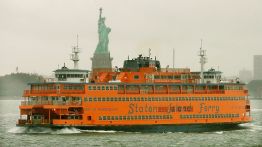
Once a year, Nick, a surgeon who lives on the Upper West Side of Manhattan, visits Staten Island. Almost as soon as he arrives, he literally runs back to where he just came from. Nick is a marathon runner — he’s done New York seven times — and like millions of similarly masochistic athletes and wannabes, he’s lined up at the mouth of the Verrazzano Bridge, the eastern edge of New York City’s least exalted borough, with the sole aim of getting back to more familiar territory as briskly as his legs can carry him. “Of course I don’t have anything against Staten Island,” he explains. “There’s just not that much of a reason to go there.” Many others, it turns out, feel the same. I moved to Manhattan just over four years ago.

Staten

Swapping aprés ski for aprés spa 

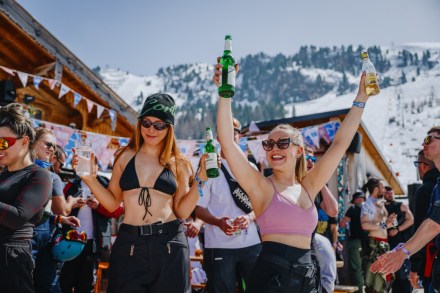
“Welcome to your thirties,” my friend Rich roared, throwing open the balcony door leading onto our hotel room’s private loggia. The sound of gushing water filled the room as I flopped, exhausted, onto the bed. The Ziller River rushed through the valley below, fast. Verdant hills stretched upwards to create a preposterously bucolic scene, practically begging for your best Julie Andrews impression, arms outstretched. I laid there, and took it in through the window. I pretended I didn’t mind that I was missing the party, Snowbombing Festival raging on in Mayrhofen town. The “Snolympics?” Didn’t sound like much fun. Pond skimming on skis, surely soggy and impractical.

Instead of stomping on the bar in our ski boots, we’d zipped home in a taxi to ZillergrundRock Luxury Mountain Resort, with high hopes

How to solve ‘range anxiety’

From our UK edition

In ‘The Adventure of Silver Blaze’, Sherlock Holmes mentions ‘the curious incident of the dog in the night-time’. ‘But the dog did nothing in the night-time,’ argues Inspector Gregory. ‘That was the curious incident,’ replies Holmes. You never hear anyone say: ‘We finally stumbled across a charming little petrol station nestling among the trees’ Along with Donald Rumsfeld’s ‘Unknown unknowns’, this is perhaps the most famous example of what you might call ‘perceptual asymmetry’. We mostly act instinctively based on what is salient, giving little thought to what is easily overlooked. It is hence surprisingly easy to change what people do simply by changing what they pay attention to.

Alone and defenceless: the tragic death of Captain Cook

From our UK edition

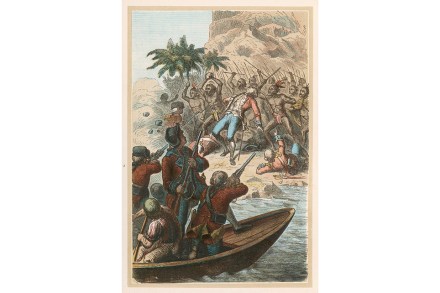
The principal purpose of Captain James Cook’s last voyage, which began in Plymouth on 12 July 1776, was to discover the elusive Northwest Passage. Attempts had been made before, in vain, from the Atlantic, but this time it would be from the west, from the Pacific.  On the way, Cook was to return an Anglicised Polynesian named Mai to Raiatea, ‘a ragged volcanic island’ about 130 miles north west of Tahiti. Mai takes up much of Hampton Sides’s narrative, offering ‘a poignant allegory of first contact’, before being deposited home with his cargo of English domestic farm animals and his suits.  Prior to that, Cook had investigated, in New Zealand, the massacre of ten crew members of the Adventure, the Resolution’s sister ship on his previous voyage.

Following Napoleon: my exile in St Helena

From our UK edition

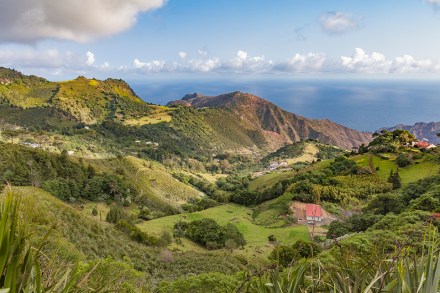
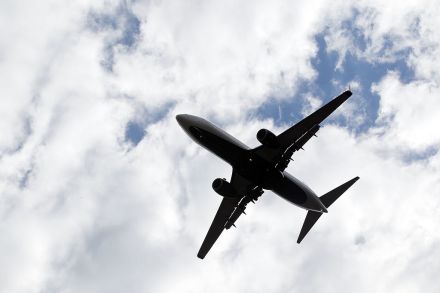
St Helena In an attempt to escape from the world, I have come with friends to St Helena. It is quite a good place for the exercise. Until a few years ago the only way to get to the island was a five-day boat voyage from Cape Town. Shortly before Covid, an airport for this British overseas territory was finally completed at UK taxpayer expense. To protect some local insects the runway was put at a slightly wrong angle, making it difficult – sometimes impossible – to land. The weekly flight from Johannesburg therefore refuels in Namibia in case landing is impossible and the plane has to about-turn. A lifesize statue of Napoleon stands on the balcony.

Was Marco Polo a ‘sexpat’?

From our UK edition

25 min listen

When I recently came across a book review asking the question ‘was Marco Polo a "sexpat"?’, I knew I had to get its author on to, well, discuss this important question some more. The 13th century Venetian merchant Marco Polo’s account of China was one of the earliest and most popular travelogues written on the country. Polo spent years at the court of Kublai Khan, the grandson of Genghis, and whose family founded the Yuan dynasty in China. My guest today, and the author of that book review, is the historian Jeremiah Jenne. Jeremiah has lived in China for over two decades, and he is also the co-host of the fascinating podcast Barbarians at the Gate, all about Chinese history.

The true valour needed to go on pilgrimage in Britain

From our UK edition

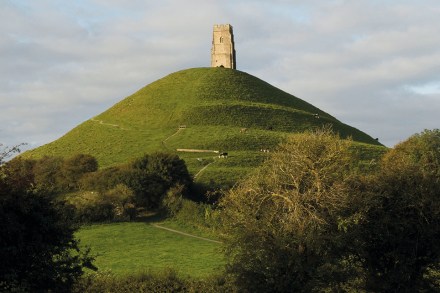
Every summer solstice, thousands of people gather at Stonehenge to greet the longest day of the year. Judging from the druids in the crowd, you might think this tradition dates back to pagan Britain. In fact, it was started in 1974 by members of a hippy commune who decided to host a free festival among the stones. The Pope, the Dalai Lama and John Lennon were invited, along with a handful of British Airways hostesses. These ‘interactions between ancient and modern faith’ fascinate the travel writer Oliver Smith. On This Holy Island is a journey across Britain, telling the story of a dozen pilgrim destinations and the spiritual seekers drawn to them. As well as recounting the history of these places, it explores how later generations have re-enchanted them.

Don’t let climate activists stop you from traveling

A decade ago, when I first started contributing to the New York Times’s annual “52 Places to Go” list, the top user comments were about the destinations: Why was Calcutta chosen but not Chattanooga? This year, in a sign of the times, the most popular comments suggest that we should all just stay home to save the planet. The climate-obsessed among us are falling out of love with travel, particularly with the idea of exploring far-off places where your carbon footprint is greater. If their movement gains steam they won’t save the world, but they might well wreck the global economy and deprive themselves and others of much-needed perspectives and experiences that make the world a better place.

travel
Montréal

Montréal serves up a surprising array of off-season delights

There’s cold, then there’s winter-in-Canada cold. The kind where I’m jamming hand-warmers into my ski gloves — yet still somehow my fingers go numb — and snowflakes keep their intricate patterns as they scatter over my clothes (back home in comparatively balmy England, they’d melt instantly). But what did I expect? I’d made it my New Year’s resolution to travel off-season. Think Rajasthan in the summer monsoon, Sicily’s midwinter citrus harvest, Portugal’s Atlantic Coast when the record-breaking waves roll in come November. I’m not the only one with this idea.

goose

My first family goose hunt

It's a slow Sunday in Paducah, Kentucky, the day before our snow goose hunt. Morning Mass down the road, where the priest quizzingly asked where we were from. Brunch with my husband’s family at a cozy café. Chocolate cake with that crackly boiled icing and fresh coffee in the late afternoon at his aunt and uncle’s house. It isn’t until close to dinnertime that we pack up our bags and hit the road for the bootheel of Missouri, where we will hope to catch a few hours of sleep at our hotel before we meet our local hunting guide. About halfway through our drive, the phone rings with bad news. Our guide, Scooter, spent the day scouting and could find no signs of geese at his usual spots.

‘You can stare at a cow you will soon eat’: The Newt, Hadspen, reviewed

From our UK edition

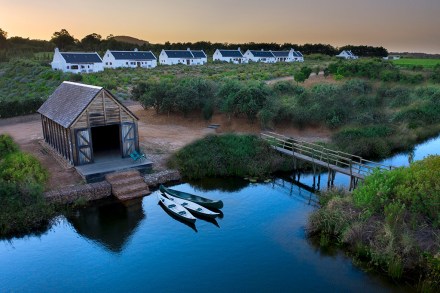
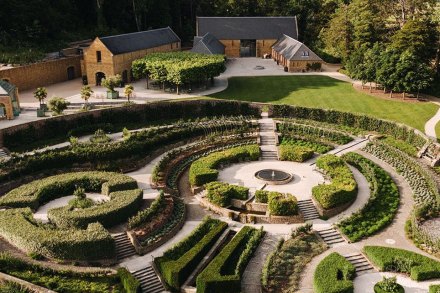
The Newt is an idealised country house in Somerset which won the World’s Best Boutique Hotel award last year. It is small, beautiful and mind-meltingly expensive, even for the Bruton Triangle and its mooing art galleries. Poor Somerset! It never wanted to be monied enough to have a triangle, but the rich make their own mythology. Since they paint every-thing grey – and now green, I learn at the Newt – they need it. A triangle fills the day. The Newt is for people who think that Babington House is stupid (it is) and though the Newt has its own issues – like the King, its taste is almost too immaculate – you never feel that the chief executive of a media conglomerate will bounce past you on a space hopper eating a fishfinger sandwich and shouting into an iPhone.

Megève’s enduring magic

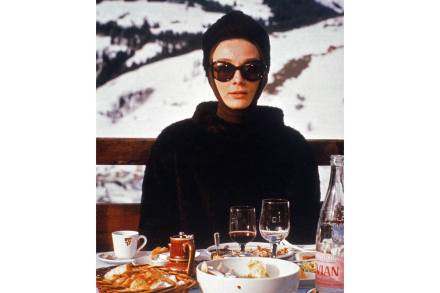
Kitted out in black Givenchy, huge sunglasses blocking out the snow glare, Audrey Hepburn is lunching al fresco in the French Alps when a meet-cute with Cary Grant ensues. It’s the opening scene of Charade, filmed just over sixty years ago in Megève — the chichi winter resort for both Hollywood royalty and true bluebloods during the 1960s. Back then, Brigitte Bardot, Yves Montand and Jean Cocteau were often seen swooping down its pistes. Imagine a snow-dusted Saint-Tropez and you’re on the right track. This medieval market town was hardly destined to become a darling of the beau monde. Megève was something of a backwater (the name even translates to “village in the middle of the waters”) until 1920, when Baroness Noémie de Rothschild spotted its potential.

Megève
Finland

Mökki life and Moomin minutiae in Finland

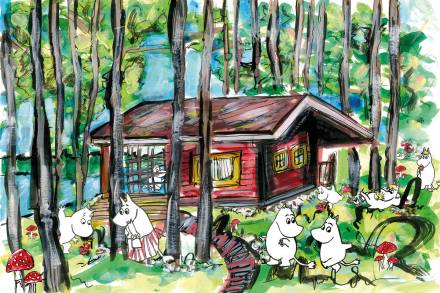
Moomins are synonymous with Finnish life, like saunas, porridge and mökki (summer cottages) culture. The large-snouted white fairytale creatures feature in the Moomin books, which are published in nearly sixty languages. Moomin World, a theme park 100 miles from Helsinki, crawls with tourists come summer — some feat, in a country with roughly twenty-one inhabitants per square kilometer. Moomin merch is ubiquitous too; fans are cult-like in their collection of rare mugs and first editions. Every day, Tove Jansson’s iconography is inked into skin. And it’d got under mine, in a way. In my twenties, a boyfriend’s collection of paraphernalia from a Finnish former partner quelled any curiosity about Jansson’s imaginary oafs (and Finland).

Opening a bottle with… Angela Hartnett

Quizzed on how to assimilate to new cultures, travel writer and celebrity chef Anthony Bourdain once said: “Drink heavily with locals whenever possible.” The “Opening a bottle with…” series is about getting pickled with people far cooler than I am, in new places. To me, booking a ski trip at the start of the year is the ultimate luxury. With my birthday falling on the first of January, when the ball drops, I feel a sense of melancholy. As hangovers descend and diets begin, I want to carry on celebrating.  In European ski resorts, they keep the festivities going well into March. Christmas lights and religious displays stay twinkling. Fresh snow combats the winter blues. Everyone’s happy to share a bottle of good wine.

angela hartnett

‘Is it France? I don’t know’: Hôtel de Crillon, Paris, reviewed

From our UK edition

Hôtel de Crillon sits on the Place de la Concorde, a vast square renamed for bloodshed, then the lack of it – it was the Place de la Révolution, with knitting and bouncing heads. Now it is placid, and the Crillon is the most placid thing in it. No one does grand hotels like the French, except perhaps the Swiss, who have nothing better to do. Hôtel de Crillon was one of twin palaces commissioned by Louis XV before the French butchered his grandson and his wife outside them: it looks like Buckingham Palace but prettier and with possible PTSD. It has been a hotel for 115 years and next to it our Ritz and Savoy look grubby, needy even, but they were built for the bourgeoisie. They have a different kind of grandeur, a kind I prefer.

‘I pity MPs more than ever’: the Cinnamon Club, reviewed

From our UK edition

The Cinnamon Club appears on lists of MPs favourite restaurants: if they can still eat this late into a parliament. It lives in the old Westminster Library on Great Smith Street, a curiously bloodless part of London, and an irresistible metaphor wherever you are. When once you ate knowledge, you now eat flesh, but only if you can afford it. Now there is the Charing Cross Library, which lives next to the Garrick Theatre, and looks curiously oppressed. Perhaps soon it will be a falafel shack and knows it. There is also the Central Reference Library, which could be a KFC, and soon will be. Public spaces are shrinking. They will all be online soon, and we will see how that goes. (It will be bad.) The Cinnamon Club, which identifies as ‘fine dining’, seeks finesse. What for?

The vagabond spirit of Mirleft, Morocco’s surf nook

At first, the sleepy little town of Mirleft looks like all the others on the 600-mile trek through the sands of the Sahara: half-gravel, half-concrete sidewalks, faded paint, brightly painted schools and the minaret of a new mosque jutting up toward the sky. But a mile past Mirleft’s dusty high street lie cliffs of California proportions — with swells to match. The cliffs arch down at a near forty-five-degree angle and into meaty waves rolling toward a point break. It’s here that a group of ten French and German surfers have joined up with Issam Surf School, heading down to Plage Sauvage, the beach below, in a 4x4.

mirleft
sharks

Swimming with sharks is nothing to be scared of

The small South African coastal town of Umkomaas hosts many scuba diving operations and resorts; its local reef system, the Aliwal Shoal, is one of the top fifty dive sites in the world. It contains the usual attractions like schools of tropical fish, turtles, rays and a few shipwrecks. The real attraction though — the reason people come from all over the world to this sleepy town — is to dive with sharks. Without a cage. For up to sixty minutes at a time. The Blue Ocean Dive Resort, where I stayed for a week, specializes in these dives, employing several experts to maximize the shark sightings. During my time there, I must have seen over fifty different sharks, including oceanic blacktips, bull sharks and tiger sharks.

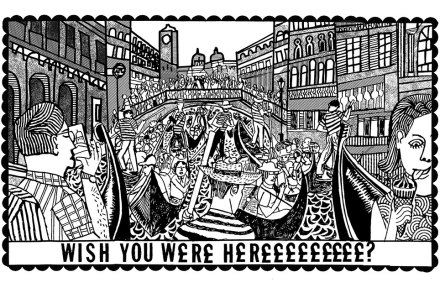
‘The lasagne is perfect’: Hotel La Calcina, Venice, reviewed

From our UK edition

Pensione La Calcina is one of John Ruskin’s houses in Venice. He stayed here in 1877, after completing The Stones of Venice and going mad, and there is a plaque for him on the wall: a stone of his own. It is next to the Swiss consulate on the Zattere, but never mind them. I think the Zattere is for people who have tired of Venice. It has a view to the Giudeccacanal, and the waterbus to the airport: to the exit. You can breathe here. I am staying in San Marco, where I can’t. My son falls from a water gate into a canal, and Italian grandmothers tut at us, and we get sick, which my friend says is ‘very chic in Venice’. Before we get sick, we eat at La Calcina.

Hogmanay in Edinburgh is a marvelous experience

The city of Edinburgh, Scotland’s capital, really comes into its own twice a year. Firstly is August, when its streets are thronged with revelers and amateur PR types (“four stars in the Scotsman!”) promoting their wares at the world-famous performing arts festival. And then the second comes at the end of the year, during the New Year’s Eve period of Hogmanay, which sees anyone claiming long-distant Scots ancestry taking part in the revels for a day or two, just as it seems anyone in Boston on St. Patrick’s Day suddenly remembers their long-lost Uncle Padraig or Great-Aunt Shelagh. In any case, Hogmanay in Edinburgh is a marvelous experience, freezing cold aside, and best experienced from the surroundings of somewhere comfortable.

hogmanay edinburgh