Travel

A tale of two safaris

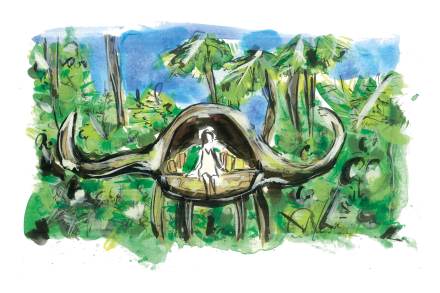
To grasp the untamed vastness of Samburu County, it’s necessary to get high. Above the thickets of acacia trees, thorny branches like barbed wire against the cloudless sky. Out of the Rift Valley’s rubbly trenches, dotted with bleached animal skulls and groves of candelabra-like doum palms clustered around some-time watering holes. To the peak of Sundowner Rock, for instance. After scrambling up its boulder-strewn slopes — wishing for the agility of the bug-eyed, Bambi-like dik-diks that prance about this terrain — I flop down on a sun-warmed granite slab and savor an eagle’s eye view of the bushland below. Legions of acacias and wiry shrubs mottle the red earth.

safari
ham

Going ham in Andalusia

In Spain you can eat all day — and we did. Earlier in the summer, I spent two days in Andalusia, and most of the forty-eight hours were taken up by mealtimes. A breakfast of the sweet porridge poleá started the day, then ham-tasting for a mid-morning snack followed by a two-hour lunch. I didn’t think it was possible to eat all day, but when the food is this good and meticulously chosen, it is. Spanish chef José Pizarro led the way, taking us to his favorite restaurants and showing us where he sources the ham and caviar for his own.

Keep Michelin men out of our hotels!

From our UK edition

It’s probably escaped most people’s attention, what with the football, the election, the Ukraine war, the horrors of Gaza, the assassination attempt and the revelation that the most powerful human on the planet has the intellectual sharpness of a daffodil. But in the past few weeks, the world of travel has been roiled by a surprising innovation: Michelin stars for hotels. Though the stars are stylised as ‘keys’. This may not seem like big pommes de terre, but it is quite important. Because, if the concept takes off and hotels start striving for Michelin accolades, then we can expect the best and most ambitious to go the same way as Michelin-mad restaurants. And that will be bad. You could argue it shouldn’t be a problem, as hotels already have star ratings.

‘I’m a hypocrite and a total fraud’ – the confessions of a French Surrealist poet

From our UK edition

Michel Leiris (1901-90) was one of those intellectual adventurers who are the astonishment of French literature in the 20th century. Their achilles’ heel is that most were communists, in a few cases Nazis; and nothing kills the life of the mind more thoroughly than preaching. Their saving grace is that many were eccentric characters, and their autobiographical work can often be their most luminous legacy. Among Leiris’s subjects are his dogs, his ideal hotel, his hatred of Wagner, his Anglophile snobbery and his tailor Because they were anti-form, the ideal prose vehicles became ‘aphorism’ or ‘fleuve’. The most brilliant of the French aphorists, Emile Cioran (though he was Romanian), exclaimed in an interview ‘Expression – that’s the cure!

The day I met a sun priest

From our UK edition

Palomino, Colombia I’m in a truly wonderful place: the Caribbean coast of Colombia. It’s got more bird species than most of Europe, exquisite cotton-top tamarin monkeys that hop through jungles, and one of the world’s highest coastal mountain ranges. There are empty beaches, shimmering lakes, colonial townscapes and a recent folk memory of terrible gangsters. Some male babies are largely kept in caves from birth, in the darkness, until they are nine  It also boasts several indigenous tribes, one of which – the Kogi – I had never heard of until I got here. But the more I read about them from my hammock on the beach, the more I become determined to encounter them – and to talk to one. A Kogi. Why? Because they are so strange.

A brief glimpse of secretive Myanmar

From our UK edition

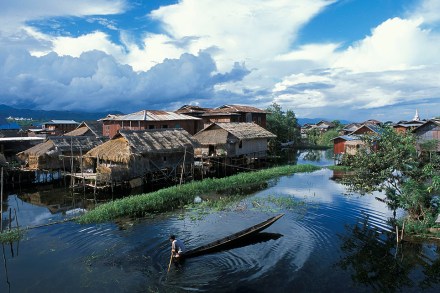
Were trains to blame for the travel writing boom of the 1980s? When Paul Theroux’s The Great Railway Bazaar was published in 1975, it sold 1.5 million copies and launched a publishing phenomenon. At first, long-distance train journeys conjured all the romance of the golden age of travel: leather luggage, first-class compartments and the billowing steam from an antique engine. But with each new imitator, the format became increasingly stale, and now train trips suggest the cushioned charm of Michael Portillo’s never-ending BBC series. Nevertheless, as Clare Hammond shows in On the Shadow Tracks, rail journeys can still take the traveller deep inside a country.

How to hack your summer holiday

From our UK edition

Since it’s June, here is your cut-out-and-keep guide to hacking your summer holiday. One possibility. Don’t bother. Unless you have school-age children, why book your main overseas holiday in what is the nicest part of the year at home? As my late father often reminded me: ‘The three worst things about living in Britain are January, February and March.’ If you head south in these three months, almost anywhere will be an improvement. When flying in July, you risk sitting on the tarmac at Gatwick on a perfect summer’s day destined for a place where your shoes will catch fire. And you miss out on the long, light evenings, too.

The pleasure of reliving foreign travel through food

From our UK edition

The idea of the kitchen as a space for transformation and transportation is not a new one. Many writers have explored the room’s ability to offer both domesticity and alchemy at the same time – how it allows cooks to travel vicariously through the food they make. This is the subject of Cold Kitchen, Caroline Eden’s memoir of her time spent in her kitchen in Scotland and of her travels to Eastern European and Central Asian cities – and somehow she makes it fresh and compelling. She is an author and critic who has written extensively about the food and culture of the countries of the former Soviet Union. Black Sea, in which she explored Odessa, Istanbul and Trabzon, received a clutch of prizes, and Red Sands, about Central Asia, won the prestigious André Simon food book award.

Plane stupidity: my waking flight-mare

The skies above the Atlantic As airplane doors and Boeing stock prices continue to fall, I think it’s time to tell the story of my iPhone and how it spent almost a week last October trapped inside the belly of a Boeing 767. A few hours into a United flight home from London, I was standing up to check on my then-five-month-old daughter, who was sleeping sweetly in the bassinet beside her father, when I felt my iPhone slip between the armrest and the window. It was still plugged into the outlet, so naturally I gave the charging cord a little tug, hoping to rescue the phone without incident. Instead, I felt it disconnect. No big deal, I thought. I scoured the area around my seat: no phone.

phone plane
Mallory

A mystery on Mount Everest

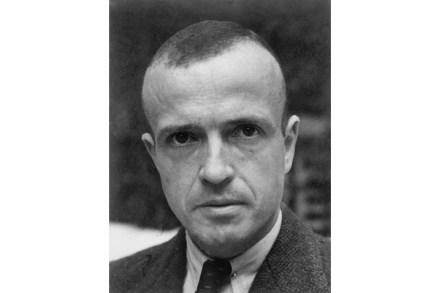
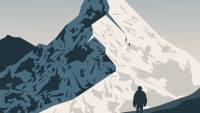
On June 8, 1924, veteran climber and geologist Noel Odell mounted the crest of a Himalayan crag and gazed up toward the tallest peak on Earth. Taking in the awe-inspiring sight, he noticed two tiny “objects” far ahead on a snowy slope “going strongly for the top.” To Odell, a trained and talented observer, the pair of ascending dots appeared to be a mere thousand feet or so below the summit. He later wrote that as he stood intently watching this dramatic appearance, the scene suddenly became enveloped in cloud and the “objects” vanished from his view. It was the last sighting of his fellow expeditionaries, George Mallory and Andrew “Sandy” Irvine, alive.

Paris

Paris: a gold-medal minibreak

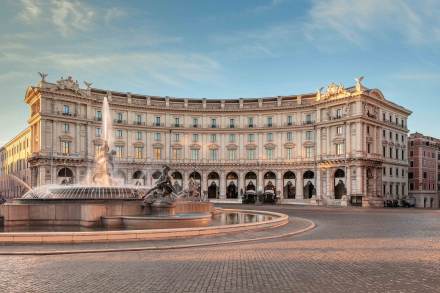
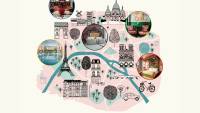
As the Olympic Games descend on the French capital this July, the contest that really matters for this sports-shy travel writer is where to stay. From historic heavyweights to new contenders, these Parisian properties stand head and shoulders above the rest. Best for wellness: Shangri-La Paris The cool marble interiors of Shangri-La’s Parisian outpost feel a world away from the tumult of the Champs-Élysées (in fact, it’s only a fifteen-minute walk). If the Grecian frescoes, silk wallpaper and sweeping, gilded staircase all seem distinctly regal that’s because the nineteenth-century building was originally the pied-à-terre of Prince Roland Bonaparte, Napoleon’s great-nephew.

Peru

You know when you’ve been ‘Peru’d’

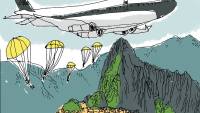
"Did you get Peru'd?" That's the question my boss, who once lived there, always asks people when they return. The idiom implies that something has gone terribly wrong, because, so my boss argues, that's inevitable during a visit to the land of the Inca. Lost luggage, food poisoning, petty theft: all of them, or worse, constitute being "Peru'd." During a recent happy hour, a colleague was describing how much she enjoyed her recent vacation to Lima and Cuzco. “Did you get Peru’d?” my boss queried. No, the woman asserted, she did not; it was a lovely trip. Another colleague piped in: “But didn’t you get Covid?” Well, yes, that’s true, she did get Covid. “You got Peru’d,” my boss decreed.

Tourists are the new pariahs

From our UK edition

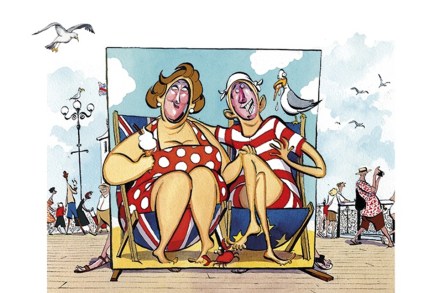
Think of Majorca and what do you picture? Maybe it is elegant tapas bars in the Gothic quarter of Palma, full of yachties and foodies from across the world. Maybe it is literary pilgrims trekking to the house of Robert Graves or noisy parties of Brits and Germans, squabbling over sunbeds in Magaluf. In one Japanese town, residents have erected a screen to block a much-prized view of Mount Fuji Any which way, what you picture is tourists. Lots of tourists. So many tourists that the reality of Majorca as an authentic place is quite obscured, invisible under the weight of visitors. And if you think that sounds bad, so do the Majorcans, which is why they are finally – perhaps belatedly – rebelling.

My summer of love with God’s gift

From our UK edition

When the author and podcaster Viv Groskop first visited Ukraine, she travelled there from Moscow, on a long train that ran eventually beside a field of sunflowers. They were, she recalls in her lovely and modestly scaled memoir, like a ‘blast of sunshine screaming: “Welcome to Ukraine! You are no longer in Russia!”’ The year was 1994, and Groskop had been in the former USSR for a little under a year. A modern languages undergraduate at Cambridge, she had decided to take her year abroad in St Petersburg. Until she got there, she had barely thought of Ukraine. It was one of a bunch of newly independent states; it hadn’t come up on her course.

A solo summer sojourn in the Algarve’s Pine Cliffs resort 

Strong, old pine tree branches cutting through a cloudless cerulean sky — a sight I find hard to beat. Throwing open the curtains at Pine Cliffs Resort in the Algarve, I wondered why I’d been away from Portugal so long.  Bleary-eyed, I reflexively photographed my first glimpse of the Atlantic from my Junior Ocean Suite’s balcony, seagulls cinematically swooping into the frame. Another vain attempt to capture the colors that always keep me coming back; the pictures somehow never as good as the real thing. I’d posted up from Tokyo gone dinnertime the previous night, just outfoxed by Japan’s famed pink sakura (2024’s late bloom meant I missed them by twenty-four hours). Waking up deathly early, I soaked away grizzly jet lag in my spacious room’s egg-shaped tub.

pine cliffs

Where to eat, drink and stay in Cape Town

Setting an early alarm while on vacation never comes easily to me, but making time to wander Babylonstoren’s fruit and vegetable garden before the day’s searing heat took hold was no problem. One of the oldest Cape Dutch farms, set at the foot of Simonsberg in Cape Town’s Franschhoek wine valley, it’s a sprawling, fantastical, technicolor utopia — positively Eden-like, with a lot more than apples to tempt you. Scarecrows made from terracotta plant pots wave from fields teeming with 300 edible crops, fat pomegranates growing alongside tangy tamarillos, willow trees swaying in the breeze.

cape town

A Midwest road trip

The Midwest Notre Dame is not an Ivy League university and, in what I assume is some sort of intentional point, its buildings tend to be ivy-free. Perhaps it is the absence of ivy, perhaps I am just flat after a long day’s drive across Ohio and Indiana, perhaps it’s just winter, but the campus seems more sterile than I had expected. It’s Good Friday, and my friend Margot is studying classical architecture here. She’s showing me around the grounds. I don’t really know what I’d hoped to see. Amy Coney Barrett? Multiracial friendship groups, skipping across the green? As soon as I see the stadium, though, I am transfixed. Margot is visibly disappointed when I say that I adore the stadium above all the other buildings.

james donald forbes mccann
Vegas

Loving Las Vegas

After ten hours of flying and too much bad airplane coffee, the beef carpaccio from 8 East at the Circa casino was ecstasy. Topped with potato chips, served with drops of citrus-infused wasabi crème, it would have been fabulous anytime. But nursing a cold Sapporo, stoned on exhaustion and discombobulation, I shivered in delight with every bite. Just a single piece would have been worth the flight. It was my first time in Las Vegas — my first time in the States — and I was hoping to write a meaningful story about a too-much written about place.

Galápagos

The Galápagos evolution even Darwin didn’t foresee

Lonesome George, a Pinta Island giant tortoise, spent the latter half of his hundred years munching on cacti and roaming around the Charles Darwin Research Station on the Galápagos island of Santa Cruz. He borrowed his name from the 1950s American comedian and actor George Gobel and one of the three B-52 Stratofortresses that completed the first non-stop jet circumnavigation of the world in 1957. But the name was ultimately more fitting for the tortoise who was the last of a million-year-old species. In 1959, fishermen introduced three goats to Lonesome George’s home of Pinta Island, one of the smallest islands of the Galápagos archipelago. Just ten years later, they had multiplied to around 40,000.