Trains

Fifty years on from Beeching and Britain’s railways are better than ever

On 27 March 1963, ‘The Reshaping of British Railways’ was published. Better known as the Beeching Report, the paper was a seminal moment for Britain in the twentieth century. Dr Beeching’s report (and subsequent axe) recommended the closure of 5,000 miles of tracks and 2,363 stations, with 67,000 jobs lost. Most of Beeching’s initial suggestions were eventually implemented and our railways were changed forever. Beeching is still a controversial figure. The trade unions, then and now, paint him as a mad axeman who destroyed a noble institution and the livelihoods of thousands of railway men. No wonder one ‘Dr B. Ching’ is still lampooned in Private Eye every week. But serious reforms were needed.

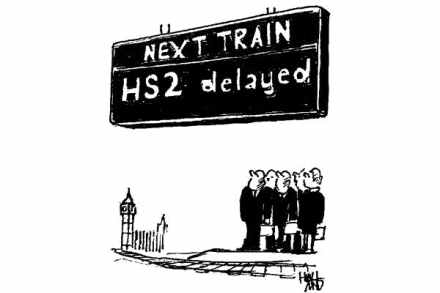
Are High Speed Railways for the North or for London?

I used to think High Speed Rail was an excellent idea. Now I'm not so sure. I suspect the economic case for the proposals is weaker than its proponents allow. More importantly, I'm not at all sure the government's plans for fast trains linking London and Birmingham are the right or most useful possible idea for high-speed rail. Knocking ten minutes off the London to Birmingham route seems like relatively little gain that comes at quite a price. Eventually, of course, the plan is to extend high-speed rail to Lancashire and, perhaps, Yorkshire too. Sometime, one would guess, towards the middle of this century. You can't accuse modern Britain of rushing large-scale infrastructure projects. It is good that the government is paying some attention to northern England. About time too.

First’s risky win highlights fundamental problems with the rail network

Euston, we have a problem. Richard Branson found out today that Virgin Trains has lost the rail franchise for the West Coast Mainline to First Group. From 9 December, First plans to ‘offer substantial improvements in the quality and frequency of services’ on one of the country’s key arteries. This overhaul will bring in 11 new trains and 12,000 extra train seats by 2016. Branson is sore about his company's loss, and has attacked the government's 'insanity' for handing over the network to First: Under our stewardship, the West Coast Mainline has been transformed from a public liability into a valuable asset for the UK, worth many billions of pounds.  The service is a British success story and one to put up against rail companies around the world.

Why Ed Miliband’s PMQs slip-up matters

The exchange about rail fares in PMQs earlier was, it's true, not one for the photo album. But the way it's resolved itself this afternoon has been considerably more diverting. You see, it turns out that David Cameron was right: Labour did arrange for these fare increases when in government. And, what's more, Ed Miliband was wrong: the coalition didn't ‘reverse’ the cap on fares that Labour then conveniently introduced in the run up to the general election. That cap was limited to one year by the Labour government itself. It was always intended that it would expire on 1 January 2011, at which point — barring a new cap — the train companies could go back to the hyper-inflated fares they'd imposed previously. And that's what happened.

A fairly bland PMQs

Today's PMQs was rather a bland affair. Ed Miliband started with three questions on train fares that David Cameron batted away, but there is a little row brewing over whether Cameron's claim that he is simply continuing the policy of the last government is correct. Later, Miliband moved onto the safe territory of the Union and consensus broke out with only the half dozen SNP MPs dissenting from it. Angus Robertson, the SNP's Westminster leader, then asked the PM a question that, in a preview of the SNP's campaign tactics, was designed purely to get the words Cameron, Thatcher and Scotland into the same sentence. There were two other things worth noting from the session.

Shrinking Britain is Good. So We Need Fast Trains.

I can't decide whether Matthew Sinclair thinks High-Speed Rail too ambitious or not ambitious enough. I'm happy to share his scepticism towards the economic and jobs numbers put forward by the plans' backers but trust he will not be offended by the suggestion his own figures should be treated with comparable scepticism. Who knows what the impact will be? All estimates, on each side of the argument, involve hefty assumptions and some amount of guess-work. But when and why did we decide that we no longer need to spend money on infrastructure? At this rate there's a chance Britain will end up like the eastern seaboard of the United States: motorways as car-parks, slow trains and overcrowded skies. HSR is unlikely to be the solution to all these problems but it may be part of one.

Who’s Afraid of Fast Trains?

Reading Brother Blackburn's post on high-speed rail I was, I admit, surprised to find so many Coffee House commenters backing the project. I had - unworthily! - assumed most would be against it. And if HSR stops at Birmingham I would oppose it too. Indeed, I think that if HSR is to go ahead it needs to reach Scotland as well as Manchester and Leeds while another line should link Cardiff and Bristol with London too. David suggests that the idea of a Tory-led government ignoring local protests against HSR offends the "the gentle trinity of localism, decentralisation and the big society" and of course he has a point. Nevertheless, there are some infrastructure projects that can only be led by central government and in which utilitarian considerations must play a large, even dominant, role.

Railway Dreams

Place your bets, please, if you think this is actually likely to happen: The fastest, most frequent train service in the world could run between London and the North within 12 years, according to the chairman of the government-owned company planning the high-speed link. Double-deck trains travelling at 225mph (360km/h) and carrying up to 800 passengers would depart every four minutes, cutting the journey time from London to Birmingham to 30 minutes and from London to Manchester to just over an hour. I mean, it would be grand if it did but given this country's record on large scale infrastructure projects this seems a highly improbable venture. After all, in this part of the world it's taking the best part of 15 years to reopen the Waverley line from Edinburgh to the Borders.