Trains

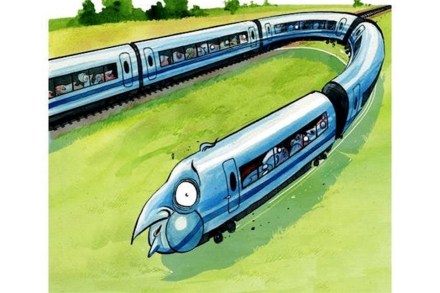
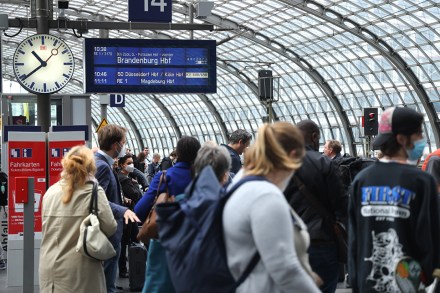
You think British trains are bad? Try German ones

From our UK edition

I found Jean-Pierre standing at a half-open window gulping down lungfuls of stale Dutch air as our night train chuntered, unseeing, through an expectoration of towns: Zutphen, Eefde, Gorssell. He was 79 years old, he told me, and returning to Berlin for the first time in 61 years for a meeting with an old friend. Our steward made it absolutely clear he couldn’t give a stuff that there was no buffet car Back in 1962, Jean-Pierre had been a very young Belgian Jesuit employed in smuggling hard currency from West to East Berlin, which he did by stuffing the notes inside a plaster cast which covered his right leg. There was nothing wrong with his leg, of course.

Gloves, tea strainers and a game of Monopoly… how the Great Train Robbery unfolded

From our UK edition

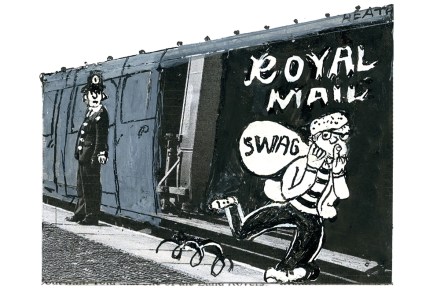
We don’t know if the two teenagers who attempted a train robbery in Scotland this week knew that it was the 60th anniversary of the most famous one in British history. Given their failure – nothing was stolen and the charges include ‘malicious mischief’ – it seems unlikely. Either way, the train robbery of August 1963 remains secure in its title of ‘Great’. Why did it fascinate us so much in the first place? Partly it was the zeitgeist timing (that year also saw Profumo, Beatlemania and JFK’s assassination); partly the amount stolen (£2.5 million, worth more than £40 million today); and partly the narrative of ‘plucky underdogs vs the police and banks’ – the last of whom were insured, except the Midland, which disdained the idea and so lost £500,000.

Why Putin should watch his back

From our UK edition

How secure is Vladimir Putin? His Presidential Security Service consists of 2,500 personnel, his Federal Protective Service of 50,000 troops and the National Guard, essentially his personal army, of 350,000. What could possibly go wrong? Roman emperors might have had a view. It was Augustus who invented the Praetorian Guard (27 bc), a personal, prestigious protection force of 9,000 men, based in Rome and accompanying him abroad. It did not start well. The second emperor Tiberius came within an ace of being displaced by his captain of the Guard Sejanus. The next (insane) emperor Caligula was murdered by conspirators, including a Praetorian, and the Guard hauled out a terrified Claudius from behind a curtain and made him emperor.

Why we should be more thankful for America’s rail system

In recent months, the train track that was bustling during my small Pennsylvania town’s heyday has been back in use, hauling coal to ports that ship it overseas. The train blares its whistle around 7 a.m., waking our sleepy town with a bygone sound of enterprise. The whistle blows again around 5 p.m., and people rush to watch the train chug on through. Real train buffs, with expensive cameras in tow, line the tracks at dawn. It’s novel, old-timey, and thrilling. But otherwise most of us never think about trains. Most Americans, for that matter, never think about trains.

Bring back the railway restaurant car

From our UK edition

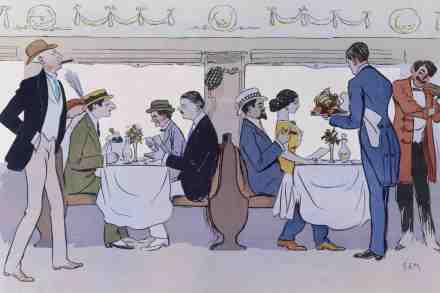
It’s six o'clock and you’ve fought your way on to a train at a major London terminus. The carriage is rammed – heavily pregnant women, the stricken and the young stand in the corridors like it’s A&E – and everywhere people are diving into takeaways. The pungent egg and cress sandwich from Pret is bursting at the seams next to you; on the other side of the table there’s a lout blasting music from his phone speaker and eating the smelliest katsu curry money can buy.

Thirty-five years of crying to Planes, Trains and Automobiles

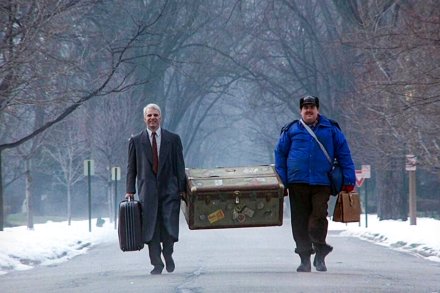
No piece of art has ever affected me quite like John Candy’s face in Planes, Trains and Automobiles. It has made me cry for thirty-five years, rivulets of tears. It has shown me that nothing evokes loneliness like a face. John Candy's face simultaneously reveals warmth and fatalism (it's the face of a man who always feared he'd die young — and did). His unibrow is childlike and genuine. His smile is never fake. But Candy’s shower curtain ring peddler Del Griffith is smiling through pain. He’s hiding behind the mask of a gregarious family man and "best in the world" salesman (with a bowtie and bristly mustache). His smile hides a secret: Del Griffith is a grieving widower, and his home is inside an old trunk he carries around like luggage.

Trains, planes and wheelchairs: why is this still a route to disaster?

From our UK edition

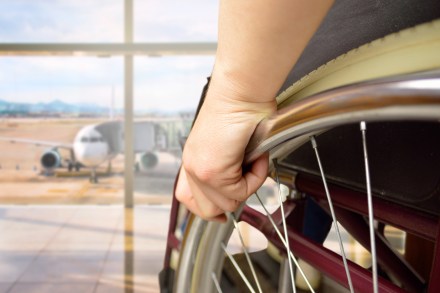
Whenever I take a train journey, I am filled with dread. Despite always booking assistance, I am terrified there won’t be someone at my destination with a ramp to help me and my powered wheelchair on to the platform. Many a time has my travel companion – or a complete stranger – had to straddle the train and the platform to stop the train doors closing with me stuck inside. I have frequently arrived at my destination late and stressed, left with the impression that my time doesn’t matter. What on earth could I be late for – surely nothing important? So I have read with horror, but not surprise, the recent stories of disabled people being abandoned or mistreated when travelling on planes and trains.

It’s time to clear out the Bank of England’s board

From our UK edition

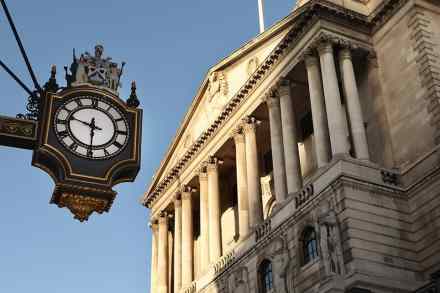
Liz Truss says she intends to review the Bank of England’s mandate, which has been fixed as a 2 per cent inflation target since Gordon Brown gave the Bank its independence in 1997. We’re told Governor Andrew Bailey, keen to keep his job, thinks a review is ‘probably the right thing’. But is it? A return to the long-term inflationary average of 2 per cent is highly desirable as soon as global price spikes subside – but if the odds-on next PM thinks the Bank incapable of achieving it, setting more dynamic inflation-and-growth objectives would surely be an overreach. Instead, maybe she should take her axe to the organisation, starting with the Bank’s board of directors, known as the Court.

The authoritarianism of British Transport Police

From our UK edition

When our freedoms are being taken away we are like the proverbial frog boiled alive in water where the temperature is slowly brought to boiling point. Who batted an eyelid in June when it was reported that rail companies are drawing up plans to abolish paper rail tickets and have us all travel with e-tickets instead? Who picked up on today’s story that explains one of the reasons why the police are so keen to switch us to e-ticketing? Lucy D’Orsi, chief constable of the British Transport Police, says her force wants access to data from passengers’ mobile phones and bank cards so that it can track us around the network. At the moment, you can get on a train from Wolverhampton to London with a paper ticket and leave little trace.

Who monitors the moralists?

From our UK edition

If anyone was suitable to be the Prime Minister’s adviser on ministerial interests, it was Lord Geidt. Self-effacing, professional, unself-righteous but thoroughly proper, he could be relied on to do his job without an eye to attracting headlines, gaining Remainer revenge and similar modern temptations to which some officials succumb. Yet last week he resigned. It seems a good moment to ask whether the job is doable. Many will say that it isn’t, and blame Boris Johnson. It is undoubtedly true that any system based on rules comes under strain when confronted with Boris’s work methods. Last week, a horse called Etonian ran at Ascot. A newspaper reported that he was ‘evidently hard to train after his smart juvenile days’. That sums up the Boris problem.

Abolish the railways!

From our UK edition

As the country is held hostage once again by the rail unions, it’s time for the nation to ask itself: does it need trains at all? The last time anyone dared ask this question was 60 years ago when Dr Richard Beeching boldly closed more than 2,000 stations and 5,000 miles of track. The time has come to finish the job and shut down the rest of Britain’s viciously expensive, underperforming and fundamentally inefficient rail network. The economic reasons for doing so are irrefutable, no matter how the railroad anoraks might sputter. Originally private, then nationalised, then privatised again, then morphed into an odd hybrid in which tax subsidies are higher than ever, British railways are hideously expensive, uncomfortable and unreliable.

The utter shamelessness of Britain’s rail unions

From our UK edition

In what other industry could demand collapse by a tenth and yet the staff still think that they have a right to an above inflation pay rise and no job losses? Rail privatisation was supposed to put an end to union militancy and to relieve taxpayers of the financial risk of running the railways. Patently, it has achieved neither objective. Three national rail strikes have been declared for later in the month, to compound strikes on the London underground. Meanwhile, taxpayers will contribute £16 billion this year to propping up an industry in which demand for its services have collapsed. In the week to 22 May (before the effect of last week’s bank holidays) usage of national rail services averaged 89 per cent of what it did before the pandemic.

It’s time for Boris to take on the rail unions

From our UK edition

Imagine if we gave the rail unions what they really wanted, and renationalised the railways. Would they then leave us alone and get on quietly with the job of driving trains, clipping tickets and so on? Like hell they would. Thankfully, Nicola Sturgeon has just tried this very human experiment, so that the Westminster government does not have to. On 1 April, railway services north of the border were taken back into public ownership so that, as the unions would put it, passengers could once again be put first and profits no longer drained away by nasty private companies rewarding their evil shareholders. And the result? Er, a national rail strike – just the same as the unions are threatening in England.

Women-only train carriages insult us all

From our UK edition

Sooner or later, somewhere in the UK, we’ll have trains with women-only coaches. It’s an idea which keeps rolling around, and though the train people complain — it’s unworkable, unenforceable — it makes no odds. It’s too seductive an idea for a progressive politician. Jeremy Corbyn was tempted by it back in 2015, and now the Scottish transport secretary, one Jenny Gilruth, is considering it. She often feels unsafe on trains, she says, because they’re ‘full of drunk men’, especially the train to Fife, which is her constituency. ‘I just want our railways to be safe places for women to travel.’ I’ve nothing against ladies’ coaches in principle. In my mind’s eye they look appealing.

Women-only carriages are a bonkers idea

From our UK edition

Here we go again. Another suggestion, this time by the SNP transport minister, Jenny Gilruth, to introduce women-only carriages on public transport in order to address the ‘systemic problem’ of women feeling too scared to travel ‘because of men’s behaviour’. Does that mean it's okay for men to sexually assault women in mixed carriages? Rather than addressing the fact that rape is obscenely under prosecuted in this country (with around 1 per cent of reported rapes ending in a conviction in England and Wales) the minister is following in the footsteps of the likes of Jeremy Corbyn in coming up with a bonkers idea to keep women safe. How about deterring men from sexually harassing and assaulting women instead? Isn't that a novel idea?

What tea with the WI taught me about responsible investment

From our UK edition

Late-breaking exam results: many of the City’s top fund managers have failed a vital test of ‘stewardship’ — defined for this purpose as ‘the responsible allocation, management and oversight of capital to create long-term value for clients and beneficiaries leading to sustainable benefits for the economy, the environment and society’. That mouthful comes from the Financial Reporting Council’s UK Stewardship Code; asset management firms seeking to become ‘signatories’ to the code were asked to submit essays describing their own investment principles, highlighting their approach to hot-button ‘ESG’ (environmental, social and governance) issues.

Letters: The sorry state of BBC sport

From our UK edition

Misplaced Trust Sir: Charles Moore is as ever bang on target (The Spectator’s Notes, 26 September). National Trust members have had a raw deal this year, but so have many loyal staff and volunteers. It should not surprise any visitor to a National Trust property that a very rich person built it and lived there. No doubt they achieved great financial wealth by being quick-witted, entrepreneurial and above all ruthless in their dealing. They likely exploited everyone irrespective of race or creed. How many mill owners sent ‘boys’ up chimneys, down mines and into the machinery to clear blockages? The National Trust is a curator of buildings, artefacts and estates. They do not have a remit to delve into the background of their benefactors and make judgments.

Whose bright idea was the circuit-breaker?

From our UK edition

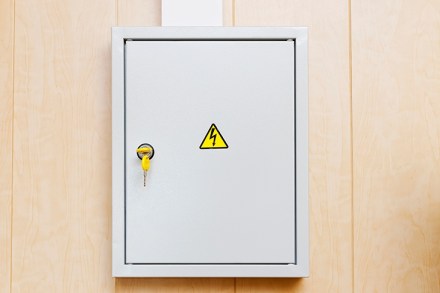
It’s electrifying! Who invented the circuit-breaker? Thomas Edison patented it in 1879, realising what damage could be caused to electrical equipment in the event of a surge in current created by short-circuit. However, his early electrical installations did not use them, opting instead for fuses — thin wires designed to burn out when the current flowing through them reached a critical level. The first circuit-breaker — with spring-loaded contacts designed to open when the current became too much — was not installed until 1898, at L Street Station by the Boston Electric Light Company. Vehicle recovery Has the recovery in car sales been maintained?

The end of the line for the rail franchise fiasco

From our UK edition

Good riddance to the passenger rail franchise system which has finally been killed off by Covid, though a majority of the travelling public might say it should long ago have been put out of its — and, more pertinently, their — misery. The complex scheme to privatise British Rail launched by the Major government in 1993 defied those who said it couldn’t be done and was designed by the Treasury to maximise proceeds to itself. In doing so, it fractured the industry into a myriad of separate owners, operators and service providers that rarely worked in harmony or created competition for the benefit of users. The consequences of this structural fiasco were as random as they were unsatisfactory.

Letters: Why do we need beavers?

From our UK edition

It’s not about money Sir: Professor Tombs criticises Alex Massie (Letters, 22 August) for ignoring evidence when the latter claims that economic concerns ‘no longer matter’ in great political decisions. But the evidence from the last Scottish referendum tends to support Massie. At the beginning of the Scottish referendum campaign in 2014, polls showed 26 per cent of Scottish voters favoured independence. The Better Together campaign amassed compelling evidence that independence would be a financial disaster and set about presenting this to the Scottish public in an exercise they christened Project Fear.