Trade

How liberal globalism went bankrupt

When future historians chronicle the period after the Cold War, the rise of China will dominate their accounts. Beginning in the 2000s, China unleashed a flood of state-sponsored manufactures, many of them produced by western multinational corporations using Chinese labor on Chinese soil. This impoverished much of the already pressured industrial working class in the US and Europe, triggering populist revolts in rustbelts like the American Midwest, the north of England and eastern Germany. The recycling of profits from China’s chronic trade surpluses through the global financial system enriched western financial interests and helped to inflate bubbles in the real estate and stock markets. These burst in 2008, causing the Great Recession.

china

Boycotting China is not that easy

China’s various human rights abuses, their treatment of women, their savagery toward religious people and their chokehold on Taiwan and Hong Kong, has long made them a target for economic boycotts by Westerners. But executing a successful one is exceedingly difficult to achieve. In 2003, disappointed that the George W. Bush administration reaffirmed their ‘One China’ policy in regards to Taiwan, I launched my own boycott of Chinese goods. It was difficult but felt worthwhile to spend extra time looking for the ‘made in’ label on goods I was buying. And then I needed a shower curtain. I visited store after store and could not find one made anywhere except in China. I lived without a curtain for months before giving in and buying a Chinese-made one.

boycotting

Time to crush China’s Arctic influence

Eyes are opening to the evil of the authoritarian Chinese regime that represses its people, genocides entire cultures, and influences investments and policy all over the globe. As most of the world is under coronavirus lockdown, the Chinese Communist party detains hundreds of thousands (if not millions) of Uighur Muslims in concentration camps in east China. Not to mention the brutal occupation of Tibet, where China is also allegedly responsible for the massacre of hundreds of thousands of Tibetans over the last 70 years due to its brutal occupation.The CCP’s mishandling of the viral contagion from Wuhan may have exposed its obsession with power at all costs, but its next, greater threat is still developing in the shadows: imperialism.

arctic

How Bill Clinton junked America’s supremacy

‘This is a good day for America,’ said President Bill Clinton on May 24, the Year of Our Lord 2000. ‘In 10 years from now we will look back on this day and be glad we did this.’ Clinton was talking about the House of Representatives’ vote to award normal trade relations to China. And he was right. By 2010, despite the crash of 2008, the knowledge class still largely considered the decision to support China’s entry into the World Trade Organization as a great boon. China’s rise had turbocharged globalization and made us all richer — never mind the stupefying sovereign debts. Labour unions had opposed it, but leaders and corporations were still enthralled by the gargantuan consumer markets.

President Bill Clinton speaks in the Rose Garden, May 24, 2000 in Washington, D.C. after the China trade vote in Congress.

A US-UK free trade agreement will bring benefits on both sides of the Atlantic

It will no doubt be met with furious resistance in parliament and on the streets. There will be an outcry over chlorinated chickens. There will be scare stories about the National Health Service being sold off. And the farmers will be angry at the prospect of the country being flooded with food that is far cheaper than anything they can produce. Even so, assuming the Conservatives win the election, we leave the European Union and Donald Trump wins re-election to the White House (OK, I will agree the hypothetical is doing some heavy lifting in that clause), Britain and the United States are going to attempt a comprehensive free trade agreement. That will be a big deal. America and the UK are, respectively, the biggest and fifth biggest economies in the world.

us-uk

Are inside-traders profiting from the US-China trade war?

Of all the 9/11 conspiracy stories, one of the most persistent is the suggestion that al-Qaeda funded its operations by short-selling the shares of airline companies in the days before the attack. Inevitably, airline shares plummeted that day, netting short-sellers vast profits. While there was an increase in short-selling before the attack, no-one has proved one way or the other whether that was history’s most audacious case of insider-dealing or just a reaction to an industry which was already in trouble for purely commercial reasons. But is someone now trying on the same trick with the US-China trade war?

inside-traders

Would Britain really be first in line for a US trade deal?

The animosity between the Trump administration and Europe has not yet damaged military relations, but the same can't be said for economic ties. Negotiations for an EU-US free trade agreement, the Transatlantic Trade and Investment Partnership (‘economic NATO,’ as the organization’s former secretary general, Anders Fogh Rasmussen, had called it), have stalled, perhaps permanently. Negotiations are at ‘a stalemate,’ said EU trade commissioner Cecilia Malmström. The Council went a step further, declaring the mandate for the talks to be ‘obsolete and no longer relevant.’ TTIP’s demise, and the frustration it has caused the Americans, might augur well for another possible transatlantic trade deal.

trade deal

China’s Belt and Road Initiative is neo-Imperialism

China’s Belt and Road Initiative (BRI) is touted by Beijing as an attempt at multinational economic cooperation and development, comprising everything from foreign direct investment to the development of infrastructure. However, the purpose of the BRI is not economic or cultural but strategic, and is an effort to mask the expansion of Chinese power. In its strategic intent, the BRI should be considered an imperial project alongside the likes of the British East India Company (EIC) or the Dutch East Indian Company, Vereenigde Oostindische Compagnie (VOC).  With the BRI, China is exercising the 'imperial excuse', just as the EIC and VOC did centuries ago.

belt and road initiative

Bastard capitalism

‘If we will not endure a king as a political power,’ Sen. John Sherman of Ohio said in 1890, ‘we should not endure a king over the production, transportation, and sale of any of the necessities of life.’ These words helped drive through the Sherman Anti-Trust Act that saved early American capitalism by breaking up Standard Oil and the robber barons’ fiefdoms.A long line of Anglo-Saxon dragon slayers straggles behind the senator, all the way back to King John at Runnymede. Over-mighty kings and industrial barons get short shrift in Britain and America. This isn’t mere resentment. It is a philosophy of power and knowledge, and the principle behind democracy and free markets.

capitalism

The future of world trade is in the balance

Ongoing trade talks between American and Chinese officials took an unexpected turn on Sunday: President Trump took to Twitter and announced a plan to impose tariffs on all Chinese imports by Friday. The tariff threat adds urgency to negotiations that will continue on Wednesday, when a Chinese delegation is due to arrive in Washington, DC. The move is a departure from last week when US Treasury Secretary Steven Mnuchin and Trade Representative Robert Lighthizer arrived in Beijing to initiate a fresh round of trade talks with China. Despite chronic trade tensions, both sides had sounded optimistic ahead of the meeting. State Councilor Wang Yi, China’s top diplomat, expressed hopes the two sides could ‘reach a mutually beneficial, win-win agreement’.

world trade

Leading Brexiteers in DC to talk US-UK free trade agreement

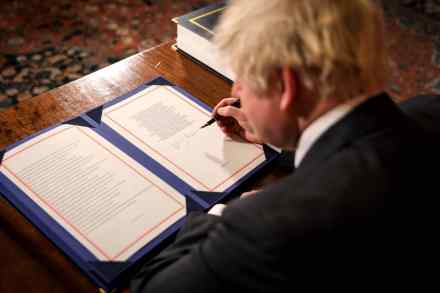
David Davis, the former Brexit minister, and Owen Paterson, another pro-Brexit ex-minister, confirmed Friday morning that they’re meeting with Trump administration officials to discuss a US-UK free trade agreement. Theresa May, the stricken British prime minister, refuses to discuss a US-UK FTA until after Britain has withdrawn from the EU in March 2019, and after Britain and the EU have made a new trade deal. This week, May forced a draft of her withdrawal bill through her cabinet, but sparked resignations from her cabinet and open revolt from pro-Brexit Conservatives. ‘We’re clearly here to advocate for a US-UK free trade agreement,’ said Shanker Singham of the Institute for Economic Affairs, who serves as an outside adviser to Boris Johnson.

david davis owen paterson washington

Peter Navarro slams Wall Streeters as ‘foreign agents’ hindering the White House

‘Wall Street and Goldman Sachs…here’s the most important thing,’ said Peter Navarro, the White House trade policy pointman, at a Washington think tank Friday. ‘When these unpaid foreign agents engage in this kind of diplomacy – so-called diplomacy – all they do is weaken this president and his negotiating position.’ The factionalism within the White House itself and the in-fighting over Washington’s China policy was on full display. The president’s encouragement of rival camps battling it out has often spilled over into plain view during the first two years of this administration.

peter navarro

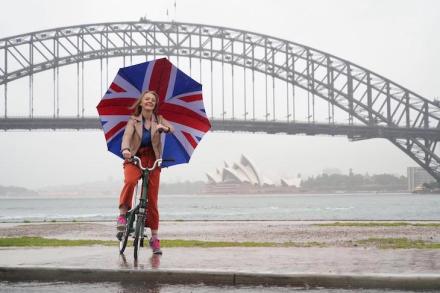
Australia’s choice: Chinese trade – or American security?

 SydneyFor decades, Australia has been known as ‘the lucky country’. At the end of the world geographically, we are separated from the global troublespots by vast oceans. We have recorded 27 years of uninterrupted growth, partly because of a surge in exports of commodities to China. At the same time, our tough border protection policies boost public confidence in, as John Howard put it, ‘who comes to this country and the circumstances in which they come’. As a result, our politics have not been profoundly affected by the kind of populist forces dismantling established parties across Europe. Nor have we witnessed an anti-globalisation backlash. Not for us any Trump- or Brexit-like insurgencies.