Totalitarianism

Forgetting was the best defence for the Kindertransport refugees

Michael Moritz, one of Silicon Valley’s most successful venture capitalists, really has got it in for Donald Trump. America is currently in a ‘dark age’ of authoritarian governance, he claims, which spurns legality and liberal do-gooders everywhere. As a lifelong Democrat, Moritz was appalled when, in 2017, Trump failed to denounce the alt-right protestors who chanted ‘Jews will not replace us!’ at a torchlit rally in Virginia. Understandably, Moritz is alarmed by the tide of anti-Semitism today. His Jewish parents narrowly escaped death in Hitler’s Germany when they came to the UK on the Kindertransport. The 71-year-old Moritz now asks the question: how long before the iron-studded jackboot returns to Europe?
The thoughts of Chairman Xi – in digestible form

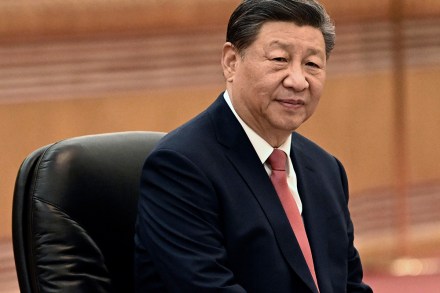
While giving a talk on China I was asked an unusual question: ‘What is the one word you would use to describe China?’ By China we mean of course the Chinese Communist party (CCP) and, more specifically, Xi Jinping. My reply was: ‘Solipsistic.’ Xi wants China to lead the world, but to take very limited responsibility for solving the world’s problems Steve Tsang and Olivia Cheung, from the School of Oriental and African Studies, have produced a study in solipsism, and a mighty fine one. Xi and the CCP are solipsistic in the vulgar rather than true philosophical sense. They are supremely self-centred in their belief that the external world should exist or conduct itself only in so far as it reflects the CCP’s reality. Understanding Xi’s political thought is vital.

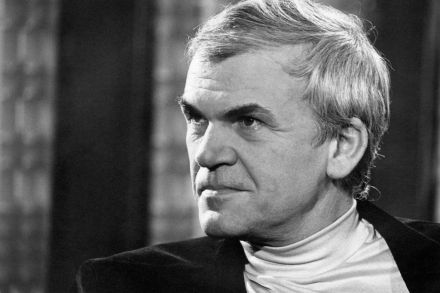
Milan Kundera’s ‘transcendental buffoonery’

From our US edition

I was just leaving France when I got the news that that the Czech novelist Milan Kundera had died, aged ninety-four. He had emigrated to Paris in 1975, when he was forty-six, a refugee from the crackdown in Prague following the Russian obliteration of the Prague Spring in 1968. He died in his adopted city on July 11, full of honors but also, or so it seems to me, largely forgotten.  I had not been following Kundera’s work for many years. But there was a moment, in the 1980s, when he was the talk of the posh, intellectual literary town. I wrote a longish essay about him for the New Criterion in 1986. I draw on that work here.  Kundera was in his late thirties when he published his first novel, The Joke, in Prague in 1967.

milan kundera

Hong Kong is now a police state

From our US edition

No one now denies that Hong Kong is a fiefdom of Beijing. Its democratic leaders have been packed off to prison on spurious grounds or have left the territory, and its street protests have long been beaten to pieces with batons. The 2020 national security law has made mockery of Hong Kong's last shreds of freedom of expression, rendering all criticism of the Chinese Communist Party akin to terrorism; and its uncensored homegrown newspapers are now closed by the state — their proprietors inexorably marched off to jail. Any pretense of adherence to the treaties signed by Britain and China around the time of the handover in 1997 — treaties that guaranteed Hong Kong autonomy — has long fallen away. Hong Kong is a subject province of the People's Republic now, and nothing more.

Margaret Atwood seems embarrassed by the sheer volume of her output

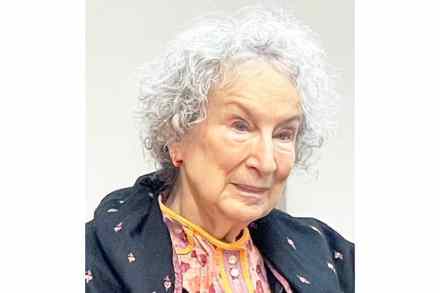
Margaret Atwood is among the major writers of English fiction of our time. This is a very boring way to start a review, but it is true. Atwood, now 82, is prize-winning, popular and prolific. She’s won two Bookers. Several of her books have attained totemic status with readers, most obviously the reproductive dystopia of The Handmaid’s Tale, but also Cat’s Eye, for its steely portrayal of girlhood cruelty, and The Blind Assassin, which combines feminist grit with genre-straddling swagger. And there are so many books.

A plague of phony experts and elites

From our US edition

Quick: what do you think when someone tries to convince you of something by prefacing their remarks with the phase “Experts say”? I think of that rude, two-word imperative of Germanic origin that ends in “You.” As Laplace said in another context, it is par expériences nombreuses et funestes that I have this almost Pavlovian reaction. The “experts,” alas, are not expert, i.e, “possessing a high degree of skill in or knowledge of” a certain subject. For proof of my contention I offer the name of Anthony Fauci or the organization that glories in the acronym CDC, that is, the Centers for Disease Control. They are both a bit like Michael Avenatti, once championed everywhere as a genius and presidential material, but now universally exposed and discredited.

elites experts

The techniques of totalitarianism are still fully in play today

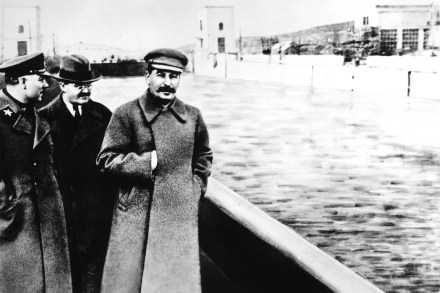
How to Become a Tyrant (Netflix) is ideal history TV for Generation No Attention Span. Presented in six bite-sized chunks by Peter Dinklage, aka the ‘Imp’ Tyrion Lannister from Game of Thrones, it tells you most of the things you need to know about Hitler, Stalin, Mao, Gaddafi, Kim Il-Sung, Idi Amin and Saddam Hussein, without obliging you to think or grapple with any tedious detail. Instead of examining the dictators individually, it explores their careers thematically, looking for the ingredients they have in common.