Tinder

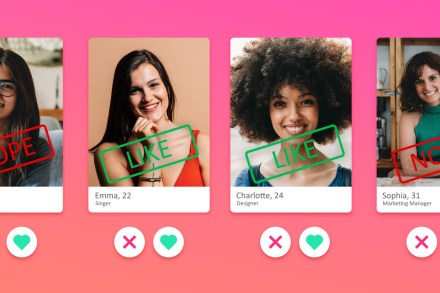
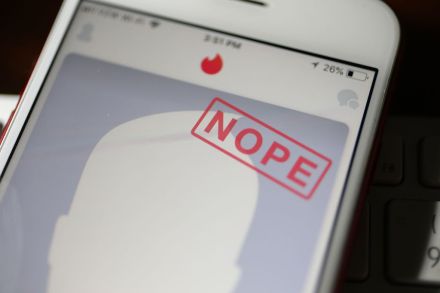
What does it do to one’s soul to swipe?

From our UK edition

For me, discovering dating apps was like happening upon crack cocaine. The starting pistol for my ‘dating’ was the decree absolute. I guessed it from the envelope. Still, it was stark seeing it on paper. For so long it had been pencilled, now it was in ink: ‘The marriage solemnised on…  has legally ended.’   My first instinct was to crack open a six-pack. Of Cadbury’s Creme Eggs. I ripped off the foil, bit open the chocolate shell and licked out the fondant. My second response was even more gluttonous: setting up a dating app profile.

My plan for a better dating app

From our UK edition

It’s 30 years since a website called Match.com opened the Pandora’s box of online dating. Until then, with the tiny exception of the classifieds, meeting a mate had to begin out there and in person. But from 1995, dating retreated to a desktop computer – a virtual shop window of real people. Match.com was launched as a minimum viable product that sold, so said the wags, other minimum viable products. Today, the online dating industry makes more than $9 billion. By 2033, its revenues are expected to double. There are now tons of apps, yet still so many loners. According to one survey, 44 per cent of Londoners are single. If Pandora’s box opened years ago, today it’s surely shattering.

Help! I’m on a dating blacklist

From our UK edition

There’s a online blacklist of men you should avoid dating and I’m on it. I discovered this over the summer when a colleague gave me a nudge and showed me a screenshot of my dating profile. ‘That’s you, isn’t it?’ A wave of fear passed through me. I had been posted on a Facebook group named ‘Are we dating the same guy?’. I set out to discover more.  The group itself was easy enough to find. It was started in New York last year to help the city’s single women avoid ‘red flag’ men. The group describes itself as a place where women can ‘warn other women about liars, cheaters, abusers, or anyone who exhibits any type of toxic or dangerous behaviour’. Now it has more than two million members from 120 cities across the world.

The demise of online dating

Have you made your “date-me doc” yet? “Date-me docs” are, per an article in the New York Times last week, “long, résumé-like dating bios” — think of them as the antidote to terse, image-reliant dating apps.  They're thus far confined to the digital outposts of startup, Rationalist and Post-Rationalist communities; at this point it would be more accurate to describe them as a specific cultural phenomenon than a reaction to dating apps. Whereas dating apps such as Hinge and Tinder are made for “normies,” websites such as OkCupid — where the term “sapiosexual” was originally popularized — or even Craigslist tended to attract a more eccentric caliber of dater.

online dating

Will AI make Tinder redundant?

From our UK edition

The world is home to 7.8 billion people. Roughly one in 14 of these people (530 million) are on Tinder. Badoo, the second most popular dating app, has ‘only’ 318 million users. Tinder is the most popular dating app in the world, by far. Now, though, a new challenger appears to be emerging. Unlike Badoo and other less robust dating apps, all of whom try to offer a variation of what Tinder provides, this competitor offers something completely different. You see, this new dating app, a next generation dating app, plans to inject artificial intelligence into matchmaking.

Business schools are dating apps for the super-rich

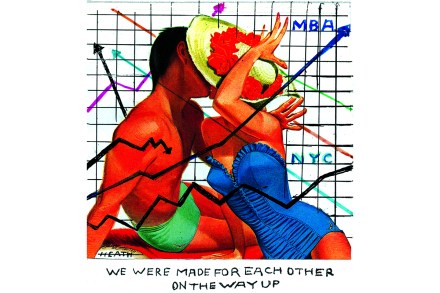
“D’you know what the acronym MBA stands for?” The twenty-seven-year-old who asked me this had a deep tan and fluorescent teeth. He may have winked, but the eye-twitch was more likely a nervous tic developed from looking at himself in the mirror so much. I responded with a look of indifference mixed with fear. “Married” — he paused for dramatic effect and demonstratively looked at my wedding ring — “but available.” I felt nauseated. I was in my first semester of business school in New York City and had so far learned how to make an educated estimate of a company’s optimal capital structure, how to make a balance sheet look balanced and how to use the word “conceptually” to sound smart in strategy class.

business school

Why can’t men write about sex?

From our UK edition

Not long ago I was a regular Tinder user. Having heard that gingers were romantically incompatible, I decided to mix work and pleasure and put this controversial claim to the test. I set up a sort of interview-date with a nice young lady called Laura, a former international gymnast who was working as a waitress, but looking for more permanent work. She sported a lovely glossy dark ginger mane. We weren’t getting on too badly, but not much of a story there. Luckily there was scope for deepening the research: we went back to mine, and a bit of horizontal research definitively established that the alleged incompatibility of gingers is utter nonsense, doubtless put about by jealous eugenicists. None of the above is true.

Constrained by freedom: what do post-liberals want?

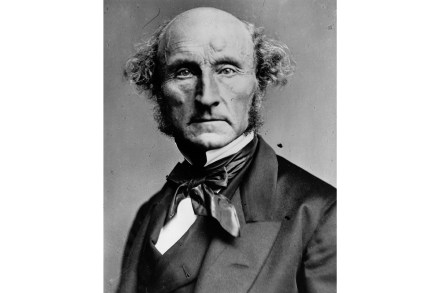
Any attempt to expound post-liberalism must begin by taking a view of what liberalism is. And liberalism can be viewed as a philosophy that enshrines freedom as its foundational principle. Freedom from what, though? That is a moving target. The pioneers of liberalism, whether they be John Locke or the Founding Fathers, wanted to be free from the tyranny of the minority, that is, from power exercised arbitrarily by a political sovereign. Two hundred years later, following J.S. Mill’s disdain for the craven conformism of late-Victorian social mores, liberals realized they wanted to be free from an empowered majority. That is, even if a majority want democratically to decide gambling should be made illegal, for liberals the practice should remain legal as long as one gambler remains.

post-liberals

No, dating apps should not label sex offenders

A battle pitting feminists and media against online dating app behemoth Match Group flared up last week when one of Match’s properties, the app Tinder, admitted candidly there are registered sex offenders using their service.Well, duh. Tinder, with 5.2 million active users, doesn’t perform background checks, nor should they. Of the 45 online dating brands owned by Match Group, including PlentyOfFish and OkCupid, only one, Match, a paid service, does. But activists screamed for the Dallas-based company to take action to better protect women.

dating apps