Tiananmen square

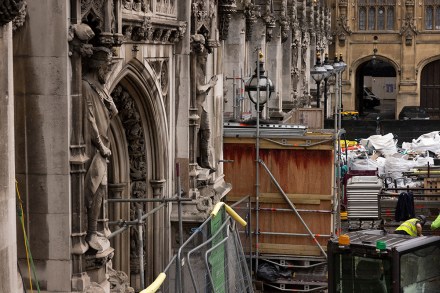
What does it say about Britain that the Palace of Westminster is crumbling?

Many political scientists are oddly uninterested in politics. Their fascination is at a level of theory; but the means through which decisions are made in practice, through specific conversations and arguments and accommodations between actual people, strike them as so much gossip – or, worse, journalism. Jan-Werner Müller, a professor of politics at Princeton, best known to general readers for his trenchant, well-timed and comfortingly short What Is Populism?, here wanders like a niche flȃneur through the territory in between the personal and the theoretical: the ways in which people and politicians are variously welcomed, channelled, liberated and constrained by their concrete environments.
Tiananmen and the Tang: the rise of rock in China

35 min listen

Every protest needs an anthem, and for the 1989 Tiananmen Square protests, 'Nothing to My Name' by Cui Jian became that emblem. Cui was one of China's earliest rockers, taking inspiration from the peasant music of China's northwest and fusing it with the rock 'n' roll that was beginning to arrive in the country. It put rock music – and the Chinese interpretation of it – under the national spotlight. On this episode I talk to Kaiser Kuo, host of the China Project's Sinica podcast, who also happens to be a founding member of Tang Dynasty, one of China's earliest and greatest rock bands.

The Pillar of Shame and the erasure of Hong Kong

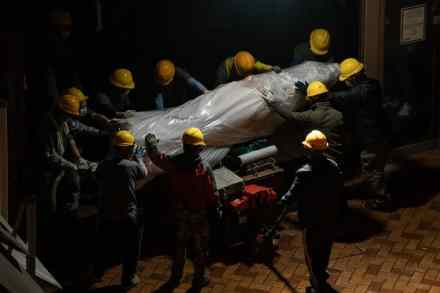
In the dead of night one of the most prominent memorials to the Tiananmen Square massacre, the Pillar of Shame, was removed from Hong Kong University this week. The eight-metre high statue – commemorating the thousands killed in Beijing’s brutal crackdown on peaceful demonstrators in June 1989 – was filmed being loaded into a container late on Wednesday night. It is not the only piece of public art to have been targeted. At dawn on Christmas Eve a bronze ‘Goddess of Democracy’ – a replica of a statue built by students on Tiananmen square – was dismantled by the Chinese University of Hong Kong. And at Lingnan University a wall relief featuring the ‘Tank man’ was removed during the night.

Why Hong Kong’s Tiananmen Square vigil will be different this year

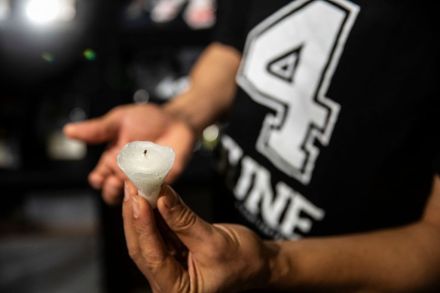
Every year since the tanks rolled into Tiananmen Square on 4 June 1989, Hong Kongers have gathered in their thousands to remember the fallen. The annual Tiananmen Vigil, where candles light up Victoria Park, was an event laden with significance. It was a statement that Hong Kongers would not forget those who had died under the heavy boot of the totalitarian state. It was a symbol of the city’s distinctive history and its autonomy from Beijing. Even last year, despite the authorities banning the protest under the pretext of Covid-19 restrictions, thousands gathered peacefully. It's unlikely the same will happen tomorrow. The organisers of last year’s vigil are in jail. This year’s vigil has been banned.