Thucydides

The real ‘Thucydides Trap’ Beijing and Washington must avoid

These are good times to be a scholar of the classical world. Last summer, Donald Trump issued an order that all federal architecture needed to be “beautiful,” noting that the Founding Fathers “wanted America’s public buildings to inspire the American people and encourage civic virtue.” George Washington and Thomas Jefferson had therefore “consciously modeled the most important buildings in Washington, DC, on the classical architecture of ancient Athens and Rome.” It was time to go back to these principles, said Trump. From now on “classical architecture shall be the preferred and default architecture for Federal public buildings” in the District of Columbia.
Did the Trump/Xi summit achieve anything?

From our US edition

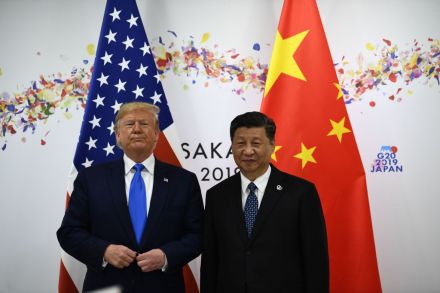
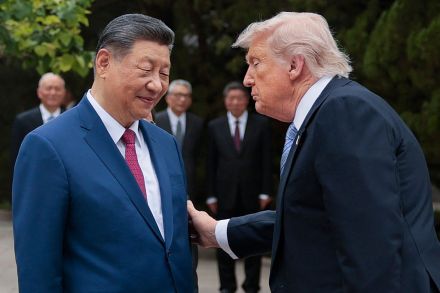
Air Force One is in the air as I write, whizzing from Beijing back to Washington – and Donald Trump leaves China with many questions unanswered. There were warm words on both sides and plenty of friendly symbolism in the President’s big summit with Xi Jinping. But the fundamental great power tensions remain – over trade, technology, and war and peace in the Middle East and Taiwan. Washington and Beijing agree that Iran should never have a nuclear weapon – though it remains unclear the extent to which China will help reopen the Strait of Hormuz. Its closure hurts the Chinese economy, of course, but China has significant energy reserves and Xi knows that the pain spreads around the world to his advantage.

trump xi

The futility of ever hoping to give peace a chance

‘War – what is it good for?’ asked Edwin Starr on his 1970 single of the same name, before answering his rhetorical question:   ‘Absolutely nothing.’ In this, Starr was not only excoriating America’s contemporary folly in Vietnam. He was implicitly endorsing the philosopher Immanuel Kant’s recommendation that humanity could and should trade up from endless war to perpetual peace, and the anthropologist Margaret Mead’s suggestion that war was not natural to our species.

Pompeo’s principles

From our US edition

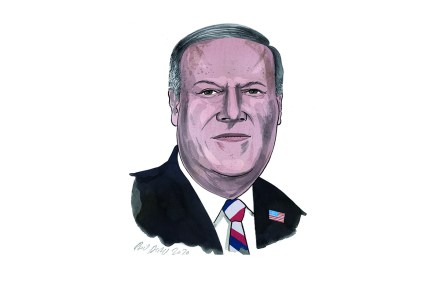
‘Come in.’ Burly, brisk and maskless, Mike Pompeo indicates a chair before the marble fireplace. ‘It’s all right if we’re six feet — or two meters — apart.’ We are meeting at the State Department the day after Pompeo’s return from Qatar, where US negotiators have opened discussions with the Taliban and other Afghan factions on an end to the war in Afghanistan. It’s also the day before the signing of the Abraham Accords between Israel and the UAE and Bahrain. Cheerful and perhaps a little tired, Pompeo exudes forceful confidence: a man who knows what needs to be done. As Secretary of State since 2018, Pompeo has been the strategist who has translated Trump’s generalities into the specifics of policy.

The coronavirus is springing the Thucydides trap

From our US edition

The first casualty of informational war is truth. The first American casualty of COVID-19 was the myth that the United States can ‘manage’ the rise of China as a world power through mutual interest. That mutual interest was only ever economic. Naturally, most of our politicians, business leaders and commentators explained it as strategic too: as technocracy calls GDP the index of human happiness, so it identifies strategic interests with economic ones. The coronavirus crisis has, however, exposed an essential strategic antagonism between the United States and China.'‘What made war inevitable was the growth of Athenian power and the fear which this caused in Sparta,’ Thucydides wrote in History of the Peloponnesian War.

thucydides