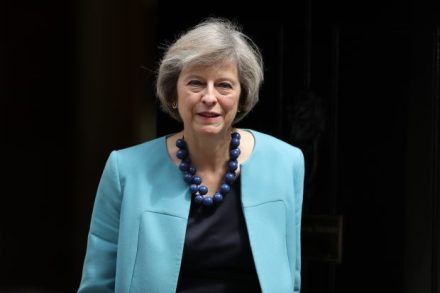
Theresa may

Mrs May the ‘Student Killer’ should count the cost of her visa crackdown

From our UK edition

In the post-Brexit landscape whose shape was barely glimpsed in G20 discussions at Hangzhou, one thing is clear: soon we’ll have to stop waffling about trade deals and start pushing British products the world wants to buy. One such is education, at our universities, independent schools and English-language colleges — an export sector calculated in 2011 by the now defunct Department for Business, Innovation and Skills to be worth £17.5 billion. Not only does this sector attract foreign exchange, plug funding gaps for cash-strapped universities and support thousands of jobs, it also lays the ground for future relationships with students who return home to embark on business careers.

Theresa May: We have selection in state schools already, selection by house price

From our UK edition

Theresa May received the traditional desk banging reception when she addressed the 1922 Committee of Tory backbenchers. May pleased Tory MPs by emphasising that they  would have more opportunity to feed into policy making process now through George Freeman and the policy board and the green papers that will---once again—precede white papers. But what most excited Tory MPs was what May said about opportunity and grammar schools. May said that she would give a speech on a 21st century education system soon, explaining how selective schools--in other words, grammars--fit into the mix. Strikingly, she defended an ‘element of selection’ arguing that there is selection already in the system, and it is selection by house price.

Theresa May reveals her weakness

From our UK edition

Bit early for a lap of honour. At PMQs Mrs May congratulated her government (i.e. herself) on fifty marvellous days in government. And she drew comparisons between her polished style and the Corbyn car-wreck. One view is that the chimpanzees’ tea-party currently posing as Her Majesty’s opposition should remain beneath the attention of Number 10. Mrs May disagrees and she used Labour’s woes as the starting point for some carefully scripted comedy. With mixed results. Delivering gags is tough. Delivering someone else’s gags is tougher. Delivering someone else’s out-of-date gags is so tough that it borders on crazy. But the PM is, understandably perhaps, tempted by the illusion of omnipotence at the moment.

Theresa May’s stilted second PMQs performance

From our UK edition

If the purpose of the first few Prime Minister’s Questions sessions that a new leader faces is to assert their authority, both over the Opposition and their new party, then Theresa May managed that today. She didn’t do it with a great deal of panache, though: the Prime Minister was much less fluent and confident today than she was in her all-conquering first stint at the Dispatch Box before the summer. Her scripted jokes sounded a little less comfortable and natural, too.

Theresa May clearly wants to pick a fight on grammars

From our UK edition

The most interesting thing about the accidentally-revealed grammar schools briefing document is not so much that the government is planning to press ahead with the change to the schools system, but that it is considering passing a new law in order to do it. A brave move for a government with such a small majority. This means Justine Greening and her junior ministers in the Education dept are in for a rocky few months, something the memo itself acknowledged. It said: ‘I simply don’t know what the PM thinks of this, but it sounds reasonable to me, and I simply can’t see any way of persuading the Lords to vote for selection on any other basis.

May and Davis split on single market comments

From our UK edition

Theresa May didn’t choose a quiet life when she appointed David Davis as the Brexit Secretary, Liam Fox as the International Trade Secretary and Boris Johnson as the Foreign Secretary. Mostly, the men have bickered amongst themselves up to this point. But today the Prime Minister’s official spokeswoman put some distance between May and her minister charged with Brexit negotiations. Yesterday Davis had told the Commons that he thought it unlikely that Britain would be able to retain single market access while also controlling EU migration. He said: ‘This government is looking at every option but the simple truth is that if a requirement of membership is giving up control of our borders, I think that makes it very improbable.

Some clues as to what David Davis means by Brexit

From our UK edition

David Davis has just finished his first statement to the Commons on the process for the UK exiting the European Union. Davis’s initial statement stuck closely to what the government has said already; the coordinated Labour backbench heckle of ‘waffle, waffle’ had some truth to it. But it was striking that Davis said he hoped the UK’s security relationship with the EU would be as close or closer post-Brexit; in Whitehall, Britain’s intelligence and military capabilities are regarded as one of our key assets in the negotiation. But in answer to the questions that followed, Davis--a naturally frank politician—gave a clearer sense of what he means by Brexit.

Theresa May’s honeymoon period comes to an end

From our UK edition

The Prime Minister and her colleagues are very slowly starting to reveal what they think they mean when they say ‘Brexit means Brexit’. This afternoon the Secretary of State for Exiting the European Union David Davis will give a statement to Parliament on what the terms of negotiation might resemble for Brexit - or at least what the terms that ministers have come up with over the summer are. It may be that the Government isn’t actually ready to set very much out at all, but is just trying to avoid an urgent question from a hostile MP by giving a statement.

G20 leaders have fallen for Project Fear

From our UK edition

So, last week’s sharp rise in the Purchasing Managers’ Index (PMI) for manufacturing wasn’t a freak. This morning its twin, the PMI for the much larger services sector, also showed a huge rebound to 52.9, more than reversing the fall to 47.4 in July and putting it marginally ahead of PMI for the Eurozone, which stands at 52.8. The combined PMI was 53.2 in August. Anything above 50 suggests that the economy in expanding while anything below 50 suggests contraction. Just like last week’s manufacturing figure, this morning’s news seems to have caught forecasters unaware: the consensus was for PMI in services to be 50.0.

How can we trust China with our nuclear power when we can’t trust it not to spy on our government?

From our UK edition

In her decision as to whether to go ahead with the Chinese-backed Hinkley C nuclear power station – postponed from July apparently because of security concerns – Theresa May will find no better guidance than the advice which has been given to her and her aides while attending the G20 summit in Hangzhou this week. They have reportedly been advised to not to take their mobile phones, and to use temporary replacements while in China. They have also been given temporary email accounts which can be deleted upon return, and to avoid using public charging points for laptops and iPads.

May says general election will be in 2020

From our UK edition

Theresa May is on her way to her first G20 summit. But she has still sat down for the traditional start of term interview with Andrew Marr. Reading the transcript of it, it looks like a classic Theresa May interview: with very little given away. She avoided answering Marr’s questions on whether she would like to see more grammar schools and refused to say whether she shared her chief of staff Nick Timothy’s view that Chinese involvement in the Hinkley point nuclear project would be security risk. On Brexit, May said little new about the deal she would like to strike--confirming the sense that, as one Minister told me, the government is ‘a way away from forming a definitive position’.

It’s time to drop the British Bill of Rights for good

From our UK edition

The Government plans to scrap plans to scrap plans to scrap the Human Rights Act. Here we go again. Following snugly in the footsteps of her two predecessors as Lord Chancellor, Liz Truss has promised to implement the so-called 'British Bill of Rights' in its place. There were never good reasons for this policy, but at one stage there were at least some bad reasons. Now, even they have run out. The European Convention on Human Rights affirms the rights to life, a fair trial and freedom of expression, among others. Until 1998, a Brit who thought their human rights had been violated needed to exhaust all their legal options at home before fighting to take the case to the European Court of Human Rights. On average, that took five years and cost £30,000.

Why won’t junior doctors just admit they want more money?

From our UK edition

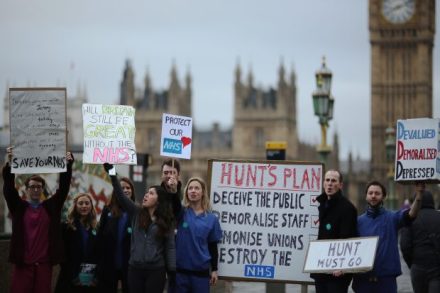
Junior doctors are striking again: this time, for five days in a row over several weeks. This level of industrial action is without precedent in the history of the NHS. Even though I will soon be employed as a junior doctor under the terms of the contract, I think the decision to strike is scandalous. In the early stages of this row, it was possible to sympathise with junior doctors' discontent about having a contract imposed on them. Now it has become harder and harder to know what it will take to please them. The contract they were offered was a good deal — even the BMA said so. Yet for some junior doctors, it just wasn't good enough.

A rotten windfall

From our UK edition

It’s strange that, even now, the Brexit vote is routinely referred to as an expression of anger or frustration — as if the most easily baffled half of the population had voted in response to forces they could not understand. In fact, the result of the 23 June referendum seems to look wiser with every week that has passed. Of course, leaving has its risks. But 52 per cent of voters judged that a greater one lay in staying in a European Union that is changing all the time — and invariably for the worse.

Theresa May’s Brexit minefield

From our UK edition

When David Cameron resigned, the Conservative Party Board pushed back the planned date for the election of a new leader until after the G20 summit had taken place. The official reason was to give the new Prime Minister time to read into the job and save him or her from having to fly off to meet world leaders directly after moving into Downing Street. More cynical members of the board, though, suspected Cameron had another motive: he wanted the chance to say a proper goodbye to Obama and Co. Thanks to Andrea Leadsom’s withdrawal from the leadership race, however, Theresa May now heads to the summit this weekend with almost two months in No. 10 under her belt. She will be a main focus of interest in Hangzhou, China.

Warrant for alarm

From our UK edition

A concerted effort is under way to make sure that, when it comes to the European Arrest Warrant, Brexit does not mean Brexit. The Police Federation, for example, will hear no ill spoken of the system. And the same might be said of the Prime Minister, who as home secretary praised it to the skies. As she put it in October 2014, without the European Arrest Warrant, ‘British criminals would be able to hop on to the Eurostar or fly to Spain, safe in the knowledge we wouldn’t be able to get them back to prosecute them.’ Without it, the UK would become ‘a honeypot for all of Europe’s criminals on the run from justice’. The statistics appear to back her.

Theresa May shows she wants to be defined by more than just Brexit

From our UK edition

Theresa May welcomed the Cabinet to Chequers with this address, just released by Number 10: 'Thank you very much for coming together today. It’s our first opportunity to meet since the summer recess, but also the first opportunity for us to meet since the fantastic success of the GB Team at the Olympics – absolutely great. And also the Paralympics will be starting very soon, so we wish our Paralympic athletes all the very best and success there as well. But obviously over the summer – over the last few weeks – quite a lot of work has been done. We’re going to be having an opportunity today to discuss this.

Theresa May’s great Brexit brainstorm starts today

From our UK edition

Summer is over. Or at least as far as Theresa May is concerned it is, as the PM gathers her cabinet at Chequers today to talk business about Brexit. It's the most important gathering of her time in office so far and a chance to spell out an action plan for Britain's departure from the EU. She put a stop yesterday to talk of a second referendum and today she has repeated her pledge that there won't be an attempt to 'sort of stay in the EU by the back door'. But whilst those words are a reassurance of what won't happen, today's meeting is also a chance for the PM to thrash out what she hopes will happen over the weeks and months ahead. It's also an important opportunity for each cabinet minister to spell out the 'opportunities' of Brexit: this is the key to making Brexit a success.

France’s Calais threats are a recipe for more human misery

From our UK edition

French politicians have been busying themselves recently offering solutions to Calais's crowded 'jungle' camp - and it's good news that the Home Office has said their suggestions are all ‘non-starters’. Quite right, too. Nicolas Sarkozy's plan to set up a system for displaced people living in France to apply for asylum in the UK might sound humane. In fact, it's a recipe for even more misery. Why? Because offering the faint hope of sanctuary to those who have suffered unimaginable terror would encourage more vulnerable people to set out on a tragic journey which has already claimed far too many lives.  Displaced people from the Middle East, in particular, have been through enough.