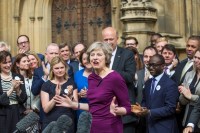
Theresa may

Theresa May: ‘I get so frustrated with Whitehall’

From our UK edition

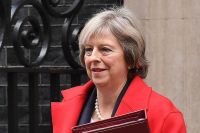
The Prime Minister’s office is a small, unimpressive room in 10 Downing Street with miserable views and unexceptional furniture. Since moving in, Theresa May has spruced it up — but only a little. There is now a large glass meeting table; her predecessor preferred to chat on the sofas. She has also delved into the government art collection to retrieve two pictures of Oxford, where she honed her interest in politics and met Philip, her husband. She has also picked a painting of an English country church (she is of course a vicar’s daughter), and that’s about it. It’s a place for work and — very occasionally — interviews. We meet a few weeks after Mrs May won The Spectator’s Politician of the Year award.

Did the ‘rise of populism’ really cost David Cameron his job?

From our UK edition

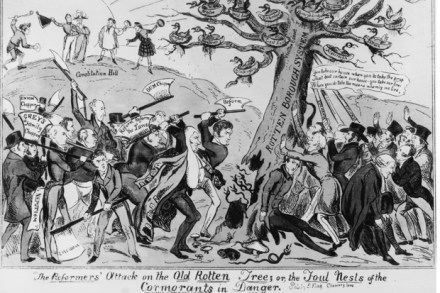
When The Spectator was founded 188 years ago, it became part of what would now be described as a populist insurgency. An out-of-touch Westminster elite, we said, was speaking a different language to the rest of London, let alone the rest of the country. Too many ‘of the bons mots vented in the House of Commons appear stale and flat by the time they have travelled as far as Wellington Street’. This would be remedied, we argued, by extending the franchise and granting the vote to the emerging middle class. Our Tory critics said any step towards democracy — a word which then caused a shudder — would start a descent into chaos. On the contrary, we said, the choice was between reform or a ‘revolution of the most sweeping character’.

What the papers say: The trouble with Boris, and McDonald’s Brexit boon

From our UK edition

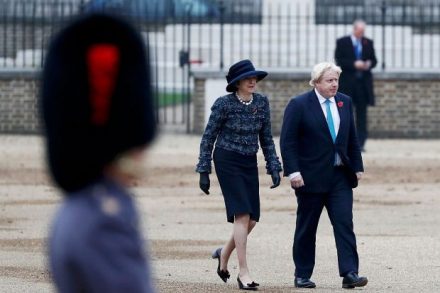
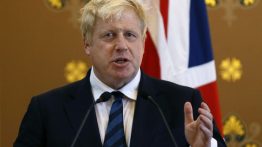
Boris Johnson was slapped down by Theresa May yesterday for his comments about Saudi Arabia. And the Foreign Secretary earns himself a similar rebuke in the Guardian this morning. The paper describes his remarks as ‘plain speaking without a purpose’ and says that ‘he frequently shoots from the hip or goes off half-cocked’. It warns that while speaking out of turn as a columnist could be ‘embarrassing’, now the ‘potential consequences are far graver’. But if so, why is Theresa May still tolerating Boris? In the eyes of the Guardian’s editorial, it’s because the PM thinks that ‘a cannon that misfires so often is less dangerous in front of her than on the benches behind her’. But how long will the PM's patience persist?

Power and the people

From our UK edition

When The Spectator was founded 188 years ago, it became part of what would now be described as a populist insurgency. An out-of-touch Westminster elite, we said, was speaking a different language to the rest of London, let alone the rest of the country. Too many ‘of the bons mots vented in the House of Commons appear stale and flat by the time they have travelled as far as Wellington Street’. This would be remedied, we argued, by extending the franchise and granting the vote to the emerging middle class. Our Tory critics said any step towards democracy — a word which then caused a shudder — would start a descent into chaos. On the contrary, we said, the choice was between reform or a ‘revolution of the most sweeping character’.

Unforgiven

From our UK edition

Now that almost six months have passed since the EU referendum, might it be time for old enemies to find common ground? Matthew Parris and Matt Ridley, two of the most eloquent voices on either side of the campaign, meet in the offices of The Spectator to find out.   MATTHEW PARRIS: Catastrophe has not engulfed us yet, it’s true. But I feel worse since the result, rather than better. I thought that, as in all hard-fought campaigns, you get terribly wound up and depressed when you lose. Then you pick yourself up, dust yourself down and start all over again. But my animosities — not just towards the Brexit argument, but towards a lot of the people who advanced it — haven’t softened, I’m afraid.   MATT RIDLEY: I noticed that.

Notebook – 8 December 2016

From our UK edition

One remark from the Christmas party season knocks insistently around my head. It came from Nigel Farage on a staircase in the Ritz. For those who didn’t enjoy 2016, a year of political revolution, he gleefully promised: ‘2017 will be a hell of a sight worse.’ My, my. What did he mean? Had he taken one Ferrero Rocher too many? Or does Farage, like an increasing number of MPs, expect a general election next year, including further dramatic upsets? The biggest reason for pooh-poohing a 2017 election isn’t the Fixed-term Parliaments Act but Prime Minister’s character. Theresa May is extremely cautious and she doesn’t want to test the electorate just yet.

Boris Johnson is right about Saudi Arabia

From our UK edition

In what sense does anyone actually disagree with what Boris Johnson said about Saudi Arabia and Iran? Does anyone actually think that his observation that they are both engaged in 'puppeteering' in Syria and Yemen is not only true, but understates the seriousness of the problem? Does anyone believe the Foreign Office when it says that Mr Johnson’s remarks do not reflect the position of the Government? Now I know the argument, viz, that Saudi Arabia is an important and very sensitive ally and the way to deal with its sensitivities is to make criticism in private, which is what, we are invited to believe, Theresa May did when she visited the Kingdom.

Theresa May vs Whitehall – round II

From our UK edition

Theresa May, you may have read, is fed up with obsequious civil-servants and their ticky-box ways. 'From the officials' point of view, what they owe to the minister, and what the minister expects, is the best possible advice,' she tells Fraser Nelson and James Forsyth in The Spectator Christmas issue. ‘Don't try to tell me what you think I want to hear,' she added. 'I want your advice, I want the options. Then politicians make the decisions.’ Sound stuff, I’m sure you’ll agree. The trouble is, civil servants who’ve dealt with May suggest the Prime Minister doesn't practise what she's preaching. 'Theresa May is more the type who says "Who was that person in the meeting who said something I didn’t agree with?

What the papers say: Article 50 debate, Brexit ‘fog’ and ‘looney Labourites’

From our UK edition

After MPs voted last night to back the Government’s plan to invoke Article 50 by the end of March, the Guardian says it’s good news that Parliament is now finally using its powers to shape the Brexit process. The paper says it’s ‘extraordinary’ that so much time has passed since the referendum, given how there is still no ‘real clarity about the government’s general aims’ in upcoming negotiations. It says yesterday, however, ‘some fog began to lift’: ‘At last, the great issue of the UK’s future relations with Europe was finally being discussed where it matters most of all, in our elected parliament,’ the paper says.

Rock’s quiet right-wingers

From our UK edition

They will be sitting there right now, listening tearfully to the song for one last time on their dinky little iPods, before deleting it for ever. ‘-Heathcliff — it’s me, Cathy, I’ve come home, so co-wo-wo-wold, let me into your window.’ No, Kate. You are never coming in through our windows again. What about the cuts? What about the refugees? What about Brexit? How could you? The window is closed, double-glazed and with a mortice lock. ‘Wuth-ering Heights’ — which once I loved — is dead to me. Also that one about going up a hill or something. That’s gone too. Die, Bush, die.

‘I get so frustrated with Whitehall’

From our UK edition

The Prime Minister’s office is a small, unimpressive room in 10 Downing Street with miserable views and unexceptional furniture. Since moving in, Theresa May has spruced it up — but only a little. There is now a large glass meeting table; her predecessor preferred to chat on the sofas. She has also delved into the government art collection to retrieve two pictures of Oxford, where she honed her interest in politics and met Philip, her husband. She has also picked a painting of an English country church (she is of course a vicar’s daughter), and that’s about it. It’s a place for work and — very occasionally — interviews. We meet a few weeks after Mrs May won The Spectator’s Politician of the Year award.

Don’t try to be liked, and buy your steak at Aldi – the lessons I’ve learned in 2016

From our UK edition

Merry Christmas everyone. Here are some things I learned — or relearned — in 2016.   1. That which does not kill you makes you still alive. It’s weird to think that less than 12 months ago I was in hospital, dosed up with morphine, battered and bruised with a broken clavicle, numerous cracked ribs and a pulmonary embolism which can actually kill you, don’t you know. And now it’s as if the whole thing never happened. Well, apart from the hideous titanium plate, like a giant centipede, which I can still feel all stiff across my collar bone. And the bastard hunting ban my family has imposed on me…   2. Hunting is the only thing.

Commons votes in favour of invoking Article 50 by the end of March

From our UK edition

461 MPs have just voted for Theresa May to invoke Article 50 by the end of March. The Tory amendment to Labour’s opposition day motion passed comfortably with only 89 MPs opposing it—and Ken Clarke the only Tory amongst them with 20-odd Labour Mps joining the SNP and the Lib Dems in voting against. Now, this vote is not binding and if the government loses its appeal to the Supreme Court will not be sufficient to satisfy the courts. But it does indicate that the government will be able to get an Article 50 bill through the Commons without too much trouble. It does make you wonder why Theresa May didn’t simply ask parliament to pass an Article 50 resolution before the Gina Miller case made it to the High Court.

Nicky Morgan’s wrong trousers

From our UK edition

Does Theresa May understand what life is like for the just-managing families she purports to stand for? The Tory party has seen a fair bit of snipping over the past few days over whether the Prime Minister’s £995 Amanda Wakeley trousers, which she wore for a newspaper interview and was then ridiculed about by one of the Cabinet ministers she sacked. Nicky Morgan told the Times that ‘I don’t think I’ve ever spent that much on anything apart from my wedding dress’ and that the pricey garb had been ‘noticed and discussed’ in party circles. You might expect that in order to look the part on the world stage, a leader would want to ensure his clothes were well-tailored and impressive.

Spectator live blog: The Supreme Court’s Brexit hearing, day three

From our UK edition

It's day three of the Supreme Court's landmark case on the triggering of Article 50. Here's how the day unfolded:  4.15pm: The Supreme Court hearing has now finished for the day. The Lord Advocate, Lord Wolffe has been putting forward the Scottish Government's case. So far, he has told the court that using prerogative powers to trigger Article 50 would be an 'unconstitutional' step. But he makes it clear that the Scottish Parliament does not have the power to veto Brexit. You can read the Scottish Government's full submission to the Supreme Court here. 3.30pm: Ronan Lavery now takes up the argument on behalf of Northern Ireland.

What the papers say: Brexit, political pygmies and repentant Remainers

From our UK edition

MPs will vote for the first time today on the Government’s Article 50 timeline. While Labour have said the decision to spell out the plan for Brexit is a ‘welcome climbdown’ by ministers, is this afternoon’s debate merely delaying the actual process of Britain leaving the EU? That’s the Sun’s verdict on today’s proceedings, with the paper saying a ‘coalition of political pygmies’ are ‘stringing out the process in Parliament’. It goes on to say that Theresa May’s opponents ‘should stop pretending’ they are worried about democracy and Parliamentary sovereignty and instead own up to ‘their true aim’ - ‘reversing the referendum result’.

Theresa May agrees to publish Brexit strategy before invoking Article 50

From our UK edition

With the Supreme Court ruling on the government's Article 50 appeal not expected until the new year, Theresa May is facing a more immediate Brexit headache. After around 20 Conservative MPs were expected to back a Labour motion today -- tabled by Jeremy Corbyn and Keir Starmer -- calling for the Prime Minister to 'commit to publishing the government’s plan for leaving the EU before Article 50 is invoked', No. 10 has staved off the rebellion by agreeing to Labour's demand. Accepting Labour's motion, ministers have added an amendment of their own -- that the House should 'respect the wishes of the United Kingdom as expressed in the referendum on 23 June; and further calls on the government to invoke Article 50 by 31 March, 2017'.

Michel Barnier plays hardball on Brexit

From our UK edition

Michel Barnier, the Commission’s Brexit negotiator, has been giving a running commentary on Brexit this morning. Barnier, striking a predictably tough stance before the negotiations start, said that he wants the divorce aspects of the Article 50 deal concluded by October 2018, to give sufficient time for ratification. This, essentially, means that there’ll be one year of negotiations from after the German elections next autumn. But Barnier’s position is that only once this deal has been agreed, can talks move on to what the future relationship between the UK and the EU will be. In other words, no talks on trade until the exit process has been agreed. He emphasised that there will be no cherry picking and that the four freedoms are indivisible.