Theresa may

A Donald-Boris alliance would be good for Brexit

From our UK edition

It's a shame that protocol, being protocol, prevents Foreign Secretary Boris Johnson from meeting President-elect Donald Trump during his trip to Washington. Boris can't even meet Rex Tillerson, the man Trump has chosen as his Secretary of State, until Tillerson is confirmed by the senate. A Trump-Johnson encounter would be a meeting of considerable media and public interest: the Donald and the Boris have become aligned in people's minds ever since the EU referendum, when Nick Clegg and others called Johnson 'Trump with a thesaurus' and so on. It's true that Boris is, in a tabloid sense, a thinking man's Trump. The two men are born New Yorkers. They share an enthusiasm for women (in a dangerous male predator sense), as well as for entertainment and jingoism.

Nicola Sturgeon is making it up as she goes along

From our UK edition

Because the SNP have won so often and so conclusively in recent years there is an understandable temptation to suppose they must always know what they are doing. Accordingly, Nicola Sturgeon sits in Bute House like some political Moriarty: motionless, perhaps, but like a spider at the centre of its web. And 'that web has a thousand radiations, and [s]he knows well every quiver of each of them'. Other political parties may plan, but the SNP plots. Everything is done for a reason and nothing is left to chance. The nationalists are relentless and implacable. No wonder they put the fear of God into their foes (especially a Labour party they long since supplanted as the natural party of government in Scotland).

What the papers say: An overdue overhaul for mental health and May’s Trump-sized opportunity

From our UK edition

Theresa May is launching yet another attempt to define herself as a politician today with a major speech on tackling the ‘hidden injustices’ of mental illness. The Prime Minister has won plaudits for taking on an issue which often gets ignored, says the Daily Telegraph. Yet it’s true that we have been here before, the paper says - pointing out that David Cameron made a similar pledge only a year ago. So what's different? The Telegraph says there are ‘obvious benefits’ to May’s strategy to finally get to grips with this issue. But with the NHS in such a mess, her targets will be ‘hard to achieve’.

What does Theresa May’s ‘shared society’ really mean?

From our UK edition

While getting the Tory leadership contest out of the way quickly was good for the country following the EU referendum, it did mean that Britain gained a new Prime Minister without much idea of what she believed or wanted to do with her time in office. Theresa May did set out some principles for her government when she stood on the steps of Downing Street on her first day in the job, and in her autumn conference speech, but how she plans to help the ‘just managing’ and how much she really intends to do by way of domestic reform when Brexit is such a big distraction - and potentially a convenient excuse. But as I say in the magazine this week,  the Tory leader is keen that Brexit isn't the only thing by which her premiership is judged.

Theresa May: Donald Trump’s remarks about women are ‘unacceptable’

From our UK edition

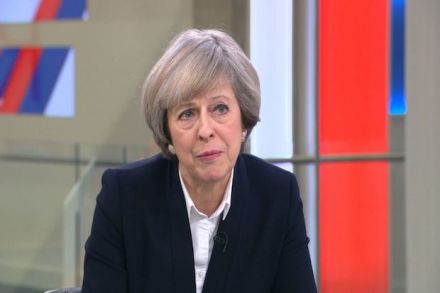
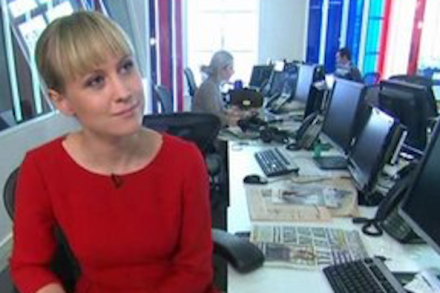
The most memorable moment of Theresa May’s New Year TV interview was when Donald Trump’s quote about grabbing women by the pussy was read out to her. A clearly uncomfortable May replied that it was unacceptable language. Before quickly adding -- in an attempt to avoid angering the incoming President—that Trump himself had said that his language was unacceptable. One of the reasons that it was the most memorable moment was that May stuck to her usual script on both Brexit and domestic policy. She again made clear that control of immigration is paramount for her in the negotiations. But despite repeated attempts from Sky’s new political presenter Sophy Ridge, May wouldn’t confirm what this logically implies—that Britain is leaving the single market.

Theresa May snubs Marr

From our UK edition

It's tradition that the Prime Minister kicks off the new year by giving a broadcast interview to the Andrew Marr show. However, this year Theresa May has decided to mix things up and snub the BBC in favour of Sky News. On Sunday, May will instead be interviewed by Sophy Ridge to kickstart Ridge's new morning show: https://twitter.com/SophyRidgeSky/status/816768482188599296 This means that Marr now has to settle for Justine Greening and Nicola Sturgeon. Mr S's BBC mole says the decision has gone down 'like a cup of cold sick' with the upper echelon of the Beeb.

The other lesson that Theresa May must learn from Cameron’s failed EU negotiation

From our UK edition

Theresa May has clearly learnt one lesson from David Cameron’s failed negotiation with the EU. As I write in The Sun this morning. she has realised that if she just asks for what cautious officials think she can get, then she won’t get enough to satisfy the voters—hence Sir Ivan Roger’s resignation as the UK representative to the EU. But an even bigger problem for Cameron’s renegotiation was that the other side never believed he would walk away from the deal. Cameron compounded this problem when he made clear that he wanted the whole thing done quickly, further reducing his negotiating leverage.

Theresa May’s extraordinary opportunity

From our UK edition

It is the fate of all new prime ministers to be compared with their recent predecessors. Theresa May has already been accused of being the heir to the micro-managing Gordon Brown. Her allies, meanwhile, see a new Margaret Thatcher, an uncompromising Boadicea destined to retrieve sovereignty from Europe. But perhaps a more fitting model for May would be a less recent Labour prime minister: Clement Attlee. When Labourites reminisce about Attlee, it isn’t so much the man himself who makes them misty-eyed. It is the achievements of those who worked for him — Nye Bevan, Ernest Bevin and the rest. Attlee’s government created the welfare state and the National Health Service, and built a million houses. It had lots of excuses not do any of these things.

Theresa May won’t get a better chance to deal with the social care crisis

From our UK edition

What is the greatest problem facing Theresa May this year? The Prime Minister is preparing for her speech on what Brexit means (in which she will presumably have to speak in sentences rather than using random and meaningless slogans), but that's not the only major policy issue that she should deal with in 2017. As I explain in this week's magazine, Cabinet ministers are growing increasingly agitated at what they see as a paltry response to the social care crisis. As MPs, they are being lobbied by furious council leaders who say that nothing announced so far even comes close to alleviating the crisis. As ministers, many of them see the effects of a poor settlement on social care funding in their portfolios.

What the papers say: Britain’s booming economy and ‘whinging’ Whitehall

From our UK edition

The front page of the Times makes happy reading for the Government this morning with its news that Britain’s economy grew at a faster rate than any other leading economy in the world last year. But while politicians are keen to act as cheerleaders on occasions like this, they are somewhat more reluctant to mention another ‘metric of success: immigration’. So says the Guardian in its editorial in which it argues that foreign workers wanting to come to Britain is a sign of just how healthy our economy is. Theresa May faces a challenge, the paper says, in addressing the worries of workers who want immigration to be controlled, while not ignoring the demands of various sectors for workers from overseas. So what’s the solution?

May’s big chance

From our UK edition

It is the fate of all new prime ministers to be compared with their recent predecessors. Theresa May has already been accused of being the heir to the micro-managing Gordon Brown. Her allies, meanwhile, see a new Margaret Thatcher, an uncompromising Boadicea destined to retrieve sovereignty from Europe. But perhaps a more fitting model for May would be a less recent Labour prime minister: Clement Attlee. When Labourites reminisce about Attlee, it isn’t so much the man himself who makes them misty-eyed. It is the achievements of those who worked for him — Nye Bevan, Ernest Bevin and the rest. Attlee’s government created the welfare state and the National Health Service, and built a million houses. It had lots of excuses not do any of these things.

Tim Barrow’s appointment as Britain’s EU ambassador should silence May’s critics

From our UK edition

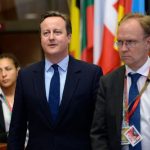
Just a day after Sir Ivan Rogers' resignation as Britain's ambassador to the EU, his successor has been named as Sir Tim Barrow. Currently political director at the Foreign Office, Barrow is a career diplomat who is a former ambassador to Russia with significant experience of Brussels. Speaking on LBC, Rogers' old boss Charles Crawford, a former British diplomat critical of the EU, says that Barrow will be a popular choice with the Foreign Office. He adds that Barrow will be 'fearless' in putting to ministers the choices ahead: 'If you have to choose someone for this job, he is -- given where we are -- as good as it gets at the moment. He will get on with people because he's charming. But he's not soft, he's not someone who's going to dither.

Britain was wrong to back the U.N’s anti-Israel resolution

From our UK edition

Like all the best mistakes, it was done for the right reasons. Knowing that for once the US wouldn’t veto, the UN Security Council passed a resolution condemning settlement building in the occupied Palestinian Territories. The UK was no doubt keen to be with the consensus but we were wrong to back the Resolution. This time was different. Not because Israel has changed, nor the expansion of the settlements is exacerbating the efforts towards a settlement, but because the world has changed and so have we. The Arab Spring showed that the Israel-Palestinian conflict doesn’t matter. This may sound harsh for a country generating more news than any people can reasonably be expected to cope with but the medieval mapmakers were wrong. The Holy Land isn’t the centre of the world.

What the papers say: Sir Ivan ‘the terrible’ or a terrible loss?

From our UK edition

Sir Ivan Rogers is stepping down from his role as the UK’s ambassador to the EU - but is his departure really such a great loss? In his explosive resignation email, Rogers urged his colleagues to challenge ‘muddled thinking’ and ‘speak truth to power’, in a parting shot at Theresa May. So is this evidence of a Brexit botch-up? Not so, says the Sun, who calls the departing diplomat ‘Ivan the terrible’ and says it won’t weep over his decision to quit. A quick glance at the ‘pathetic empty shell’ of David Cameron’s EU renegotiation deal is all you need to see as to why Roger’s resignation is no great loss, the paper says.

Brexit means that few years will be as memorable as 2016

From our UK edition

Few years will live as long in the memory as 2016. Historians will ponder the meaning and consequences of the past 12 months for decades to come. In the future, 180-odd years from now, some Zhou Enlai will remark that ‘it is too soon to say’ when asked about the significance of Brexit. The referendum result shocked Westminster. Michael Gove was so sure it would be Remain that he had retreated to bed on the evening of 23 June and only found out Leave had won when one of his aides telephoned in the early hours of the morning. Theresa May admits in her interview with us that she was ‘surprised’ by the result and had been expecting a Remain vote, based on both the polls and the mood in her own constituency.

Sorry, Jeremy, but comparing Theresa May to Henry VIII is depressingly ignorant

From our UK edition

Another day, another Tudor throwback. This time, Jeremy Corbyn has accused Theresa May of acting like Henry VIII by avoiding a vote in Parliament over the triggering of Article 50. 'She cannot hide behind Henry VIII and the divine rights of the power of kings on this one', he told the Guardian this week. 'The idea that on something as major as this the prime minister would use the royal prerogative to bypass parliament is extraordinary – I don’t know where she’s coming from.' We’ve been here before. Our politicians are addicted to Tudor comparisons: only last August, the Labour MP Barry Gardiner accused Theresa May of seeking ‘to diminish parliament and assume the arrogant powers of a Tudor monarch.’ (Can powers be ‘arrogant’?

Conservative Party’s sincere apology backfires

From our UK edition

This week, Theresa May's sincerity was called into question when party members -- including Ed Vaizey -- received a Christmas greeting from the Prime Minister in which they were addressed by their surname. With brains at CCHQ quick to clock the problem, Alan Mabbutt -- the Director General of the Conservatives -- has sent out an apology email in which he takes the blame for the error which 'distracted from the sincerity' of May's message. Only there's another issue. This time recipients are not even addressed by their surname -- let alone their first-name. Instead, they are simply referred to as 'Dear Member': Mr S suspects Theresa May and her party have some work to do when it comes to mastering the personal touch.

2017 will be one long vampire scream from the liberal elite

From our UK edition

I’ve been looking at my predictions for 2016 made this time last year. It’s extraordinary — don’t check, just trust me — all 12 of them came true. If you had placed a £1 accumulator bet on my forecasts that Britain would vote Brexit, Trump would be elected US President, and that Scarlett Moffatt off Gogglebox would win I’m a Celebrity… Get Me Out of Here, you wouldn’t need to read The Spectator any more — just the Forbes Rich List, where you’d come just between Warren Buffett and Carlos Slim. 1. 2017 will be one long vampire scream from the liberal elite.

Priti Patel is wrong: mass migration is a sign of rising prosperity, not poverty

From our UK edition

Perhaps the worst excuse for Britain's massive international aid budget is that the cash will stem immigration pressures because richer countries emit fewer emmigrants. As economists cal tell you reverse is true: emigration is an expensive journey and when the poorest countries become wealthier, more people can afford to make it. So Priti Patel was not quite right when she told the Independent's website that... ...tackling the global challenges of our time such as drought and disease which fuel migration, insecurity and instability is the right thing to do and is firmly in Britain’s interest. Tackling drought and disease is, unquestionably, the right thing to do. But the link to migration is rather more complicated.

The six best reasons for Brexit

From our UK edition

We’re closing 2016 by republishing our ten most-read articles of the year. Here’s No. 8: Daniel Hannan's piece from June, in which he argues why voting 'Leave' is the right decision For me, as for so many people, it’s a heart versus head issue. I’m emotionally drawn to Europe. I speak French and Spanish and have lived and worked all over the Continent. I’ve made many friends among the Brussels functionaries. Lots of them, naturally, are committed Euro-federalists. Yet they are also decent neighbours, loyal companions and generous hosts. I feel twinges of unease about disappointing them, especially the anglophiles. But, in the end, the head must rule the heart. Remainers often tell us to think of our children, and I’m doing precisely that.