Theresa may

Senior Tories oddly supportive of Theresa May’s plan to stay

From our UK edition

Theresa May's announcement that she plans to serve as Prime Minister for 'the long term' has come as rather a surprise to her party. Cabinet ministers and senior backbenchers had hoped that all the talk of her sell-by-date and a leadership contest would have faded in time for the autumn, but this has stirred it up again. There are two schools of thought in the party as to whether the Prime Minister went into her interview yesterday intending to give a stronger line on whether or not she was going to leave. By and large those who are most unimpressed by the way she has led up to this point think that it was a deliberate move to show authority. Even those who think she was bounced into it believe that the Prime Minister was trying to quash speculation about having a precise leaving date.

Neither May nor Corbyn will fight the next election

From our UK edition

I've been arguing since June that it is at least possible that Theresa May could remain in office longer than the Westminster village consensus dictated, so I'm not too surprised by her statement of intent in Japan. Besides, what else could she say? Like most people, I still don't expect her to fight the next election, but if she does manage the sort of transformative dogged resurrection I wrote about in June, it could just be possible. For now though, what will hold her in place will be not so much her own talents (whatever they may be) but her party's fear of confronting the huge and possibly existential questions that will come with the choice of a new leader.

Theresa May wants to spend her political capital in an odd way

From our UK edition

What on earth is Theresa May up to? The Prime Minister seemed to have successfully calmed things down in the Tory party following her disastrous snap election. But now she has thrown everything wide open again by telling reporters that she would like to fight the next election and that she is her 'for the long term'. The 'do you want to fight the next election' question is a tricky one for Prime Ministers to answer. Say 'no' and you become a lame duck. Normally saying 'yes' makes more sense, even if you're secretly planning to scarper before there is another campaign. But May had already cast herself as a lame duck, albeit one who was very keen to serve and clear up the mess she'd made for as long as was necessary.

Theresa May’s vow to fight the next election changes nothing

From our UK edition

Theresa May’s ability to survive the summer has emboldened her to stay on in Downing Street and fight the next election. That, at least, is what is being read into the Prime Minister’s remarks during her trip to Japan that she is in it ‘for the long term’. In fact, while it might seem that another dose of mountain air has strengthened the PM’s resolve, little has changed about May’s plan for the future. And by saying that she isn’t quitting any time soon, the PM is just stating the obvious. In the days after the election, Theresa May told MPs: I will serve as long as you want me. Despite the excitement now greeting her latest remarks, this remains her position.

May’s opponents are the mad and the bad

From our UK edition

I first met Theresa May, or met her properly, way back in the last century. I’d been invited to speak at a constituency dinner for Maidenhead Conservatives on a Saturday night, and sat at her table. She was with her husband, Philip; I remember only my suspicion that he didn’t desperately want to be there. Of her I remember the pallor, and a certain shyness; but the couple were pleasant and welcoming to me, and as I’m not one to pump people for political news and gossip, and she isn’t one to volunteer such things, this was not the sort of evening that would have prompted an entry in the diary I don’t anyway keep. I suspect hundreds who’ve dined with Mrs May, asked to recall the occasion, would struggle — as I do here — to say much more.

Theresa May’s great comeback is now underway

From our UK edition

Theresa May has always made her holidays sound as sensible and lacking in exoticism as she is. But something strange happens to the Prime Minister when she takes a break. After her last break, she decided she wanted a snap election. Now she's back from the three-week holiday that was supposed to help the Conservative party calm down, and she's declaring that she is here 'for the long term' and that she does want to fight the next election for the Conservatives. Her colleagues had urged her to take a long break this summer. They might now start getting a little suspicious when their leader next starts talking about some annual leave.

Theresa May’s climbdown on corporate excess is a major retreat for the Tories

From our UK edition

‘Mayism’, whether it left you in admiration or despair, at least seemed like an identifiable philosophy. It was concerned with social justice, but it wasn’t socialist: it was better described as post-liberal. Mayism was sceptical of free markets, which were prey to ‘selfish individualism’ (as the manifesto put it), but it didn’t see big government as the answer. It preferred to spread economic power, by clamping down on corporate malpractice and giving new rights to workers. And the symbol of this – until yesterday when the Tories pretty much dropped the proposal – was the idea of putting workers on company boards. To be exact, the idea has not been entirely dropped.

Britain should pay a Brexit bill – but only on one condition

From our UK edition

Fifty billion? Seventy-five? In its wilder moments, the FT might even splash on a hundred billion pounds as the minimum cost of our exit from the European Union. As the negotiations over our departure reach perhaps the thorniest issue of all, the final bill will have to be settled. But what should it be? If the hardliners on both side would calm down for a moment, then the answer should be very simple. We should agree to cover the cost of the disruption our departure creates, but only in return for a fair deal on trade. It is probably a mystery to most people why we have to pay anything to leave the EU at all.

What the papers say: Theresa May shows she is for turning

From our UK edition

In any deal, says the Sun, ‘no party should agree to the rules being set by the other side’. So the Prime Minister is ‘reassuringly spot on’ to insist we cut ‘direct ties with the European Court of Justice’. Whatever some might say, ‘make no mistake..’ the ECJ is no independent institution’, argues the paper - and instead, the court has been the ‘hothouse' for the 'ever-growing superstate’ of the European Union. Theresa May’s decision to turn Britain away from the court should be welcomed; and the terms the government put forward in its position paper, which it published yesterday, ‘strikes a decent balance’.

The government is right to turn its back on the European Court of Justice

From our UK edition

A key question in the Brexit talks is how any deal between the EU and UK will be upheld. The government has begun to address this today, publishing a paper on enforcement and dispute resolution. One thing is clear: ministers are committed to extricating the UK from the jurisdiction of the European Court of Justice (ECJ). In fact, the main point of the paper could be summed up as spelling out why Britain cannot agree to the ECJ being the arbiter of any Brexit deal. The government is entirely right about this. Sovereign states do not and should not enter into agreements in which the meaning and effect of the agreement is settled by the courts of the other party. The reason is obvious: one party would be at the mercy of the other.

Theresa May’s ‘no deal’ bravado is a thing of the past

From our UK edition

A transitional period that offers businesses some time, and some certainty.  A financial settlement including a one-off severance payment and possibly ongoing contributions for continuing programmes. A legal arrangement that concedes some sort of role to some sort of European court, and thus concedes that any substantive trade relationship with the EU will involve some sort of sharing of sovereignty. Today’s government paper on the ECJ is more proof that Theresa May has come a long way from the days of “no deal is better than a bad deal”. The clear message from the UK government positions sketched out this summer is this: we want a deal. We really want a deal. We want a deal so much that we’re prepared to walk back from our previous rhetoric and posturing.

Is Theresa May preparing to cross her Brexit ‘red line’?

From our UK edition

Theresa May could not have been any clearer: the UK is leaving the jurisdiction of the European Court of Justice after Brexit. Here’s what she told the Tory party conference back in October: ‘Let’s state one thing loud and clear: we are not leaving the European Union only to give up control of immigration all over again. And we are not leaving only to return to the jurisdiction of the European Court of Justice. That’s not going to happen.’ And for those who didn't get the memo, here she was in January: "So we will take back control of our laws and bring an end to the jurisdiction of the European Court of Justice in Britain." Now, things aren’t quite so clear.

How the Conservatives can win back young voters

From our UK edition

Election day polling by Michael Ashcroft showed a Britain divided not so much by class or region as age. The 45-54 age group split almost evenly between the two main parties. Older voters went for the Conservatives; younger ones for Labour. Among 18-24 year olds, only 18 per cent voted Tory, while 67 per cent supported Labour. Among 24-35 year olds, that first figure rose to only 22 per cent and the second dropped to only 58 per cent.

The Spectator Podcast: The real modern slavery

From our UK edition

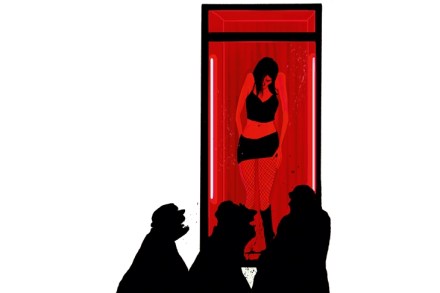
On this week's episode, we're looking at whether the 'sex trade' is a form of sanitised modern slavery. We also ask whether the Tory leadership battle is a phoney war and if university education is going downhill. In this week's magazine Julie Bindel looks at the sex trade, decrying what she sees as an attempt to suffocate the essential human rights of women by supporting the legalisation of prostitution. Are we too soft on this issue? And are the women involved trapped in a form of modern slavery? Julie joins the podcast to discuss, along with Rachel Moran, author of Paid For: My Journey Through Prostitution.

The phoney Tory leadership war

From our UK edition

When a new MP is offered a job as a parliamentary private secretary for a cabinet member, it’s often a test to see if they really would do anything to get into government. It involves running errands, spying on colleagues, ferrying messages around the Commons and planting inane questions for backbenchers to ask in the chamber. But in this hung Parliament, another duty has been added to those of the Tory PPS: to report anyone who might look as if they’re running for leadership. The Tory whips’ office has asked every PPS to inform them if any minister is behaving suspiciously — giving grand speeches about the state of the nation, perhaps, inviting colleagues for drinks or just making a few too many friends.

The many sides of satire

From our UK edition

Brexit the Musical is a peppy satire written by Chris Bryant (not the MP, he’s a lawyer). Musically the show is excellent and the impressions of Boris and Dave are amusing enough, but the storyline doesn’t work and the script moves in for the kill with blunted weapons. Everyone is forgiven as soon as they enter. Boris swans around Bunterishly, Dave oozes charm, Theresa May frowns and pouts in her leather trousers, and nice Michael Gove tries terribly hard to be terribly friendly. Andrea Leadsom, known to the public as a furtive and calculating blonde, is played by a sensational actress who belts out soul numbers while tap-dancing in high heels and a pencil skirt. Was there ever a kinder portrait of a cabinet minister?

What the papers say: The dangers of a rushed Brexit

From our UK edition

Theresa May is back from holiday and the Brexit work continues in earnest. Over the next few days, two key papers - spelling out detail on the customs union and the Irish border - will be published. There’s no doubt, says the Times, that this ‘is a crucial week for Brexit’. ‘After more than a year of disagreement and drift’, there are now some ‘encouraging signs’ that things are slowly being put in order: the joint article written by Philip Hammond and Liam Fox and which was published yesterday advocating a transition period, is one such sign. The publication of reports ‘to flesh out the banal slogans’ touted so frequently so far, will also help matters, suggests the Times.

Fiona Hill’s key role in the fight against modern slavery

From our UK edition

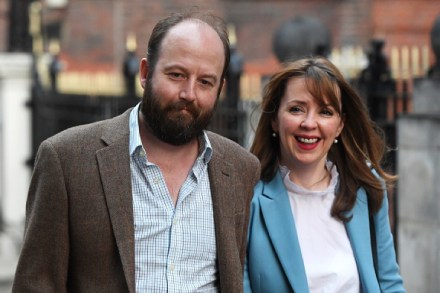
This article is, partly, about Fiona Hill. You remember Fiona Hill, the most evil woman in Britain, the wicked, snarling monster who led Theresa May to disaster then quit as Downing Street chief of staff. That Fiona Hill. That same Fiona Hill is a friend of mine, so you can feel free to ignore everything I say about her: I’m not objective and I don’t pretend to be.  Let’s just say I don’t think you should accept at face value the lazy, unfair and often self-serving caricature of my friend that has been put into the public square by various people, for reasons of their own. Maybe one day I’ll write a little more about those people, their motives and their honesty, but that can wait.

Ruth Davidson is on manoeuvres. What is she playing at?

From our UK edition

So Ruth Davidson, honorary colonel in the signals reserve, is on manoeuvres again. It is past time, the leader of the Scottish Conservative and Unionist party says, for the government to rethink its approach to immigration. Time, instead, for an adult debate on the subject at the end of which, she hopes, the government will rethink its obstinate insistence on treating immigration as nothing more than a numbers game. And since the government keeps missing its targets on immigration, perhaps it would be sensible to revise those targets? At the very least, she says, it is absurd to insist that foreign undergraduates should be counted as immigrants when the public itself doesn’t think they should.