Theresa may

This is what Theresa May should say in her Florence speech

From our UK edition

Tomorrow in Florence, Theresa May needs to make the speech of her life. Britain has a strong hand to play in these EU talks and it’s time the Prime Minister showed it. May must assert once again that ‘no deal is better than a bad deal’, shoring up the UK’s bargaining position. She should also insist Britain won’t confirm any ‘divorce bill’ until these Article 50 talks end in March 2019, with the final amount dependent on the goodwill the EU has shown. Above all, taking her cue from Foreign Secretary Boris Johnson, the Prime Minister needs to present an inspiring vision of the UK outside the EU. The heyday of Florence was as a free-trading, outward-looking, independent city-state, long before it was absorbed into a unified Italy.

What the papers say: May must mean what she says on a Brexit no deal

From our UK edition

Ahead of tomorrow’s Brexit speech in Florence, the Sun has some advice for the Prime Minister: show that you’re prepared to walk away. The paper says it is vital that the Cabinet pulls together around the PM’s Brexit. But it also asks: what happens if Angela Merkel doesn’t buy her plan? Of course, it would be good for Britain if the German Chancellor ‘realised the damage a 'punishment' Brexit will do to German car giants and saw reason’. But there’s no guarantee of that. So May must ’get serious about walking away’ – ‘It cannot be a bluff’, the Sun says. Former chancellor Lord Lawson is right to say ‘we have nothing to fear from a 'no deal'.

Breaking: A mayor speaks at party conference

From our UK edition

Although this year's Labour conference is to take on a distinctly anti-mayoral vibe – with both London mayor Sadiq Khan and Manchester mayor Andy Burnham refused speaking slots – it seems there are still some safe spaces out there for regional mayors. At next month's Conservative party conference in Manchester, West Midlands Mayor Andy Street will take on a starring role. Street – who provided one of the Conservatives' surprise wins in the local elections – will get to deliver a conference speech, the Birmingham Mail reports. With Labour's mayors unhappy about their treatment by the party, perhaps they can ask Corbyn to take inspiration from the Tories?

Brexit wars

From our UK edition

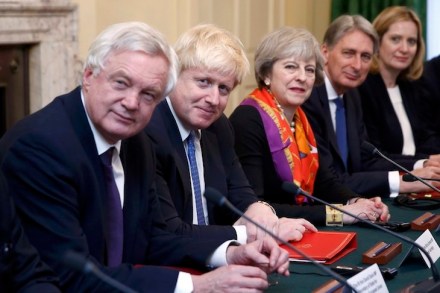
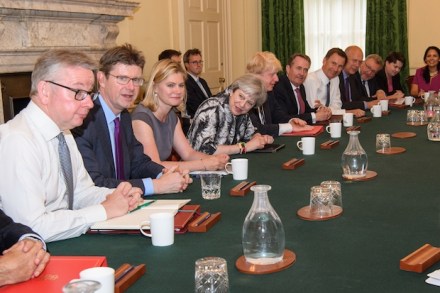
The time for choosing is fast approaching for Theresa May. Soon she must make a decision that will define her premiership and her country’s future. The past few days have shown how hard, if not impossible, it will be for her to keep her entire cabinet on board with whatever EU deal she signs. It is imperative that she now picks what kind of Brexit she wants. But doing so will risk alienating — or even losing — various cabinet members. She has been trying to blur the lines for months, but as one of those closely involved in this drama warns: ‘She can’t fudge this forever.’ Another participant in the struggle says: ‘She’s got to decide who she wants sitting round the cabinet table.

Theresa May’s singing birds can only hold the same tune for so long

From our UK edition

After concerns about the Foreign Secretary's job security bumped Vince Cable's keynote leader's speech at Lib Dem conference off the news agenda yesterday, a sense of stability has been restored to Cabinet. Boris Johnson has told hacks in New York that he is not going anywhere – likening Cabinet harmony to 'a nest of singing birds'. The message from Downing Street, too, is one of quiet confidence that Johnson won't be departing the frontbench – at least, not this weekend. This suggests two things. Firstly, that May's Florence speech won't be as drastic as had first been thought. Secondly, Johnson is coming round to the idea of payments to Brussels continuing during a transition period.

What the papers say: Tory Brexit infighting could hand Corbyn victory

From our UK edition

Boris Johnson’s Brexit intervention ‘is a dismal reflection on Theresa May’s position’, says the Times. But worse than that, this Cabinet ‘disunity is corroding the Conservative brand’ - and making a Corbyn victory at the next election ever more likely. 'In normal times,’ says the Times, ‘the case for dismissal would be unanswerable’. But while the Foreign Secretary’s popularity has ‘plummeted’ of late, he still retains ‘a talent for generating headlines when he is in the mood for trouble’. Mrs May has learnt a lesson from her brutal treatment of George Osborne, and seems determined not to repeat her mistake on that front.

What the papers say: Boris is speaking for the majority of Brits

From our UK edition

Boris Johnson has come in for plenty of criticism since setting out his Brexit blueprint in a 4,000 word article in the Daily Telegraph. But the Sun says the Foreign Secretary has done the PM a favour in speaking up for ‘the 52 per cent who voted Leave and the many more won over since’. ‘Theresa May must listen’ up, the paper says - and she should also 'ignore the siren calls from Cabinet Remainers’ who want to reverse the referendum result. The attacks levelled at Boris are ‘designed solely to discredit him and trash the optimistic vision’ of Brexit he has set out. Instead of getting angry at Boris, the PM should remember the fact that ‘The EU has more to lose if talks collapse’.

The biggest Cabinet Brexit split

From our UK edition

The Cabinet remains divided on one of the most fundamental Brexit questions. Everyone in the Cabinet does accept that Britain is leaving not just the EU but the single market too. But there remains a split over whether Britain should be aiming for an EEA minus deal with the EU or a CETA plus one. This might sound techy but it is fundamental to Britain’s future. Free movement makes it a political non-starter for Britain to stay in the single market. However, several of the most senior members of the Cabinet, backed by the institutional Treasury, think that Britain should stay as closely aligned to the single market as possible. They want Britain to shadow the EU’s regulatory structures and transpose European Court of Justice judgements.

Can Theresa May satisfy both Boris and the EU?

From our UK edition

We are only six days away from Theresa May’s big Brexit speech in Florence. But it is far from certain what will be in it, as I say in The Sun today. The biggest domestic challenge for May, insiders say, is squaring Boris Johnson. I’m told that ‘there is quite a lot of nervousness about that’. ‘Boris has been the most hard-line’ of the Cabinet Brexiteers an insider tells me. One of those involved in the negotiations between the two camps predicts ‘it is going to be a tetchy week.’ Boris’s issue is money. He is opposed to paying a big exit payment to the EU and he’s told Number 10 that he wants that £350 million for the NHS.

Ministers told to ‘think carefully’ about Tory conference

From our UK edition

With no majority and disagreement rife about what went wrong for the Conservatives in the snap election, next month's party conference presents Tories with the perfect opportunity to discuss new ideas and ponder the big challenges facing the party. However, don't expect members of government to partake in the soul-searching. Coffee House understands that everyone from ministers down to Parliamentary Private Secretaries have been encouraged to keep their heads down and 'think carefully' about their behaviour at the four-day event. 'It's been put in no uncertain terms, that in the time of a hung Parliament, the media will be looking for stories to fill the vacuum so think carefully about what you do,' explains one member of government keeping a low profile.

The Spectator Podcast: Playing the race card

From our UK edition

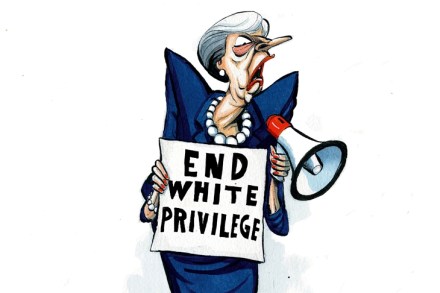
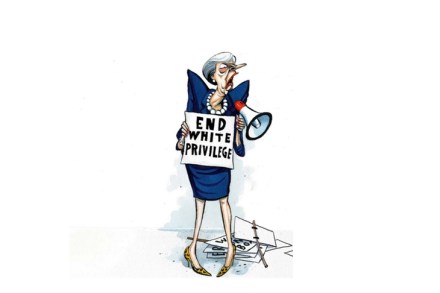
On this week’s episode, we ask whether Theresa May is jumping on a bandwagon by playing the so-called ‘race card’. We also look at the coalitions within our political parties which are being stretched to breaking point, and consider whether doping is the real lifeblood of professional sport. First up: Next month, Theresa May is expected to release the results of a race audit, which has investigated racial disparities in public services. Following hot on the heels of David Lammy’s review into the criminal justice system’s relationship with race, whispers are already abounding that it is being lined up by the Tories as a ‘game-changer’ in terms of their outreach to BAME communities.

Theresa May’s phoney war

From our UK edition

Next month, Theresa May is expected to launch her long-awaited audit into racial disparities in public services. We are being prepared for the worst. Unnamed Whitehall insiders say that they have been ‘shocked’ by the picture it reveals of racial discrimination in the UK. All this suggests the scene is being set for another bout of political self-flagellation regarding the subject of race in Britain, in which half-truths are peddled by lobbyists and swallowed wholesale by officialdom. Several studies have already shown   that some ethnic groups experience different outcomes in policing, health, employment and education. There are many causes behind these disparities but the evidence will be carefully selected to suit a predetermined agenda.

Can anyone unite the Tory tribes?

From our UK edition

One of the reasons that coalition governments are so unusual in Britain is that both main parties are coalitions themselves. The Tories have long been a party of both social conservatives and libertarians, Eurosceptics and Europhiles, buccaneering free traders and economic nationalists. Labour has always brought together Methodists and Marxists, middle-class liberals and working-class trade unionists, hawks and doves. These internal alliances mean the parties mostly avoid the need for an external one. But the Labour and Conservative coalitions are nearing breaking point. Labour’s problem is that its far left now dominates, making the party unbalanced. The two years since Jeremy Corbyn won the leadership have seen his wing gain ever more control.

Theresa May’s phoney race war is dangerous and divisive

From our UK edition

Next month, Theresa May is expected to launch her long-awaited audit into racial disparities in public services. We are being prepared for the worst. Unnamed Whitehall insiders say that they have been ‘shocked’ by the picture it reveals of racial discrimination in the UK. All this suggests the scene is being set for another bout of political self-flagellation regarding the subject of race in Britain, in which half-truths are peddled by lobbyists and swallowed wholesale by officialdom. Several studies have already shown   that some ethnic groups experience different outcomes in policing, health, employment and education. There are many causes behind these disparities but the evidence will be carefully selected to suit a predetermined agenda.

Yet another no-score draw at PMQs

From our UK edition

Jeremy Corbyn has improved at PMQs to the extent that he now touches on the topics that will cause the Prime Minister the most embarrassment. So, today public sector pay and tuition fees both got an outing. But Corbyn isn’t a good enough—or forensic enough—parliamentary performer to really makes these points tell. Theresa May for her part is capable of parrying, but not counter-punching. The result: PMQs is now routinely a no-score draw. Today was no different and with an unexceptional set of backbench questions, the session rather petered out. These no-score draws quite suit both May and Corbyn. As long as May gets through these sessions intact, the morale of the Tory parliamentary party isn’t adversely affected.

Theresa May’s power play pays off as government wins committee vote

From our UK edition

Government whips can breath a sigh of relief. On what turned out to be the second late night sitting in a row for MPs, Andrea Leadsom's motion to ensure that the government has a majority on public bill committees passed at 320 votes in favour to 301 against. This means that even though the government did not win a majority in the snap election, they will have a majority on key committees which scrutinise legislation. In the debate before the vote, opposition MPs accused the Conservatives of an undemocratic power grab – with Labour's shadow leader of the House, Valerie Vaz, likening Leadsom to a North Korean news reader sent out to say everything is fine.

Evgeny Lebedev’s peace offering to Theresa May

From our UK edition

Since taking on the editorship of the Evening Standard, George Osborne has discovered that revenge is a dish best served daily – rarely missing an opportunity to attack Theresa May and her government. So, Mr S was surprised to see that today's edition of the paper, not only doesn't attack the Prime Minister – but actually praises her work. It appears that the paper's proprietor Evgeny Lebedev is keen to find common ground with May. He has tweeted out today's front page – which reveals the paper's annual special investigation is focussed on modern slavery – an issue May has led the way on: https://twitter.

Labour MPs rebel as the government’s EU repeal bill wins Commons vote

From our UK edition

After David Davis warned that MPs opposing the government's EU repeal bill would be voting for a 'chaotic' exit from the EU, the Brexit secretary can take heart that the majority of Parliamentarians took his advice onboard. This morning MPs voted in favour of the government's EU (withdrawal) bill at its second reading by 326 votes to 290, in the first key Commons test of the legislation. On hearing the news, the Prime Minister issued a statement on the 'solid foundations' the bill provides: 'Earlier this morning Parliament took a historic decision to back the will of the British people and vote for a bill which gives certainty and clarity ahead of our withdrawal from the European Union.

Theresa May must make sure that Brexit doesn’t just become a process story

From our UK edition

The EU Withdrawal Bill is undoubtedly an important piece of legislation. But I suspect that the bickering over Henry VIII clauses and affirmative statutory instruments passes most voters by. This is why it’s imperative that Theresa May keeps reminding voters of what the point of Brexit is, of what it will enable this country to do. One of the many problems with the Tory general election campaign was that it turned Brexit into a process story. May talked endlessly about the need to strengthen her hand in the negotiations. But as Andrea Leadsom complained in the political Cabinet’s post-mortem of the election campaign, May never said what Brexit was actually for.