Theresa may

Tory policy chief: party needs Beveridge-style commission to survive

From our UK edition

The Conservative Party appears rather burnt-out at the moment. At its conference - even before Theresa May’s disastrous speech - it seemed to be the Knackered Party rather than the Nasty Party that the Prime Minister herself had warned about so many years ago. But it is still in government, and desperately needs to find new ideas and reasons to exist while also negotiating Brexit and dealing with unexpected scandals, such as the allegations swirling around Westminster at the moment of impropriety from Cabinet ministers. When parties are knackered, they often find a period of opposition to be a comfort, a chance to have the sort of debate about policy that you just don’t have time for in government.

The Tories need a positive vision for Britain after Brexit

From our UK edition

Political Cabinet on Tuesday was a fascinating occasion, as I say in The Sun, and not just because Andrea Leadsom took the opportunity to tell Theresa May she had a wonderful smile.  The Cabinet were given a detailed presentation on the state of public opinion—and bits of it made for grim reading for them. David Mundell, the Scottish Secretary, summed up the mood of the meeting when he told Theresa May, to chuckles, that his first impression from all the data was that she shouldn’t call an election anytime soon. The problem for the Tories is that the voters are wary of their values and fed up with austerity.

Identity issues

From our UK edition

It was always going to be difficult for Theresa May’s government to secure a legacy beyond Brexit. With the negotiations running into difficulty, it becomes all the harder. Ministers must avoid, however, resorting to well-meant gestures which open the government to ridicule. Take, for instance, the revelation that Britain has insisted on the UN’s International Covenant on Civil and Political Rights making reference to pregnant transgendered people — although it now denies that it objected to the term ‘pregnant women’. The purpose of the relevant clause is deeply serious — to dissuade malignant regimes from subjecting pregnant women to the death penalty.

Portrait of the week | 26 October 2017

From our UK edition

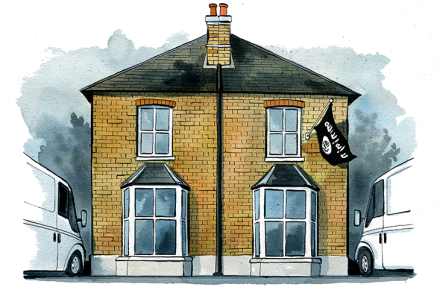
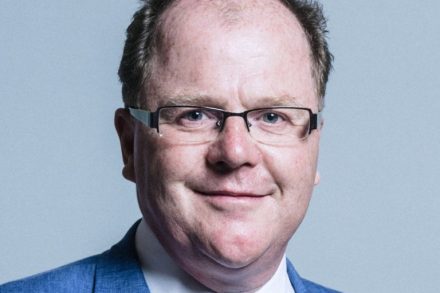
Home  Of perhaps 400 Britons returned from the former territory of the Islamic State in Iraq and Syria, those who ‘do not justify prosecution’ should be reintegrated, Max Hill, the independent reviewer of terrorism legislation, told the BBC. Rory Stewart MP, asked about foreigners fighting for the Islamic State in Syria, said that ‘the only way of dealing with them will be, in almost every case, to kill them’. Jared O’Mara MP resigned from the Commons equalities committee after attention was directed to remarks he made online in 2004, such as that Michelle McManus had only won Pop Idol ‘because she was fat’.

The Spectator’s notes | 26 October 2017

From our UK edition

Theresa May’s style of negotiating with the European Union is coming spookily to resemble David Cameron’s. She is in the mindset where the important thing is to get a deal, rather than working out what sort of a deal is worth getting. The EU understands this, and therefore delays, making Cameron/May more desperate to settle, even on bad terms. Eventually, there is an inadequate deal which the British government then has to sell to a doubting electorate. Mr Cameron was punished for this at the referendum he had called. Mrs May is inviting punishment at a general election. It is interesting how moderate politics cannot get a hearing just now.

Theresa May can’t just expect employers to solve the mental health crisis

From our UK edition

Theresa May made mental health one of her key policy issues when she became Prime Minister, and it was supposed to be a key part of her relaunch after the snap election too. So far, though, the Prime Minister has done a fair bit of talking, and not a huge amount of doing. The big mental health launch in January involved very little money and a lot of worthy words about lifting the stigma. Worthy words are handy, given some people do still encounter a great deal of stigma when they are mental, rather than physically, ill. But the thing about being Prime Minister is that you can do a lot more than talk if you want.

Theresa May’s silent treatment

From our UK edition

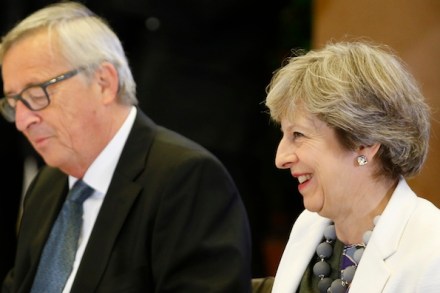
After an unflattering account of Theresa May's dinner last week with Jean-Claude Jucker wound up in the German broadsheet FAZ, tensions between Brussels and Westminster have heightened. The briefing claimed that May 'begged' for help and appeared 'tormented' with 'deep rings' under her eyes. Keen to prove that he was not behind the leak, Juncker yesterday insisted that May 'was in good shape, she was not tired' – insisting the reports were untrue. So, Mr S was intrigued to read Rachel Sylvester's column in today's Times. She claims that on the UK side, those who report meeting May recently describe her as 'stricken and stunned'.

Theresa May discovers the perfect answer to difficult Brexit questions

From our UK edition

Theresa May has the perfect answer to all difficult questions: we don’t want to give away anything that will harm our position in the Brexit negotiations. No matter whether the information an MP is requesting has anything to do with Britain’s negotiating position: it’s a handy line to use when the answer is in fact ‘I don’t actually know’. The Prime Minister deployed this argument about not wanting to undermine the negotiations several times as she took questions from MPs in the Commons following her statement on last week’s European Council summit.

May’s disastrous dinner with Juncker: Episode II

From our UK edition

Well, that lasted long. Although Theresa May didn't get the green light to talk trade on her EU council summit charm offensive last week, there was a general consensus that the mood music had at least improved. The EU27 struck a conciliatory and optimistic tone – agreeing to begin internal trade discussions in anticipation of moving to trade talks in December. Angela Merkel even went so far as to say she had 'no doubt' a deal would be reached between the EU and Britain. However, it seems that the memo to play nice failed to reach the European Commission. Just as happened the last time May had dinner with Jean-Claude Juncker, a withering account of the pair's meeting on Monday has wound up in the German broadsheet FAZ.

Caption contest: May goes it alone

From our UK edition

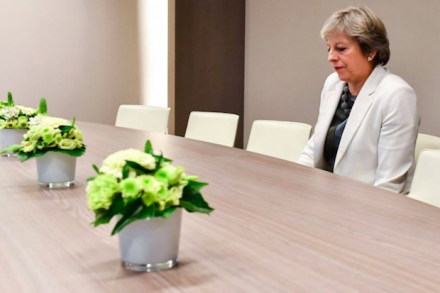
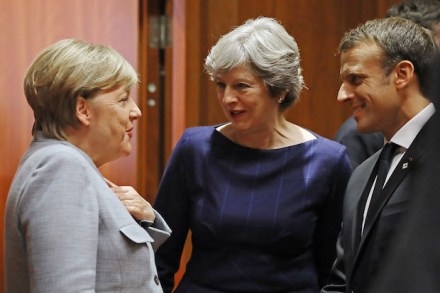
Oh dear. Despite managing a carefully co-ordinated photo opp with Angela Merkel and Emmanuel Macron on arrival in Brussels, Theresa May cut a solemn figure this morning. A snapper took a photo of the Prime Minister alone at a meeting table – looking glumly into the distance. It's hardly the Brexit image that Downing Street were trying to project. Oh to be a fly on the wall in No 10... Captions in the comments.

Angela Merkel throws Theresa May a lifeline

From our UK edition

Few in Whitehall believed that Theresa May's trip to the EU Council summit this week would result in Britain being given the green light to move onto the second stage of Brexit talks. Instead, it has all been about setting the tone and planting the seeds so that when the EU27 meet again in December, they decide that it is finally time to talk about trade. So, Theresa May ought to be able to leave Brussels a moderately happy woman today. This morning EU leaders agreed to start internal discussions on their approach to the 'second phase' of talks on trade and the transition period. This isn't a green light – but it is a suggestion a green light could be granted the next time they meet.

The government needs to know what kind of Brexit deal it wants

From our UK edition

Theresa May needs to invite the Cabinet down to Chequers to thrash out the government’s position on Brexit, I say in The Sun this morning. Remarkably, the Cabinet have never had a proper discussion about what the final deal with the EU should be. One senior Cabinet Minister tells me that ‘The million dollar question is the trade-off between regulatory compliance and market access and we haven’t had that discussion yet’. This failure to talk is frustrating Cabinet Ministers, breeding distrust and contributing to the current break down of discipline within the government. As the policy isn’t decided yet, ministers keep trying to push it this way or that.

Portrait of the week | 12 October 2017

From our UK edition

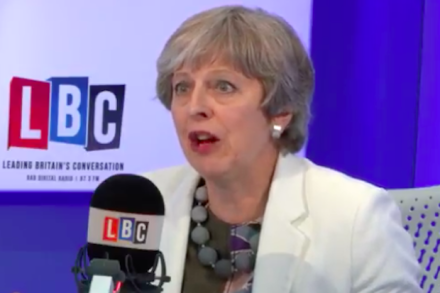
Home Theresa May, the Prime Minister, when asked by Iain Dale in an interview on LBC: ‘If there was a Brexit vote now, would you vote Brexit?’ repeatedly refused to say. Earlier, briefing the House of Commons on Brexit, she said that the country must prepare for ‘every eventuality’. The government published two papers on trade and customs arrangements that envisaged ways by which Britain could thrive as an ‘independent trading nation’ even if no trade deal were reached with Brussels. Mrs May admitted that during a transitional period, the European Court of Justice would retain jurisdiction.

The Spectator Podcast: Tech vs Trump

From our UK edition

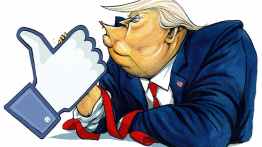
On this week’s episode, we discuss Trump versus technology, the ‘new normal’ with Calamity May, and whether jargon is polluting the English language. First up, in this week’s magazine cover piece, Niall Ferguson writes on the battle between networks and hierarchies for supremacy in a digital world. The biggest fight is between the American President and the social networks, like Facebook and Twitter, who still exist in the unregulated frontier of the Wild Wild World Wide Web. Niall joined Freddy Gray, host of the Spectator’s Americano podcast, to discuss. As Niall writes: "It may be too big a stretch to claim that Russian Facebook ads swung the election in Trump’s favour.

The plots thicken

From our UK edition

‘Worst week ever’ is one of those phrases that journalists are, perhaps, too quick to use. Alastair Campbell once quipped that if you added up all Tony Blair’s worst weeks, you got a full year. The real worry for the Tories, however, is not that last week was Theresa May’s worst ever, but that it represented the new normal. Even inside Downing Street, there are those who worry that leadership plotting and the like will continue until Mrs May leaves the building. They worry that while they are strong enough to repel the plotters — as they did so effectively this time — she isn’t powerful enough to take back control. So the whole cycle will continue, with the rebels coming back for another crack every time the Prime Minister looks vulnerable.

Why May must stay | 12 October 2017

From our UK edition

As from the Manchester conference hall I watched Theresa May’s big moment falling apart, as I buried my head in my hands while her agonies multiplied, I suppose I thought this could spell the end for her premiership. But even as I thought that, then reminded myself that the same failure of the larynx has afflicted me in front of a big audience and could strike anyone and is in itself meaningless, I knew such an outcome would be unjust. There may be reasons why the Tories should find a new leader, but the triple-whammy of a frog in the throat, some joker’s idiotic stunt, and the failure of two magnetic letters to stick to a board, can hardly count among them.

Theresa May refuses to say she’d now vote Leave

From our UK edition

Theresa May struck a defiant tone this afternoon in her first broadcast interview since her disastrous conference speech. Speaking to Iain Dale on LBC, the Prime Minister re-iterated her old claim that she still wishes to lead the party into the next election – even if the number of MPs in her party who support her wish is now in single figures: ID: Is it still your intention to lead the Conservative party into the next election? TM: Iain I've been asked this question many times and the answer has not changed, I can tell you that. ID: I just wondered after the events of last week whether it might have changed.

Theresa May’s race audit relies on misleading statistics

From our UK edition

We know from her unfortunate conference speech that it irks Mrs May to hear Labour claiming a monopoly on compassion, and this week’s racial disparity audit is her latest attempt to prove that she is equally concerned about injustice. The problem is that the disparity audit is based on a colossal intellectual blunder. Disparate outcomes may be the result of discrimination, but there are numerous other valid explanations. When comparing large groups using statistics there are many confounding factors at work. For example, the average age of ethnic minorities is younger than for the white population. This has given them less time to get promotion and increase their earnings. To assume that lower average earnings result from discrimination is a schoolboy error.

Theresa May concedes that the European Court of Justice will have a role during the Brexit transition

From our UK edition

Most of Theresa May’s statement today was simply a reiteration of what she had said in Florence. But we did get clarity on one crucial point. In answer to a question from Jacob Rees-Mogg, Theresa May explicitly accepted that the European Court of Justice would have a role during the transition. She said that she hoped it would be replaced at some point by a new dispute resolution mechanism. But at the beginning of the transition, the ECJ will be the arbiter. Now, there will be Brexiteers who don’t like this; Jacob Rees-Mogg’s question was seeking an assurance that this would not be the case. But if the transition is to see the UK stay inside the single market in everything but name, it is hard to see how this can be avoided.

Theresa May needs to promote new ideas, not just new names

From our UK edition

Theresa May is threatening a reshuffle - and would be wise to threaten it for as long as possible as the only thing more problematic than naughty ministers you need to move is angry ex-ministers who didn’t want to be moved. Katy looks at who the Prime Minister could move in this post here, and points to a desire for new talent in the government. Promoting the next generation would achieve two things. Firstly it would energise a rather grey government (impressive, given the grey government is opposed by a party led by Jeremy Corbyn and John McDonnell).