Theology

Can Peter Thiel stop the Antichrist?

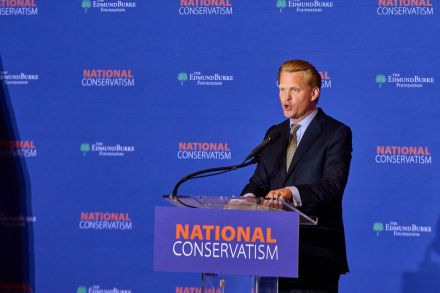
Last December, we flew to Los Angeles to interview Peter Thiel, the billionaire tech tycoon and co-founder of PayPal. We discussed globalization, artificial intelligence and the rise of New York Mayor Zohran Mamdani. But one subject seemed to particularly exercise Thiel: the Antichrist. He promised to expand on this when we next met – which is how we ended up in the back room of a Cambridge college, surrounded by theologians, venture capitalists and AI engineers, to hear Thiel describe the end of humanity. Standing in front of Gustave Doré’s illustration of Satan’s fall in Paradise Lost, Thiel, a can of Diet Coke in his hand, explained why the most important thing he can do with his money is to identify and then defeat the Antichrist.

thiel antichrist

No passive utopia: Tibetan Sky, by Ning Ken, reviewed

From our UK edition

We often forget to ascribe agency to modern Tibet. Politically, it seems to lie mute in the behemoth shadow of China. Culturally, we encounter it more as the backdrop to journeys of self-discovery than a producer of modern culture in its own right. But the villages of the Tibetan plateau are defiantly cosmopolitan in Ning Ken’s novel, the first by this important Chinese writer to be translated into English. Sardonic and erudite, it’s the only major literary treatment of Sino-Tibetan relations to appear in English in decades. The author belongs to the generation of such era-defining Chinese novelists as Mo Yan and Yan Lianke, publishing his first fiction in the heady days of reform and opening-up.

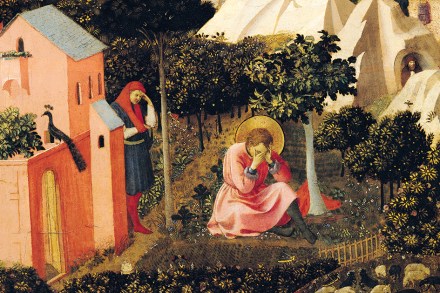
The spiritual journey of St Augustine

From our UK edition

When I lived in south London, my Algerian barber used to tell me that he came from Souk Ahras, ‘the home town of Augustine’. I found it strange to hear a forbidding doctor of the early church described as a local boy made good, but Catherine Conybeare shows me that I should not have done. Algerians have remembered what the Church has often overlooked: that Augustine’s thinking owes everything to his birth in 354 in what was then Roman North Africa. Although five million of his words survive, they come to us from the hands of medieval copyists who were more interested in setting out his doctrines than in recording his life. They cut up his sermons and letters, removing irrelevant or cryptic local allusions.

A double loss: The Möbius Strip, by Catherine Lacey, reviewed

From our UK edition

The Möbius Book has been variously described as ‘a hybrid work that is both fiction and non-fiction’ and a ‘memoir-cum-novel’. Catherine Lacey herself asserts that it is a work of non-fiction, but with a qualifying ‘however’. It comprises two narratives, first- and third-person, and is published to be flipped 180 degrees. Ali Smith’s How to be Both had a similar format, as did Mark Danielewski’s Only Revolutions. All three force the reader into making a choice and living with the consequences. This is not cosmetic, as The Möbius Book is about decisions and repercussions. Lacey writes in the aftermath of two break-ups: a romantic one with a man referred to as ‘the Reason’, and an earlier one with God.

Christianity, culture wars and J.D. Vance: a conversation with James Orr

From our UK edition

62 min listen

James Orr was living the life of a young, high-flying lawyer when, after a few drinks at a New Year's Eve party, he asked for signs that God existed. The signs came; among other things, he narrowly avoided a fatal skiing accident. Now he is a passionate Christian and a conservative culture warrior who helped defeat an attempt to impose the tyranny of critical race theory on Cambridge University, where he is an associate professor of the philosophy of religion. He's also an intellectual mentor to the vice president of the United States; Politico describes him as 'J.D. Vance's English philosopher king'. Dr Orr says Vance is 'extremely articulate, but he takes no prisoners'.

The report of Christianity’s death has been an exaggeration

From our UK edition

George Orwell began his beautiful, nostalgic pre-war novel Coming up for Air with an epigraph from a popular song. ‘He’s dead, but he won’t lie down.’ It’s tempting to borrow the line when writing about Christianity in the West today. The chronicle of its death has been long foretold, its obituary repeatedly rewritten. Numbers, particularly in older denominations, have been heading south for decades, and churches (in Britain at least) have been shutting ever since over-enthusiastic Victorians opened far too many of them. Yet at the same time immigration is revivifying congregations everywhere. Many people show signs of spiritual openness, few speaking well of the kind of bare-knuckle rationalism that characterised New Atheism.

Is it time for Jordan Peterson to declare his spiritual allegiance?

From our UK edition

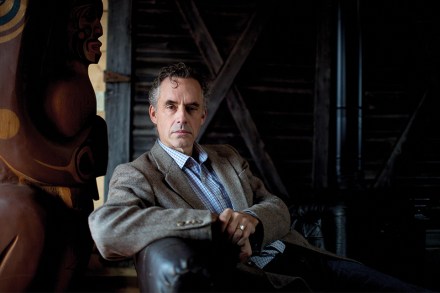
Alan Isler’s novel Clerical Errors (2001) features a troubled priest who mocks the faith he has largely abandoned. ‘How can any rational creature not see in the story of Christ the pattern of countless pagan myths, the universal romance of the sacrificial god, his apotheosis and his rebirth?’ Jordan Peterson’s new book stands this argument on its head. That core Old Testament and gospel narratives are echoed in other cultures, past or present, is hailed as a mark of biblical universality. What applies to the resurrection also covers themes including sibling rivalry (Cain and Abel), pride and overreach (Noah’s Flood), deliverance from slavery (the Exodus) and the Fall itself. These archetypes abide in our collective unconscious for good reason.

What does Christian atheism mean?

From our UK edition

Two opposed camps can only have a fruitful debate if they agree on what it is they disagree about. A militant atheist such as Richard Dawkins is right to call out scientific ignorance in some religious settings. But at a deeper level his argument fails, because the deity he rejects is a blown-up thing, not the Creator conceived in classical tradition. Similar considerations apply to Slavoj Žižek’s Christian Atheism. When the claim that religion is no more than pious fantasy forms your starting point as well as your conclusion, then reason becomes the first casualty. This approach is as circular as beginning a book on socialism by asserting that all left-wing thought and endeavour are flawed by definition.

Why did Jon Fosse win the Nobel Prize for literature? It’s baffling.

From our UK edition

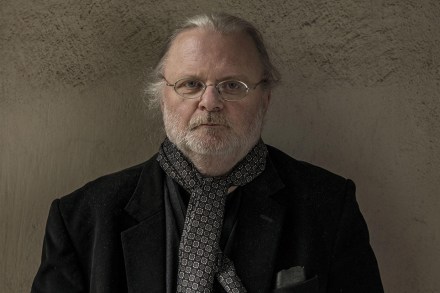
The Nobel Prize for Literature this year was awarded to the Norwegian novelist and playwright Jon Fosse (pictured). He has long been admired by anyone in the literary world keen to advertise their seriousness. The Canadian critic Randy Boyagoda, writing of Fosse’s Septology in the New York Times, said that he’d ‘come into awe and reverence myself for idiosyncratic forms of immense metaphysical fortitude’. The technique is to bury statements of mystic vision or horror in piles of mostly tiny and uninteresting events Fosse is published in Britain by Fitzcarraldo Editions, that elegant firm bringing all sorts of high-minded writers to our attention in matchy-matchy formats.

A playful version of the universe: Pure Colour, by Sheila Heti, reviewed

From our UK edition

Readers familiar with Sheila Heti’s work, most notably How Should a Person Be? and Motherhood, in which she examines both the possibility and implications of choosing one’s life and dealing with the consequences, will be familiar with her apparent capriciousness. Her prose — freewheeling, elliptical, a tangle of jokiness and jeopardy — seems to capture the puzzle of proportionality: how seriously should we take this one life we have, and how can we hope to balance our opposing urges towards levity and gravity?

The left’s Nicene Creed

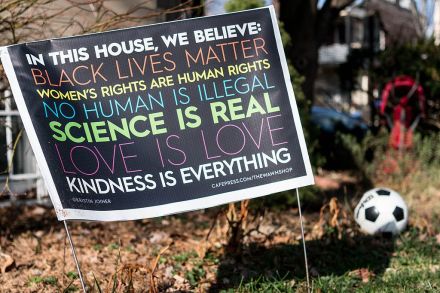
I live in a blue city in a blue state, meaning I can't so much as walk to the CVS without seeing a certain sign in half a dozen front yards. You know the one: "IN THIS HOUSE, WE BELIEVE: BLACK LIVES MATTER, SCIENCE IS REAL, WAR IS PEACE, MY LIFE FOR AIUR" and whatever the hell else they're on about these days. The sign has become so commonplace, so utterly oblivious to its own irony, that it feels less like a show of defiance than a profession of faith. Think of it as the left's very own Nicene Creed, the statement of belief that Catholics recite every time they go to mass. One imagines a congregation of the pink-haired standing in pews: "I believe in Science, and in xis only son Dr. Fauci, creator of BIPOCs and TERFs...

The End of Times and the coming of the Antichrist

From our UK edition

Two things it may be wise to know before picking up this relatively short and surprisingly cheerful brand spanking NEW biography of the Antichrist: (1) the meaning of the word ‘eschatological’ (it’s fairly critical); (2) the fact that the Antichrist is not the devil (a common misapprehension). The Antichrist is actually the son/spawn of the devil, and Philip C. Almond has already provided us with a perfectly serviceable biography of the Prince of Darkness himself (also NEW, even though, um, a few years old now). As a religious/cultural figure the Antichrist was actually a bit of a slow starter.

Alternatives to God

From our UK edition

K. Chesterton, in one of his wise and gracious apothegms, once wrote that ‘When Man ceases to worship God he does not worship nothing but worships everything.’ John Gray, one of the most pernickety and carnaptious of contemporary philosophers, presents here a kind of taxonomy of not atheism, per se, but of the vacuums and nothings into which the loss of belief has rushed. It is, as one would expect, an exhilarating read. The title winks to Empson’s Seven Types of Ambiguity, and he appears as one of the figures in these essays. One might think that atheism is a fairly simply proposition. There is no God.

Eat the forbidden fruit

From our UK edition

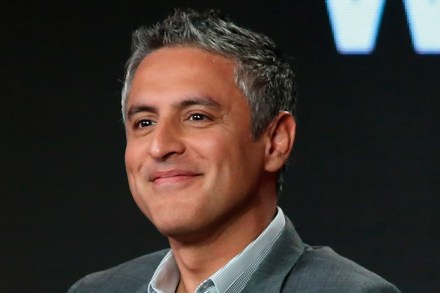
Eating human brains, burying one’s face in dead people’s ashes and publicly deriding the president of the United States as a ‘piece of shit’ are not among the activities usually associated with serious religious historians. But Reza Aslan is something else. An American academic born in Iran, brought up as a Muslim, converted to Jesus by the Jesuits and back to Islam through his own free will, he came to prominence following an interview on Fox TV to promote his book Zealot: The Life and Times of Jesus of Nazareth (2013). He was repeatedly asked how being a Muslim qualified him to write about Jesus, to which he responded by listing in pushful, indignant tones all his academic credentials.

Why it’s obvious that morality precedes religion

From our UK edition

At a beautiful church service recently I encountered again a Gospel parable that left me, again, torn between sympathy and doubt. You will recognise Matthew 25: 35-40, for its phrasing has entered the idiom: ‘I was hungry and you gave me food … sick and you visited me … in prison and you came to me … a stranger and you took me in … naked and you clothed me … ’ The story is of a king praising his subjects for these kindnesses to him. This puzzles them: ‘When did we see you hungry, and feed you … a stranger and take you in…’ (etc)? The king replies: ‘Inasmuch as you did it to one of the least of these, my brethren, you did it to me.

Dreaming of wide open spaces

From our UK edition

On the website of the Australian National University in Canberra, emeritus professor of history Barry Higman lists his research interests as food sciences, cultural studies and historical studies, with a particular interest in The world history of food over the last 5,000 years; the global history of domestic servants in the modern world; the history of the Jamaican landscape; the history of Australia as a flat place; and the history of islands and insularity. This rather unusual breadth of interests suggests either that Professor Higman is a very curious man indeed or a complete academic fraud. Fortunately, for the sake of the future of higher education in south-eastern Australia, it’s the former. Flatness is the uneven, fascinating work of a true scholar enthusiast.

All about my father

From our UK edition

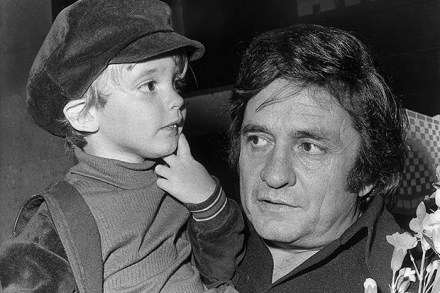
My father had many faces. There was much that made up the man. If you think you ‘know’ John R. Cash, think again. There are many layers, so much beneath the surface. First, I knew him to be fun. Within the first six years of my life, if asked what Dad was to me I would have emphatically responded: ‘Dad is fun!’ This was my simple foundation for my enduring relationship with my father. This is the man he was. He never lost this. To those who knew him well — family, friends, co-workers alike — the one essential thing that was blazingly evident was the light and laughter within my father’s heart. Typically, though his common image may be otherwise, he was not heavy and dark, but loving and full of colour. Yet there was so much more....

The gospel truth

From our UK edition

More brides in Britain go down the aisle to Gloria Gaynor’s ‘I Will Survive’ than to any other tune, Simon Loveday notes. He cannot resist adding that ‘it seems doubtful that they have fully taken in the words of the rest of the song’. That must be true. ‘I’m not that chainedup little person still in love with you,’ yells the defiant narrator in Gloria’s song. ‘You’re not welcome anymore.’ If anything, ‘I Will Survive’ belongs, it seems to me, to a genre of assertive anthems, like ‘My Way’ and ‘Invictus’, that appeal to people who are the imaginary heroes of their own Desert Island Discs and examine their lives as little as the lyrics that make them feel better.

Darkness visible

From our UK edition

Perhaps you have sometimes wondered: how would you even begin to make a film about going blind and being blind and what that means? How, when the subject is so profoundly and inherently uncinematic? Or maybe it’s other thoughts that keep you awake at night — such as when we all finally receive our £350 million a week plus free puppy, where will we be expected to keep them? — but even if that’s so you’ll still find Notes on Blindness to be a singular achievement, as well as a truly wonderful one. This is based on the audio recordings of John Hull, the academic, writer and theologian who was Emeritus Professor of Religious Education at the University of Birmingham.

War on Mount Olympus

From our UK edition

It is a curious fact that the modern Hebrew for ‘atheist’, Tim Whitmarsh notes in passing, is apikoros. The word derives from Epicurus, who set up shop as a philosopher in Athens around 306 BC, but it became so domesticated in Hebrew that the medieval thinker Moses Maimonides, till he found out better, thought it was of home-grown Aramaic origin. In ancient Jewish usage, however, I think apikoros meant someone who denied that God takes care of the world, which was indeed the claim of Epicurus. Though Whitmarsh sets out to show that atheism was quite normal in ancient (Greek) history, atheism turns out to be a slippery notion. Epicurus declared that the whole boundless world was made up of an infinite number of indestructible atoms in unpredictable motion.