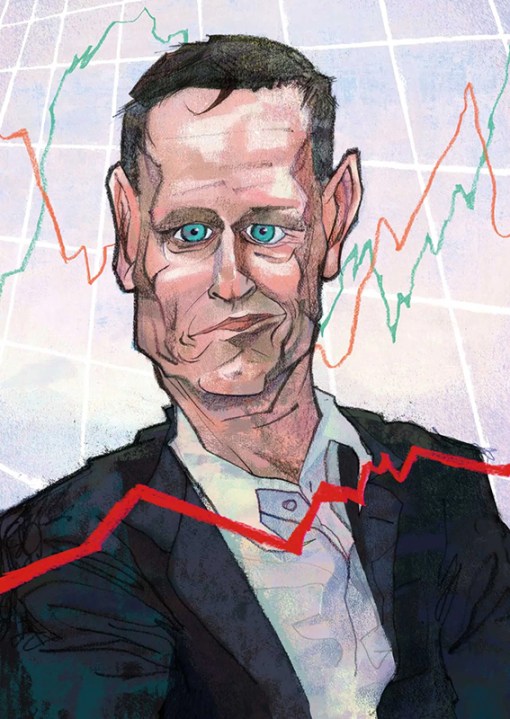
Last December, we flew to Los Angeles to interview Peter Thiel, the billionaire tech tycoon and co-founder of PayPal. We discussed globalization, artificial intelligence and the rise of New York Mayor Zohran Mamdani. But one subject seemed to particularly exercise Thiel: the Antichrist. He promised to expand on this when we next met – which is how we ended up in the back room of a Cambridge college, surrounded by theologians, venture capitalists and AI engineers, to hear Thiel describe the end of humanity.
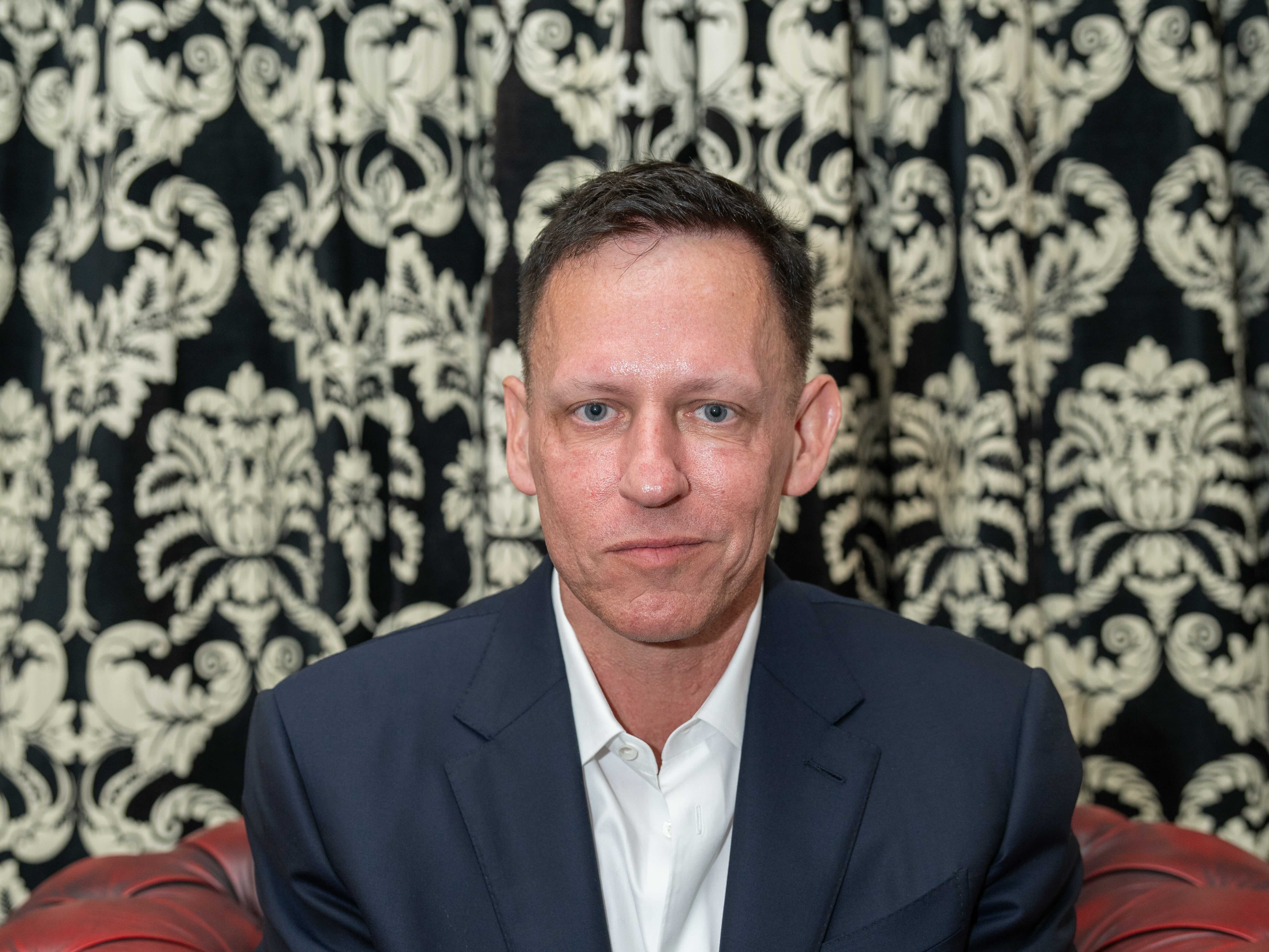
Standing in front of Gustave Doré’s illustration of Satan’s fall in Paradise Lost, Thiel, a can of Diet Coke in his hand, explained why the most important thing he can do with his money is to identify and then defeat the Antichrist.
Thiel has been worrying about Armageddon for some time. He jokes that being allowed to talk about the Antichrist is “the best test of free speech.” At previous events, protesters have gathered, dressed in goth garb, holding The Satanic Bible and performing “dark rituals” to disrupt proceedings. But on this occasion, Thiel’s lectures, hosted by James Orr, a theologian and senior advisor to Nigel Farage, go undisturbed. This is perhaps a credit to Cambridge’s commitment to free speech. Or is it just the tight security operation? The location was only sent to attendees hours in advance, adding to the sense of secrecy.
But first: who is the Antichrist? He/she is generally understood to be a future false prophet, empowered by the Devil, who will try to destroy Christ. Some people believe the Antichrist will rule tyrannically before the second coming and Judgment Day. Thiel says that society feels as though “it is very late in the day” and that we may be living through end times. He has concluded that the Antichrist is already living among us. “I am just a humble classical liberal,” Thiel tells us. “I want to stop the Antichrist.” Those who suggest that Christians should look forward to the reign of the Antichrist, as a necessary precondition to the eschaton, are reprimanded. He is not a Calvinist. To wait for God to banish the world of evils is to subject your children to tyranny, or worse, stagnation.
For all the linguistic flourishes, it is hard to pin down exactly who or what Thiel believes the Antichrist is – or what we should do about it. He argues that figures like Dr. Strangelove no longer hold power: the Antichrist is not a nuclear physicist or mad scientist, but a Luddite. He jokes that one of his friends is adamant that Bill Gates is the most likely candidate. He recalls a terrible fight with Gates in which the Microsoft founder screamed at him as if he had Tourette’s syndrome. But no, Gates cannot be the Antichrist because that person must be, says Thiel, “at minimum someone popular.” Richard Dawkins, the “paleontologist turned fossil who still believes in the 18th-century idea that science is compatible with atheism,” is also out. Stranger candidates include King Solomon, or at least the promise of a philosopher king more generally.
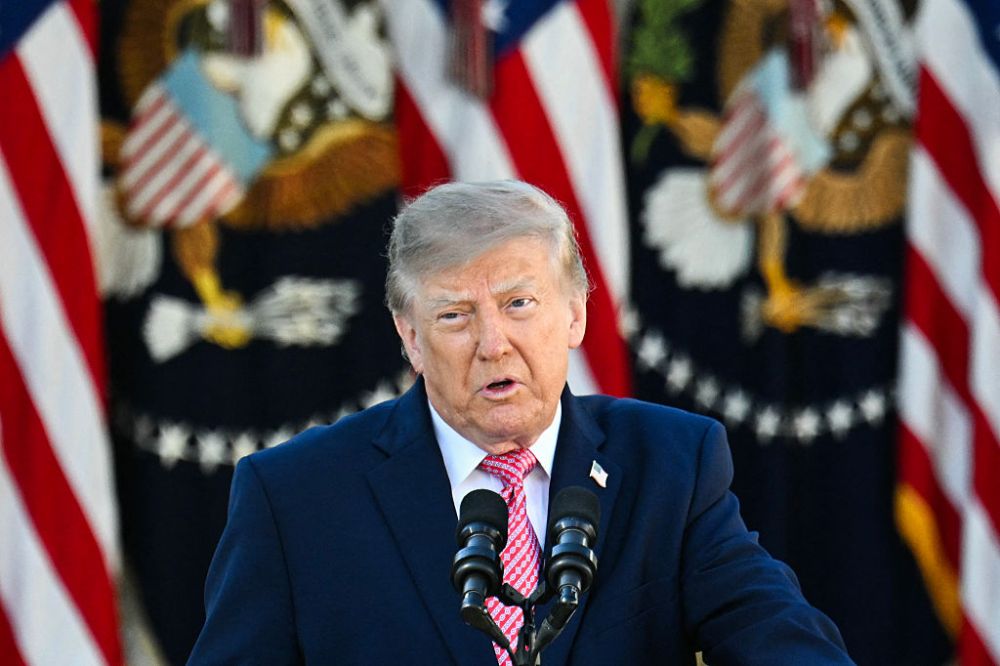
Thiel is worried by Pope Leo XIV. While the Holy Father is currently perceived as just a “partisan NPC [non-player character],” if aligned with a “woke” or anti-progress US president such as the left-wing Congresswoman Alexandria Ocasio-Cortez, the forces of the Antichrist might prevail through caesar-opapism.
Unusually for a self-described Christian, Thiel at no point proposes piety or prayer as the solution to the Antichrist’s threat. He believes in the flawed nature of the human condition, but he thinks that technology could save us. Critics might call him a Faustian: so preoccupied with science and tech that he disregards the immortal soul. He tells the audience: “I don’t know whether I’m going to live for ever because of life extension technology or the resurrection, but I’m hedging my bets.”
He says society feels as though ‘it is very late in the day’ and that we may be living through end times
If the Antichrist is a real person in the world, operating as a political actor, Thiel’s quest to identify him also provides a useful staging post for him to discuss his other more profane reflections on the United Kingdom – whether about Reform UK, the Rwanda scheme or taxes.
While Thiel is fond of Britain, he believes we have made serious errors by not controlling our “crazy immigration” or taking advantage of the tech-powered growth the United States has. Nonetheless, he hopes that Britain can stand up to a vengeful American administration if the Democrats are elected in 2028, perhaps even acting as a refuge for the politically persecuted. In this sense Britain is like New Zealand, where Thiel has acquired citizenship and bought land to help him establish a refuge in times of international discord.
The pursuit of a safe jurisdiction may explain Thiel’s preoccupation with British politics. He says that Reform is “the best option for Britain, and it’s not even close,” and that it is ‘the only chance Britain has.” This is not just a nod to the host James Orr; Thiel has a specific dislike of the Conservative party. He describes the Rwanda scheme as an un-serious idea, and considers the removal of the non-dom scheme by the last Tory government to be part of a wider strategy (along with the abolition of Swiss banking secrecy and the progressive shuttering of international tax havens) to make it impossible to hide money from international governance structures – and, by extension, the Antichrist.
His disdain for the Tories seems to be rooted in his belief that the party is in hock to property owners. If the “so-called conservative parties” want to win another election, “they should expel everyone who makes money from real estate from running.”
The gerontocracy that Thiel believes dominates the Conservative party presides across the world, he says. It is responsible for the decline in fertility rates; he points to countries like South Korea where the number of children being born is so low that there is a social stigma around becoming parents. The likely future for the diminishing number of children born will be working almost to death to keep a planet that is overspilling with old people ticking over. As Thiel describes it, this is simply a life of “economic enslavement.”
Boomers themselves, he says, are “coherently polarized” across right and left, which allows them to concentrate their political power, unlike the more diffuse generations which have come after, who do not channel themselves electorally into large political parties. This means that gerontocracy is nigh on impossible to solve politically.
His bitter anger follows us as we walk out into the freezing winter evening. Thiel is not a pessimist, but he believes that without a course correction, we are doomed. The audience could respond with fatalism – a sense that nothing is to be done – or it could be a spur to action.
Before attending Thiel’s lectures, we suspected that the “Antichrist” was either a distraction from politics – coming about after his allies, including Elon Musk, have fallen from grace in Trump’s administration – or simply a super narrative that ties together various strands of his political thinking: one cohesive “Antichrist” to be held responsible for falling fertility rates, the grooming gangs, net zero, immigration, wealth taxes and anything else he dislikes. In a social context where the assumed set of moral values for most people involves a nihilistic, liberally minded atheism, we may look to rationalize genuine religious belief as having a secret secular motivation. But after listening to these lectures, perhaps the most surprising thing is how sincerely Thiel and the people around him really do believe in it.




Comments