Theatre

This production needs more dosh: Good, at the Harold Pinter Theatre, reviewed

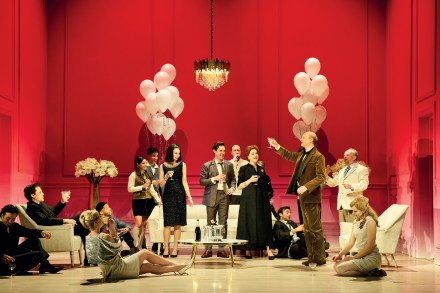
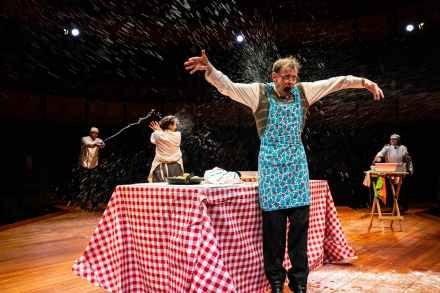
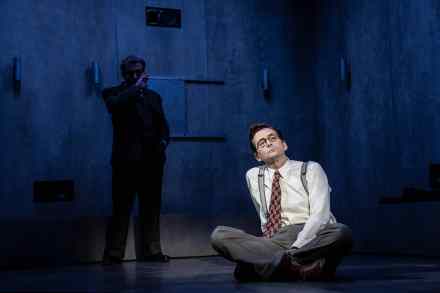
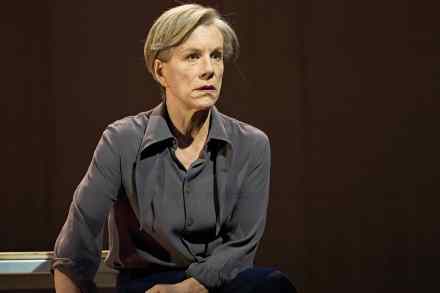
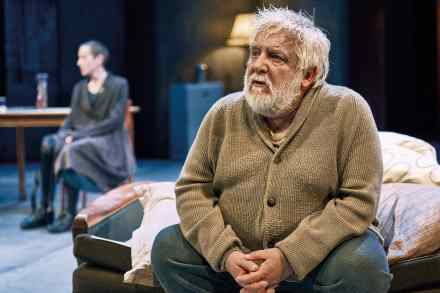
Good, starring David Tennant, needs more dosh spent on it. The former Doctor Who plays John, a literary academic living in Germany in 1933, whose cosy life is disrupted by troublesome females. His mum is a cranky basket case dying in hospital and his wife is a manic depressive who can’t look after their kids. Both women speak with Scottish accents. John has a fling with a third Scotswoman who studies Goethe at his university. Weirdly, all three women – mum, wife and girlfriend – are played by the same actress. Couldn’t the producers fork out for a proper cast? They certainly didn’t spend more than a fiver on the set, which looks like an abandoned bomb shelter made of cardboard.

Artistic achievements that changed the world

‘Astonish me!’ was the celebrated demand that the impresario Sergei Diaghilev made of Jean Cocteau when he was devising Erik Satie’s ballet Parade. Dominic Dromgoole has taken it as the title for a collection of essays on a series of seismic first nights, ranging across different public art forms. It is a celebration of the artistic achievements that overcame the odds to change the story of culture, and whose effects rippled out to change the world. The author is a distinguished theatre director, and his focus is on performance. He is at pains to reject the notion of the solitary artist and argues that, from the dawn of history, the finest art has been communal.

In defence of Shakespeare’s Globe

Off to my old manor, the Globe theatre, to join a celebratory gathering of thems and theys for I, Joan, a non-binary telling of the Joan of Arc story. The show has caused no shortage of outrage in various communities on the left, centre and right, and has had the Globe labelled as misogynist by feminists of a certain generation. It is a great compliment to the Globe that even though it only opened in 1997, it is already held so dear that whatever happens there is quickly amplified into a broader debate. In my time as artistic director, we had one Sun front page ridiculing our engagement with foreigners; then later a concerted pile-on from left and right when we had the temerity to invite both Israelis and Palestinians to an international festival.

Mirthless, artless farrago of jabber: The Doctor, at Duke of York’s, reviewed

The Doctor is an acclaimed drama from the pen of writer-director Robert Icke. We’re in a hospital run by a famous medic, Dr Ruth, whom the Cockney characters call ‘Dr Roof’. Two major problems beset Dr Roof who has to raise funds for a new private wing while grappling with her partner’s early-onset dementia. A Catholic priest barges in and demands to visit a dying patient. Dr Roof refuses. Then she punches him in the face to prove who’s boss. Her ill-advised left hook plunges the hospital into crisis, and the senior staff gather in the boardroom to sort out the mess created by Dr Roof’s violent temper. All the doctors wear white coats, like pantomime boffins, which seems an unlikely costume nowadays.

How politics killed theatre

Hope can be remarkably persistent. And so, despite several years of experience pointing in starkly the other direction, a recent weekend saw me at Who Killed My Father at the Young Vic, the latest from ubiquitous Belgian director Ivo van Hove. A young friend had gone with his father the previous week and both described it as ‘excellent’. Intense, but in a good way. Worthy broadsheet publications gave it four stars. I had my doubts: Édouard Louis, on whose angry memoir about growing up in a working-class, homophobic home in northern France the play was based, is not my cup of tea.

A show for politicians: John Gabriel Borkman, at the Bridge Theatre, reviewed

Clunk, clunk, clunk. John Gabriel Borkman opens with the obsessive footfalls of a disgraced banker as he prowls the attic of a shabby townhouse. On a beaten-up sofa lies Gunhild, his estranged wife, who guzzles Coke and watches TV game shows. The whole place stinks of stagnation and failure. The reclusive Borkman was once the country’s best-known banker until envious colleagues accused him of embezzlement and got him sent to jail for five years. After his release, he began a life of self-destructive solitude. The family are more riven with feuds than the royals. Gunhild loathes her twin sister, Ella, while Borkman blames both women for his downfall. His one hope, his son Erhart, openly shuns him and prefers the company of a sexy local seductress.

Worthy of Wilde: Eureka Day, at the Old Vic, reviewed

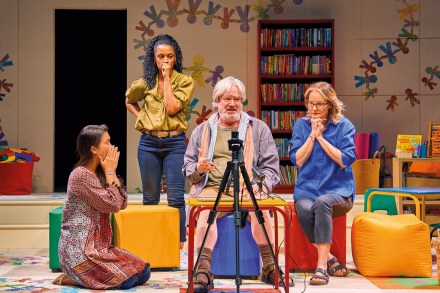
Eureka Day is a topical satire set in a woke school in America. An outbreak of mumps has led to calls for a vaccination programme that will prevent the school from being quarantined and shut down entirely. The script, written in 2018, has acquired new layers of meaning since the Covid terror. It opens with a playful sketch in which four white teachers and a black parent try to agree how many ethnic categories should be recognised by school officials. Their friendly conversation conceals a toxic seam of racial suspicion and hostility. The writer, Jonathan Spector, is probably a rock-sold liberal who wants the world to know that the woke cult has gone too far. The play’s highlight is a 20-minute passage of comedy which reaches a peak of hilarity that would make Oscar Wilde envious.

A masterpiece: Rose, at Park Theatre, reviewed

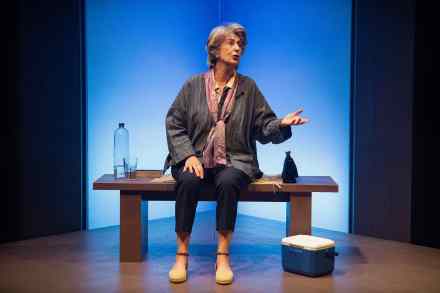
Look at this line. ‘I’m 80 years old. I find that unforgivable.’ Could an actor get a laugh on ‘unforgivable’? Maureen Lipman does just that in Rose, by Martin Sherman, a monologue spoken by a Ukrainian Jew who lived through the horrors of the 20th century. In the opening sections, Lipman plays it like a professional comic and she fills the theatre with warm, loving laughter. Rose’s dad is a hypochondriac who spends all day in bed. ‘He never stopped dying but as far as we could tell there was nothing wrong with him.’ Eventually he loses his life when a wardrobe stuffed with pills topples on to him. ‘He was crushed to death by medicine.

A tremendous show that will attract serious attention from the West End: Rehab – The Musical reviewed

Rehab: The Musical opens with a boyband star, Kid Pop, getting busted for possession of cocaine. The judge sentences him to a course of treatment at the Glade which he attends with great reluctance. Giving up marching powder is the last thing on his mind. ‘I said no to drugs but they just wouldn’t listen.’ His sharky agent, Malcolm Stone, wants to prolong Kid Pop’s notoriety by sending an undercover ‘addict’ to the Glade to spy on him and leak stories to the press. Stone hires a luscious sex bomb, Lucy, to take on the job, and it’s obvious that Kid Pop will seduce her and their affair will end in redemption for both parties. Predictable enough, perhaps, but the couple’s journey is a joy to experience.

Rhapsodic banalities: I, Joan, at the Globe, reviewed

‘Trans people are sacred. We are divine.’ The first line of I, Joan at the Globe establishes the tone of the play as a public rally for non-binary folk. The writer, Charlie Josephine, seems wary of bringing divinity into the story too much, and he gives Joan a get-out clause to appease the agnostics. ‘Setting aside religiosity we’ll settle for more of a street god, a god for the queers and drunks… a god for the godless.’ What can ‘a god for the godless’ mean? No idea. Joan throws in a few more hipster platitudes about ‘elevating our humanity, finding the unity hidden inside community, remembering our collective connectivity fuels courageous creativity [sic]’.

Why must film delight in making us feel stupid?

‘What did the rampant chimp have to do with any of it?’ I squawked in bewildered disappointment to a friend at the end of Nope, the long-awaited third film from Oscar-winning writer-director Jordan Peele. I had hastened in great excitement to see Nope on the first day of its cinema release, hoping for a work that would rival Peele’s sparkling debut Get Out in its idiosyncratic mash-up of razor-sharp social commentary and horror. Instead, I paid £14.20 to sit through 130 minutes of barely explained peril that were resolved in a manner that was even less clear. Peele, I concluded sadly, had crossed over to the dark side of artists who appear to believe that it is fashionable to be incomprehensible.

Our prison culture is more barbaric than it was in 1823: Elizabeth Fry ‘The Angel of Prisons’ reviewed

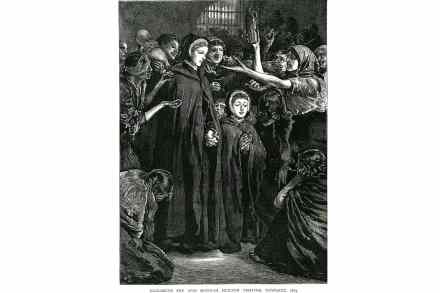
The Angel of Prisons dramatises the life of the penal reformer Elizabeth Fry, who lived near Canning Town. She married a wealthy Quaker, Joseph Fry, who encouraged her philanthropic work which she managed to pursue while raising 12 children. Early in life, Fry had been a party girl who loved dancing, and this production shows her practising her moves to a soundtrack of thumping contemporary music. The script, by James Kenworth, blends present-day London vernacular with the dialect of the early 19th century. It’s easy to watch and it delivers heaps of information without any hint of lecture-hall formality. When Fry visited the mixed-gender Newgate Prison near the Old Bailey she found her vocation.

The show works a treat: Globe’s The Tempest reviewed

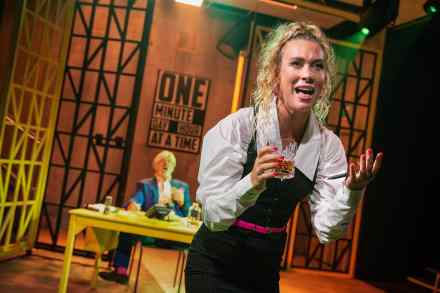
Southwark Playhouse has a reputation for small musicals with big ambitions. Tasting Notes is set in a wine bar run by a reckless entrepreneur, LJ, whose business bears her name. In real life, LJ’s bar would go bust within weeks. It serves vintage wines to a clientele of wealthy tipplers who chug back large tureens of Malbec and claret but who eat no food. The staff help themselves to free champers and Burgundy whenever they choose, and the boss fusses around like a mother hen making sure her brood are safe and content. Bad punctuality is never punished and the staff improvise each shift as they go along. But the emotional atmosphere of LJ’s feels right.

In praise of Jodie Comer

She’s got all the trappings of superstardom: killer looks, a clutch of awards and £4.5 million in the bank. But mention ‘Jodie Comer’ to your friends and you’re bound to get a few blank stares. The British actress, best known for playing super-stylish assassin Villanelle in the BBC series Killing Eve, has yet to become a household name. And, like many in her growing legion of fans, I want to know why. This month I saw Jodie, 29, in Prima Facie, her debut West End play. It’s a masterpiece of a monologue in which she confronts gruelling issues including sexual assault, misogyny and bias in the criminal justice system – and she was nothing short of astonishing. When the curtain fell, I could barely speak.

A four-way race between poet, actor, video artist and sound engineer: Edinburgh Festival’s Burn reviewed

In a new hour-long monologue, Burn, Alan Cumming examines the life and work of Robert Burns. The biographical material is drawn from Burns’s letters, and the poems are read out in snatches. You won’t learn much except that Burns was a poor farmer who later worked as a taxman. To represent his many flings with women, a few high-heeled shoes are dangled on strings above the stage but this looks strangely cheap given that huge sums have been lavished on graphic imagery projected onto a big screen at the rear. Flashing lights and surges of music add to the sense of distraction. Cumming’s performance centres on dance, which looks like a new departure for him.

No, Boris Johnson isn’t ‘missing in action’

Someone in the Guardian wrote that Boris Johnson had his ‘out of office’ on, and the Chancellor was ‘missing in action’, but the Sun reported that ‘Downing Street denied Boris Johnson had been missing in action during the cost of living crisis’. Ed Miliband said: ‘The Tories are missing in action.’ A Liberal Democrat spokesperson called Christine Jardine said: ‘We have a zombie government and a Prime Minister missing in action.’ Dozens of people are using the phrase missing in action. What is the matter with them all? Don’t they realise it means ‘missing presumed dead’? Thomas Hood in his ‘Waterloo Ballad’ pictures a dying man on the battlefield found by his lady love.

The Dane gets an interpretive dance makeover: Ian McKellan’s Hamlet reviewed

Ian McKellen’s Hamlet is the highlight of Edinburgh’s opening week. In this experimental ballet, Sir Ian speaks roughly 5 per cent of the lines, accompanied by a hunky blond dancer, Johan Christensen, who offers a physical interpretation of the Dane’s melancholy. The other roles are played by a ballet troupe in olde worlde costumes. The performing area is a black thrust stage, gleaming like patent leather, surrounded by low spotlights and swirling dry ice. It looks like Elsinore recreated by a cruise-ship designer. Newcomers will find the story mystifying. Hamlet smoulders longingly at Horatio and they dance like a hot couple at a gay night spot.

Why Merseyside is the natural home for a Shakespearean theatre

Prescot is a neglected little town in Merseyside noted for having Britain’s second narrowest street and for its Brazilian waxing salon. It’s now also home to Shakespeare North, a game-changing new theatre. This handsome, modern brick building overlooking a Jacobean church has a light, airy, unfussy interior – a stairway to heaven. You leave the modern world and enter an octagonal cocoon, modelled on a 1630 playhouse, built of slowly splitting green oak, the limbs all pegged together, not a nail in sight. The seats (two tiers) accommodate between 320 and 470 people, depending on the configuration of the stage. Its acoustic is spot-on and it feels cosy but not claustrophobic. The sound and lighting technology is modern but it can be candlelit if need be.

What do ‘catcalls’ have to do with cats?

‘A law against catcalls?’ asked my husband sceptically. ‘What next, criminalising booing and hissing?’ He often gets the wrong end of the stick, but in this case I hardly blame him, for the press retailed widely Liz Truss’s resolve to make a law against catcalls and wolf-whistles. But to an older generation like my husband’s, catcalling is something to do with the theatre. In Practical Cats, T.S. Eliot assures us that Gus the Theatre Cat acted with Irving and Tree – Sir Henry Irving (1838-1905), who Shaw said revealed on stage ‘glimpses of a latent bestial dangerousness’, and Sir Herbert Beerbohm Tree (1852-1917), noted for histrionic versatility.

Why now is the time to be spontaneous

I am not naturally a spontaneous person. I relish neatly laying out projects and plans in my Moleskine diary. It was out of character, then, when on the second Monday of the Wimbledon fortnight I decided on the spur of the moment to head to the All England Club and join the queue for a day ticket. If I didn’t get in, I reasoned, I could always have a nice meal in a nearby restaurant and watch the action on a big screen, content in the knowledge that I was at least sharing the air of the SW19 postcode. My back-up plan wasn’t needed. When I joined the ‘queue’, I was the only person in it. I was ushered straight into the grounds to enjoy six glorious hours of sun-drenched tennis. Perhaps there was something in this spontaneity lark after all.