The west

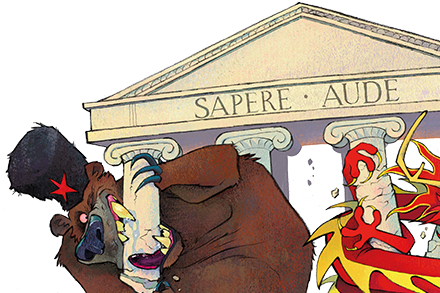
NATO’s Suez moment

In 1969, Charles de Gaulle told his friend André Malraux that America’s “desire – and one day it will satisfy it – is to desert Europe. You will see.” It has taken nearly six decades, but de Gaulle’s prophecy now looks uncomfortably close to fulfillment. After years of diplomatic effort to manage, placate and charm successive American presidents – and Donald Trump in particular – European leaders are coming to a grim realization: the United States is, at best, indifferent to their interests and sensibilities and, at worst, openly hostile to them. Some, such as Italy’s Giorgia Meloni, still believe Trump can be cajoled, that the transatlantic relationship can somehow be salvaged.

Greenland

How the Roman ranking system actually worked

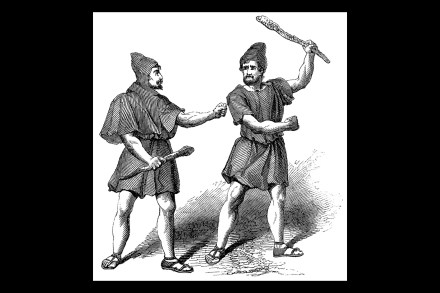
For otherwise healthy plebs in the Roman world, survival depended on four Fs: farming (the sole source of food and money), fighting, family and friends. Everything else that made life worth living meant having some degree of political control over your own existence, which could be summed up in a fifth F: freedom, or political equality. But the elite had little time for such goodwill towards men. For the plebs, there was the rub. In the 20s BC Livy began writing a history of Rome from its foundation in 753 BC. It was first ruled by a series of seven kings (none actually Roman) who were finally thrown out as tyrants in 509 BC.

roman ranking

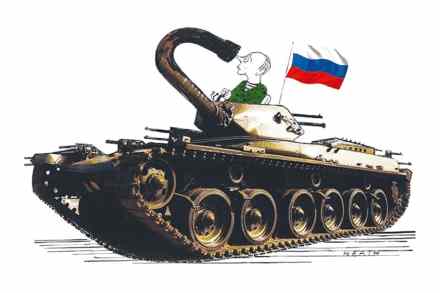
Russia’s brutal strategy of war is failing

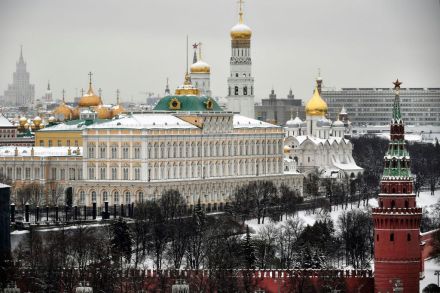
Ukraine’s devastating attack on the Crimean Bridge and Russia’s sickening response — deliberately targeting civilians — perfectly encapsulate how these adversaries are fighting this war. Ukraine has a coherent strategy, effective operational design, and close coordination among its forces. Russia is failing because it has none of this. The centerpiece of Ukraine's strategy is eviscerating Russian combat power without getting into a raw slugfest that would sacrifice its own troops. That means knocking out Russian combat power without a head-on battle, wherever possible. How does Ukraine do that?

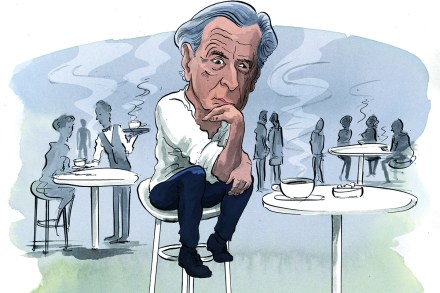
What Bernard-Henri Lévy sees for the West

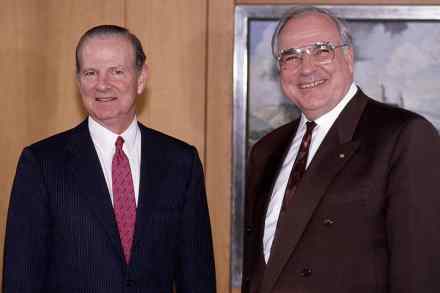
I meet Bernard-Henri Lévy at his apartment in central Paris on a chilly autumn afternoon. Considerations of security prohibit me from revealing its location. A French Jew who is a public and vocal enemy of both Islamism and some of the world’s worst regimes, Lévy is both perhaps the most important public intellectual in Europe, and a man with enemies. I have come to ask him about the future of the West — if, that is, he feels there will be one. Lévy, internationally known by his initials BHL, is a philosopher who has been at the heart of French — and international — society for half a century. But he remains an idiosyncratic figure.

lévy