The new testament

Singing of arms and the man: Son of Nobody, by Yann Martel, reviewed

Yann Martel, the author of Beatrice and Virgil and Life of Pi, typically explores competing storylines, narrative reliability and the nature of truth. His new novel, Son of Nobody, pursues these themes in a first-person account written by a scholar who discovers a Greek epic. The narrator is a Canadian called Harlow Donne – a PhD student at a middling university. Offered an ‘unbelievable opportunity’ to spend a year at Oxford, he leaves home, his wobbly marriage and his young daughter. His doctoral supervisor repeats his habitual plea: ‘Just find something to say.’ He does. From ‘hints and scraps’ found at the Bodleian Library and the Ashmolean Museum, Donne stitches together and translates 30 fragments of a lost poem of the Trojan War.
New light on the New Testament

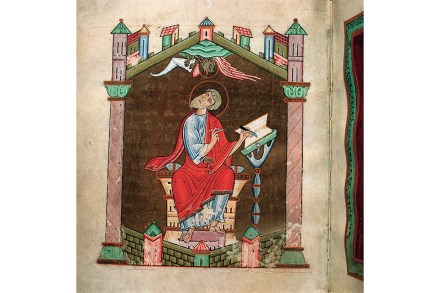
Readers of the Bible, you are almost certainly in for a shock. A new book, drawing on recent archaeology and literary criticism, persuasively argues that some of the most important parts of the New Testament were written or edited by slaves. Its author, Candida Moss, presents this thesis in God’s Ghostwriters, a general interest book which asks readers to look beyond the Bible’s named authors and imagine their collaborators, some of whom were enslaved scribes. In the Roman era, ‘writers’ did not usually inscribe the text themselves but composed through dictation; and most people who took dictation were enslaved. They were well educated from a young age, and it was customary for them also to act as proofreaders. St Paul, for one, clearly employed scribes.

Jesus’s female disciples remain women of mystery

Is there a patron saint of conjecture? Perhaps it is a name known only to Bible scholars, who have rich cause to guard it jealously. Even if such a saint is invoked by the academy alone, the petitioning must be pretty constant. Lucky, then, that this account of the early female followers of Jesus is jointly authored, for it takes more than one person to dream up the vocabulary required for 200 pages of guesswork. As Joan Taylor and Helen Bond admit in their introduction: ‘Sometimes there’s not much to go on and we’ll need to use our imaginations.