The american civil war

Juneteenth is Trump’s chance to win in November

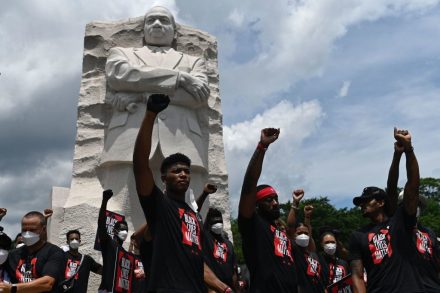
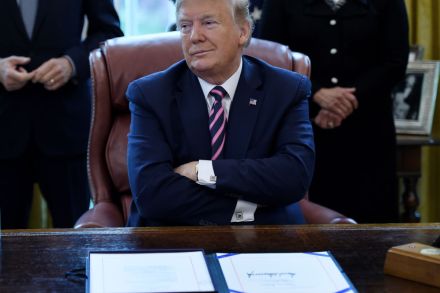
Of course June 19 should be a federal holiday. It’s not just the right thing to do: it’s also the smart thing to do. If Donald Trump doesn’t establish honoring the freeing of America’s black slaves in the national calendar today, then we’ll know that he’s asleep at the switch: too busy tweeting ‘LAW & ORDER’ in full caps, or nodding out in bed to Tucker, or incapable of leaving a mark on American life and politics any deeper than a divot left by his five-iron.Emancipation Day, which is what it should be called, would be a symbol, but also a statement of fact. It would acknowledge slavery, but also freedom.

juneteenth reparations slavery

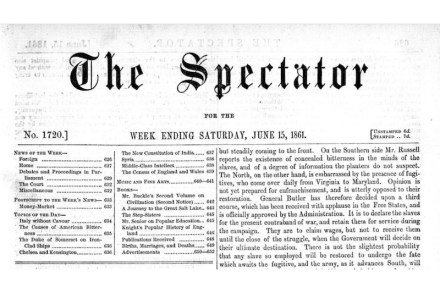
The Spectator, war and slavery: a note on our history

In her article about the point of protest, Tali Fraser mentions the support of Manchester in the 1860s for the North against the slave-owning South in the US civil war. At the time, this was an unpopular cause amongst the British elite. Of all the publications still around today, only one backed Abraham Lincoln then: The Spectator. The magazine almost went bust as a result. I remarked a few days ago that what sets us apart from other long-running magazines is that our values have not changed much since we were founded in 1828 – or, indeed, since the The Spectator appeared in its original form in 1711. That aroused some teasing: surely, some asked, a magazine needs to change with the times?

slavery

Are we now in a Fourth Turning Crisis?

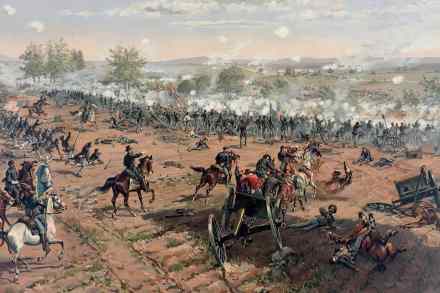
Back in 1997, William Strauss and Neil Howe released The Fourth Turning: An American Prophecy that articulated a roughly 80-year generational cycle of history based on ‘four turnings’ dating back to the Wars of the Roses starting in 1459, climaxing in 1485. That initial crisis was followed by the Armada Crisis from 1569 to 1588, the Glorious Revolution from 1675 to 1689, the American Revolution from 1773 to 1781, the Civil War from 1860 to 1863, and the Great Depression and World War Two from 1929 to 1944. Fourth Turnings always climax with an existential crisis that either destroys the country or results in its renewal.Based on the 1944 climax, Strauss and Howe predicted the next Fourth Turning would occur sometime around 2005 when a ‘spark will ignite a new mood...

fourth turning

Lessons from the Johnson impeachment

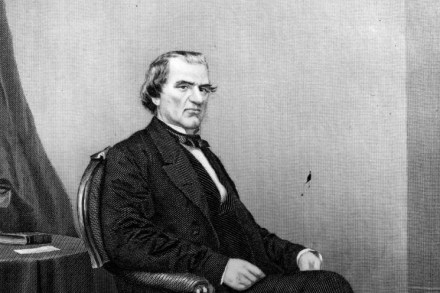
The first time Congress impeached a president was in 1868.  The president was Andrew Johnson, a man almost as surprising to find in the White House then as Trump is now. Johnson, a Tennessee Democrat with a taste for hard liquor, had been the only southern senator to stay loyal to the Union when the Confederate slave states broke away in 1861, provoking the Civil War.  President Abraham Lincoln was a Republican but he ran for re-election in 1864 as a 'Unionist', and adopted Johnson as his running mate, hoping to pick up northern Democrats’ votes. The scheme worked and Lincoln won. Johnson was so drunk at his swearing-in as vice-president early in 1865 that his speech made no sense and he had to be led away by embarrassed friends.

andrew johnson

American breakup: secession is much closer than we think

The United States is ripe for secession. Across the world, established states have divided in two or are staring down secession movements. Great Britain became a wee bit less great with Irish independence, and now the Scots seem to be rethinking the Act of Union (1707). Czechoslovakia is no more and the former Soviet Union is just that: former. Go down the list and there are secession groups in nearly every country. And are we to think that, almost alone in the world, we’re immune from this? Countries threaten to split apart when their people seem hopelessly divided. I’ve seen it already. Before moving to the United States, I lived in a country just as divided, without the kind of fellow feeling required to hold people together.

Secession is much closer than we think

A Shout in the Ruins is a panorama of the Civil War and beyond

We’re in Virginia, in the 1850s. A girl called Emily is tormenting her dog, Champion, and her father’s teenage slave, Rawls. Seeing this, Emily’s father, Bob, beats her with his belt and kicks the dog. Of Rawls, Bob says: ‘Now leave him be so he can get about my business!’ A girl, a dog, a slave, and a slave-owner.The owner addresses the girl with words and violence, and abuses the dog. He helps the slave get down from the fencepost he’s standing on. But he does not talk to the slave. He talks about the slave. Thinking this over, Rawls looks at Emily,‘sprawled out and wailing in the grass’, and envies her. Her pain is temporary; his is permanent.