Terrorism

Usman Khan’s time in prison could hold the key to explaining his murderous attack

From our UK edition

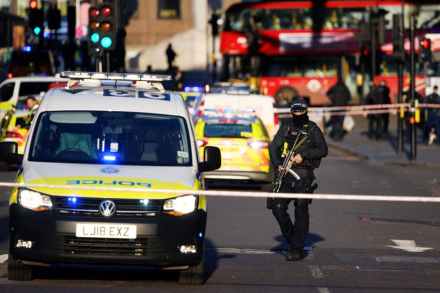
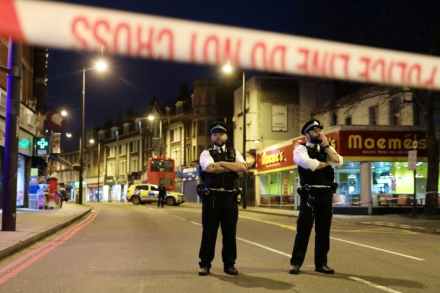
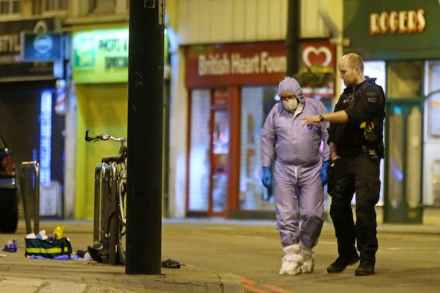
London Bridge terrorist Usman Khan appears to have spent some of his final months behind bars at HMP Whitemoor, a high-security prison near Peterborough, where some of the country’s most dangerous people are held. The prison's chequered history could be relevant to the horrific events that unfolded in the capital last week. I last visited Whitemoor near the beginning of 2016. This ‘new build’ prison, finished in 1992 with space for around 450 inmates, was designed to be escape proof. Two years later, five IRA terrorists and a gangster brutally disabused this notion by escaping over the perimeter wall armed with a gun that had been smuggled into the ‘supermax’ special secure unit where they were held. A prison officer was shot during the escape.

A beginner’s guide to the narwhal

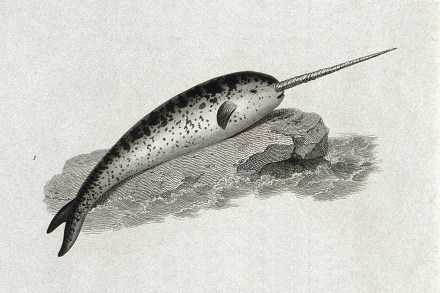
You may be thinking, at this particular moment, about narwhals. It’s unlikely, but it’s more probable than it would have been a week ago, given the improbable insertion of the toothed whale species known as Monodon monoceros into the current news cycle. In a horrific incident that left two dead, a knife-wielding terrorist on London Bridge was stopped from further destruction in part by a man brandishing a five-foot-long narwhal tusk. (They’re not cheap weapons, on that note.)This opened up a litany of confessions on Twitter in which plenty of otherwise sane adults admitted they didn’t think the narwhal actually existed.

narwhal

Only fitfully funny: Chris Morris’s The Day Shall Come reviewed

From our UK edition

The Day Shall Come is a second feature from British satirist Chris Morris and like the first, Four Lions, it is a ‘comedy of terrors’, you could say. But this time, rather than a group of hapless home-grown Muslim suicide bombers we’ve decamped to America and it’s the FBI that will do anything to get their man even if that man is harmless and insists that God speaks to him through a duck. It is funny, fitfully, but it asks us to laugh at someone I wasn’t sure we should be laughing at, plus it is repetitive and acts like we didn’t get the joke the first time, when we did. Or, at least, I did. You may be slower-witted, of course.

9/11 and the false sense of American security

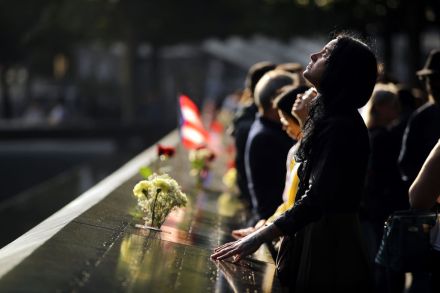
Eighteen years ago, I was only a child. My first indication that something bad had happened on September 11, 2001 was that a birthday party my whole class had been slated to attend was canceled. Instead of heading to a celebration, I waited with the rest of my classmates for our parents to come and take us home. Except my mother didn’t take me home. We went straight to the supermarket. I remember watching, mouth agape, as my mother piled what seemed like hundreds of boxes of spaghetti, cases of water, and canned goods into the wagon. None of us knew what would come next, and she wanted to be prepared. That commitment to preparation came from fear. A fear that was rational and justified, and which grew out of a realistic sense that the sands had shifted. We were at war.

9/11

Tables turned | 27 June 2019

From our UK edition

It can’t be easy to find yourself on the other end of the microphone when you’re a journalist of the calibre of Emily Maitlis. You know all the pitfalls, how easy it is to be teased out of your bunker, to say more than you ever intended under the scrutiny of an ambitious, driven interviewer with a keen nose for a story. In One to One on Radio 4, though, it was surprising to hear the ultra-cool Newsnight presenter almost in tears as she recalled covering the Manchester Arena bomb and the Grenfell fire. We could hear her voice catching, the tears welling up, her words stuttering as she tried to get her breath back.

Alms for arms

From our UK edition

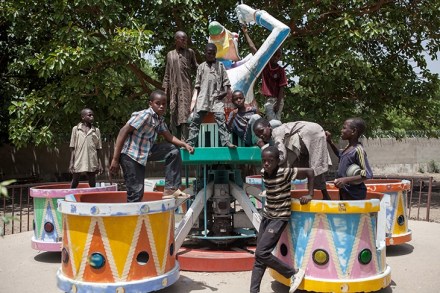
In the rush to declare Isis dead now that its caliphate has been routed from Iraq and Syria, it’s easy to forget that its Nigerian fellow traveller, Boko Haram, is still going strong. April’s five-year anniversary of the Chibok schoolgirls’ kidnapping, for example, passed with barely a celebrity tweet to mark it, despite the fact that 112 of the girls are still missing. Nor is much fuss likely to be made next month, when an insurgency that has killed nearly 30,000 will enter its second decade as violent as ever. Out of sight and out of mind, Boko Haram’s power is growing. And to find out why, all you have to do is follow the children who beg on the streets of Nigeria’s northern cities.

Up close and personal | 2 May 2019

From our UK edition

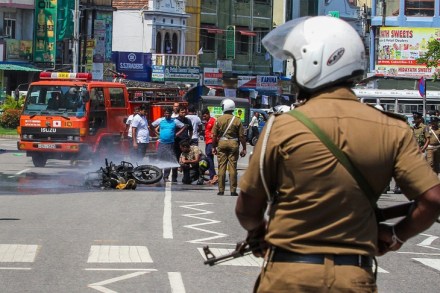
‘Can you fly down this evening?’ she was asked by her boss in the Delhi office of the BBC. ‘Yes, of course. I have to,’ replied Ayeshea Perera, a Sri Lankan journalist. She was talking from Colombo to David Amanor of the World Service’s The Fifth Floor, which looks at current news stories from the perspective of those intimately involved with them and is always worth catching for its alternative, less formal approach and Amanor’s gentle probing to find the real story. Perera described the chaos on arriving at the airport in the Sri Lankan capital on the evening of Easter Day and the weirdness of going to see the Church of St Anthony next morning to find that from the outside it looked just as she had always known it.

What Isis wants

From our UK edition

It has become commonplace to describe terror attacks as ‘senseless’. The horrific Easter Sunday bombings in Sri Lanka, which cost the lives of more than 350 people, several British citizens among them, make little sense. The only way to understand them is as a symptom of the growing globalisation of terror. The tactics — synchronised bombs on a Christian holy day — are grotesquely familiar. And it was not surprising to learn that one of the attackers was partly educated in London. The attacks, on three Catholic churches and three hotels favoured by westerners, clearly targeted Christians. The culprits have been identified as local Islamic extremists. The purpose of the attacks, therefore, was to increase tensions between Muslims and non-Muslims.

Islamic terror and the Left’s pretzeled language

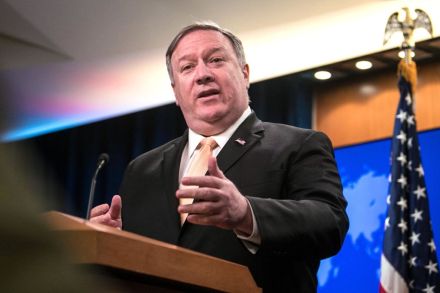
After years of Obama-era State Department obfuscations and Orwellian redactions, it was heartening to hear Secretary of State Mike Pompeo lay the blame for the ‘horrific wave’ of bombings at international hotels and Catholic churches across Sri Lanka on Easter Sunday where it belongs: at the feet of ‘Islamic radical terror.’ Pompeo stated at a press conference Monday that ‘radical Islamic terror remains a threat’ and that the US, along with international partners, is working against the ‘evil’ of ISIS, al-Qaeda, and other radical Islamist groups. That’s a far cry from the antics of the State Department under Obama.

mike pompeo sri lanka

How the police should deal with far-right terrorism

From our UK edition

As New Zealand comes to terms with the most deadly terrorist attack ever carried out on its soil, leaders from around the world will be asking their security advisors whether this marks the start of an escalation of right-wing threats and whether their current strategies for defeating this form of extremism are fit for purpose. It has been obvious for several years now that far-right extremism has been growing across western democracies with social media providing the means for a new global connectivity between far-right individuals and groups.

My grief for the victims of the New Zealand mosque attack | 15 March 2019

From our UK edition

'We belong to Allah and to Allah we shall return'. Muslims around the world, including me, are now reciting the verse from the Quran that Muslims say on hearing of the death of a fellow believer. Taking in news of the murder of 49 worshippers at a mosque in sleepy, safe New Zealand at the hands of a white supremacist, this verse came to my lips again and again. I felt the same grief when I watched the attacks on 9/11 unfolding. In the days afterwards, I also struggled with the reaction of others in Riyadh, where I was living at the time, and their shameful sense of schadenfreude. This was hard to deal with as I struggled to comprehend the attacks on New York, a city I love and call home.

My grief for the victims of the New Zealand mosque attack

From our UK edition

'We belong to Allah and to Allah we shall return'. Muslims around the world, including me, are now reciting the verse from the Quran that Muslims say on hearing of the death of a fellow believer. Taking in news of the murder of 49 worshippers at a mosque in sleepy, safe New Zealand at the hands of a white supremacist, this verse came to my lips again and again. I felt the same grief when I watched the attacks on 9/11 unfolding. In the days afterwards, I also struggled with the reaction of others in Riyadh, where I was living at the time, and their shameful sense of schadenfreude. This was hard to deal with as I struggled to comprehend the attacks on New York, a city I love and call home.

Bangladesh doesn’t want Shamima Begum. Here’s why it might have to take her

From our UK edition

Whatever the arguments over the Government’s decision to revoke Isis bride Shamima Begum’s British citizenship, the teenager's future now depends on one thing: will the courts determine she is a dual national who is eligible for Bangladeshi citizenship? If so, Sajid Javid's decision is lawful, as this means that the loss of her British citizenship will not leave her stateless. But what does Bangladesh make of this row? The view from Dhaka has been clear: we don't want her. In a statement issued this week, the country's foreign ministry said: “The government of Bangladesh is deeply concerned that she has been erroneously identified as a holder of dual citizenship shared with Bangladesh alongside her birthplace, the United Kingdom.

Isis’s collapse has sparked a new rift between Trump and Europe

From our UK edition

The days of black-clad militants rampaging through cities, parading captives as war trophies and doing wheelies in U.S.-made Humvees are over. The Islamic State – which once presided over eight million people in a reign of terror across territory as large as the United Kingdom – is now confined to an orchard in the dusty Syrian village of Baghouz. The so-called caliphate is now just 700 square metres. Within days— certainly weeks —all of Isis' territory will be retaken, the stragglers either killed in a barrage of US airstrikes or sent to Syrian Kurdish-run prison camps to the north. The demise of the caliphate, however, has given way to a new question: what to do with Isis foreign fighters? Donald Trump's answer is to make sure that Europe pulls its weight.

The shame of those siding with Shamima Begum | 20 February 2019

From our UK edition

At last, having kept pretty shtum about it for the past few years, the virtue-signalling set has mustered up some sympathy for women caught up in the horrific Isis vortex.  Unfortunately, though, their sympathy isn’t for the Yazidi women who were burned alive after refusing to become sex slaves for Isis jihadists. Or the Kurdish women who found themselves living under the brutal misogynistic yoke of the Isis empire. Or the Syrian and Iraqi women whose husbands and sons were beheaded for adhering to the wrong branch of Islam. No, their sympathy is for a woman who supported the movement that did all those things. Who provided moral succour to the Isis barbarians.

Sajid Javid is wrong to strip Shamima Begum of her British citizenship

From our UK edition

Sajid Javid’s decision to strip Shamima Begum of her British citizenship leaves me deeply uneasy. I can understand why a Home Secretary charged with keeping the public safe would want to do whatever possible to keep this woman out of the country. But Begum was born in this country, grew up here and was educated here. This, surely, makes her British. As a country, we should want to take charge of investigating her and, if the evidence is there, prosecuting her. After all, she offended against the ties that bind when she headed from this country—a liberal democracy with the rule of law—to go and serve in a so-called caliphate that offended against the values we hold most dear.

Isis bride Shamima Begum should be allowed home

From our UK edition

So, what do you reckon then about the jihadi bride, Shamima Begum, unearthed by the Times’ Anthony Loyd in a refugee camp in Syria? Should she be brought back home for an NHS delivery for her imminent baby – with the cops hovering backstage – or left to stew in a Syrian refugee camp, to give birth in the same conditions as other mothers-to-be? I may be misjudging my readers here, but I fancy I can discern which way most of us would want to go. But the first thing to say about all this is that this wretched 19-year old is about the least important aspect of the Isis situation.

And I think to myself, not a wonderful world

From our UK edition

The story of Jay Austin and Lauren Geoghegan is an interesting one, I think, for what it tells us about the right, the left and human nature. These two youngish people — both 29, one of them a vegan, the other a vegetarian — jacked in their wonkish jobs in Washington DC in order to experience the world in all its glory. Their itinerary included dangerous areas — or at least areas deemed dangerous by western governments with an axe to grind. As Jay put it: ‘People, the narrative goes, are not to be trusted. People are bad. People are evil. I don’t buy it. Evil is a make-believe concept we’ve invented to deal with the complexities of fellow humans holding values and beliefs and perspectives different than our own... By and large, humans are kind.

Forget the ‘Beatles’: here’s what happens to most British jihadi suspects | 23 July 2018

From our UK edition

What happens to Brits who've returned from fighting for Islamic State in Syria and Iraq? Most would expect that they'd immediately fall into the criminal justice system, and wouldn't then emerge for a very long time. Today it emerged that Home Secretary Sajid Javid had dropped Britain's blanket opposition to the death penalty so that two Isis fighters from the group dubbed the 'Beatles' could be sent to the US. But in most cases, the question isn't where someone will face justice, but whether they can face justice at all. We know that there are hundreds of people who have returned from fighting for Islamic State. But what is less well-known is what happens when these individuals get back to Britain.

Sajid Javid can combat the extremists’ narrative

From our UK edition

The government will launch its new counter-terrorism strategy next week, I write in The Sun today. It’ll also introduce a new bill to ensure longer sentences for terrorists. This strategy will see more resources for the Prevent programme in high priority areas such as London, Manchester, Birmingham and Bradford. There’ll are plans too, to recruit over a thousand more staff to the security services so that a greater number of suspects can be kept under close surveillance at any one time. There’ll be steps taken to ensure that those released from prison are monitored more closely once they have been released. There’ll also be a fresh push to get the tech companies to do more to combat terrorist material online.