Terrorism

US Middle East initiative takes early holiday

From our UK edition

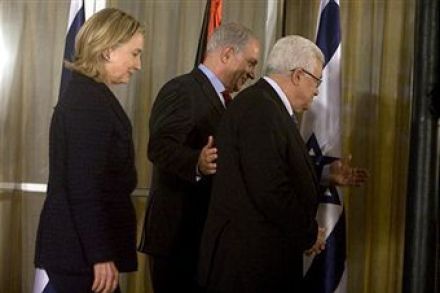
When the Obama administration started its latest Middle East initiative, it was amid great fanfare. I blogged – sceptically -- about the optimism exuding from the State Department at the time. Now, however, the US government has given up its push for a freeze in Jewish settlement construction as quietly as possible. As Martin Indyk of the Brookings Institution puts it: “The Middle East peace process just died, but nobody seems to be in mourning. Twenty months of U.S. efforts to freeze Israeli settlement activity to create a conducive environment for negotiations have produced only deadlock.

Time for jaw-jaw

From our UK edition

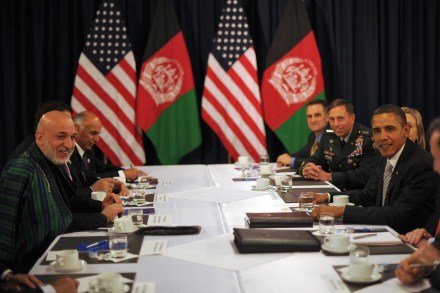
Today I joined number of leading Afghan experts, from Ahmed Rashid to Gilles Dorronsoro, in calling on President Obama to change the American strategy in Afghanistan. Based on our work in and on Afghanistan, we wanted to make a number of points just as the White House begins reviewing its strategy: First, that the cost of the war is now over $120 billion per year for the United States alone. This is unsustainable in the long run. Second, despite these huge costs, the situation on the ground is much worse than a year ago because the Taliban insurgency has made progress across the country. The military campaign is suppressing, locally and temporarily, the symptoms of the disease, but fails to offer a long-term cure.

Time for an Afghan Inquiry

From our UK edition

The Iraq Inquiry had been conspicuously silent, but now John Chilcot's team has called Tony Blair to give evidence again. It's expected that our former PM will make the trip to the Queen Elizabeth II centre early next year. That would push the expected deadline for the inquiry's work finishing – at the end of this year – into 2011. Few people, however, expect the inquiry to say anything novel or get Tony Blair to say anything different than before. Its well-phrased final report may change policy in the margins – but in the security establishment there is little question of what needs doing.

Wiki-danger

From our UK edition

Now the Wikileaks are beginning to become dangerous. Before, the leaks contained high-level tittle-tattle, confirmation of existing analyses and embarrassingly accurate portraits of world leaders. I still thought it wrong to regurgitate this data, as it will lead to more secrecy, bilateral problems and potentially even conflicts – the things that Julian Assange claims he is seeking to avoid. Yet I told NPR that the idea of prosecuting the Wikileaks founder for treason was far-fetched; he is not a US citizen and it was not clear to me what kind of charges could be brought against him in the US courts. Now, however, with the publication of data which will be useful background reading for any would-be terrorist, the situation has changed.

Some perspective on the Helmand Wikileaks

From our UK edition

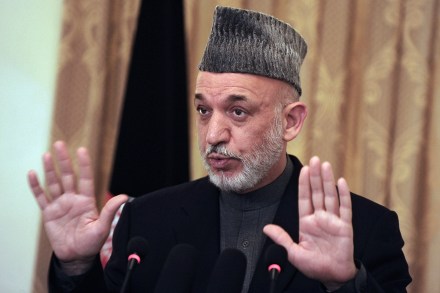
Today's Wikileaks will make uncomfortable reading for all parts of the British defence establishment – ministers, both old and new, and the senior military leadership. As a senior military officer told me, "this isn't going to be good." The diplomatic cables reveal that US officials and President Hamid Karzai at some point thought that British forces had bitten of more in Helmand than they could chew. The US NATO commander, General Dan McNeill, is quoted as saying three years ago that British forces have made a mess of Helmand. This is backed up by a comment, more than a year later, suggesting that President Karzai also agreed that British forces were "not up to the task of securing Helmand" without US assistance. Cue headlines of British military failure.

Pakistan’s double game comes under the spotlight once again

From our UK edition

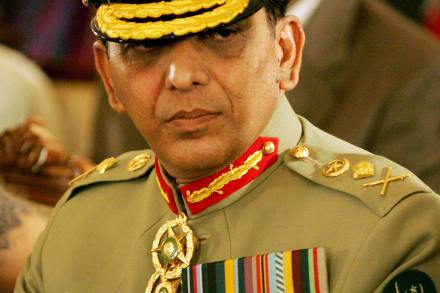
The leak that keeps on leaking has one or two embarrassing titbits about our domestic policymakers this morning. Yet far more noteworthy are the documents on Pakistan. While they don't tell us too much that is surprising – being mostly about the duplicitous game that country is playing with the West – they do highlight some potentially worrying trends. Chief among them is the growing influence of General Ashfaq Pervez Kiyani, the head of Pakistan's army. His name is littered generously throughout the US briefings, and it is often connected with dangerous conspiracy and double-dealing. One document, for instance, suggests that Kiyani was prepared to overthrow the Pakistani President, Asif Zardari, last year.

The Return of Peter King Watch

From our UK edition

If you thought the Wikileaks brouhaha would bring Peter King crawling out of the woodwork then award yourself a prize. America's worst Congressman appeared on MSNBC this morning and called for Wikileaks to be classified a terrorist organisation: “The benefit of that is, we would be able to seize their assets and we would be able to stop anyone from helping them in any way,” “Either we’re serious about this or we’re not. I know people may think this is a bit of a stretch, but I analogize it as the RICO statute, where they had a pretty narrow definition of criminal enterprise in the beginning, but now that’s been expanded quite a bit to deal with contemporary problems,” King said.

Labour’s terror u-turn doesn’t lessen its authoritarianism

From our UK edition

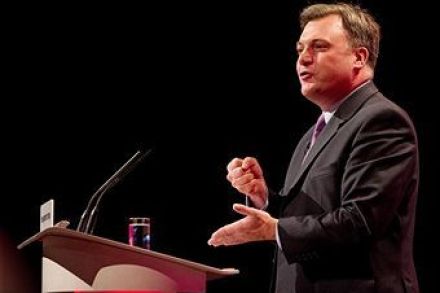
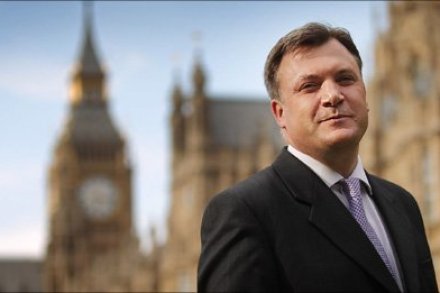
It is a day for about turns. First, the Pope has taken a historic decision to approve the use of condoms to fight AIDS; second, Labour has vowed to change its position on terror legislation and law and order. The party feels its record in government has damaged its reputation as a guarantor of liberty. Generation Ed wants to make another break from the past. Ed Balls has masterminded a cunning sleight of hand. The proposal is nowhere near as dramatic as headlines suggest. Labour will support the government’s proposed reduction of detention periods from 28 days to 14, provided the police and security services are not impeded by the change. Balls also indicated that he could support the abolition of control orders if an alternative was found.

Progress towards an Afghan solution?

From our UK edition

Nato has agreed to the Afghan plan, or so they say. As Lieutenant-Colonel David Eastman says, Afghan security forces are deemed to be sufficiently capable for the handover to begin next year, as Obama and Petraeus hope. There are those who disagree - some doubt the Afghans, some doubt success itself. Nato secretary general, Anders Fogh Rasmussen may have to be added to that former group of dissenters. He said earlier today: ‘If the Taliban or anyone else thinks they can wait us out, they can forget it.’ The problem for those of Rasmussen’s thinking is that the Taliban can wait; Nato can’t.

Nato – from the glass half empty point of view

From our UK edition

Nato leaders are in Lisbon and Daniel Korski has argued that the most successful military alliance in history isn’t done yet. Writing in the Independent, Patrick Cockburn gives an alternative. He contends that Nato will never recover from the Afghan mission, and he has three substantive points: 1). Nato's solutions are the problem. ‘It is not just that the war is going badly, but that Nato's need to show progress has produced a number of counter-productive quick fixes likely to deepen the violence. These dangerous initiatives include setting up local militias to fight the Taliban where government forces are weak. These are often guns-for-hire provided by local warlords who prey on ordinary Afghans.’ 2).

Neo-isolationism is NATO’s greatest enemy

From our UK edition

As NATO leaders gather for a key summit in Lisbon, expect the newspapers to be full of the usual “why bother” commentary. NATO, they will argue, was founded for a different age and is not relevant for dealing with today’s threats – from cyber-attacks to nuclear non-proliferation. It is even struggling to deal with older threats, such as the Taliban insurgency. Most Europeans do not seem to mind. They feel safer than at any time before and worry predominantly about post-material threats, not conventional attack, as a think tank report showed recently. As a result, Europeans are set to spend less on defence. Germany expert Hans Kundnani has an excellent piece on Berlin’s anti-militarism over on ECFR’s new blog.

Sir Christopher Meyer reviews George Bush’s memoirs

From our UK edition

Sir Christopher Meyer, the former British Ambassador to the United States, has reviewed George Bush's biography for the latest issue of The Spectator. We've pasted his entire review below, for readers of our Book Blog. Taking the long view, Christopher Meyer, The Spectator, 20 November 2010 While Tony Blair emerged from his memoirs as a chameleon of many colours, there is only one George W. Bush in Decision Points. The book reads like the man speaks. If it has been ghosted — and Bush gives thanks to a multitude of helpers — it has been done with consummate skill to preserve the authentic Bush voice. The result will be unexpected, even unwelcome, to many.

Will there be peace in the Middle East in time for X-mas?

From our UK edition

Two years into her term, and after carefully avoiding any success-free issues, Hillary Clinton has finally launched herself into the Middle East peace process. According to Roger Cohen in the New York Times, "The heavy lifting is now in Clinton’s hands". As evidence of Clinton's new role, Cohen lists a video conference with the Palestinian prime minister, where the US secretary of state announced $150 million in US aid to the Palestinian Authority and said the Obama administration was “deeply disappointed” by recent Israeli behaviour. Mrs Clinton's foray into the Middle Eastern quagmire  is interesting.

The divide over the Guantanamo settlements

From our UK edition

After being pre-empted by the morning newspapers, Ken Clarke's statement this afternoon contained nothing that was unexpected. "We've paid the money so we can move on," he said. And he went on to emphasise that the Guantanamo payouts are not an admission of culpability, but rather all about sparing the public's money and the spooks' time. More striking were some of the responses from Clarke's coalition stablemates. Take Tom Brake, the Lib Dem MP for Carshalton and Wallington, who suggested that the government wouldn't have made the payments if the UK didn't have a case to answer.

A 2015 Afghan exit will be tricky

From our UK edition

William Hague told the Foreign Affairs Select Committee that British combat troops will leave Afghanistan in 2015 - even if parts of the country remain violent. Speaking to a number of senior military officers and civilians who have recently returned from Kabul and Helmand, I have come away with the clear sense – whisper it – that the tactical tide is in fact turning against the Taliban insurgency but that a number of facts will complicate further progress. First, the next few months in Helmand may unfortunately be quite bloody.

The curious case of the Guantanamo Bay pay-outs

From our UK edition

What to make of the out-of-court settlement that has been paid to around a dozen former detainees of Guantanamo Bay? According to unofficial reports, taxpayers might have to shoulder £10 million as a result. One of the men is thought to be receiving £1 million. The explanations seeping out of Westminster are understandable enough. Security chiefs, we're told, were keen to avoid a lengthy process – not just because it could mean more cost for the taxpayer, but because it would drag the practices of our intelligence services out into the public realm. David Cameron, speaking on the matter in July, highlighted that Mi5 and Mi6's time could be spent more usefully than sifting through documents in preparation for a court case.

Richards: we’re in it for the long haul

From our UK edition

General Sir David Richards does like thinking in decades, doesn't he? A year or so ago, he was warning us that "the whole process [in Afghanistan] might take as long as 30 to 40 years." Today, in interview with the Sunday Telegraph, he says that the wider battle against al-Qaeda could last around 30 years. In both cases, he deserves our attention. To hear the head of our military suggest that the West's current conflicts will stretch across generations is sobering, to say the least. More noteworthy, though, is Richards' claim that a "clear cut victory" over Islamist terror is "unnecessary and would never be achieved" – but that we can "contain it to the point that our lives and our children's lives are led securely.

Ten more highlights from the Bush serialisation

From our UK edition

You know the drill: the second part of the Times's Bush serialisation (£) is out today, so here are ten more highlights from their coverage. The book is also out today, so we can, as the former President suggests, draw our own conclusions. 1) Watching the towers collapse. "I caught enough fleeting glimpses of the coverage to understand the horror of what the American people were watching. Stranded people were jumping to their deaths from the World Trade Center towers. I felt their agony and despair. I had the most powerful job in the world, yet I felt powerless to help them. At one point, the television signal held steady long enough for me to see the south tower of the World Trade Center collapse. The north tower fell less than 30 minutes later.

Ten highlights from the Bush serialisation

From our UK edition

Number 43 is back. And judging by his interview (£) with the Times editor James Harding – and that paper's serialisation (£) of his memoirs – he is standing defiant. As Bush himself puts it to his critics, "I ask those people to read the book. I understand that the filter can be harsh. But I think people will see someone who deliberated carefully on key issues, someone who did not sell his soul for politics, that he was willing to stand on principle and people can draw their own conclusions." "The book" is out tomorrow, so we will be able to draw our own conclusions then. But, in the meantime, here's a selection of extracts from the first part of the Times serialisation. The second part will come tomorrow, and cover 9/11, Blair and Katrina.

In international politics, the pursuit of stability is not enough

From our UK edition

One of the biggest challenges facing the post-Iraq generation of foreign policy decision-makers, like William Hague and Hillary Clinton, is to balance the pursuit of overseas stability with promotion of the dynamic and sometimes de-stabilising forces that build countries' long-term stability and make economic and political progress possible. This may sound like an academic question but it is a very real change- and not just because the SDSR has made the task of building overseas stability a key government objective.   Take Iraq. After having lost an admirably violence-free and largely fair election, it looks likely that Iraqi Prime Minister Nouri al-Maliki will cling to power and the voter-winner, Ayad Allawi, will be denied a role in government.