Terrorism

May sails through TPIMs statement with disapproving attack on Yvette Cooper

From our UK edition

Aside from having to explain her government's policy on clothing that might be used as a disguise, Theresa May did pull it out of the bag, again, in that statement on Mohammed Ahmed Mohammed's TPIM. Her short speech at the start wasn't anything to write home about, simply setting out the bare bones of what was being done to find the terror suspect. But it was in her response to Yvette Cooper that the Home Secretary really got her eye in. She took a rather disapproving tone to answer Cooper's questions, telling her that she was wrong to suggest that TPIMs were in some way a watering down of Labour's control orders.
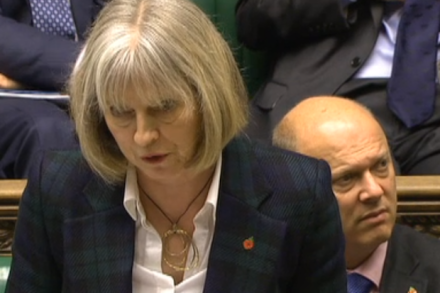
Theresa May has taken the heat out of Home Office rows

From our UK edition

Theresa May will give a statement to the House of Commons this afternoon on the disappearance of terror suspect Mohammed Ahmed Mohammed. The Home Secretary has earned a formidable reputation over the past few years for emerging unscathed from a variety of Home Office rows, and Labour has struggled to lay a finger on her. But this afternoon May will face a grilling from Yvette Cooper over the TPIM arrangements for Mohammed Ahmed Mohammed, and Labour wants to use this incident as a way of claiming that the Home Secretary's own policy is flawed.

Richard Dawkins is right: Osama bin Laden has made air travel insufferable

From our UK edition

It’s not that often I feel a real bond with Richard Dawkins but no sooner did I read his diatribe about Osama bin Laden having won the global war on terror because he, Prof Dawkins, had had a jar of honey confiscated at the airport, than I realised that here was a kindred soul. The prof declared on Twitter over the weekend: Bin Laden has won, in airports of the world every day. I had a little jar of honey, now thrown away by rule-bound dundridges. STUPID waste. — Richard Dawkins (@RichardDawkins) November 3, 2013   Ah yes, I’ve been there. Except the jar of forest honey – raw, lovely, village stuff – confiscated from me on my way back from Kosovo wasn’t little at all; it was full-size.

Brave, non-denominational freedom fighters

From our UK edition

Those of you who wonder why the BBC is so politically correct, so craven in its expressions regarding, for example, Islamic terror, may find a partial answer here:  Stephen Whittle Director of Editorial Policy at the BBC Dear Stephen, We have received many complaints over the last 24 hours from British Muslims regarding the use of the phrase 'Islamic terrorists' by your news reporters in connection with the struggle for Kashmiri independence. We believe this phrase is totally inappropriate and adds nothing to the story and even distorts what is a long-standing struggle by the Kashmiri people to gain control of their own destiny. We have noticed that your news reports are also failing to adequately report the background to this conflict.

Theresa May’s grubby little warning: an independent Scotland will be out in the cold

From our UK edition

It is a good thing that government ministers come to Scotland sometimes. It is a bad thing that they insist on opening their mouths when they do. Earlier this year we endured the spectacle of Philip Hammond making an arse of himself; today it has been Theresa May's turn to make one wish cabinet ministers would, just occasionally, contemplate the virtue of silence. The Home Secretary was in Edinburgh to warn that an independent Scotland would be a dangerous place. It would, in fact, be left out in the cold. It would not, you see, be part of the English-speaking-world's Five Eyes intelligence-poolling network. The UK, United States, Canada, Australia and New Zealand will continue to share information. Little Caledonia will be left on the outside, all forlorn, friendless and at risk.

This is no time to prosecute the perpetrators of ‘Bloody Sunday’

From our UK edition

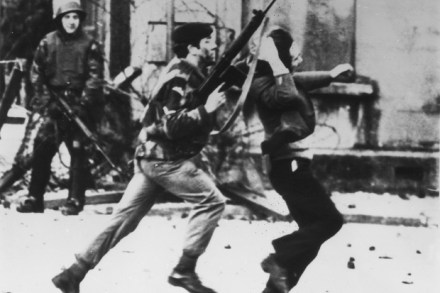
The front-page of yesterday’s Sunday Times carried the news that up to 20 retired members of the British Armed forces are likely to be taken in for questioning in relation to the deaths of 30th January 1972, known as ‘Bloody Sunday’. Some readers will know that I have taken a great interest in this case and have written a book which I don’t think spares many details on what specific soldiers of 1st Battalion of the Parachute Regiment, among others, did that day. In certain cases – including that of at least one soldier who is still alive (‘Soldier F’) – I do not hesitate to call what they did ‘murder’. But the process from here is fraught with difficulty.

Al-Qa’eda targeted Kenya not because it’s a banana republic, but because it’s a symbol of African success

From our UK edition

If Al-Shabaab was behind the terrorist attack in Nairobi, then the group has come a long way since its foundation in a derelict shampoo factory called Ifka Halane — ‘Clean and Shiny’ — in Mogadishu in 2006. I know a little about the group because I am the only westerner to have met its founder, Aden Hashi Ayro, before he was killed in a US air strike. In those days Al-Shabaab was a small militia providing muscle for the Islamic courts in Mogadishu. For a brief spell the courts did a good job of bringing a degree of law and order. Then Washington foolishly backed an Ethiopian invasion of the country. For Al-Shabaab, this was a godsend. Afghan-trained Salafists don’t enjoy fixing drains or street lights. Insurgency is much more worthwhile.

How we survived terror at Nairobi’s Westgate mall

From our UK edition

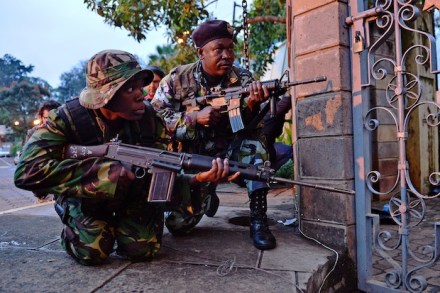
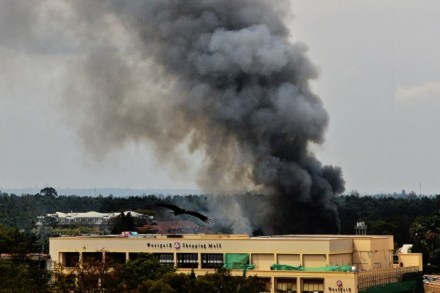
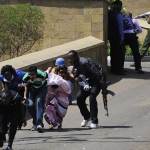
 Nairobi Kenya is one of those places where everybody knows everybody — and each one of us seems to have friends or relatives caught up in the Westgate shopping mall terrorist attack. My friends Simon and Amanda Belcher were on their way to lunch at the mall before catching a film at the cinema. They had parked their car on the top floor and walked past a marquee where a children’s ‘super chef’ cookery competition was about to start when gunfire erupted inside. Simon at first thought ‘firecrackers’. Then they heard shots from the ramp up to the car park. Walking towards them were two slim young men carrying AK-47s with their faces swathed in Arab scarves.

Ignoring Islamic terrorism didn’t make it go away

From our UK edition

Not so long ago politicians were hailing the end of al-Qaeda and the global jihad movement. By the middle of 2011, key ideologues like Osama bin Laden and Anwar al-Awlaki were dead. Arab Street also appeared to have embraced peaceful protest, with popular uprisings unseating seemingly entrenched regimes in Tunisia and Egypt. A new dawn, we were told, was breaking. The weekend’s events have brought that hopeless optimism into sharp relief. The terrorist siege of the Westgate shopping mall in Kenya continues, with around 70 people dead so far. Elsewhere, at least 80 Christians were killed in a suicide attack outside a church in the Pakistani city of Peshawar yesterday.

No, Mr Cameron. The Kenyan massacre is all about Islamism

From our UK edition

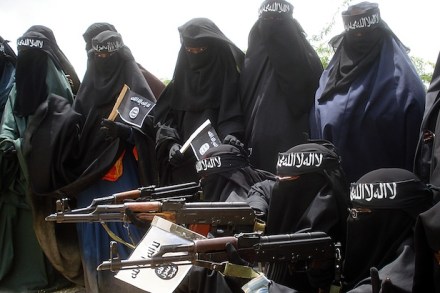
Here we go again. A group of Islamist terrorists armed with guns and grenades head into a shopping mall in Kenya. They separate out the Muslims from the non-Muslims, let the former go free and massacre the latter. Cue the usual responses. The British Prime Minister, David Cameron, says: ‘These appalling terrorist attacks that take place where the perpetrators claim they do it in the name of a religion – they don’t.  They do it in the name of terror, violence and extremism and their warped view of the world. They don't represent Islam or Muslims in Britain or anywhere else in the world.’  I don’t think any sensible person would argue that the perpetrators represent all Muslims.

Why does David Cameron refuse to admit that the terrorist attack in Nairobi is linked to Islam?

From our UK edition

Do you know the name of Muhammed’s mother? No, me neither. I can manage the names of two of his wives and his Christian concubine, plus his daughter, but not his mother. The matter was, however, of more than academic interest when gunmen took over the Westgate shopping centre in Nairobi. According to witnesses, members of the public were lined up and then gunned down if they failed to name the mother of the founder of Islam or recite verses from the Koran. Those lucky enough to be able to speak Arabic — possibly passages from the Koran — were let go. The rest were fair game. Now, whatever else you can say about these individuals, I think we can agree, can’t we, that religion looms quite large in their world view?

The reaction to David Miranda’s detention is completely ridiculous

From our UK edition

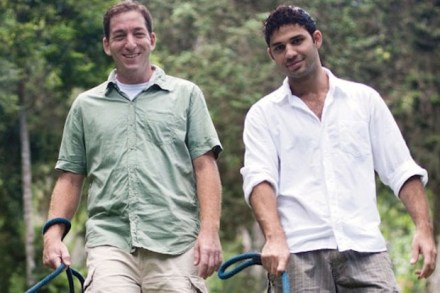
It may not have been the smartest move to detain David Miranda, the Brazilian partner of Guardian ‘journalist’ Glenn Greenwald, under the Terrorism Act.  But the explosion of righteous anger over the episode is ridiculous. Starting with the outraged claim that Miranda was arrested only because of his connection with Greenwald. Wrong. Greenwald himself has previously told journalists that his partner assists him in his work. That present ‘work’ consists of engineering the leak of massive amounts of classified intelligence from a source – Edward Snowden – currently granted asylum in Moscow.

David Miranda’s arrest proves how sinister the state has become

From our UK edition

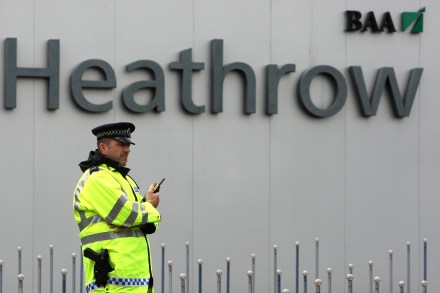
Always remember mornings like these, the next time police officers and politicians demand more powers to protect us from terrorism. They always sound so reasonable and so concerned for our welfare when they do. For who wants to be blown apart? But the state said its new powers to intercept communications would be used against terrorists. They ended up using them against fly tippers. Now the police are using the Terrorism Act against the partner of a journalist who is publishing stories the British and American governments would rather keep quiet. The detention of David Miranda at Heathrow is a clarifying moment that reveals how far Britain has changed for the worse.

David Miranda’s detention shows that the state is not only malevolent but stupid too

From our UK edition

The problem is less that the state is malevolent but that it is stupid. And that stupidity means that a lack of malevolence may be a matter of luck, not policy. Or, if you wish to be more generous, the state has the power to crush liberties and its failure to do so on a more consistent, wider, basis is a matter of forebearance or inefficiency more than anything else. That, at any rate, is one theory to explain why David Miranda, the partner of Guardian journalist Glenn Greenwald, was detained at Heathrow airport for nine hours. If the state wants to fuck you up, as Larkin didn't quite write, it can. And will. This is not something unique about the British state (unrestrained by oversight though it be).

Freeing terrorists for peace?

From our UK edition

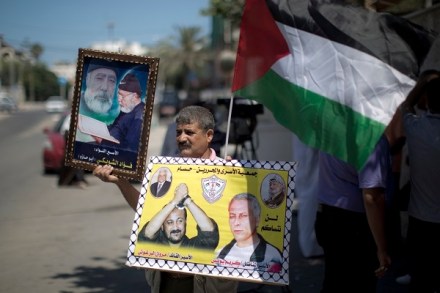
Amid all the bloodshed in Egypt and Syria at the moment the fact that the Israelis and Palestinians are once again at the negotiating table has received less notice than usual. Which is not necessarily a bad thing. The intense international focus on the dispute seems to me a minor contributing reason why the dispute remains unresolved. But there is one aspect of the talks which really ought to be highlighted. That is the Palestinian demand that Israel release 104 Palestinian terrorists from prison before talks commence. While agreeing to this precondition, Israel has not asked for – and is not getting – anything in return. Of course Israel has been here before. Many times.

Mehdi Hasan and the EDL

From our UK edition

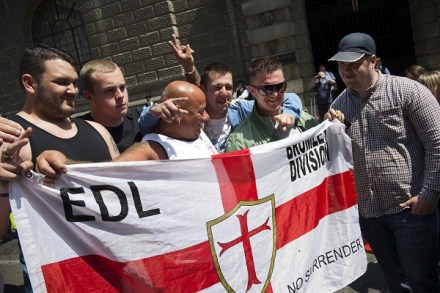
At the weekend I was on the BBC TV programme Sunday Morning Live. We discussed pilgrimages and the ethics of the banking industry. But the first debate was the most heated. It was titled, ‘Are Muslims being demonised?’ The Huffington Post’s UK political director, Mehdi Hasan, claimed that Muslims are indeed being demonised. For my part I argued that while there are serious reasons – principally terrorism and murder – to be concerned about some strands of Islam, those who would tar all Muslims with the brush of the extremists are doing something very wrong. I thought it an interesting and lively discussion. However at the very end Mehdi Hasan told a smear which I think needs correcting.

The EU fails to ban Hezbollah

From our UK edition

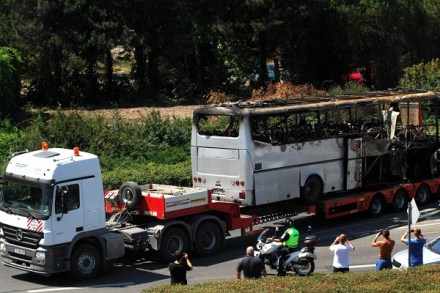
As though the sunny weather and the royal baby were not enough, here comes yet more good news. The European Union has finally banned the military wing of Hezbollah. This is something I have argued for often, including here, here, and here. After recent trials of Hezbollah operatives and Hezbollah operations – including the Bulgaria bombing – on European soil the decision did seem inevitable. Yet there is a cloud on the silver lining - which is that the EU, in somewhat characteristic fashion, has only managed to do a partly good thing. While they have banned the ‘military wing’ of Hezbollah they continue to allow the ‘political’ wing to fundraise and recruit in Europe.

Sadiq Khan has unwittingly highlighted the problem of Islamic extremism

From our UK edition

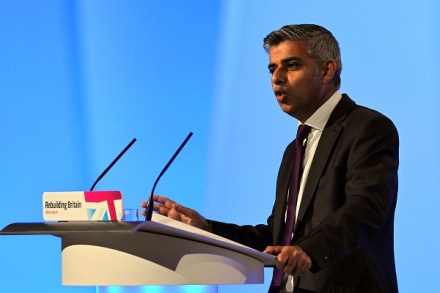
Sadiq Khan MP had a piece in the Telegraph last week attacking an excellent piece by Charles Moore in the same paper the Saturday before. In his piece Sadiq makes a number of claims which are worth rebutting. First is his question, ‘Would we accept the Jewish community being talked about the way the Muslim community are?’ Well, as I have written here before, that would depend, among other things, on whether or not in recent years a bunch of fundamentalist Jews had detonated bombs across the London transport system or beheaded a soldier on the streets of London. It would also depend on whether cells of Jewish extremists had been caught, tried and prosecuted on a fairly regular basis for trying to kill and maim numerous British people.

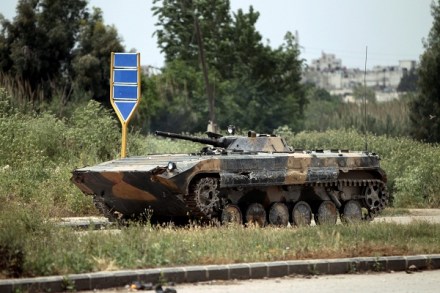
Cameron wants to change the military balance in Syria, but how do you do that without arming the Islamists?

From our UK edition

David Cameron and Vladimir Putin have just concluded their pre G8 talks, the main topic of which was Syria. Cameron wants to use the next few days to try and persuade the Russians to stop backing Assad; the weapons they’ve been sending him have enabled him to gain the upper hand on the rebels militarily. Cameron instinctively wants to do something about the slaughter in the Levant for both strategic and moral reasons. As one figure intimately involved in British policy making on Syria told me earlier, ‘The one certainty is that, if nothing is done, not only will lives be lost, not only will Assad not negotiate, but we will also not stop radicalisation.

Prism controversy will deepen coalition divisions over the snooper’s charter

From our UK edition

GCHQ’s use of the US monitoring system Prism is threatening to turn into a major political row. Douglas Alexander is demanding that William Hague come to the House of Commons to explain what GCHQ was doing and what the legal basis for it was. But this controversy is going to have an effect on coalition relations too. It is going to intensify Liberal Democrat opposition to the measures included in the Communications Data Bill. This comes at a time when David Cameron has decided, as he made clear in the Commons on Monday, that the measures in it are needed. In the United States, the Obama administration is pushing back against criticism of the programme.