Television

Does Joan Crawford deserve her bad reputation?

Bitches get a bad rap. In his new book, Ferocious Ambition, film historian Robert Dance recontextualizes the life, career and artistry of the most notorious bitch of them all, Joan Crawford. Crawford’s early twentieth-century rivals have faded into history (outside of the gayest of gay kids, does any Gen Z-er know the name Norma Shearer?), but Crawford is omnipresent for all the wrong reasons. Ryan Murphy reenacts her feuds on FX’s Feud. Drag queens imitate Crawford running around with an ax. And, every Mother’s Day, bloggers roll out posts and memes about her legacy as the worst mom of all time; the titular Mommie Dearest of Faye Dunaway’s campy, classic, child-abuse shlockfest.

crawford

Bowling Alone reads like a nostalgic look at the good ol’ days

In the Phetasy.com book club, we recently read the famous social science tome, Bowling Alone, by Robert Putnam. In it he examines the decline of social capital across various facets of American life. Based on his 1995 essay of the same title, the book was groundbreaking when it appeared in 2000. Putnam had noticed a trend: Americans were spending more and more time alone. His book analyzed the data and contemplated what it meant for our democracy and humanity. Although his observations were a harbinger of the oft-cited “epidemic of loneliness” we are currently living through, in our post-Trump, post-pandemic pre-maggedon reality, Bowling Alone reads like a nostalgic look at the good ol’ days. Days when people still interacted at all.

bowling alone

Why America’s top TV networks are banking on English soccer

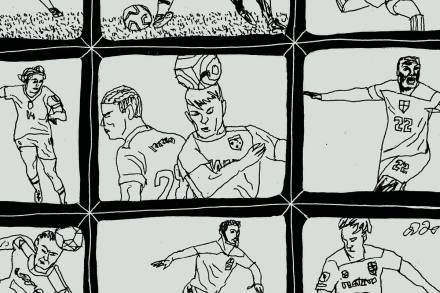
America’s soccer supernova is always just around the next corner, but Rebecca Lowe, who anchors NBC’s coverage of the Premier League in the United States, recalls a few corners already turned. “When I stood in LA in the rain at four in the morning and there were 5,000 people lining up to come in and join us,” she said, referencing one of NBC’s “FanFest” watch parties in 2021, “I was like, ‘Oh yeah, this has not only made it, but this is not going anywhere. This is only getting bigger.’ And there are not many things in this country that can get bigger.” It sure seems like there are more red-blooded Americans patrolling our streets in Arsenal and Liverpool shirts these days.

premier league
hallmark

In praise of Hallmark Christmas movies

You think the Christmas season starts when the Christmas decorations entirely take over Hobby Lobby at the first of November. Or the night of Thanksgiving when, full of turkey, you make your first gift purchase on Amazon. Or for us Christians, the first Sunday in December when kids bug us for that piece of chocolate and we begin reading about the birth of Christ. But we all know Christmas started earlier, perhaps back in October, when your wife began to turn her heart toward the Hallmark channel. Here is some advice from a happily married man of more than two decades: you won’t defeat Hallmark this year. You can only hope to contain it.

Were we all wrong about Frasier?

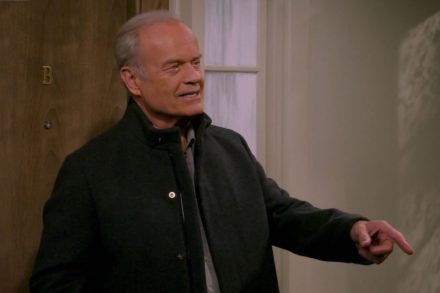
It is fair to say that, of this fall’s new and revived television shows, the reboot of Frasier was seen as at best a difficult proposition and at worst a cynical exercise in artistic necrophilia. There was no doubt that the original show was one of the finest American situational comedies of the twentieth and twenty-first centuries; a pitch-perfect farce, acted and written with enormous sophistication by a peerless cast, even if Jane Leeves’s “Mancunian” accent as Daphne is still one of the most peculiar things to have been heard on television. Even a lessening of impact after Daphne and Niles finally became a couple did not stop Frasier being regarded with enormous fondness after the show came to an end in 2004.

frasier

Biddy Baxter and the perils of remembering the past

From our UK edition

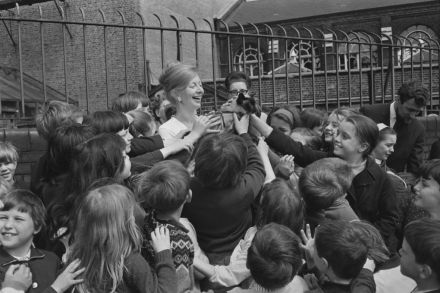
I’ve been reading the cracking, crackling new biography Biddy Baxter: The Woman Who Made Blue Peter by Richard Marson (he’s a friend, but I wouldn’t sell you a pup). There is always fun to be had in the gap between the transmitted, necessarily anodyne, product of children’s TV and the real-life shenanigans backstage, and the story of the often forbidding Biddy serves this up in satisfyingly salty dollops. In the collegiate, committee-ridden atmosphere of TV production, Baxter was a rare tyrant but one who always put the viewer ahead of any other consideration. Making TV is a battle; the reason so much of it is so bad is that the people involved don’t have the stomach to fight.

Much of the mysteriousness is inadvertent: ITV’s The Reunion reviewed

From our UK edition

The Reunion opened in 1997 with some young people being carefree: a fact they obligingly signalled by zipping around the South of France helmetless on motorcycles while laughing a lot. Love appeared to be in the air as well – given that they consisted of two couples: the men in charge of driving (different times), the girls holding them tightly around the waist. But then matters took a darker turn as a voice-over intoned that ‘memory is a false friend’ and we sometimes ‘create our own truth’. And with that, we cut to present-day London where, despite its taste for banalities, the voice-over turned out to belong to a respected author called Thomas Degalais – duly seen signing books for a queue of grateful fans.

The BBC’s biggest problem

From our UK edition

As I write this, the director-general of the BBC is being quizzed on the corporation’s future by people who were around when Sir John Reith kind of set the whole thing up. A cheap crack, I know – and I have nothing against the House of Lords. Anything which mediates our dangerous experiment with democracy is to be welcomed – the peers, the royals, the judges etc. I have been dipping in and out of the event and have yet to hear Tim Davie asked if he plans to bring back It’s That Man Again or whether or not the injunction ‘sod off’ is suitable for post-watershed viewing. If only they would ask this kind of thing, in a way – the crisis is rather more existential today.

Will we even notice if AI replaces screenwriters?

From our UK edition

We are edging into the third month of the strike by the Writers Guild of America, called because of shrivelling residual royalty payments from streaming movies and TV, as well as concern about AI such as ChatGPT being used to generate story ideas – and indeed to write scripts. Hollywood’s screenwriters have now been joined by the 150,000 members of the Screen Actors Guild, which was demonstrated very visibly by the cast of Oppenheimer walking out of its UK premiere last week. ‘We are all going to be in jeopardy of being replaced by machines,’ said union president Fran Drescher. Susan Sarandon has said of AI: ‘I would hope that in the future people understand the difference between real people making real choices and something that’s basically animation.

what we do in the shadows

Why What We Do in the Shadows works

Before Taika Waititi achieved his current state of half-ironic, half-irritating ubiquity, he made small, often brilliant films. One of the most notable ones was the 2014 New Zealand comedy horror picture What We Do in the Shadows, which he co-created and co-directed with Flight of the Conchords star Jemaine Clement. Horror comedies are notoriously tricky to get right tonally, but the film — which admittedly leant far more heavily on the comedic aspects — was a modest box-office hit and became yet another step on Waititi’s stroll to Hollywood dominance.

How to enjoy Glastonbury from your sofa

From our UK edition

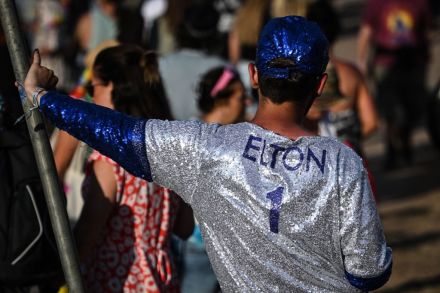
More than 200,000 people have schlepped down the ley lines for another year of ‘Glasto’. It’s tempting to deride these people: they’ll stink, they’re anchorless hedonists, they’re blue-haired hippies. However, they’ve got tickets to Glastonbury and I haven’t, so they win.  Actually going to the festival, however, is a minority experience. More of us will be watching it on TV. And whether you dig the Glastonbury vibe or not, there’s plenty of good music for all across this weekend.  The most important thing to remember, though, is to watch as little of the coverage as possible. It’s fluff. For three whole days, everything is ‘fantastic’, everyone will ‘bring it’ and ‘vibes’ will always be ‘elite’ for the gawping BBC presenters.

My return to dating

From our UK edition

The Coronation Street writers have produced 26 scenes to ease me out of the show for long enough for me to nip down to London to do a play for four weeks in the West End. They are long scenes – one is 13 pages – with my screwed-up, long-lost daughter, played by Claire Sweeney. I really need to get a grip on my Corrie lines, but my attention is torn between them and the play script. It’s been eight months since I last performed Rose, a one-woman show about a feisty old lady who goes from a shtetl in Ukraine to owning a hotel in Miami Beach, and this week it opens at the Ambassadors Theatre. I start on page one of the 47-page play, only to get distracted by a new Corrie script. Consequently, from about page 22, I know very little.

The strange obsession with Phillip Schofield

From our UK edition

As I have noted before, there is always another circle. I thought that last week’s scandal (originally entitled ‘Suellagate’ or ‘speedgate’ by the papers) could not be surpassed for its sheer vacuousness and pointlessness. But then I did not foresee that the next week would be one in which every newspaper and news bulletin would lead with a story about a morning television presenter. Yet here we are, after more than a week of national debate about Phillip Schofield. I first became aware of Schofield when he was presenting children’s television from the BBC’s ‘broom cupboard’ with Gordon the Gopher. I have not followed the career of either character very closely since. Nor, I think, have many other people.

TV dramas like Welcome to Wrexham are spoiling sport

From our UK edition

Wrexham had never seen anything like it: thousands of fans cheering their team as an open-top bus made its way through the city’s streets. On board, Wrexham’s footballers celebrated their side’s promotion back to the English football league. The club’s star owners, Ryan Reynolds and Rob McElhenney, were there too – and with them, as usual, came the cameras. The rise of Wrexham has become the subject of a hit Disney+ documentary, Welcome to Wrexham. It’s a feel-good story about Ryan and Rob, two rich and handsome actors from the other side of the Atlantic, taking over a down-and-out club in a depressed industrial heartland and giving it hope. Wrexham is not the only football club to have let the cameras in.

Does Shakespeare tell us how Succession will end?

From our UK edition

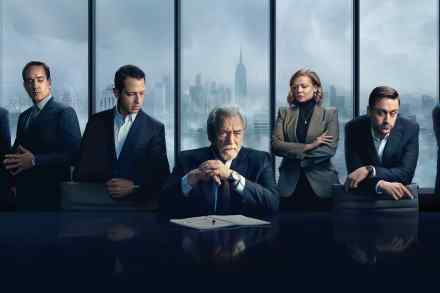
The award-winning Succession is many things. Now in its fourth series, it has been compared with a Renaissance painting, a Greek tragedy, a Jane Austen novel, and a psychoanalytical allegory of trauma responses (Kendall – fight; Connor – flight; Shiv – fawn; Roman – freeze). Ultimately, however, it is a Shakespearean series. The writers may have swapped the battlefield for the boardroom and armies for anxious shareholders, but the show’s character studies and themes – power, family, politics, betrayal, revenge – are Shakespearean in their complexity and circularity. Only instead of soliloquies, we have a lot more raised eyebrows, death-stares and ‘uh-huhs'. There’s even a playwright called Willa.

The secrets of London by postcode: E (East)

From our UK edition

How Walford in EastEnders got its name, why Isaac Newton visited bars in disguise and what happened when the IRA parked on a double yellow line. Our tour of London’s postcode areas has reached its penultimate stop – who fancies an E? In the run-up to the 1997 general election, John Major visited the Mirror Group offices in Canary Wharf. One of the rooms he entered, high up in 1 Canada Square, was that of Kelvin MacKenzie, erstwhile editor of the Sun but by then boss of L!ve TV. Looking out of the window, the Prime Minister commented: ‘Incredible view you’ve got from here, Kelvin.’ ‘Yes,’ replied MacKenzie. ‘On a clear day, you can almost see a Tory voter.

In praise of Prunella Scales

From our UK edition

As I’ve got on in years I’ve been fairly successful in eliminating vices – most of the debauchery of my teens and twenties is a distant, hazy memory. But as I reached my fifties I found I had fallen into the grip of a compulsion that was as powerful and unshakeable as any drug. My name is John and I am addicted to Great Canal Journeys with Prunella Scales and Timothy West.  During my condition’s worst ravages I found myself staying up half the night binge-watching this endearing elderly couple navigating their way around the historic waterways of Britain at 2mph. The pottering about, the occasional prang while entering and exiting locks, the odd glass of wine in the afternoon ­­– it was the most addictive TV I’d seen since The Wire.

Before Yellowstone there was The Big Valley

One of the most popular shows today is the Paramount Network’s Yellowstone, which follows the Dutton family, led by Kevin Costner's John Dutton, who owns and runs one of the largest ranches in the country, the Yellowstone Ranch in Montana. The sprawling cattle ranch, owned by several generations of Duttons, is under constant threat by scheming developers, environmental activists and Native Americans seeking historical justice, not to mention the forces of globalization that threaten to run the family legacy out of business. Writer and director Taylor Sheridan’s hit series has been praised for its breathtaking cinematography, complex characters, gritty realism and modern relevance.

big valley yellowstone

The dark side of Ted Lasso

From our UK edition

You’ll know where you are with Ted Lasso – the third season of which has just started on Apple TV – as soon as you hear the Marcus Mumford co-written theme song. It peddles a sort of sub-Coldplay uplift, with a lot of big, meaningless anthemic 'yeah's in the chorus. Bright, accessible, catchy and instantly forgettable, you still enjoy hearing it every time you watch a new episode. And that’s the show in microcosm: cheery, amusing and utterly inconsequential. Yet somehow the Jason Sudeikis vehicle has become not only Apple TV’s biggest hit to date, but the most Emmy-nominated comedy in recent years.

The perverse and addictive appeal of Netflix’s You

From our UK edition

In our risk-averse, deeply fearful age, the idea of one of the most popular shows on any streaming service being a black comedy about a serial killer who has an unfortunate penchant for murdering the women he falls in love with might be something of a tough sell. But the bloody exploits of Joe Goldberg, a bookstore worker-turned-university-professor, who has so far terrorised the denizens of New York, California and London, have run to four immensely popular seasons on Netflix, with a likely fifth and final instalment in the next year or two. Not bad for a series that – intentionally or otherwise – treads a fine line between hilarity and horror, its essential ridiculousness jostling against its near-nightmarish central conceit.