Television

The perennial appeal of Made in Chelsea

From our UK edition

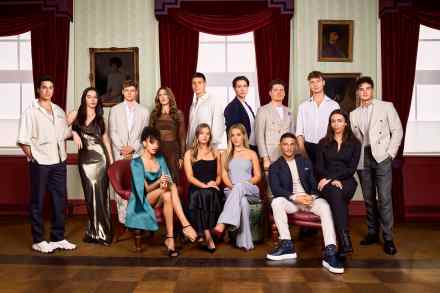
The modern world of dating is ripe for disappointment, and recent dating app convert Sophie is certainly not immune. ‘I went on a date with an actor – not doing too bad – we go to Zuma. I ordered everything; Henry VIII in there, got it all. Then the bill came and he says, how should we do this? Ugh! Ejector seat. Meep! Bye bye. No, I couldn’t. I paid the whole bill and left. Auf wiedersehen.’ Luckily, pal Olivia has a solution, and advises her to ditch the apps and instead sign up to a millionaires’ dating agency run by her friend. Good advice for all of us, perhaps, although I’m not sure I would make the criteria for the dating agency. But this is Made in Chelsea, where finding a millionaire to date is a completely reasonable expectation.

The New York deli sandwich that changed history

From our UK edition

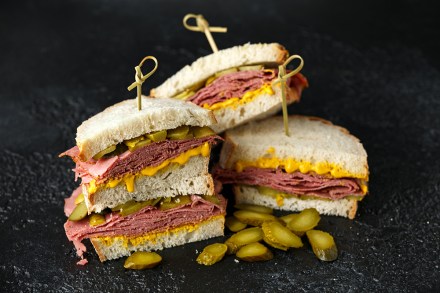
There’s nothing new about bringing maverick businesspeople into government to give the bureaucratic blob what an unnamed ‘Trump adviser’ was recently quoted as calling ‘a swift kick in the ass’. After all, it was David Cameron who in 2010 hired the now all but unmentionable retail buccaneer Sir Philip Green to find ways to cut Whitehall waste. But Donald Trump’s conferment of the role of solo global peacemaker on his real-estate buddy Steve Witkoff – who has no known foreign policy or government expertise – takes that idea to a scary new extreme. Take a look on X at a clip of him arriving alone to meet Vladimir Putin and a line-up of Kremlin heavies. When a woman, face unseen, takes the seat next to Witkoff, he turns to her and says: ‘Are you my translator?

When will the BBC ever learn?

From our UK edition

They say that death and taxes are the only certain things in this life. I would add BBC bias into that mix. It was probably about 20 years ago that I first went on Newsnight. In those days Jeremy Paxman ruled the roost and taught me an early lesson in live television. Jeremy asked me my view and I gave it. He then turned to the other guest and duffed him up a bit. I made the mistake of smiling briefly, only for Paxman to turn on me and say something along the lines of: ‘I don’t know what you’re grinning about.’ He then proceeded to duff me up a bit too. Lesson learned. Back then, when you left the Newsnight studio, your phone would explode. Like Question Time some decades ago, it was must-watch television.

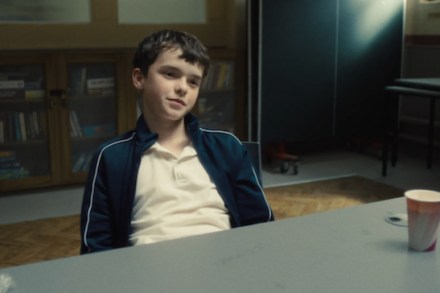
Forget Adolescence: this is the Netflix drama teenage boys should watch

From our UK edition

Boris Johnson didn't like Adolescence. In his Daily Mail column last week he acknowledged the fine acting of the most talked-about television programme of the year, but still concluded that it was ‘tosh’. The problem, he felt, was that it wasn't based on a real-life crime, which somehow lessens its worth as a lesson for our times in the eyes of the former Prime Minister. I'm not sure his logic fully holds up to scrutiny (nor, for that matter, does Keir Starmer's plan to show Adolescence in schools). But if it is real-life drama that Boris wants then Netflix, with impeccable timing, this week released another one of those sports documentaries at which they have become rather adept.

In defence of benzos

From our UK edition

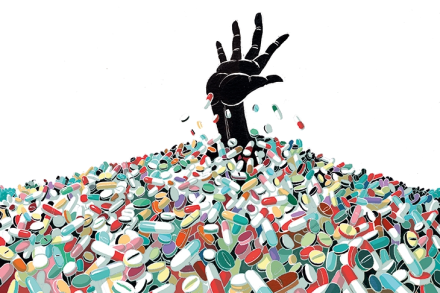
In the latest series of The White Lotus – a moral fable about the narcissism and toxicity of the privileged class – Parker Posey plays Victoria Ratliff, a Southern matriarch routinely spaced out on the tranquilliser lorazepam. Her daughter Piper asks why she needs it. ‘Certain social situations make me anxious,’ she drawls. When her husband Timothy (Jason Isaacs) gets word that his crooked financial empire is about to crumble, he starts necking Victoria’s pills in secret before swiping the bottle. My ears always prick up at the mention of lorazepam because, like Timothy Ratliff, I have taken it illicitly to manage anxiety. However, I was not stealing it from my wife, but receiving it in the post from my mother.

Keir Starmer must look beyond adolescent politics

From our UK edition

An industry poll by the British Film Institute in 2000 to find Britain’s best television programme put Fawlty Towers first and Cathy Come Home second. The latter, Ken Loach’s bleak 1966 play about a woman’s downward descent through unemployment, homelessness and poverty, is about as far from John Cleese’s inimitable farce as can be conceived. Yet both made lasting impressions on viewers of very different kinds. Adolescence’s popularity is down to telling liberal England what it wants to hear, never mind its basis in reality Watched by a quarter of the population at the time, Cathy Come Home took an uncompromising approach to its subject and provoked wide reaction. Passers-by stopped its star Carol White in the street to hand her money, assuming she really was destitute.

The Severance season two finale is of a quality rarely seen on TV

Burned by the backlash to Lost, Damon Lindelof went in a new direction for his following show, The Leftovers. It also had a mystery at its center: why did a rapture happen where 2 percent of the world’s population instantly vanished on a random Friday? But whereas Lost set up an expectation of answers, only to disappoint, The Leftovers made it clear that there were no answers to this mystery. Over its unfortunately abrupt three seasons, neither the viewers nor the characters would ever find out why this event happened or what it meant; why some people were taken and why others were left behind. It wasn’t a puzzle to solve but a situation to cope with and live through. It’s the greatest TV show you haven’t seen.

severance

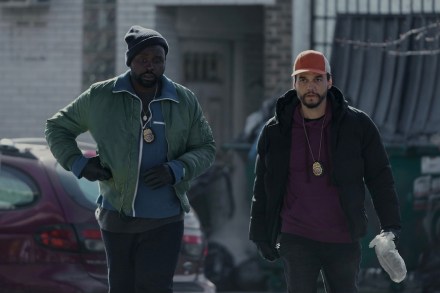
Apple TV+’s Dope Thief is an ugly mess

LOG is the name of ungraded digital video footage. It’s flat, lifeless, and dark, but that’s fine because you can tweak, tune, and adjust in a way that was never possible with film, fiddling with exposure, contrast, saturation, and so forth. In those days, everything had to look as good as possible on the film. But, with the ability to grade in post, fix visual effects in post, and change backgrounds and designs in post, directors started getting lazy. And eventually, some convinced themselves that ugliness is a distinct stylist choice. It’s not laziness; it’s an aesthetic. I say all this as, in another era — an era with more care — Dope Thief could have been a great show.

Dope Thief

We need a modern Wogan

From our UK edition

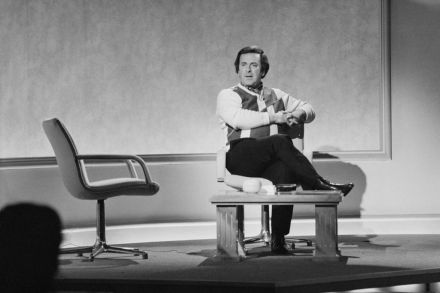
Nowadays whenever an elderly celebrity dies – consider the death last month of Gene Hackman as a case in point – one of the first things that happens is that a chunky clip of them appearing on a talk show such as Wogan or Parkinson gets shared on social media. Before you know it, you’ve spent three or four minutes listening to them regale television-watchers of the 1970s, 1980s or 1990s with a reflective anecdote or a personal story that reveals something important or even profound about their lives and animating passions or influences.

Can a TV series capture the extraordinary story of the Mitford girls?

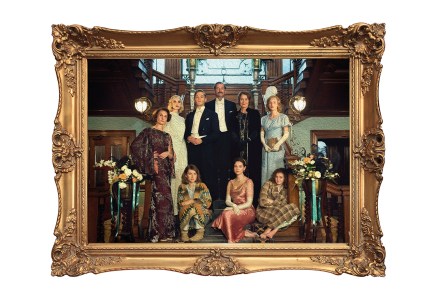
We remain fascinated, even obsessed, by the Mitfords. Collectively, their existence is the stuff of legend: the affairs, the imprisonment, the polarized politics, the wit, the beauty, and the brutality, all in one glamorous package. In uncertain times, the sisters offer a flush of eccentric characters: Nancy the Novelist, Pamela the horsewoman, Diana the Fascist, Unity the Hitler-lover, Jessica the Communist and Debo the Duchess.

Mitford

A return to the White Lotus

The White Lotus, now back for a third series, could perhaps be best described as Death in Paradise for elegant people. Most obviously, this is because its plots revolve around murders in an idyllic location — only with a far bigger budget, a much starrier cast and several episodes per story. But there’s also the fact that it follows the same pattern every time. So it was that season three began this week, rather like its predecessors, with some lovely scenery, a dead body and a caption reading "One week earlier." After that, we duly watched a bunch of rich, good-looking folks arriving at a luxury White Lotus resort where they were welcomed by the resolutely smiling staff and a nervous manager, before gazing round and marveling at the beauty of it all.

Lotus

This month in culture: March 2025

With Love, Meghan Netflix, March 4 If there were an award for the year’s least eagerly awaited show, Netflix’s With Love, Meghan would have to be in the running, if not quite the clear front-runner at this early stage of the year. Even the synopsis — “Meghan Markle invites friends and famous guests to a beautiful California estate, where she shares cooking, gardening and hosting tips” — summons up gasps of horror. The footage that has arrived via trailer indicates that this will be as vacuous as an Instagram reel brought to full, unlovely life, with its uniquely dreadful hostess conveying nothing so much as an onscreen vacuum where any kind of charm, grace or likability should be.

culture

I watched everything except the Super Bowl

Who did you cheer for in the Super Bowl last night? The asteroid? Evan McMullin? (OK, let’s not go too crazy.) Rarely has a third-party option looked so good. This was one of the least appealing Super Bowl match-ups in NFL history—and it’s the second time these two teams have met in a championship game in just three years. In one corner, football’s new dynasty, the Kansas City Chiefs, like the New England Patriots of yesteryear except everyone has a make-up artist on retainer. The Chiefs might play on the wind-swept plains but they’ve imported Hollywood into the NFL like never before.

super bowl

Well done to the Channel 4 halfwits

From our UK edition

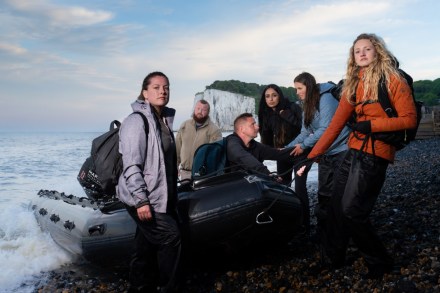
The number of people arriving here in small boats has increased since Sir Keir Starmer was elected Prime Minister on 4 July last year. The 20,000 figure was passed in December. Perhaps the increase is a consequence of these disparate individuals yearning to live in a country in which Angela Rayner is the Deputy Prime Minister. Or maybe they have noticed that one of the great cabinet posts has been conferred upon David Lammy and they think to themselves – goodness, these guys are taking affirmative action to absurd levels. We can’t go wrong here.

The hard truth about Britain’s soft power

From our UK edition

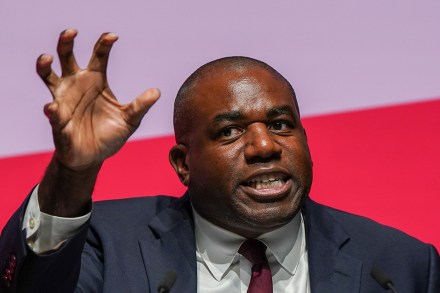
How hard is your soft power? According to David Lammy, Britain’s soft power is so strong and underrated that he has decided to set up a ‘soft power council’ to show just how hard we are. Put aside such details as waste and futility for a second. Surely there is something rather embarrassing about boasting about such things? It reminds me of the phrase ‘muscular liberalism’. A person may define the political concept of muscular liberalism. He may even be described by others as a ‘muscular liberal’. But no one should go around declaring themselves to be such a thing, without expecting to be greeted with a chorus of ‘I don’t doubt it, dearie’ and the like.

How to catch a traitor

From our UK edition

A quarter of a century after the first series of Big Brother, there is still some life in reality TV. Most of it is dross, but reality TV at its best tells you something about the human condition. What The Traitors (BBC One) tells us is that people are very good at lying. We over-estimate our ability to read people, and ‘body language’ is as likely to mislead us as it is to provide a ‘tell’. It is because people are good at lying that the faithfuls spend most of their time banishing fellow faithfuls based on nothing but vibes. They are then filled with remorse before picking another target at random and doing exactly the same thing again. The other thing The Traitors shows us is that people act in their rational self-interest and generally do it rather well.

The Traitors finale was a cruel spectacle

From our UK edition

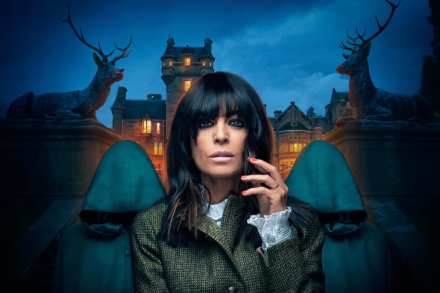
Blame Covid. That’s the origin of the BBC’s hit game-show, The Traitors. Workplaces are still deserted as people sit in their kitchens tapping away at their laptops but they crave the drama of office politics. This show lays on conspiracies and intrigues galore. The setting is a quaint old Scottish castle where a random group of players compete to win a pile of cash. Each contestant is ordered to tell the truth but a small number are given permission to cheat. These roles are assigned in secret, which fosters an atmosphere of fraud and mistrust. It’s a paradise for crooks and cut-throats. The castle is sprawling with side-parlours and shadowy drawing rooms where conspiracies can be hatched and strategies discussed as the contestants try to identify the ‘traitors’ among them.

Why we dramatize history — and why we should stop

A few weeks ago, a friend asked if I had watched the Newsnight interview with Prince Andrew. That interview, yes — the one with all the sweating and the pizza in Woking, in which he definitely didn’t meet Virginia Roberts Giuffre but he did single-handedly crash his reputation, and Emily Maitlis, like the Medusa of journalism she has since become, just let him tie his own noose. Of course I’ve watched it. I’m a journalist. And a twenty-first-century citizen. Who hasn’t? My friend, for one, though she pointed out that she can just watch the three-part Amazon dramatization of the whole affair, A Very Royal Scandal, which is even juicier than the interview. (“I’m the son of the sovereign,” bellows the Duke of York, played by a soapy Michael Sheen.

history

The death of anticipation

From our UK edition

Were there arguments? Undoubtedly. By the time Christmas Eve arrived, it was a dead cert that Great Aunt Mary would prefer BBC Two’s festive celebration from Westminster Cathedral (complete with the puberty-defying nearly-15-year-old Anglesey treble Aled Jones) to Kenny Everett’s reworking of A Christmas Carol on BBC One (louche, anarchic and probably regrettable, with its jokes about a pudding with cystitis and pantomime-style wordplay of the ‘Good golly, Miss Marley?’ variety). And it was 1985, so only 30 per cent of British homes owned a video recorder, making the ‘what to watch’ argument notably fraught in the season of peace and goodwill toward men. The problem with anticipation is the element of waiting. How long is it since patience was a virtue?

I hope nobody watches Meet the Rees-Moggs

From our UK edition

Towards the end of last year, the production company Optomen TV contacted Jacob about the possibility of filming a documentary series on what life was like as an MP. The idea was to start shooting in June, since it was assumed the show would build to the natural finale of an autumn general election and its aftermath. A pilot day was filmed in Somerset in March, when the children were home from school and we hosted our annual meet for the Mendip Farmers Hunt. The producers decided the show could work. Then Rishi Sunak fired the starting gun for the election on 22 May, before we’d signed anything. Jacob took the plunge and agreed to start filming that afternoon. The crew were already waiting when I returned from school with the children.