Television

My teenage brush with a micropenis

From our UK edition

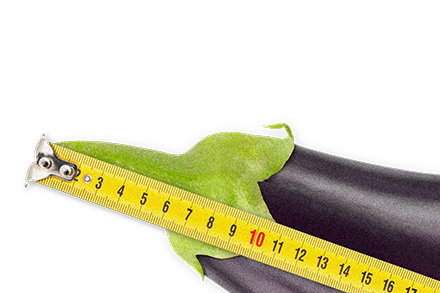
Like Adolf Hitler, I have been involved in a Channel 4 documentary about penises. I also share a love for watercolours and a partiality for Wagner but that, I promise, is where the similarities end. But back to penises. The Führer’s genitalia – or lack thereof – is a feature of a new documentary, Hitler’s DNA: Blueprint of a Dictator. The documentary makers have examined a scrap of the bloodied fabric from the bunker sofa upon which Hitler blew his brains out and the long – but mostly the short – of the findings are that history’s most evil man likely had underdeveloped sexual organs, including a micropenis and an undescended testicle.

Is Martin Scorsese America’s greatest living director?

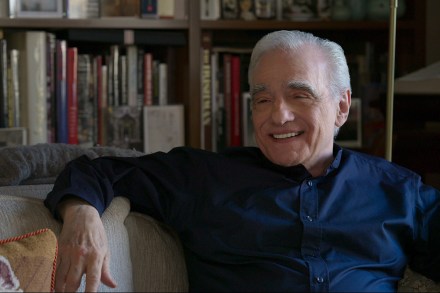
Who’s the greatest living American film director? Many would say Steven Spielberg, and that can’t be dismissed, but he hasn’t made a really good film since Munich (2005). There are many younger pretenders – such as David Fincher, Paul Thomas Anderson, Quentin Tarantino – and the more esoterically inclined might make the case for anyone from Terrence Malick to Spike Lee. Yet it’s hard not to feel that the don of contemporary American cinema is Martin Scorsese, whose career over the past five-and-a-half decades has existed, sans pareil, thanks to a vast dollop of talent, a considerable degree of good fortune and, crucially, an ability to lure both A-list collaborators and deep-pocketed moneymen into financing his films.

scorsese

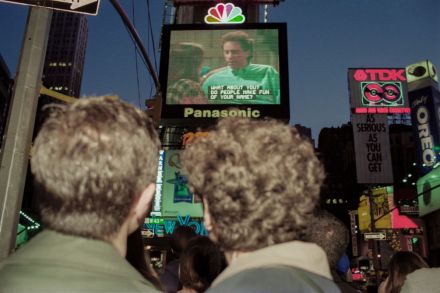
Nobody Wants This could learn a few things from Seinfeld

From our UK edition

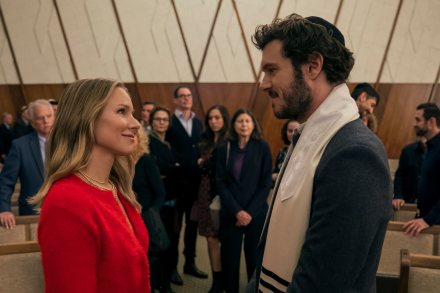
Nobody Wants This, the Netflix romcom that brought us the ‘hot rabbi’, recently returned for its second season. For the uninitiated, the first series introduced us to sex and relationships podcaster Joanne, played by Kristen Bell, who meets Noah, played by Adam Brody (of The O.C. millennial crush fame), a reform rabbi who has just broken up with his long-term girlfriend. The premise felt fresh and original: a romcom that dared talk about religion and even made it the key part of the plot. It’s undoubtedly a hit, with season two racking up more than eight million views in its first four days of streaming, taking it to the number one spot on Netflix’s chart.

Will Disney strike a deal to end its YouTube TV blackout?

A war has taken over media coverage. No, not one of actual consequence. This war, however, is imminently affecting your national pastime and your wallet. This is a civil war within media. The combatants are the Walt Disney Company with it’s channels – including ABC and ESPN, plus the SEC and ACC networks – and Google, YouTube TV’s parent company. The two entities failed to meet a carrier agreement, and all Disney channels are blacked out on YouTube TV. That means that much of the nation will not have access to most of the weekend’s football content, as has been the case since the showdown a couple weeks ago.

youtube tv disney

Wokeness ended my backroom Jeopardy! habit

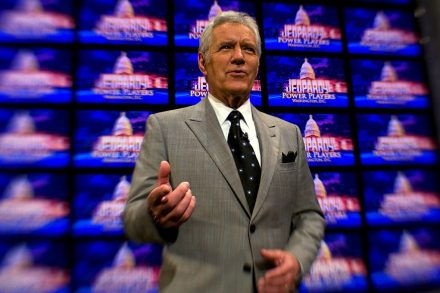
In May I got a Facebook message from a guy named Mikey Walsh, who I’d met once at a trivia night at Mister Tramps, one of the diviest dive bars in Austin, Texas. He told me he’d been running a quiz called “Buzz In Buzzed,” which was exactly like Jeopardy!. Several of the regular players had been on Jeopardy! like me, and he was looking for more contestants to play. “This is not a business,” he said. “It’s free to play, and there’s no prizes. It’s just nerds playing trivia for fun.” This wasn’t the kind of offer I turn down. The opportunity to play fake Jeopardy! in the back of the bar for no money? Sign me up, I said. A couple of weeks later, I went to Buzz In Buzzed.

jeopardy

LeBron’s ‘Second Decision’ wasted everyone’s time

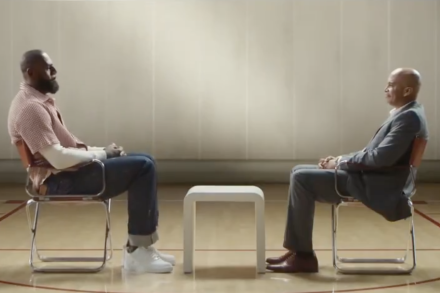
With bated breath, diehard sports fans in America and across the globe waited to see what LeBron James’s “The Second Decision,” meant for the NBA icon’s future. Retirement? A team change? Another son being gifted – ahem – earning an NBA draft pick? “Everyone’s on pins and needles across the country,” the host said in the anticipated video. “You ready to go, LeBron?” Then, a pause for unnecessary dramatic effect. “LeBron, fans want to know where you’re taking your talents this year. What’s your decision?” “In this fall, man this is tough,” James’s bad acting enunciates, “In this fall, I’m going to be taking my talents to Hennessy VSOP.” Hennessy is a cognac brand. He was announcing a new brand deal.

Kimmel makes the case for free speech

After a few days in politically-induced time out that felt like a decade, Jimmy Kimmel made a triumphant return to late night TV on Tuesday. “I’m not sure who had a weirder 48 hours,” he said. “Me, or the CEO of Tylenol.” Given that Tylenol is a brand name and has no actual CEO, let’s say Kimmel, who Disney/ABC pulled off the air last week under political pressure from station ownership and the chairman of the FCC after he made a bad-taste joke about Charlie Kirk’s assassin.  Kimmel suddenly became the most famous man in America not named Donald Trump, and his audience met his return with a roaring standing ovation, chanting “Jimmy! Jimmy! Jimmy!

Kimmel

Don’t cry for Jimmy Kimmel

The defenestration of the supposed talk show host Jimmy Kimmel, for the inflammatory remarks that he made during the monologue in his show on Monday night about Charlie Kirk, is both an unexpected and deeply predictable development. It was unexpected because Kimmel clearly believed that he was, like Lehman Brothers, “too big to fail,” and was therefore within his rights to make such comments as how “We hit some new lows over the weekend with the MAGA gang trying to characterize this kid who killed Charlie Kirk as anything other than one of them and doing everything they can to score political points from it.” And it was deeply predictable because Kimmel now becomes the latest scalp that the right have seized this year, and perhaps the most high-profile yet.

Kimmel

Meghan Markle’s TV show is a balm for desperate housewives

From our UK edition

The Duchess of Sussex has achieved something quite remarkable. After the brickbats hurled at the first season of her Netflix show With Love, Meghan – the furious pro-monarchy outrage, the eye-rolling from critics, the memes that lampooned her syrupy anecdotes – many TV personalities would have flinched. They would have called consultants, tweaked the format, apologised by going in a ‘new direction’. Meghan Markle (or should I say Sussex) has done the opposite. Season two arrived last month: unchanged, unrepentant and every bit as twee as the first.  Like her homemade ‘jam’, that’s not to say it’s gone down well. ‘Painfully contrived’, ‘irrelevant meets intolerable’ and ‘tone-deaf’ were just some of the newspaper reviews.

The Office is the TV show that will never die

From our UK edition

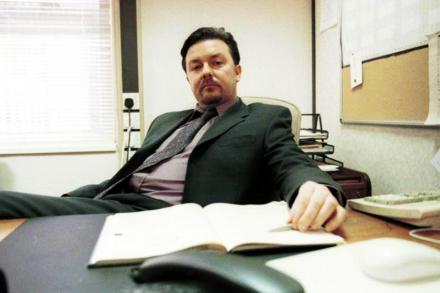
A thought hit me when bingeing the first series of The Paper on Sky’s Now streaming service this week: how on earth did it take this long for someone to make a sequel to The Office? Don’t get me wrong, this wasn’t a glowing verdict on the comic merit of The Paper – an Office-style mockumentary set in a struggling regional newspaper in Toledo, Ohio. Rather it was a reflection on the usually mercenary economics of big television. During the pandemic, the American version of The Office racked up an astonishing 57 billion streaming minutes, despite its final episode having aired in 2013. The show premiered in 2005, inspired by the British sitcom created by Ricky Gervais and Stephen Merchant that ran from 2001 to 2003 (and which is itself still a big hit on iPlayer).

The brilliance of BBC Alba

From our UK edition

During lockdown, a friend and I moved into a flat that had a difficult relationship with the TV aerial. Ineptitude and laziness combined to ensure that the only channels we were able to watch were BBC ones via the iPlayer app. So most nights – if there was no live sport – we found that our entertainment was at the behest of the state broadcaster. And what a drag it was. Every time, we’d reject the populist crap on BBC1, the parochial crap on BBC2, the braindead crap on BBC3, the boring crap on BBC4, the insane crap on BBC News, the wrist-slashing crap on BBC Parliament. And then we’d get to the end of the nav bar, to see one option left, and my flatmate would put on a Scottish accent and say: ‘Alreet, what’s on Alba?

Alien: Earth is unfriendly and brilliant

Another day, another bunch of rampaging, acid-blooded xenomorphs. Noah Hawley’s new series, Alien: Earth, comes hard on the heels of the profoundly forgettable but commercially successful latest installment in the film saga, Romulus. That film got into trouble with certain viewers for its artistic necrophilia in the artificial-intelligence-assisted resurrection of Ian Holm’s character Ash from the first Alien film, as well as some rather laborious fan service in the repetition of various hard-as-nails catchphrases. But still, its box-office revenue indicated that there is still, after four and a half decades, a hearty appetite for audiences who want to be scared witless by rampaging extra-terrestrials: the very opposite of kindly, friendly ET types.

Donald Trump saved the UFC 

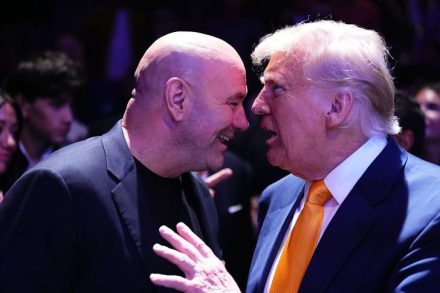
A new bombshell has fallen on the sports-media villa: Dana White cloaked in the glory of a whopping seven-year, $7.7 billion media-rights deal with Paramount to stream all UFC fights on Paramount+ in the United States and select simulcast events on CBS. For the love of everyone’s wallets, goodbye Pay Per View and hello to a new right-wing cultural shift in mainstream sports coverage.  Why is this new deal so relevant? Since the UFC’s inception in 1993, mixed martial arts existed as its own niche category. Critics openly said it wasn’t a real sport. They lampooned the more brutal style of MMA as less skilled and artistic than boxing, once a more revered American pastime.

Let’s scrap football’s post-match interviews

From our UK edition

‘The view was stunning.’ ‘The hotel room was well appointed.’ ‘It’s a city of contrasts.’ Such numbing clichés in travel commentary are considered, by anyone remotely au fait with Eric Newby or Patrick Leigh Fermor, to be unacceptable. But if you watch Match of the Day, you’ll know the footballing equivalents of these kinds of asinine blandishments have long been deemed worthy of the kind of critical scrutiny usually reserved for Jonathan Franzen novels. After following the game for 40 years, I’ve finally reached breaking point with the abysmal drivel that comes out of the mouths of players, pundits and managers alike. Of course, they aren’t being paid to be articulate and witty to the cameras – they’re paid to win games of football.

South Park has lost the plot

Since 1997, South Park has satirized just about every group in modern life while hilariously positioning itself as the voice of moderation. Yet with the premier of Season 27 last week, the show seems to have lost sight of reality, instead circling the drain of MSNBC-style political delirium. Far from rejecting the extremes of American politics, the shows repositions leftist extremism as the new moderation.  The new season’s first episode shows the Principal, who was once politically correct, embrace devout Christianity in an America where wokeness is effectively illegal and Christian Nationalism reigns supreme. The town’s adults are annoyed to see public schools foist religion on the kids, so they organize their usual rabble-rousing resistance.

South Park

Don’t mourn the death of TV

The online American right is positively obsessed with the nineties. It’s easy to establish the cause here: a surfeit of Gen X and early millennial users, many of whom are fresh converts from within the last decade. Social-media posts by conservative users depicting America’s cities, beaches, and nightclubs from this era regularly achieve staggering virality. The memorialization of these things is justified by presenting them, perhaps not wrongly, as evidence of the cultural homogeneity that America has lost in the past quarter century. There is one tendency among these that I find particularly troubling – lamenting the death of American network television.

Television

Britain has lost the plot over Peppa Pig

From our UK edition

We’ve been through a lot as a nation over the past few years. Watching politicians debate scotch eggs, finding out (without wanting to) how Prince Harry lost his virginity, Just Stop Oil’s tomato soup tantrums… so sometimes an event arises that makes you ask yourself: has this all taken a larger toll than we realised on our collective psyche? Are we, in fact, having some kind of national nervous breakdown?  The answer would appear to be a big, fat, pig-shaped yes, given the ‘breaking news’ announcement on ITV’s Good Morning Britain this week that Peppa Pig matriarch Mummy Pig had given birth to her third piglet, Evie. https://twitter.

The BBC’s problems go far beyond Gary Lineker

From our UK edition

As one might expect from a 103-year-old organisation, the BBC has a very high opinion of itself. Outside Broadcasting House stands a statue of George Orwell. Inscribed next to it is a quotation by him: ‘If liberty means anything at all, it means the right to tell people what they do not want to hear.’ A noble sentiment, and a more flattering testament to the corporation than Orwell’s description of it after working there during the second world war: ‘Something halfway between a girl’s school and a lunatic asylum.’ In his growing outspokenness, the football pundit Gary Lineker might have thought that he was channelling Orwell.

The truth about my relationship with Phil Spencer

From our UK edition

I never thought I would read a headline like ‘Kirstie Allsopp’s husband enables upskirting’. Regrettably, this type of nonsense has become a regular part of our life since Ben and his business partner Will decided to rescue an old pub on Latimer Road. There used to be a dozen pubs on this street, but they have nearly all gone. Ben and Will are romantics and are hugely attached to this part of west London, where they have worked together for 25 years. They thought that reviving the pub would be a fun project, but some locals are working night and day to ensure it never comes back to life, lodging dramatic objections to everything and anything.

The overlooked brilliance of BBC’s The Hour

From our UK edition

With reluctance – but enticed by its surprisingly starry cast and the fact that it had landed, ironically enough, on Netflix – I recently tuned in to The Hour, the BBC’s 2011 political drama series. It's about a BBC TV news programme being launched in 1956, against the backdrop of the Suez Crisis. And, goodness me, isn’t it good? Better than good, in fact – it’s a high-carat television diamond, and not some lab-grown job either, but the real, romantic, sparkling deal hewn out of the earth and hawked via Antwerp before ending up in the Imperial State Crown.