Technology

The new corporatism that’s killing capitalism

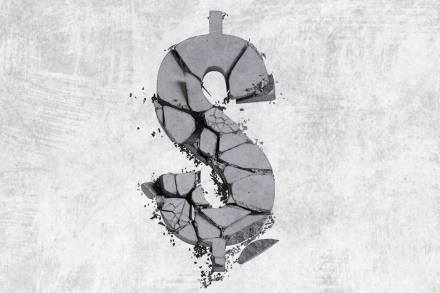
Over the years since the financial crisis, economic power and wealth has become ever more concentrated in fewer hands. This is something leaders have acknowledged, and policymakers have tried to do something about. And yet, despite brave talk of breaking up mega-giant companies, anti-trust efforts have been anemic, as most recently demonstrated by the failure to stop Microsoft from swallowing game maker Activision. The future looked a little brighter in the immediate aftermath of the pandemic. There were signs of a grassroots resurgence, with a strong uptick in new business formations in the United States. But since then, as interest rates have risen and regulatory pressures have increased, there has been a slackening off of new firms.
the new corporatism

Light bulb moment: the flaw in the petrol car ban

From our UK edition

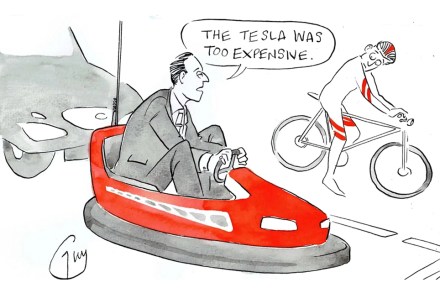
This week, writing in the Daily Mail, Matt Ridley produced a devastating takedown of the government’s 2030 ban on the sale of new conventionally powered cars. He plans to pre-empt the ban himself by buying a brand-new petrol car in 2029. Innovation happens gradually and delivers its benefits unevenly – therefore it is stupid to impose it on everyone all at once  I thought he was right about almost everything, except perhaps that final prediction. He’s right to be sceptical about the environmental benefits of electric cars – especially in countries such as China (and, to a lesser extent, Germany) where electricity is largely generated from the filthier forms of coal.

Should we fear AI? James W. Phillips and Eliezer Yudkowsky in conversation

From our UK edition

James W. Phillips was a special adviser to the prime minister for science and technology and a lead author on the Blair-Hague report on artificial intelligence. Eliezer Yudkowsky is head of research at the Machine Intelligence Research Institute. On SpectatorTV this week they talk about the existential threat of AI. This is an edited transcript of their discussion. JAMES W. PHILLIPS: When we talk about things like superintelligence and the dangers from AI, much of it can seem very abstract and doesn’t sound very dangerous: a computer beating a human at Go, for example. When you talk about superintelligence what do you mean, exactly, and how does it differ from today’s AI?

Nothing makes technology transparent again

Consumer technology is, usually, profoundly dull. I love technology, but even I must concede the undeniable. A new pair of light gray, plastic cupped, noise-canceling headphones are functional, and often great, but they hardly get the blood rushing. Yet another gray Windows notebook has released! I struggle to stifle a yawn. And then — worst of all — are the phones. In the sixteen years since the first iPhone debuted, smartphones have become ubiquitous; the market is so large and flooded that innovation is no longer worth the risk. Phones are not cool new devices, but tools. You don’t care how a hammer looks; you care about the price and if it can hit a nail. The latest iPhone is a tool for accessing the internet and taking selfies. Most Android phones are the same but cheaper.

Photo courtesy of Nothing

Is the glucose monitoring craze really so healthy?

From our UK edition

At £300 a go, the Zoe is a reassuringly expensive accessory. It has a recognisable logo and even had a 200,000-strong waiting list at one point. That wouldn’t be so unusual if Zoe was a must-have handbag or jewellery, but it is  a continuous glucose monitor that you stick to your arm. Some charities ask non-diabetics to donate their wearables to be reused by people who actually need them Continuous glucose monitors have been available to diabetics for a few years, but now non-diabetics without any particular reason to worry about their pancreas are also getting in on the act. Like the fear of gluten a few years ago, glucose levels have gone from something only those with a diagnosed medical condition ever think about to a widespread obsession.

Whose job is it to keep airport e-gates open?

From our UK edition

Do you hate airport e-gates? Me too. The instructions are poor, the facial recognition frequently fails and the ‘Don’t abuse our staff’ posters tell you you’re trapped in a system that’s bound to annoy. Last Saturday it went from bad to worse, when all 270 e-gates at UK entry points stopped working. ‘A technical nationwide border system issue’, the Home Office called it. But I think we should know who’s responsible – and a Hollywood-hacker-style trawl has led me to a 2021 report by David Neal, ‘independent chief inspector of borders and immigration’. Neal reveals that a single-supplier contract for UK e-gates was awarded in 2013, until 2023-24, to a Portuguese firm called Vision-Box.

I know how AI will bring us down

From our UK edition

On the smooth marble concourse by the exit doors at Heathrow Airport I met my first cleaning robot. It was purple, made by a company called Mitie and about waist-height – the size and shape of a park bin. It ran on wheels, dragging a grubby mop behind it, and it was polite. As my small son and I stumbled into its path, it backed off smoothly like a well-trained butler. I apologised to it instinctively, after which it appeared to follow us. My son said: ‘Mum, it likes us!’ Then, when we reached the door: ‘Mum, can we take it home?’ Then: ‘Mum, wait! I don’t think it wants to sweep any more. It needs a rest!’ Last month I wrote about deepfake technology and my newfound fear of AI.

What museums can learn from contemporary technology

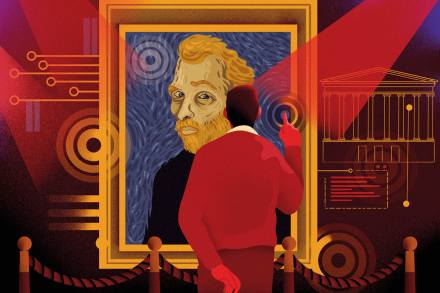
"I grew up wanting to be an astronaut,” Robert Stein, the National Gallery of Art’s recently appointed chief information officer, tells me. “I studied electrical engineering, and I got a job doing high-performance computing. And then one day, I did a project with an art museum, and I thought, ‘Wait a second, this is an area of the world that needs more technology in order to connect more people together.’ And the rest was kind of downhill from there.” The National Gallery of Art in Washington, DC — the NGA — is now ranked the most popular art museum in America.

museums

How to fake it till you make it

From our UK edition

Not to sound too much like Kamala Harris during one of her peregrinations on the nature of time, but the thing about the future is that it catches up with you awfully fast. For a while we have been warned about the dangers of artificial intelligence and the special hazards of ‘deepfakes’. It seemed so futuristic when we saw a deepfake of Barack Obama some years ago, which demonstrated how easy it was to put words into someone’s mouth that they did not say. Well, now we have had an example in real time. Or at least the electorate in Turkey have. Personally I am not persuaded that Turkey’s election was ever likely to be entirely fair and free.

The villains of Silicon Valley

From our UK edition

Historians joke that some parts of the world – Crete and the Balkans, for instance– produce more history than they can consume locally. The California town of Palo Alto produces more economics than it can consume, and therefore more politics, and therefore more culture. But this comes at a price. Malcolm Harris, a thirtysomething Marxist writer who grew up there, begins his book by citing the alarming rate at which his high-school classmates committed suicide, and argues that Palo Alto is haunted by the historical crimes on which it is built. He then itemises them across two centuries of history, tracing their influence from Stanford University and Silicon Valley out across the world.

The power of Penny Mordaunt

From our UK edition

The police have said sorry for arresting anti-monarchy protestors under the wrong legal rubric on Coronation Day, but is that really a lead news story, as it was on Tuesday’s Today programme? If the police had failed to contain the mini-mob and a couple of them had, as they intended, obstructed the processional route, there would have been a huge and justified outcry. Coverage like that of Today makes no allowance for the fact that these protestors are not ordinary citizens. Protest is their full-time job, as is making a monkey of the law. Every week, I receive notice in my inbox of protests by this coalition of organisations which explicitly promises trouble. As I write, I am looking at one which says, ‘Animal Rising Declares Intention To Disrupt The Derby Festival’.

Tale of the tape: how cassettes made a comeback

From our UK edition

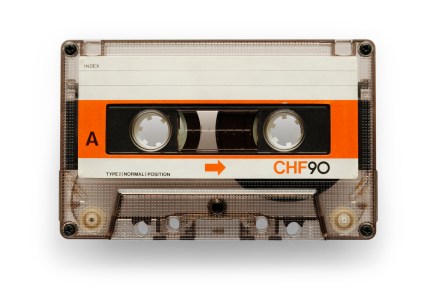
Move over vinyl: the cassette tape is back. According to the British Phonographic Industry, sales of this retro piece of technology last year came close to a two-decade peak. Having been the top-selling format for albums in the UK from 1985 to 1992 and then seemingly disappearing (selling only 4,000 units in 2012), last year saw more than 195,000 cassette tapes shifted. HMV, which recently announced that it will reopen its flagship store on Oxford Street after a four-year closure, plans to bring out cassettes for ‘specific new releases’ and has credited its return to profit with a growing interest in ‘collectable’ music from an analogue era.

The new technocracy: who’s who in the chatbot revolution?

From our UK edition

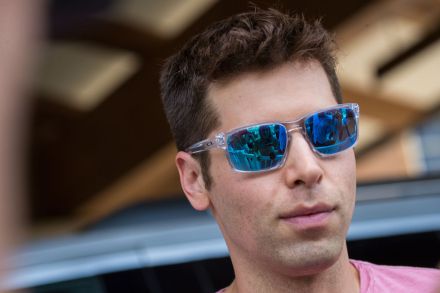
Decades are happening in weeks in the world of artificial intelligence. A fortnight ago, OpenAI released GPT-4, the latest model of its chatbot. It passed the bar exam in the 90th percentile, whereas the previous model only managed the tenth. Last week, Google introduced its own chatbot, Bard. Now, the British government is announcing plans to regulate AI for the first time, as well as to introduce it into hospitals and schools. Even some of the biggest technophobes are having to grasp this brave new world. We’re familiar with some of the technology by now, but we know little about the humans in the world of AI.

My type: a love note for the typewriter

From our UK edition

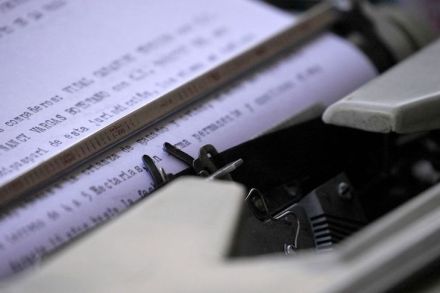
The last manual typewriter, after 150 years of commercial production, was manufactured in the UK in 2012. Yet like all design classics, it refuses to lie down and die. There is a roaring trade in old models on eBay, and dealers such as the Typewriter Man in the UK and Mytypewriter.com in the US sell them to hipsters and steampunks, among whom they are cult objects. The latter store, awash with Hermes, Remingtons and Underwoods, even has a list of famous writers and the machines they used – from John Ashbery to P.G. Wodehouse – so that you can buy a model to match your literary tastes.  They’re also, in various institutions, still in use.

Biden will never let Silicon Valley fail

After a bank run on Silicon Valley Bank left the institution in ruins, the Federal Reserve announced it would make whole the bank’s customers, including those with uninsured deposits in excess of $250,000, which should have made them ineligible for the Deposit Insurance Fund. President Biden promised the American people that this was not a bailout because no losses would be borne by taxpayers — a claim the Wall Street Journal assessed as a “whopper.” But the debate we should be having is not over the definition of the authorities' actions, but how to judge them morally — especially given how the Fed has been trying to tame inflation for the past two years.

How the Kindle lost its spark

From our UK edition

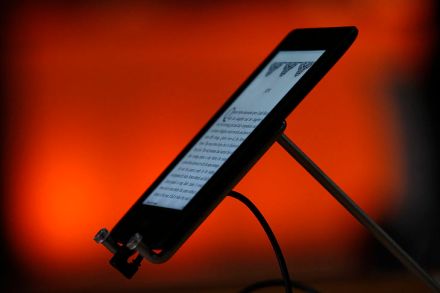
With the recent news that Kindle and other e-readers are automatically updating Roald Dahl’s books to sanitised versions, an entire era has come to an end for readers like me. Who in future will feel safe buying an electronic copy of anything? Publishers’ plans here may be modest, but the point about the puritan is that their work is never done. Martin Amis, Evelyn Waugh, Nancy Mitford, George Orwell, Charles Dickens – any one of them feels vulnerable now. If in copyright, the author and their estate can be strong-armed by the publishers; if out of copyright, laying your hands on the right edition will be a minefield. Nor does it seem clear that publishers’ revisions are being done by skilled writers.

It’s time to make friends with AI

From our UK edition

As a rule, ‘I told you so’ is an unattractive sentiment – simultaneously egotistic, narcissistic and triumphalist. Nonetheless, on this occasion: I told you so. Specifically, I told you so on 10 December last year, when I predicted in Spectator Life that 2023 might see humanity encounter its first non-human intellect, in the form of true artificial intelligence – or something so close to it that any caveats will appear quite trivial.

The unfortunate ubiquity of smartphones

Arlington, Virginia Wandering through suburban Washington, DC's National Airport — I always liked the libertarianish ex-congressman from South Carolina Mark Sanford for voting against renaming it Ronald Reagan Airport on the grounds that the nomenclatorial decision belonged to locals, not Congress — I was refused service when trying to buy a bagel. It wasn’t because of my race, gender or vaccination status; rather, the eatery in question, which had no cash registers, accepted orders only from smartphones. As I have never owned a cell phone of any kind, let alone a smartphone, I was outta luck. I couldn’t plead food insecurity, to borrow the silly euphemism of our day, for soon enough I would be dining on the nine almonds that constitute an airline repast.

smartphones

M3GAN is a biting satire of screen-obsessed parenting

There’s a bit of moviegoing conventional wisdom that says January is the dumping ground for Z-list schlock films, all the genre fare not good enough for the holiday or summer seasons. And that’s why M3GAN — directed by Gerard Johnstone, and boasting story and production credits from legendary horror/thriller director James Wan — is such a pleasant surprise. It’s a nasty little cinematic bonbon packed with memorable images, and one that manages to say a few interesting things about modern life. After eight-year-old Cady (Violet McGraw) witnesses her parents’ deaths in a horrific auto accident, she’s sent off to live with her single aunt Gemma (Allison Williams).

In defence of Spotify

From our UK edition

‘Pitiful.’ That’s the verdict of Damian Green MP, acting chair of the digital, culture, media and sport committee, on the payouts that streaming companies such as Spotify and Apple Music provide to musicians. An update to the group’s Economics of Music Streaming report, published on Friday, calls on the government to take a ‘proactive strategic role’ to make sure Britain’s music industry – one of the few that truly is world-beating – gets the cash it deserves. With streaming now accounting for 84 per cent of UK recorded music revenues, its businesses model really matters.