Technology

You can buy happiness. Here’s how…

From our UK edition

If you are reading this article online, perhaps you could go to the comments section and let us know what single slightly unusual item you have bought which has brought you the most reliable and lasting happiness. Perverse answers are welcome, of course, but I am not so interested in suggestions such as ‘a Thai bride’ or ‘a brewery’ or ‘“The Concert” by Johannes Vermeer’. What I am hoping for is a list of slightly unusual domestic or practical items which you might have bought on a whim or as a slight extravagance but which subsequently you found surprisingly delightful or life-changing to the point of boring your friends about them.


The Mozilla controversy suggests that the sexual revolution is getting ugly

From our UK edition

If you’re reading this on Firefox, you can rest assured that your custom is not going towards any hateful, disgusting, evil people who might disagree with you on something. Not now that Mozilla boss Brendan Eich has been forced to quit for supporting Proposition 8, the Californian bill opposing gay marriage. According to the BBC: ‘Mozilla's executive chairwoman Mitchell Baker announced the decision in a blog post. "Mozilla prides itself on being held to a different standard and, this past week, we didn't live up to it," she wrote. "We know why people are hurt and angry, and they are right: it's because we haven't stayed true to ourselves. "We didn't act like you'd expect Mozilla to act. We didn't move fast enough to engage with people once the controversy started.

Online etiquette must be taught in classrooms

From our UK edition

Can we protect children from the darker aspects of the internet? That was the question put to the panel last night, when the Spectator hosted a feisty discussion about the effects of technology on childhood. Child abuse, pornography and online dating were discussed, as was the idea that children have become self-centered and socially inept. Andrew Neil chaired the event, and was joined by culture minister Ed Vaizey, psychologist Oliver James, The Spectator’s Rory Sutherland and Microsoft’s Jacqueline Beauchere. Each panelist presented a different angle on the subject of The ‘Always On’ Generation, but all agreed that technology had created new opportunities and challenges.

Technology is reshaping childhood — should we be worried?

From our UK edition

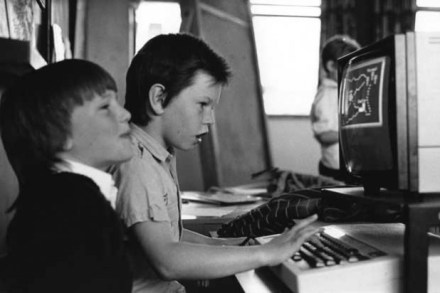
Are children utterly obsessed with technology? Yes, is the obvious answer to that question, but debate about whether is it a good or bad thing rages around forums such as Mumsnet. Many believe the innocence of childhood has been ruined by unfettered access to the Internet, videos, games and goodness knows what else. Others instead think that every generation of children is different and parents have to move with the times instead of yearning for their own past. I have to admit I’m a little biased. I built my first computer when I was six and spent most of my teenage years faffing around with websites and attempting to code. No doubt I missed out on the joyful pursuits of kicking a football but I loved every minute of it.

I was forced on to the internet in the 1980s. I still don’t belong there

From our UK edition

With regard to modern technology, I find that people of around my age — by which I mean people in their seventies or over — are divided into two camps. There are those who have embraced the digital revolution with embarrassing enthusiasm, knowing much more about it than it is decent to know; and then there are those who, almost as embarrassingly, take pride in knowing nothing about it whatsoever. The former seem determined to show that they are not past it, that they are in tune with the modern world, and, like teenagers, are never parted from their computers, emailing and tweeting as the day is long. The latter claim to see no point in email or any of the social media and talk nostalgically about the days when people used to write each other letters in long hand.

Any other business: The friends of Putin taking home gold from the Sochi Olympics

From our UK edition

Imagine if the BBC’s excitable commentators had been asked to cover the building of Sochi’s facilities, rather than the Winter Olympics themselves. ‘Yeesss!!’ Ed Leigh might have yelled, ‘That’s the 21st construction contract for the big lad from St Petersburg, Arkady Rotenberg. Seven point four billion dollars’ worth, a new Olympic record — more than the entire cost of the 2010 Vancouver Games! How cool is that for the 62-year-old who was Vladimir Putin’s boyhood judo partner? Up next, the $9.

Will self-driving cars know what to do in the middle lane?

From our UK edition

I am convinced that when I took my driving test in 1983 I was asked by the examiner, ‘What lane of a three-lane motorway should you use when driving at a speed of 70 mph?’ And I am equally sure that the ‘correct’ answer to this question at that time, as given by the early 1980s version of the Highway Code, was ‘the middle one’. My memory is that the three lanes of a motorway back then were designated 1) the slow lane, 2) the fast lane and 3) the overtaking lane. Whenever I mention this, however, no one else remembers anything of the kind. Rather predictably, about one in three people then takes the bait and embarks on a long rant about people ‘hogging the middle lane.

How James Goldsmith’s wisdom on mistresses could revolutionise mobile phones

From our UK edition

I wouldn’t worry much about the future of the British economy. Because I have a simple plan to make the UK the world’s leading exporter of mobile phones. They will be manufactured by a new consortium including Alfred Dunhill, Cordings and Bowers & Wilkins. The idea came to me when I was watching coverage of the new scandal in France, where a government security officer was photographed at 8 a.m. delivering a bag of croissants to Hollande’s love nest. My first reaction was disgust — I mean, how bad must things be in a country when even the president can’t get a cooked breakfast?

Ten reasons why conservatives should take Edward Snowden seriously

From our UK edition

Towards the end of last year Tom Stoppard gave a rather brilliant PEN/Pinter lecture on freedom of expression which was, in part, a kind of love letter to the place which has been his home since 1946: ‘There is no country in the world I would rather be living in, no country where I would feel safer.’ Later in the same lecture he listed his own ‘obsequies over the England we have mislaid’. The list began: ‘Surveillance, mis-selling pensions and insurance. Phone hacking. Celebrity culture. Premiership football. Dodgy dossier. Health and Safety. MPs’ expenses…’ And so on, before underlining his own personal mantra on human rights: ‘A free press makes all the other freedoms possible.

Rory Sutherland: Why don’t Americans have kettles?

From our UK edition

I enjoy reading reviews of kitchen gadgetry. Clever new kitchen products are often under-appreciated. Many rituals around food preparation are intended to signal personal effort, rather than to produce edible food with a minimum of fuss. There is hence a tendency towards bogus authenticity among amateur cooks which causes them to eschew labour-saving devices in favour of doing everything in a faux-Victorian fashion. Professional chefs, who must produce food in quantity every day, do not suffer this delusion: one Michelin-starred chef, when asked to name his favourite item of kitchen equipment, replied ‘the microwave’. Two new devices I particularly recommend are the air-fryer and the soupmaker. Both are commonplace in parts of Asia but were until recently unknown in Britain.

What Vodafone should do with its huge windfall: invest it in the next Vodafone

From our UK edition

Vodafone, which has just collected an £84 billion windfall from the sale of its 45 per cent stake in Verizon Wireless of the US, is either a hero or an anti-hero of British capitalism, according to taste. To me, the world’s second-largest mobile phone business is heroic because it achieved that position from a standing start just 30 years ago, when poker-playing Ernie Harrison, chief executive of a military radio manufacturer called Racal, bet everything he had on the future of mobile telephony.

How long until novels are published with video inserts?

From our UK edition

In Charlie Kauffman’s Bafta lecture (a startlingly honest reflection on film writing, and well worth a listen), the screenwriter, producer and director stresses that it is of the utmost importance, when embarking on a screenplay, to write something that could only be portrayed in the form of a film, and in no other medium. He is, of course, right: for writing a screenplay, in a purely technical sense, is different and distinct from writing in its other forms. You rarely have authorial narrative and do not overly embellish with descriptions. Rather, you must distil the essence of the piece into dialogue and action.

The View from 22 – learning to switch off, is London the new Venice and Britain’s shale ambitions vs. the EU

From our UK edition

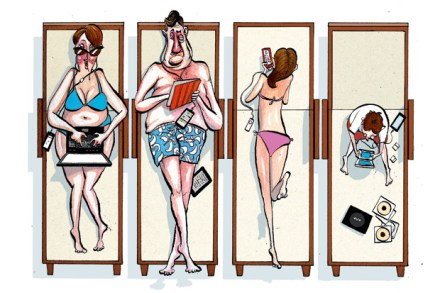
Will holidays ever be truly relaxing again? In this week’s View from 22 podcast, Mary Wakefield and Freddy Gray discuss Clarissa Tan’s magazine cover piece on how technology has ruined our holidays. Has our love of the smartphone and tablet destroyed our ability to 'switch off'? Do we need to control our impulse to use technology? And is this all a bad thing for our brains? Alec Marsh and our cartoon editor Michael Heath wonder if London is becoming the new Venice — bustling with tourists and barren streets of houses. Michael has been a Londoner since 1935. How has the capital changed since then? Have areas like Primrose Hill lost their quirky charm thanks to the deluge of foreign money? Where do authentic Londoners now feel at home?

If you’re on your summer holiday, why are you reading this?

From our UK edition

I’m in two minds about blogging this post. On the one hand, I’d really rather be on a sunny beach somewhere, reading a good old-fashioned book or staring at the blue horizon. On the other hand, I really, really want to publicise my Spectator cover story about summer and our addiction to technology (it’s fab!). Then I want monitor any comments it gets on this website, and post it on my Facebook and Twitter feeds. Each Like and retweet would give me a shot of satisfaction — ping! That’s where we’re all at, aren’t we? We now lead double lives, one in the real world and the other on the internet. While we go on holiday our other, internet self still occupies its usual place on the Web.

You’re never really on holiday with a smartphone

From our UK edition

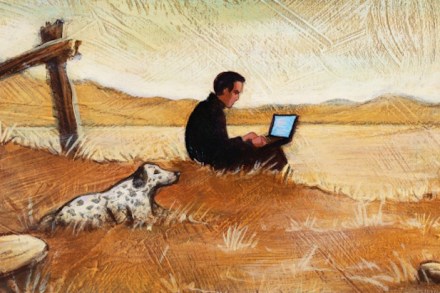
I was sitting on some rocks by the Cornish coast when a teenager swanned by on the sun-warmed boardwalk in front of me. The boy stood on the burning deck, preparing to dash across the sand, dive. Then his phone rang. ‘Luce! Yes, I’m at the sea... Was just going to plunge... Ran back to my mobile... Ha ha!... No, didn’t forget, will share that file on Google Docs... How’s France?... Awesome... Ha ha!’ Rage washed over me. I was angry because the boy had broken the sound of the waves with his silly ringtone and sillier chatter. I was angry because he had spoiled my own picturesque vision of him by doing something as banal as taking a call. But most of all, I was angry because he had distracted me while I was trying to take a scenic photo on my smartphone.

Porn, porn everywhere. But will David Cameron’s proposals actually work?

From our UK edition

Has the Prime Minister been too naïve in cooking up plans to tackle unadulterated online access to porn? Today’s Daily Mail is totally ecstatic at the proposals, but fails to take into account how difficult regulating the Internet can be. Unless David Cameron decides to go for the totalitarian Great Firewall of China approach — which filters every tiny piece of traffic, known as packets — the proposals will have a similar effect to alcohol prohibition. Porngraphy will go even deeper underground; into the encrypted untraceable bowels of the web which are nigh impossible to infiltrate. Some of Cameron’s proposals are not entirely useless.

When a smartphone gallery is better than the real thing

From our UK edition

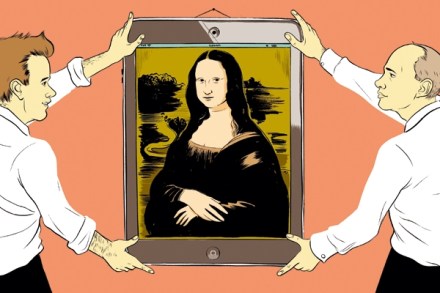
The best way to view some of the world’s greatest works of art is to go nowhere near them. Like other celebrities, the most famous paintings are hard to get close to and there are few less spiritual experiences than being cattle-prodded as part of a crowd through an overpacked exhibition. You may visit in the hope of communing with legendary art but, as often as not, gallery-going is anti-contemplative. While there is no way of replicating the experience of standing in front of a masterpiece, technology can at least allow you your personal space. Take Google Art Project, for example, a collaboration between the omnivorous internet search company and 151 museums, galleries and collections in 40 different countries.

The Snooper’s charter threatens Britain’s burgeoning technology boom

From our UK edition

Ministers are still mulling how they can collect communications data, and while quite rightly the debate about the 'Snooper's Charter' centres on the threat to individual privacy, opponents also forget the threat such legislation would post for the UK's economic recovery. With good reason this Government has prided itself on being the most technologically friendly ever. Be it via the development of Tech City, the Future Fifty, the Enterprise Investment Scheme, reforming intellectual property or even the Entrepreneur Visa – the Government is ensuring that the UK becomes a place where internet-based start ups and established technology companies want to come and do business.

Fathers, sons and the beauty of a “borrowed” book

From our UK edition

I spent the weekend in Dublin; consequently, I am suffering from what Apthorpe would have called ‘Bechuana tummy’. For the uninitiated, Apthorpe is the premier fool in Men at Arms, the first book in Evelyn Waugh’s Sword of Honour trilogy. I was reading it in bed last night and was wryly amused by this joke, which hangs over two chapters: ‘The two lame men climbed into the car and returned to Kut-al-Amara in alcoholic gloom.  Chapter 7 Next day Apthorpe had a touch of Bechuana tummy, but he rose none the less.’ I return to Men at Arms often, but never without reason. I did so this time because Father’s Day fell yesterday. My father is of a generation and I am of a temperament: we don’t do Father’s Day.

We should be teaching kids to make programs like Word, not how to use them

From our UK edition

Technology is turning the human urge to consume information into an unhealthy addiction. Some of this consumption — reading, following the news, exposing ourselves to culture — has obvious merits; I’d have no trouble downloading the entire works of Shakespeare in the time it would have taken someone ten years ago to find their keys before setting off to a bookshop. But with so much around us to consume we seem to have lost the ability to make things ourselves. How can we be creative when every waking moment is spent trying to keep up with the feeds, updates and new releases volleyed at us from all sides? Take, for example, the iPad, that pinnacle of consumption, that manages to fit TV, record store and library into a retina display and a single button.