Technology

The curious incident of the books on the Kindle

From our UK edition

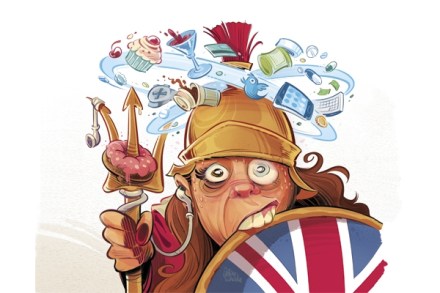
If you had a pile of 300 books in your house waiting to be read, what would you do? Would you go out and buy any more books? I doubt it, even if you could battle your way to the front door. Yet if you’d got 300 books on your Kindle/iPad/Other E-Readers Are Available waiting to be read, would you stay in and click on any more ‘Buy It Now’ logos? More than possible. Because you probably wouldn’t even have noticed how many books were on there. Never mind 300, you can put 3000 books on an e-Reader and it’ll look and weigh just the same as if you had one on there. (Modern technology is the equivalent of those irritating people who can stuff chips and cakes down themselves all day long without every putting on an ounce.

Robot & Frank

From our UK edition

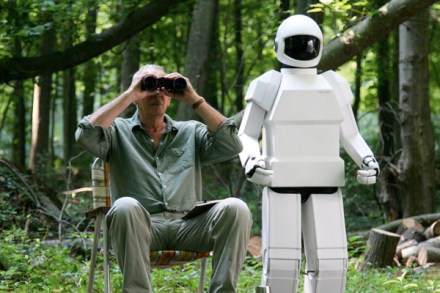
Robot & Frank is about a robot, and Frank, and I’d like to say it is as charmingly irresistible as you might suppose from the cute posters all around town, but hand on heart?  I cannot. It’s OK, I guess, as far as it goes, but it doesn’t go far enough, and, in the end, settles for what I most feared it would settle for: sentimentality. A pity, as the set-up is brilliant, and the questions it throws up — are you still you, once your mind starts to fail?; who is going to look after all our old?  — so worth asking, but it never properly gets to grips with any of them.

In praise of rude nerds

From our UK edition

The call centre problem — I’ve solved it. I now know how to get good service. The secret is to keep ringing back until you get a rude operative. Because, in this world at least, rude is the new polite. Admittedly it only works for technical help-lines, rather than call centres in general. But boy does it work. ‘Boy’ being the operative word — we’re talking here about the generation of young males who spent their teenage lives locked in bedrooms playing Call of Duty. Finally they were torn bodily from their consoles and booted out of the door by despairing parents.

Hailo matters more than HS2 – but we just can’t see it

From our UK edition

One of Britain’s exam boards was attacked last year for a question in a GCSE religious studies examination: ‘Explain briefly why some people are prejudiced against Jews.’ Is this really a theological question? Or does it belong in biology? Or psychology? Or economics? The Canadian evolutionary psychologist Steven Pinker in The Blank Slate devotes a few pages to the issue of prejudice, including not only anti-Semitism but also hostility towards trading groups and intermediaries everywhere: from Chinese shopkeepers in Malaysia to Armenians, the Gujaratis and Chettiars in India and Korean store-owners in the United States. Pinker partly attributes this to what economists call ‘the physical fallacy’.

What shall we do with the racist lap-top?

From our UK edition

Important work from Latanya Sweeney of Harvard University into the inherent racism of internet search engines. She carried out a study which demonstrated a clear difference between the sort of ads that appear on the page if you’re searching for either a “black” name or a “white” name. She used a bunch of names which had previously been identified as being associated with one race or another. For “black” names she used DeShawn, Darnell and Jermaine; for “white”, stuff like James, Emily and The Rt Hon Nicholas Soames or something. When the white names were tapped in, up came adverts for nice sofas and dating agencies and holidays in agreeable places. When the black names were tapped in up came adverts for criminal record searches.

David Willetts looks back to the future for economic growth

From our UK edition

Can science and technology become the backbone of the British economy? David Willetts thinks so — he’s set out eight great technologies he believes will ‘play a vital role in delivering economic growth’. The Universities and Science minister explained today why British scientific research needs beefing up, albeit in a very free market manner: ‘The challenge is to reap an economic benefit from this capability without clunky interventions that risk undermining the open curiosity-driven research which is what makes us special in the first place. For too long the UK has been hampered by a 'valley of death' between scientific discovery and commercial application.

Why Dr Faustus’ dark obsessions still resonate

From our UK edition

Faustus to Helen of Troy from Doctor Faustus, by Christopher Marlowe Was this the face that launched a thousand ships? And burnt the topless towers of Ilium? Sweet Helen, make me immortal with a kiss. Her lips suck forth my soul, see where it flies: Come Helen, come give me my soul again. Here will I dwell, for heaven be in these lips, And all is dross that is not Helena. I will be Paris, and for love of thee, Instead of Troy shall Wittenberg be sacked, And I will combat with weak Menelaus, And wear thy colours on my plumed crest. Yea I will wound Achilles in the heel, And then return to Helen for a kiss. O thou art fairer than the evening air, Clad in the beauty of a thousand stars.

Write a novel in a month

From our UK edition

Could you write a novel in a month? Plenty of people around the world are trying to do just that right at the moment. November, you see, is National Novel Writing Month. Organised by a Californian outfit called the Office of Letters and Light (I know – please stick with me), the event has been running since 1999, and now answers to the moniker NaNoWriMo, which sounds like a toddler doing R2D2. The rules are simple: starting on November 1st, you have until November 30th to write a novel of at least 50,000 words. You upload it to the event’s website, which checks your word count, and assuming you’ve passed the 50k mark you’re given a certificate and a web badge. Your novel is never readable on the site: it’s deleted as soon as the wordcount is performed.

Paper talk

From our UK edition

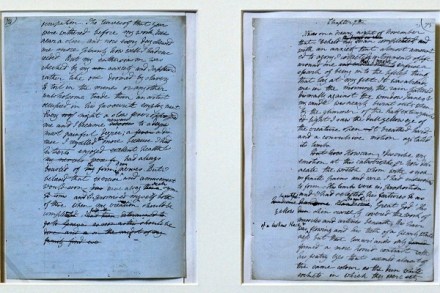
The rainforests must be jumping for joy these days. Which is ironic, as they’ve largely got Amazon to thank for it. As the e-book continues its rise, there’ll be less and less demand from publishers for that horrible, immoral, eco-balance-wrecking stuff called ‘paper’. But before the trees get too complacent, they should remember that there’s one group of people who are still curiously insistent that our leafy friends make the ultimate sacrifice: writers. When it comes to one particular stage of the book-writing process, paper remains the only acceptable tool. It’s perfectly possible these days for a book to be conceived, written, edited, published and promoted without a single word of it ever existing on paper. Laptops and e-readers are all we need.

Interview: Evgeny Morozov and the net delusion

From our UK edition

You are reading this article thanks to the greatest invention of the last 50 years: the internet. The web is often regarded as a panacea for absolutely everything. It is revolutionising the world’s economy. It is changing leisure and entertainment. And it is also a political tool that can liberate oppressed people. Jared Cohen, a former internet guru at the US State Department, once remarked: ‘Any combination of these [digital] tools [Facebook, Google etc.] allows for a greater chance of civil society organizations coming to fruition regardless of how challenging the environment.’ There is nothing that this incredible device can’t do. It is the greatest ever democratiser. But, a few dissenting voices have risen above the fevered chorus.

Age of the addict

From our UK edition

When future generations look back at the early 21st century, they may well decide that its political turmoil — the collapse of the euro, the spread of Islam, the rise of China — pales into insignificance next to a far more important development: a fundamental change in the relationship between human beings and their social environment. This was the moment in history, they may conclude, when our species mastered the art of manipulating its brain chemistry to produce intense bursts of short-term pleasure. As a result, billions of people began to have more fun than their minds and bodies could handle — and developed insidious, life-sapping addictions.

Introducing Coffee House: the App

From our UK edition

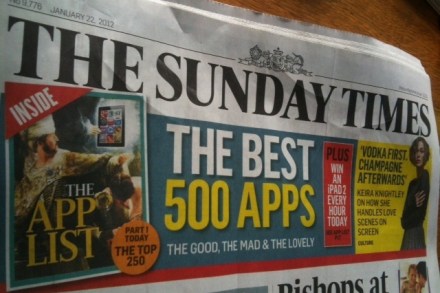
The Sunday Times lists the ‘Top 500 Apps in the world’ (£) today, and I’m pleased to say that The Spectator’s brand new app ranks no.4 in its ‘news apps’ category. The newspaper describes the list as ‘the good, the mad and lovely’ and ours emerges as little of all three. What we have sought to do with the new app is combine our blogs and the magazine, and we are (I think) the first magazine to do so. The Sunday Times gives it the thumbs-up. It ranks us behind its own app, and those of the BBC and Sky News. Here’s its verdict: ‘The contents page may be slightly eccentric, but it’s worth persevering with them.

From the archives: 50 years of human spaceflight

From our UK edition

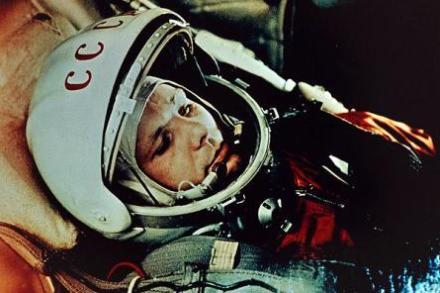
Here at Coffee House, we normally exhume a piece from The Spectator archives on Fridays. But we thought we'd make an exception, today, for the fiftieth anniversary of Yuri Gagarin's ascent into space. The piece below is actually the only one that the magazine ran at the time, and is by the politician/journalist/author Desmond Donnelly.

Libya diary: Tobruk

From our UK edition

Twelve different checks later and I'm in Free Libya, hurling down the road to Tobruk at 100 mph, with Arabic music blasting away. This place is firmly held rebel territory and most journalists have moved towards the battlefields further west. A pair of beautiful American relief workers tell me just to keep going "to see real action". They've just from Benghazi and are headed back to Egypt. They grab my driver. Tobruk, though, has plenty of action for me; and I need to get back to my programme in Cairo. After all, I'm a think-tanker, not a war correspondent. I stop by the oil refinery which is beginning to run again, as is the pipeline. Next week exports will begin.

There’s life in print yet

From our UK edition

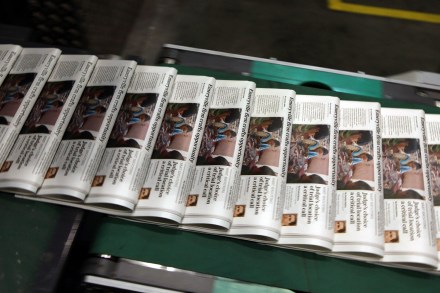
On Boxing Day, Fraser blogged on whether the iPad and other mobile devices will save British journalism. His view peered into the future, but what about the market today? Fraser points to The Times’ Christmas Day edition, the first of the paper that was available purely in electronic form. Along with Apple and News International’s iPad-only 'Daily' newspaper to be launched next year, this represents a landmark achievement that could signal the beginning for the future of journalism. Or it could represent an industry collectively hurtling towards a brick wall. Online journalism has now been with us for a decade – but, strikingly, no one has taken the issue of making money from it seriously.

Ruling the planet

From our UK edition

‘Facebook’, says the excitable author of this hero-gram, ‘may be the fastest-growing company of any type in history.’ ‘Facebook’, says the excitable author of this hero-gram, ‘may be the fastest-growing company of any type in history.’ ‘Thefacebook.com’ went live on 4 February 2004, as an on-line directory for students at Harvard, inviting them to upload a picture of themselves and some basic info, such as their ‘relationship status’, favourite books, music, movies and a quotation. Once they had set up their own profiles, they could ask others to be their ‘friend’ and direct a jokey ‘poke’ (never defined) at them.

Confounded clever

From our UK edition

‘C’ is for Caul, Chute, Crash and Call, the titles of the four sections of Tom McCarthy’s new novel; for Serge Carrefax, its protagonist; and for, among other things, coordinates, communication technology, crypts, cryptography, Ceres, carbon, cocaine and Cartesian space, motifs that trellis this book. ‘C’ is for Caul, Chute, Crash and Call, the titles of the four sections of Tom McCarthy’s new novel; for Serge Carrefax, its protagonist; and for, among other things, coordinates, communication technology, crypts, cryptography, Ceres, carbon, cocaine and Cartesian space, motifs that trellis this book.

Reds under the bed

From our UK edition

This Russian spy story just gets better and better. First a young, attractive Russian woman called Anna - with a penchant for uploading suggestive pictures of herself onto Facebook -- is seized in an FBI swoop for being at the centre of a Russian espionage network. Next, it emerges that the agents from Moscow had outwitted the FBI by going back in time. Aware that electronic messages — via mobile, or online -- are are an open book to any decent spook-catcher, they simply learnt from the past and used invisible ink and messages in buried bottles to send information their colleagues in South America. Some of the spies even are said to have been schooled in Morse code.

My beef with Stern

From our UK edition

I must admit that I despaired this morning when I heard that Nick Stern was arguing that meat eating should become socially unacceptable because of climate change. Those of us who think that climate change is happening and that human activity is a part of it have a big enough case to make without people thinking that they won’t be able to have a Sunday roast or a reviving steak if the green lobby gets its way. People are, understandably, not going to accept being told that they can’t fly, eat meat or have the heating on. The solutions to the problems posed by climate-change have to be technologically led. A hair-shirt approach will simply not have public support and won’t be accepted by every country.

Unamazing insights

From our UK edition

Four years ago, we learn from this book’s jack- et, Malcolm Glad- well ‘was named one of Time’s 100 Most Influential People’. Four years ago, we learn from this book’s jacket, Malcolm Gladwell ‘was named one of Time’s 100 Most Influential People’. As Gladwell himself might ask, ‘Is what Time says really significant? And what is significant?’ Gladwell is significant, all right. Not only is he a staff writer on the New Yorker but he wrote the bestsellers Blink and The Tipping Point that made him millions and — here is more significance — put him number one on the New York Times’ bestseller lists. What is Gladwell’s secret?