Technology

How to post a parcel without leaving your house

From our UK edition

Here’s a useful tip. Go to the Royal Mail website and you can ask your postman to collect letters or parcels from your home at a cost of 60p per item. You pay for postage online, print a label and book a collection for the following day. Granted, it’s an extravagant way to merely avoid a walk to the postbox, but for special delivery items or parcels it’s a godsend. If you don’t have a printer at home, you can even get your postie to bring a label. Given that Royal Mail was founded in 1516, I’m not quite sure why it took 500 years to come up with this particular wheeze, but better late than never. In the US, where they have mailboxes rather than slots in the door, postmen have always collected mail.

The untimely death of the landline

From our UK edition

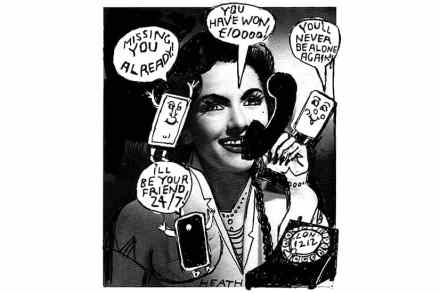
I can count on the fingers of one hand the people I know who still have a landline telephone, and I am not among them. Getting one installed in my new home is feasible but why, my children ask, would I bother? I have a mobile phone, albeit a very basic one, and what more can a person need? To anyone under the age of 50, retaining a landline seems like a fogey-ish affectation. Indeed, one of my daughters has a rotary-dial handset, not as a back-up phone but as an ironic décor item. Because if you’re wearing a belt, why have braces? For mobile users there’s the back-up possibility of something called a cloud. Otherwise, nothing. You entrust your appointment diary, address book and photo collection to one device: your mobile phone.

The algorithm myth: why the bots won’t take over

From our UK edition

Google once believed it could use algorithms to track pandemics. People with flu would search for flu-related information, it reasoned, giving the tech giant instant knowledge of the disease’s prevalence. Google Flu Trends (GFT) would merge this information with flu tracking data to create algorithms that could predict the disease’s trajectory weeks before governments’ own estimates. But after running the project for seven years, Google quietly abandoned it in 2015. It had failed spectacularly. In 2013, for instance, it miscalculated the peak of the flu season by 140 per cent. According to the German psychologist Gerd Gigerenzer, this is a good example of the limitations of using algorithms to surveil and study society.

The ghosts that could come back to haunt Blair

From our UK edition

I’m picturing Sir Tony Blair enjoying a fitting of his Garter robes after watching Boris Johnson stagger through PMQs. ‘I’m in the clear these days,’ he’s thinking. ‘So much water under the bridge, what could possibly come back to haunt me?’ Well, here are two items he might like to consider: the application of the 2003 US-UK extradition treaty in the case of Dr Mike Lynch; and Foreign Secretary Liz Truss’s statement that new sanction rules will mean ‘nowhere to hide for Putin’s oligarchs’ and their fin-ancial assets.

My Orwellian battle with Vodafone

From our UK edition

After launching an investigation into my missing phone, Vodafone informed me it could not deal with me any further until I went through a series of checks to prove that I was who I said I was. I then became locked in an Orwellian battle with an automated system that sent email after email demanding, for example, that I confirm my email, until I gave up on my lost phone, because no amount of confirming seemed to work. Maybe it was naive to try to tell Vodafone that one of their stores had sold me a Nokia that did not hold a charge, refused to refund or exchange it, then sent the phone away into the ether to be mended, where it apparently disappeared.

Downloading God in the App Store

Education at my Jewish private school was chock-full of religious instruction. Precisely half of our lessons were dedicated to Jewish studies. We had Bible classes (Chumash, we called it) every single day. As a child, I wasn’t particularly excited about most of the miracles. Sure, the staff turning into a snake was cool, but it felt like a parlor trick. The sea splitting felt too huge to even contemplate. The one miracle that seemed to get everyone in class thoroughly enamored with God’s power was the concept of manna from Heaven. The idea that you could just dream up what you wanted to eat — and for eight-year-old me that was infinite donuts, pizza and Dunkaroos — and it would just fall from the sky? Well, that was truly miraculous.

manna

Will our future lives be like a video game?

From our UK edition

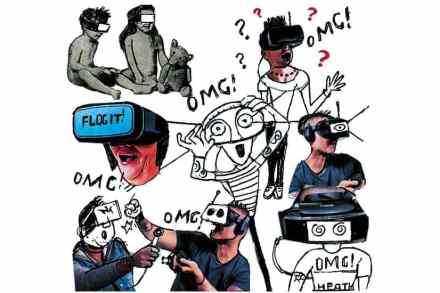
A few years ago, the software company Owlchemy Labs released a computer game called Job Simulator. Its premise was simple. Players find themselves in a future world, roughly 30 years from now, in which super-efficient robots have snaffled up all the jobs. No longer needed for work, humans entertain themselves instead by donning virtual reality headsets and reenacting 'the glory days' — simulating what it was once like to be an office clerk, chef, or shopkeeper. The gameplay, therefore, consists entirely of, well, yeah… carrying out endless mundane tasks: virtual photocopying, virtual cooking, virtual newspaper sales. Job Simulator is pretty tongue-in-cheek, crammed full of dry, self-referential jokes.

Why cash is still king to me

From our UK edition

I recently set out on a simple mission: to break the £10 note in my purse so I’d have a five to put in the church collection plate on Sunday. My first attempt backfired. The café, where my order was delivered with an eye-roll of metro disdain, no longer accepted cash payments. I sat at one of their pavement tables, drinking the single macchiato I’d neither wanted nor needed, and considered my next move. I’m aware that cash is now regarded as a grubby anachronism. All those hands it passes through! Eww! Of the two churches I attend, one has stayed ahead of this trend and installed payment terminals in the nave: tap and give. I can offer no rational objection to this. I simply don’t like it.

The tyranny of the smart phone

From our UK edition

‘Can I ask you why you don’t want a smart phone?’ said the chirpy manager, as I stood blinking in front of him in the intensely red Vodafone shop. I took my iPhone out of my bag and explained that I wanted a second phone with no brain whatsoever. A stupid, backward phone was what I wanted. Not a scheming, conniving monster like this one. And I said this quietly, so that my iPhone didn’t hear me, because that is how frightened I am of it. ‘Ah!’ said the pin-striped tech wizard, as if he had heard of this situation before, or perhaps increasingly. Reaching for the bottom shelf, he told me there was only one such phone in his shop. He put a tiny, plastic Nokia in my hands. It was so basic it was as light as a feather. I said that would do fine.

My strange encounter with foot fetishists

From our UK edition

Around five years ago I started to receive requests online for photos of and details about my feet. I’ve been asked for foot pictures intermittently ever since. Most of the gentlemen are upfront about what they’re after (‘send foot pic plz’), but one man went above and beyond in his pursuits. Posing as an academic, he sent several emails to my work account claiming dozens of women in the British media had submitted their shoe size to help him with a research project. He was just waiting for my details to finish his ground-breaking study. Although I never responded, I commend his efforts. I was never able to work out what triggered this attention from foot fetishists, but now I think I’ve figured it out.

Marjorie Taylor Greene’s Twitter ban is nothing to celebrate

From our UK edition

Marjorie Taylor Greene is nuttier than M&M World. Not your garden-variety conservative, or even a conservative at all, but a conspiracy theorist who rode these febrile times into a seat in Congress. She describes American Airlines Flight 77 as ‘the so-called plane that crashed into the Pentagon’ on 9/11, remarking that ‘it’s odd there's never any evidence shown for a plane in the Pentagon’. She suspects the 2018 California wildfires were started by a Rothschild-funded ‘laser beam or light beam coming down to Earth’ in order to help Democrats build a high-speed rail project. Her Facebook account has liked a post proposing ‘a bullet to the head’ for Nancy Pelosi.

Are electric cars a Columbus’s egg?

From our UK edition

The explosion in remote and flexible working accelerated by the pandemic slightly supports my assertion that the most important limits to future innovation may be psychological and behavioural, not technological. I am among a number of people who believe that the newly widespread use of video-conferencing is of great economic significance. A few economists and commentators agree, but all of us suffer mild social embarrassment whenever we make our case: it feels faintly absurd to evangelise a technology which is more than 20 years old, rather than pontificating about the ‘metaverse’ or some other fashionable guff. Yet history bears us out.

The hypocrisy of Elon Musk

From our UK edition

Tesla's sleek, if expensive, electric cars are leading the battle against climate change. Its batteries are moving renewable energy into the mainstream, while its founder Elon Musk, the world’s richest man, likes to present himself as a free-thinking radical. It is hard to think of a company more right on than Tesla — well, okay, perhaps Unilever — or one that depends more on its politically correct credentials. But hold on. There turns out to be one opposed minority that Tesla couldn’t care less about: China’s Uighurs. Most of the corporate world will sooner or later have to make a tough decision: do they care about human rights?

Reality check: could our universe be a simulation?

From our UK edition

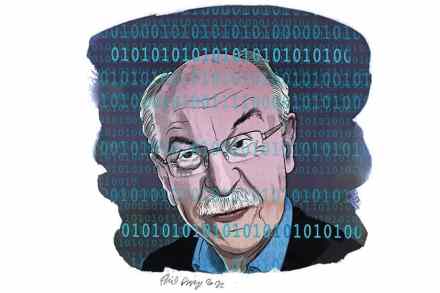
Are we all living in a computer simulation? Is the world we imagine to be real simply virtual reality instead, an elaborate computer program? That sounds ridiculous, but nonetheless it’s what many clever people actually think — or at least, think possible. One of them, the philosopher David Chalmers, has just written a book on the subject, Reality +: Virtual Worlds and the Problems of Philosophy. Chalmers is a serious intellect. He won a bronze medal in the International Mathematical Olympiad as a child and did his undergraduate studies in Pure Mathematics before turning to philosophy. Part of his argument is that we are already building simulated worlds ourselves — computer games as well as virtual environments like Second Life.

Sense and sensibility: Steven Pinker and Rory Sutherland on reason vs instinct

From our UK edition

Steven Pinker’s latest book is called Rationality. Rory Sutherland is The Spectator’s Wiki Man. We arranged for them to meet at the Cucumber restaurant, where they discussed the logic of monarchy, gender-bending, and why academics are unreasonably obsessed with wine. Steven Pinker: Part of the reason I wrote Rationality was to ask, how there can be so much irrationality in an era that has the resources for unprecedented rationality. We invented a vaccine for Covid in less than a year. So why do people today believe in conspiracies like QAnon? Rory Sutherland: Conspiracy theories aren’t always irrational, and instinctive responses can serve you well. An instinctive person with no knowledge of virology wouldn’t go into a cave full of bats.

Everyone should be sick in the street once

From our UK edition

I learned a great deal at university, about half of it from a man called Raymond Foulk. Ray was not Professor Foulk or even Dr Foulk: Ray was a near contemporary — he was in the year below me — but a mature student, then aged about 44. Shortly before he arrived at the beginning of my second year to read architecture, the college investigated his past life and sought to exile him to first-year accommodation far outside the college walls to prevent him corrupting the youth. There was nothing remotely illegal or nefarious about his past — but he had created and run the three Isle of Wight Festivals with his brother, and the college authorities had somehow become convinced they were admitting a second Howard Marks.

Our gadgets are misleading us

Human beings are wanderers who roam the world in search of adventure. And this love of adventure creates a need for home: homecoming makes wandering worthwhile. Hence human beings have devised instruments that help them to navigate, so as to guide them to their destination and — most importantly — to guide them back again, to the place where they are at home. The sextant was one of the most beautiful examples of this: an instrument for steering by the stars, which you held to your eye, and which reminded you of the vastness of the space across which you peered and the littleness of your own ambitions. Our ancestors who steered by the sextant never doubted the fixed background to human life, the unchanging heavens by which they navigated.

gadgets

Reality is enough without Zuckerberg’s metaverse

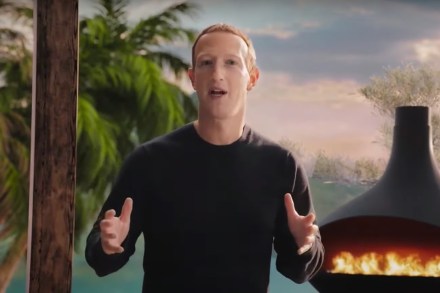
Take my hand, darling, and off we go into the metaverse. It's a whole new world...or at least it's a new world...maybe a brave new world? Enter Mark Zuckerberg, that Titanic captain of industry, who last week released a video introducing his latest plan to leave his Nike shoeprint upon reality. It's called the metaverse, and while even the savviest tech writers are grasping to explain what it is, it appears to be the fusion of our world with the virtual. Big Zuck wants what's on our screens to spill over into real life. We lived on farms, then we lived in cities, now we will live in "home spaces" with digitally rendered pterodactyls flying just outside the windows.

metaverse

A tale of bitter brotherly rivalry

From our UK edition

For early humans there was no distinction between spirit and matter. There was no idea of self; no barrier between consciousness and the world. Eventually, evolving self-consciousness and thought put a barrier between the two. Object was irrecoverably divorced from subject. Or so I’ve read somewhere. Something like that anyway. Very recently yet another barrier has been erected between human consciousness and the world in the form of the smart phone touch screen, putting us at not one but two removes from reality. No wonder everyone’s lost the plot. On Sunday, at the very forefront of the evolution of human consciousness, I took human evolution a step further by watching West Ham play Liverpool on my phone screen while sitting in a room in Provence.

Are we ready for the metaverse?

From our UK edition

Facebook has rebranded itself as Meta and last month chief executive Mark Zuckerberg announced the creation of 10,000 jobs to help build the ‘metaverse’ — a concept so radical nobody yet knows what it really is. People in the media tend to describe it as ‘a 3D version of the internet’. Facebook describes it rather vaguely as a network of ‘virtual spaces where you can create and explore with other people who aren’t in the same physical space as you’. Some suspect it might actually be hell. The term metaverse first appeared in Neal Stephenson’s 1992 novel Snow Crash, in which future humans distract themselves from economic collapse by submerging themselves in a parallel virtual reality world.