Technology

The weird and wacky world of Vinted

‘Do you have any more shoes? I need as many as you can find for my daughters.’ I had just made my first sale on the second-hand marketplace Vinted and, already, here was a message from a new customer wanting more. Delighted, I scrambled around and managed to locate more than a dozen pairs of no-longer-wanted, muddy old shoes. ‘Don’t worry about cleaning them,’ came the reply from ‘Mariella’ when I told her the good news. ‘They’re just for the garden.’ Slightly odd, I thought, but my customer seemed harmless enough: a part-time cleaner with young children who, she told me rather quaintly, was married to a cobbler.  It was

‘I’ve been allergic to AI for a long time’: an interview with Peter Thiel

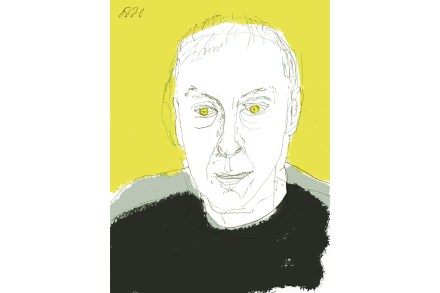
Peter Thiel has been described variously as ‘America’s leading public intellectual’, the ‘architect of Silicon Valley’s contemporary ethos’ or as an ‘incoherent and alarmingly super-nationalistic’ malevolent force. The PayPal and Palantir founder, a prominent early supporter of Donald Trump, is one of the world’s richest and most influential men. Throughout his career, his principal concern has always been the future, so when The Spectator asked to interview him, he wanted to talk to young people. To that effect, three young members of the editorial team were sent to Los Angeles to meet him. What follows is an edited transcript of their conversation. WILLIAM ATKINSON: Following Zohran Mamdani’s victory in New

The tyranny of parcel delivery companies

Once upon a time, post was delivered by a postman or postwoman. Over the past two centuries, this quaint initiative augmented a sense of community and invested early mornings with at least fleeting human contact. These days, decades after the slow demise of letter writing, a postman is now a rather recherché figure and, thanks to Royal Mail price hikes, a symbol of luxury, despite the downgrading of his once resplendent red and blue woollen frockcoat for a synthetic combo including all-weather shorts. More and more, post – which we’re now encouraged to call ‘mail’ on the principle that all Americanisms are good – means the harvest of our online

Snobbery is the best weapon against screen time

I can’t be the only neurotic mother to have rejoiced when the Princess of Wales revealed recently that she has a strict ‘no phones at the table’ rule. The Prince of Wales then later let slip that Prince George, who is 12, isn’t allowed a smartphone. When George eventually does get a phone, William added, it will be a brick without the internet – similar, one imagines, to the sort favoured by drug dealers. Hallelujah! Up until now, the best line for parents to trot out has been the old chestnut that ‘Silicon Valley guys send their children to schools where the tech use is unbelievably moderate because they know

AI will take jobs – the wrong ones

As those of you familiar with this column will know, I am always eager to distinguish between an option and an obligation. For instance, a dinner party is usually more enjoyable than an indoor drinks party. Yet in one respect a drinks party wins out: the moment you accept an invitation to a dinner party, you are committed. By contrast, when you accept an invitation to a drinks party, you can bunk off at short notice and spend quality man-time watching YouTube documentaries about steam engines instead. A dinner party is an obligation, while ‘drinks’ is an option. This is also the principal distinction between a restaurant and a café.

Bring back the album

Usually when my tweenage sons ask about relics from my 1990s adolescence – ‘What’s a landline?’ ‘What’s a phone book?’ – we’ll have a good laugh about these obsolete artefacts of the not-so-distant past. But last year when my ten-year-old asked about ‘Immigrant Song’, which he’d heard on the soundtrack to a Marvel movie, and I replied, ‘Oh, I think it’s on the third Led Zeppelin album’, his response left me winded: ‘What’s an album?’ What’s an album? The horror! How had this abject failure of parenting happened? I’ve raised my kids in as analogue a household as possible, with piles of books, newspapers and magazines on every surface. I’ve

The march of the useless machines

In search of coffee on my way to work the other day, I stopped short mid-way into a branch of a popular coffee shop when I noticed the digital ordering screens. Nothing will lose my business faster than being asked to queue twice and do the work of someone else for something simple. But these ordering screens seem to be becoming ubiquitous in our towns and cities, forcing those of us who have actually come into the office, likely to sit in front of a screen, to spend our lunchtimes also staring at a screen scrolling through options, when there is an actual human being standing behind a counter a

Say hello to your AI granny

Doing the rounds on social media is the most disturbing advert I’ve ever seen. And I’m telling you about it because you need to be forewarned, just in case this Christmas a child or a grandchild happens to mention that it might be an idea to record a video for posterity, and opens the 2wai app. 2wai is the company responsible for the ad, and the service it offers is the creation of AI versions of family members so that relatives can talk to them after they’re dead. Catch ’em while they’re still alive, says 2wai; film a three-minute interview and Bob’s your AI uncle. ‘Loved ones we’ve lost can

I've been enslaved by my Apple watch

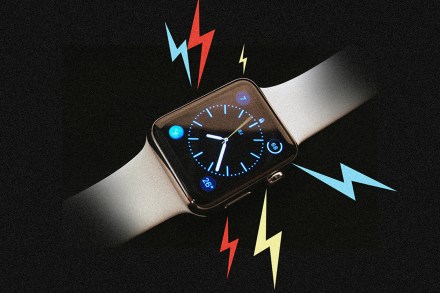
Aside from streaming on an iPad, one of the few entertainments on offer when riding a stationary bike is tracking your heart rate. Breaking 150 beats per minute provides a fleeting (and doubtless misplaced) sense of achievement. Yet the wearable heart monitor that came with my exercise bicycle proved unreliable; one’s BPM never truly drops from 137 to 69 in one second. This is to explain why I bought the fitness freak’s fetish: an Apple watch. Its heart-rate monitors are accurate. I opted for a reconditioned older model, not only half the price of the new ones but inclusive of the blood oximeter function, which a medical technology suit has

My portable charger obsession

A femtosecond, derived from the Danish word femte meaning ‘fifteen’, is a unit of time in the International System of Units equal to 10-15 or 1⁄1,000,000,000,000,000 of a second; in other words one quadrillionth, or one millionth of one billionth, of a second. A femtosecond is to a second as a second is to approximately 31.69 million years. Similarly, a femmosecond, from the French femme meaning ‘wife’, is a slightly briefer unit of time equivalent to the twinkling of an eye. It defines the imperceptibly fleeting interval between my wife saying ‘Rory, why on earth have you bought another portable charger?’ and my wife saying ‘Rory, could I borrow your

How the occult captured the modern mind

The British science-fiction writer Arthur C. Clarke, author of 2001: A Space Odyssey, proposed a ‘law of science’ in 1968: ‘Any sufficiently advanced technology is indistinguishable from magic.’ Clarke’s proposition had a quality of rightness, of stating the obvious with sparkling clarity, that propelled it into dictionaries of quotations. The timing was perfect: Concorde would soon be flying over rock festivals packed with hippies obsessed with ‘magick’. Naturally Clarke’s readers understood the difference between aerodynamics and sky gods. But African tribesmen gawping at an early aeroplane, or Pacific Islanders watching an atomic explosion, could only conclude that they were witnessing a supernatural event: for them, a scientific explanation was literally

In defence of voice notes

From emails to ‘breaking news’ alerts to texts, our phones come under a bombardment of notifications these days. But there’s one kind that always brightens my day – the one that tells me that a friend has sent me a voice note. This, however, seems to make me unusual. ‘I don’t want to hear your mini-podcast,’ complains Emma Brockes in the Guardian; voice notes are ‘self-indulgent’, sniffs Anniki Sommerville in the i Paper; and the Independent’s Lucie Tobin denounces them as ‘rude’ and ‘invasive’. In the latest issue of The Spectator, Mary Killen advises a correspondent who’s had enough of them to update their WhatsApp profile ‘to clarify their tastes… “please do not leave

Phone-addicted yummy mummies are neglecting their children

As a foster carer and an adopter, I know what neglect looks like. I’ve looked after children who didn’t know what a bed was. Children who arrived at my door with matted hair, rotten teeth and eyes that scanned every room for danger. Neglect smells of mildew and unwashed clothes. It is chaotic, desperate and tragic. But there is also a different, quieter kind of neglect. One that doesn’t look like crisis at all, but it has a profound effect on the children at the receiving end of it. Teachers have been sounding the alarm for years – children starting school unable to speak in full sentences or sit still

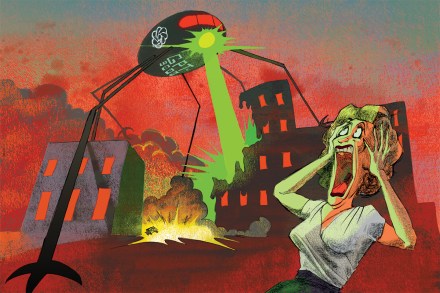
ChatGPT is a narcissist

In Isaac Asimov’s 1956 short story ‘The Last Question’, characters ask a series of questions to the supercomputer Multivac about whether entropy – the universe’s tendency towards disorder, and the second law of thermodynamics – can be reversed. Multivac repeatedly responds ‘INSUFFICIENT DATA FOR MEANINGFUL ANSWER’, until the ending, which I won’t spoil here. If I were to put the same question into ChatGPT, it would be a very different story. I’d likely get some fawning pleasantries, some ooh-ing and aah-ing about how deep and wise my enquiry is, before a long, neatly bulleted summary, rounded off by a request for further engagement (‘Let me know if you want to

Keep algorithms out of care homes

I manage a small, not-for-profit care home in Norfolk. We have tea rounds, hymn singing, hand-holding and staff who know every resident by name and often even their grandchildren’s names. But we also have empty offices: those once occupied by our deputy manager, care manager (the job I now do) and general manager, all of whom chose early retirement within the past two years. They are not alone. According to the charity Skills for Care, the adult social care sector has 131,000 vacancies – the highest on record. Turnover for care-home staff hovers around 25 per cent, and growing numbers of managers are leaving due to burnout. This is the

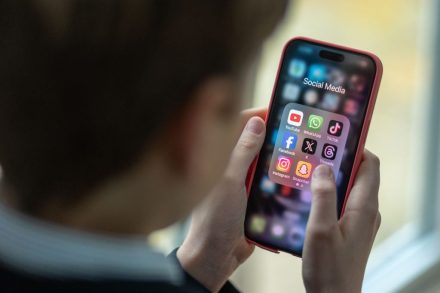
Clapping, going grey, getting naked: how to break your phone habit

I’ve been having trouble with my phone recently. I noticed it particularly while in France a few weeks ago. I’d flop on the sunbed with a book and then spend half an hour scrolling through ridiculous videos online. But then I do it at home, too – go to bed early thinking ‘Ooh good, nice early night with my book’. And then I see a video of a dog jumping into a swimming pool, or a chef cooking a Japanese omelette, or someone removing blackheads from their nose, or a clip of something that might be a cake but also might be a shoe, or someone else offering an improbable

I'm writing a novel without using AI – and I can prove it

Everyone’s seen stories about the creep of AI into art of all kinds. Recently the people behind the music-fabrication website Suno have been making outrageous statements to the effect that people don’t enjoy learning musical instruments and writing their own songs, so why not let AI do it for them? This is very new, very disturbing and very consequential. I could talk about graphic art and video and film-making, but you’ll know what’s been going on there. I’ll just cut to the chase and get to how AI tools are impacting and will continue to impact the writing of fiction.  I anticipate a future in which human authorship will need to be proven. A

Will AI kill off Captchas?

It was a line on Poker Face (the excellent US detective drama currently streaming on Now TV) that piqued my interest. Hunched over a laptop, Natasha Lyonne’s heroine, Charlie Cale, claimed to be working as a ‘Captcha technician’ – someone who solves those fiddly, occasionally infuriating internet puzzles for money. You know – the ones that ask you to ‘Select all the squares with traffic lights’, ‘Select all the squares with bridges’ or simply tick a box to say you’re human before you can log into a website. Given the series has satirised everything from New York City rent controls to multi-level marketing schemes, I originally assumed it must be a joke.

The thrill of tracking parcels

Ordering things online can be a lottery. You can’t touch, smell or taste the product you’re buying, so it’s hard to know whether you’ll actually want it when it arrives. But we keep clicking anyway because it’s more convenient than trudging to the shops and things are often cheaper. For me, another reason to order online is the dash of childlike joy it brings to my to life when I click ‘buy’ and instantly set up a future treat. In fact, it’s even better than childhood because now I can have a parcel to open any day I want, not just on birthdays and Christmas. But most of all, I

Our B&B has found its niche

A rattling noise woke me in the dead of night and I fumbled my way into the dark corridor. It was coming from the room at the end of the hallway, which was occupied by a couple from West Virginia on a romantic road trip. The door rattled again as I stood there. I realised the big old key was turning and returning in the lock and the handle was rattling but the door was not opening. I ran back into our bedroom and shook the builder boyfriend awake. ‘The people in room 4 are stuck in their room!’ He stirred and when I wouldn’t stop shaking him he got