Taxes

Biden’s budget doesn’t matter

Every year, the president puts forth a budget. And every year, the media diligently reports on it as if it matters to what the government will do over the coming year. Don’t get me wrong: budgets are important. They provide a sense of their crafters’ priorities and a roadmap for achieving their goals. But budgets don’t hold the force of law, which means — in our government — they serve as non-binding blueprints and little else. This is especially true of presidential budgets. That’s because while the budgetary process starts with the president, where it goes from there is determined by Congress alone. During the Trump years, Congress didn’t even bother bringing the president’s budget to a vote.
budget

Will Rishi Sunak stick to his ‘golden rule’?

From our UK edition

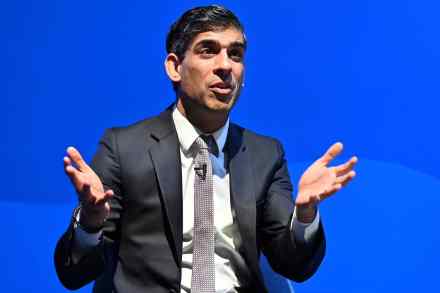
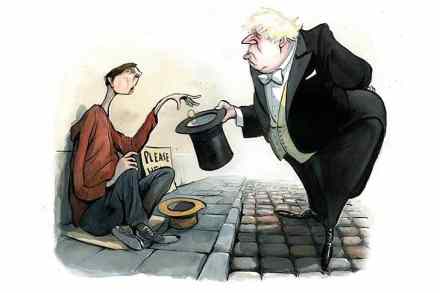
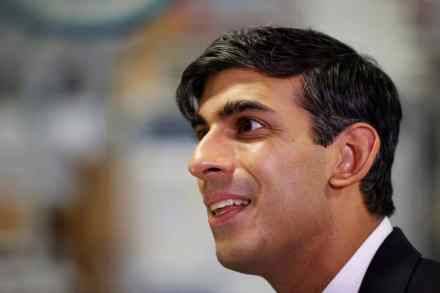
Here’s the Rishi Sunak paradox: he proudly defines himself as a low-tax Tory but under his watch taxes are reaching a 71-year high. There are plenty of Tories who want to ditch next month’s National Insurance increase but Sunak is firmly opposed – mainly because he wants to link up in people’s minds that more money for the NHS and social care doesn’t manifest out of thin air. But pressure is on at tomorrow’s spring statement to make clear what kind of Chancellor he really is. Does he come from the long line of Tories who like tax cuts in theory but not in practice – or does he have another agenda? Sunak’s starting position is that to cut tax, you need to restrain spending. For the Chancellor, it’s a simple point about trade-offs.

Rayner hits Johnson where it hurts

From our UK edition

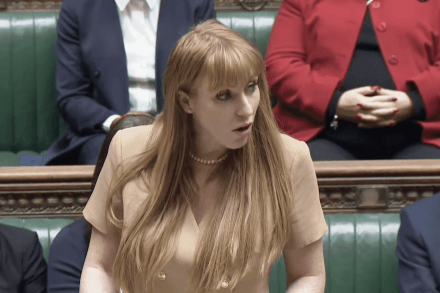
The first PMQs of the year gave us a preview of the political debate we’ll be having for the next few months. Labour went after the government on inflation. Angela Rayner asked Boris Johnson why he had dismissed fears over it as unfounded back in October: Johnson denied he had said it — which is an odd claim given what he said in that interview. She then punched the Tory bruise, by asking why Johnson wasn’t cutting VAT on fuel, as he had said he would do during the EU referendum. Johnson made the point that this help wouldn’t be well targeted, which is true. But the political pressure for this from Labour and his own backbenchers are going to make it very hard for him to resist.

New Jersey’s nothingburger governor underperforms

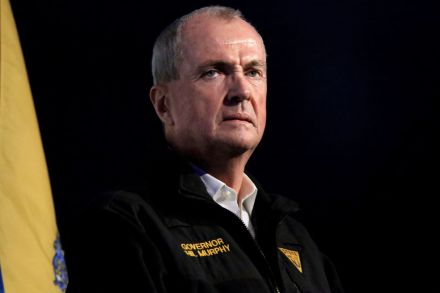
By removing Donald Trump from social media and New York governor Andrew Cuomo from office, progressives unwittingly gave an opening to a largely unheralded candidate in New Jersey. That’s why the newspaper headlines on the Wednesday morning after the election all declared the governor’s race in the Garden State “too close to call,” which in itself is a victory for beleaguered Republicans from the northeast. And even if Democratic governor Phil Murphy does pull it off, as now looks likely, this election portends serious headaches for Democrats.

new jersey

The trouble with unrealized capital gains taxes

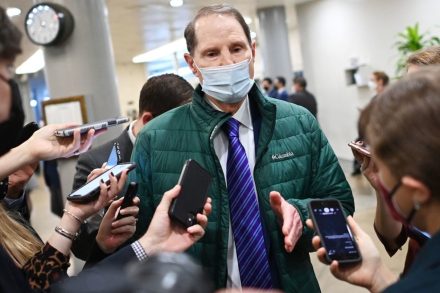
No one knows what will come out of the sausage making now going on up on Capitol Hill, but let’s take a look at one proposal to raise money to pay for some of the cost of the reconciliation bill. At the moment, capital gains are taxed only when the asset is sold or the owner dies. (The estate tax is just a tax on capital that is triggered by death rather than by sale.) Oregon senator Ron Wyden proposes that they be taxed every year whether sold or not. Unrealized capital gains are certainly a tempting target. After all, for people like Bill Gates and Jeff Bezos, practically their whole, vast fortunes are capital gains, the cost basis of their stock in Microsoft and Amazon is, at most, a few cents a share.

ron wyden unrealized capital gains tax

Will the Tories cut taxes before the next election?

From our UK edition

The Tory party has reached a fork in the road, I say in the Times today. One path involves sticking to the spending plans, hoping to cut taxes before the next election and getting rid of the new perception of them as tax raisers. The other drags them into ever more spending, led by big increases in public sector pay, and ends with them going to the country as a high-tax party. In his Budget speech and his address to Tory MPs, Rishi Sunak made clear that his preference was for the former approach, which should cut taxes before the country goes to the polls again. But sticking to even the spending limits set out this week will require tough choices that the Tories have not wanted to make in recent years.

Rishi Sunak’s low tax pitch to MPs

From our UK edition

Is Rishi Sunak a low tax chancellor? He certainly likes to tell anyone who will listen that he is. Yet his actions tend to suggest the opposite. The tax burden is currently on track to reach its highest level since the early 1950s, and while Sunak unveiled one big tax slash in the Budget in the universal credit taper rate cut, the main thrust of Sunak's announcements was spend, spend, spend. Tonight Sunak addressed Tory MPs at a meeting of the 1922 committee. After announcing £150 billion in extra public spending, Sunak sought to convince his party that, despite this, he was committed to lowering taxes.

A lament for the overtaxed smoker

There is a spot of Washington DC, a few blocks of downtown not far from the White House, where a cigarette is your only hope. The buildings are garish blocks of glass — 'like someone overturned a giant ice cube tray,' as one wag put it — while the color palette runs from charcoal gray to navy gray. The place can feel like ennui embodied, and all the worse when rain darkens the air and the streets fill with the soulless din of tires swishing through puddles. It can wear on you, this drab slice of middle-managerial noir. But at least for me, there is one thing that can brighten it up: cigarette smoke. I might catch it off a passerby or light up a Marlboro myself. But either way I feel paradoxically improved. I think, at least someone here is having a good time.

smoker

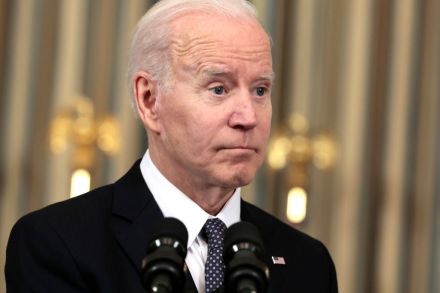
Who wants Biden’s massive budget?

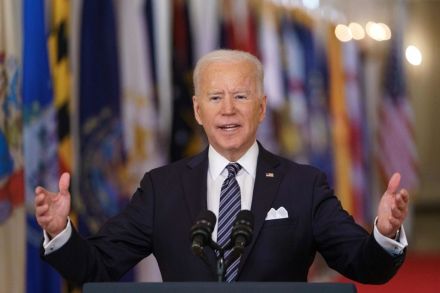
President Joe Biden just proposed the largest budget (as a percentage of America’s economy) since the country was fighting Nazi Germany, Imperial Japan and Fascist Italy. He’s doing it when there is no emergency, only an overweening desire to pass progressive programs quickly, before they lose their legislative majority. The best historical analogue to his proposed budget increase is Lyndon Johnson’s cradle-to-grave Great Society Program. It has the same flaws. In fact, Biden’s program is best understood as the next step in a long political arc, extending from Franklin Roosevelt to LBJ to Obamacare. All of them proposed centralized government solutions to almost every social problem, particularly endemic problems among the poor.

joe sentiments

Lewis Hamilton doesn’t need a knighthood

From our UK edition

Given that I know about as much about Lewis Hamilton’s tax affairs as I do about Formula One motor racing it would be unwise for me to be churlish about his knighthood, announced in the New Year Honours list. For all I know, he could be making generous voluntary donations to HMRC. A few weeks ago, it was reported that his tax status was being vetted by the Palace, and it doesn’t appear to have prevented his name appearing on the honours list. Then again, it is hard to escape a suspicion that the big attraction for his decision to live in Monaco might just possibly have been the modesty of its fiscal demands upon its residents – in which case it is not hard to wonder whether a more appropriate honour might have been the Ordre du Merite Culturel, bestowed by Albert II.

Mark Sanford’s hopeless politics of debt

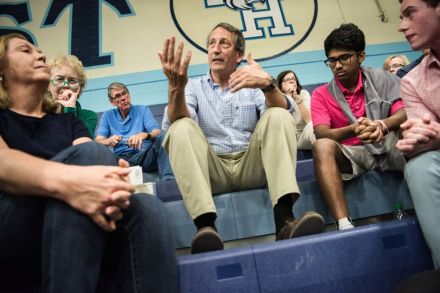
Mark Sanford might not eat brains, but he is the closest thing in American politics to the living dead, an authentic Zombie Republican. His career died a decade ago when he was governor of South Carolina and absented himself from office for a few days to go off hiking the Appalachian Trail – or rather boffing the Argentinian mistress. He was censured, nearly impeached, but clung to office anyway until his term expired in 2011. And then, two years later, he shambled back to a familiar haunt, the US House of Representatives. Sanford began his brief national career as a Class of ’94 House Republican insurgent. And there he was again, nearly a decade later, after winning a 2013 special election.

mark sanford

What if Congressmen weren’t allowed to hire accountants to do their taxes?

Here’s a wild idea: what if Congressmen and women weren’t allowed to hire accountants or lawyers, use software or go to H&R Block to fill out their tax returns? What if, like that brave 10 percent who do their taxes themselves, Congress had to sit down and do their taxes on their own? Their first time would be atrocious: wading through hundreds of pages of tax code, endless provisions, starting their forms out from scratch when they got something wrong. All this with the fear of making a mistake and getting audited, with nobody to blame but themselves. It would be glorious: our legislators would be forced to acknowledge how monstrous the tax system is.

taxes