Tariffs

Give Trump’s tariffs a shot

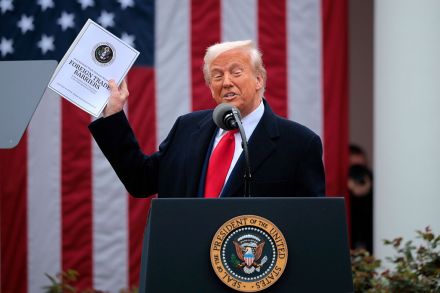
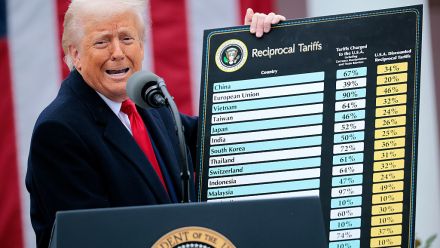
So the big question is: will it work? Will Trump’s protectionist policies, announced with some fanfare at a Rose Garden event at the White House yesterday, increase American prosperity? Or will they harm the economy?  Opinion on that matter is sharply divided. In one corner we have the free traders. They are wringing their hands and warning about higher prices, disruption of international trade and a trade war no one can win.  In the other corner are – what to call them? Most are not “anti-free traders” or “economic protectionists” (though some are).  Let’s call them “fair traders.” They like the idea of free trade – in theory. What they don’t like is the ethic of “free trade for thee but not for me.

tariffs grandeur

The grandeur of Trump’s tariffs

The first thing revealed by the high and wide-ranging new tariffs President Trump announced on “Liberation Day” is just how limited other recent American presidents have been in their thinking. Their ambition was to get elected and re-elected, then retire comfortably into a tranquil post-presidency. They would finish their days lending their names to charities and writing their memoirs (or rather, commissioning ghostwriters to fulfill their publishing contracts).   The idea of destroying and remaking the global economic order never crossed their minds. But Trump is thinking bigger. He doesn’t want to go to his grave as just another has-been ex-president.

Tariffs make sense in a world of predatory mercantilism

The classical defense of free trade, the one found in Econ 101 textbooks and Ricardo’s comparative advantage model, goes something like this: countries should specialize in what they can produce most efficiently, export the surplus and import the rest. Trade allows global output to increase, everyone gets richer and any government interference – like tariffs or subsidies – just gums up the works. But that’s not the world we live in. David Ricardo, the early 19th-century British economist who developed the theory of comparative advantage, illustrated it with a now-famous example: even though Portugal could produce both wine and cloth more efficiently than England, both countries would benefit if Portugal specialized in wine and England in cloth, then traded.

tariffs

Trump’s choice on a replacement UN ambassador is complex

Maybe the surprising thing isn’t that Donald Trump yanked Elise Stefanik’s nomination to become ambassador to the United Nations. It’s that he hasn’t pulled America out of the organization. But perhaps that outcome is in the offing as Trump ponders whether he should select anyone to succeed her abortive nomination. Trump decided to leave Stefanik in Congress because of the slender Republican majority in the House – 218-213, plus four vacancies. “I have asked Elise, as one of my biggest Allies, to remain in Congress to help me deliver Historic Tax Cuts, GREAT Jobs, Record Economic Growth, a Secure Border, Energy Dominance, Peace Through Strength, and much more, so we can MAKE AMERICA GREAT AGAIN,” Trump said in a Truth Social post.

un

Is Trump’s tariff zeal beginning to wane?

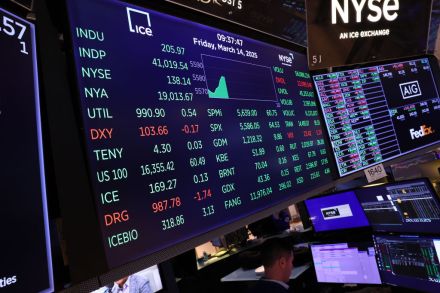
The President can’t stop talking about his favorite word – tariffs – although this week his comments are having a new effect. Rather than plummeting, the stock market is showing signs of life – climbing by more than 1 percent – on the news that Donald Trump’s plans for “reciprocal” tariff seemed to have been scaled back significantly.  For weeks the President has been suggesting that come April 2, trade retribution would really kick in: any country that has an “unfair” trading partnership with the United States (Trump was even thinking of extending this to taxes like VAT) would see an equal import tariff imposed on the country.

Recession? What recession?

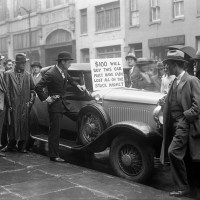
The stock market, traditionally a leading indicator, entered correction territory last week. But does that indicate that a recession is coming? Well, it’s an old saying on Wall Street that the market has predicted ten of the last three recessions. Markets hate uncertainty, and no one knows how President Trump’s efforts to use American tariffs to force our trading partners to lower theirs will turn out. But foreign trade is increasingly important to all countries, so it’s likely that, after some political Sturm und Drang, deals will be struck and international trade will continue the strongly upward path it has been on since the end of World War Two. By definition, a recession is two consecutive quarters of contraction.

shares

Trump’s war on Europe should not surprise anyone

Has there been a more cataclysmic year for US-Europe relations than 2025? It began with J.D. Vance’s “sermon” to EU leaders at the Munich Security Conference last month, in which he berated Western Europe for its policies on immigration and free speech. This year has also seen the growing threat of NATO falling apart after 76 years of peace in Western Europe, with the White House seemingly tilting toward Russia and Trump demanding that alliance members such as Germany, France, and the U.K. dramatically increase their defense spending. This week, as the Trump administration imposes tariffs on Europe and Europe retaliates, there are even signs of a full-scale trade war.

Europe

Why I am confident the Champagne tariff will not last long

I have to begin this column with a glass of Pol Roger cuvée Winston Churchill. It’s fancy stuff, and — according to some — it’s a bit early in the day to be quaffing Champagne.  “How early is too early?” I’ve often wondered that. The jury is out but most of the best authorities say that any time before actually awakening is too early.   Why the shampoo (as David Niven was wont to denominate the beverage)?  It seemed like the appropriate expedient in response to a bulletin I received from a Trump-skeptical friend. It came in over the headline, “Trump’s first mistake.

palm beach wine champagne

The US has entered a bear market

Could it be that Donald Trump actually wants a bear market now? At some point, one was bound to happen on his watch — after all, US equities weren’t going to keep up their stunning gains from the past two years for the rest of his term. A market correction was inevitable, and it seems we’ve already seen that, as the S&P 500 dipped into correction territory this week. And a bear market was almost certainly coming, given that there have been 27 of them in the S&P index since 1928. Hartford Funds provides a good summary here, showing that the average decline in a bear market is 35 percent, and they typically last 9.6 months. By contrast, the average bull market lasts 2.6 years, with prices rising 110 percent. Overall, bear markets occur about every 3.

bear market

Will better-than-expected inflation numbers calm the markets?

Has Donald Trump’s return to the White House triggered a second round of inflation? Not yet, according to the Bureau of Labor Statistics, which revealed this morning that the consumer price index rose to 2.8 percent in February — 0.1 percent less than markets had expected. The rise is being described as "stable," as annualized core inflation (which excludes more volatile prices like food and energy) rose to 3.1 percent — also a smaller rise than expected. While inflation on the year is ticking up slightly, it remains in the ballpark of what has been expected.

Canada

Is Canada doing enough to tame Trump?

There’s such a thing as cutting off your nose to spite your face, and the tariff war between Canada and the US is starting to look like a prime example. On Monday, Ontario Premier Doug Ford announced a 25 percent surcharge on electricity exports to the US, affecting an estimated 1.5 million households and businesses in New York, Michigan, and Minnesota. Trump responded with all-caps outrage, raising the March 12 tariff on steel and aluminum imports from Canada from 25 to 50 percent — a move that would be devastating for Ontario’s auto sector. How, the President asked, could Canada stoop so low as to use electricity — a resource that impacts the daily lives of innocent people — as a bargaining chip and a threat?

China’s response to Trump’s tariffs marks a dramatic escalation

Might peace in Ukraine be prelude to an even more serious conflict between the United States of America and China? Is that a hysterical question? The deal-or-no-deal drama starring Donald Trump, Volodymyr Zelensky and European leaders has dominated the news in recent days, so much so that the latest clash between Washington and Beijing has gone all but unnoticed. Yet China’s official response to the Trump administration’s move to raise its tariffs on Chinese imports to 20 percent does appear to mark a dramatic escalation. "Exerting extreme pressure on China is the wrong target and the wrong calculation,’’ said China’s foreign ministry spokesperson Lin Jian. "If the US has other intentions and insists on a tariff war, trade war or any other war, China will fight to the end.

Canada can do more to address the fentanyl crisis

It was a field day for the Canadian freight industry on Monday. Every truck in the country, stuffed to the gills with product, was racing the clock to the border. The few drivers still available commanded ridiculous prices — up to $12,000 higher than normal. At the stroke of midnight, the 25 percent blanket tariff kicked in. Trucks that had yet to make it across the border hit the brakes and turned around. The party was over; the coaches became pumpkins again, it was time for Cinderella to go home. The whole week before, business owners, brokers and shippers were asking each other: "Have you seen anything official on this? Anything from the Canadian government?" They hadn't.

fentanyl canada

Europe should be careful in wishing for their own Trump

When I visited Toronto with a UK delegation last winter, conversation focused on the issues of immigration, housing and inflation that were contributing to the unpopularity of Justin Trudeau, who finally announced his resignation as prime minister last month. The prospect of Donald Trump’s return to the White House was the slumbering python in the chandelier above the conference table: I sensed our hosts preferred not to think about how bad it might turn out to be. Well, now they know. In response to Trump’s declaration of 25 percent tariffs on Canadian goods, plus 10 percent on imported energy, Trudeau retorted with tariffs on many billions worth of US products.

Trump

What’s next for DoGE fever?

Washington, DC has been struck with DoGE (Department of Government Efficiency) fever — just as everyone started getting over the bugs they all caught at from Trump’s inauguration. Elon Musk and his gang of twenty-something whiz kids are making their mark across the federal government, starting with USAID, which Musk has repeatedly criticized in strident terms as being the core of the corruption he’s seeking to root out.

How Trump’s Mexico and Canada tariffs could change trade history

President Donald Trump has set Saturday as the deadline to impose 25 percent tariffs on Canadian and Mexican imports. From the Oval Office earlier this week, Trump explained that the move aims to push the US’s neighbors to take swift action to curtail illegal immigration and fentanyl, as well as to address growing trade deficits. The tariffs may or may not include oil, with Trump saying Thursday that determinations were still being made. Following Trump’s tariff feud with Colombian president Gustavo Petro Sunday, with the Trump forcing his Colombian counterpart to welcome deportees, his latest move signifies an expansion of his revamped “FAFO” foreign policy.

Get ready for Trump’s ‘FAFO’ foreign policy

President Donald Trump posted an AI-picture of a gangster version of himself on Instagram at around 3 p.m. Sunday. Behind the fedora-clad figure, the text “FAFO” — short for “fuck around and find out” — appears alongside a smiling face.  What happened earlier that Sunday, and the machine-made picture that followed, tells us a lot about how Trump 2.0. will deal with the world.  After two planes carrying Colombian illegal aliens departed the United States this weekend, self-proclaimed humanist and former guerrilla fighter Gustavo Petro, Colombia’s president, refused to allow the plane to land. “I deny the entry of American planes carrying Colombian migrants into our territory,” Petro said on X.

Colombia yields to Trump’s tariff threats

President Donald Trump and Colombian president Gustavo Petro feuded yesterday over the return of immigrants living illegally in the US, but after Trump’s threats of tariffs, Petro agreed to send his own plane to pick up the criminals. Trump’s plans to return the immigrants back to their country of citizenship were temporarily thwarted by Petro, who denied the flights permission to land. He claimed he rejected the repatriation flights because of the lack of “dignity and respect” shown to these Colombians, as they would have arrived on military planes while handcuffed. Petro stated, “We will receive our fellow citizens on civilian planes, without treating them like criminals.

Is Biden working to sabotage Trump’s transition?

President Joe Biden has taken actions that will make former and President-elect Donald Trump’s transition into the White House difficult, slowing him down with federal rules and other roadblocks, according to inside sources and Trump himself.  Last week, Trump talked to reporters outside of Mar-a-Lago about the departing Biden administration.  “They’re trying everything they can to make things more difficult,” Trump said.  He also told reporters that Biden was being “sneaky,” despite the current president’s public pledge to cooperate with the incoming administration’s transition into the White House.  “They try to be sneaky,” Trump said at a press conference.

Trump’s tariff threat

President-elect Donald Trump’s threat of 25 percent, across-the-board tariffs on Mexico and Canada has already shocked the system. The US dollar rose against its neighbors’ currencies, as stocks dropped and rose.Floating an additional tariff on China is one thing, but adding America’s two neighbors makes the move especially ambitious. If implemented, the US would effectively levy tariffs against its top three trading partners, which together make up around 40 to 50 percent of total trade between America and the world. That’s revolutionary.One thing that’s for certain is that tariffs would hurt the countries they target more than they hurt the US. More than 75 percent of Mexican and Canadian exports are to the Land of the Free.