Tariffs

Should Starmer impose retaliatory tariffs? Plus local elections lookahead

From our UK edition

14 min listen

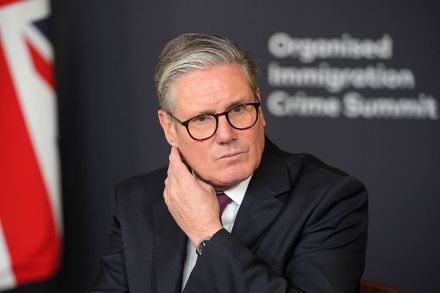
It’s World Tariff Day – or Liberation Day, depending on what you prefer to call it – but we won’t know for certain what levies Donald Trump will impose on the world until around 9 p.m. this evening. Sources are speculating that Trump still isn’t 100 per cent sure himself. But as the UK awaits its fate, what is the polling saying: should Starmer stand up to Trump? Also on the podcast, it’s just under a month until the local elections, and we have seen big launch events from Reform UK and the Liberal Democrats. These are the parties expecting to do well – potentially winning upwards of 400 council seats each. Labour and the Tories, meanwhile, are managing expectations.
tariffs

Tariffs make sense in a world of predatory mercantilism

The classical defense of free trade, the one found in Econ 101 textbooks and Ricardo’s comparative advantage model, goes something like this: countries should specialize in what they can produce most efficiently, export the surplus and import the rest. Trade allows global output to increase, everyone gets richer and any government interference – like tariffs or subsidies – just gums up the works. But that’s not the world we live in. David Ricardo, the early 19th-century British economist who developed the theory of comparative advantage, illustrated it with a now-famous example: even though Portugal could produce both wine and cloth more efficiently than England, both countries would benefit if Portugal specialized in wine and England in cloth, then traded.

What to expect on ‘World Tariff Day’

From our UK edition

13 min listen

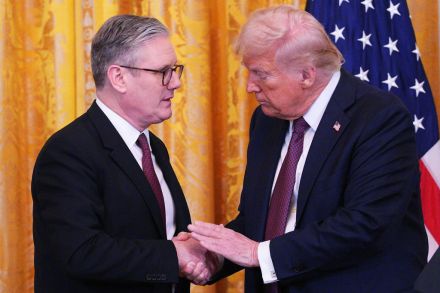
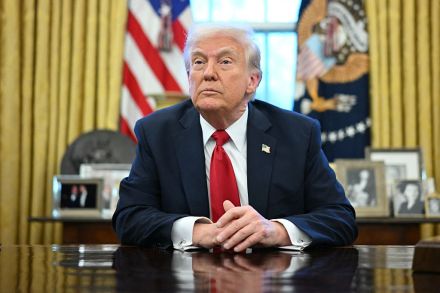
This week will see ‘World Tariff Day’ – as those in Westminster are not-so-excitedly calling Wednesday – when Donald Trump will announce a wave of new tariffs. Trump is expected to reveal plans for reciprocal tariffs aimed at addressing what he sees as an ongoing trade imbalance between the US and other countries. He argues that it is ‘finally time for the Good Ol’ USA to get some of that MONEY, and RESPECT, BACK. GOD BLESS AMERICA!!!’. It had looked as though the Prime Minister’s softly-softly approach to US relations was working and that we might avoid Trump’s levies... that was until the UK was included in the 25 per cent tariff on cars and auto parts imported into the US, along with steel. There is some hope, however.

Trump’s choice on a replacement UN ambassador is complex

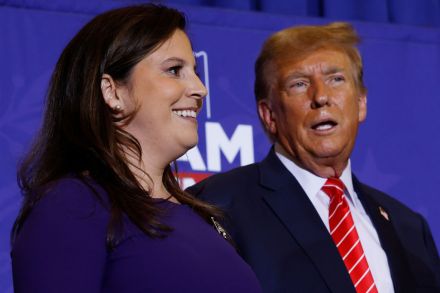
Maybe the surprising thing isn’t that Donald Trump yanked Elise Stefanik’s nomination to become ambassador to the United Nations. It’s that he hasn’t pulled America out of the organization. But perhaps that outcome is in the offing as Trump ponders whether he should select anyone to succeed her abortive nomination. Trump decided to leave Stefanik in Congress because of the slender Republican majority in the House – 218-213, plus four vacancies. “I have asked Elise, as one of my biggest Allies, to remain in Congress to help me deliver Historic Tax Cuts, GREAT Jobs, Record Economic Growth, a Secure Border, Energy Dominance, Peace Through Strength, and much more, so we can MAKE AMERICA GREAT AGAIN,” Trump said in a Truth Social post.

un

Can Britain dodge Trump’s tariffs?

From our UK edition

14 min listen

Reports in the papers today say that the British government is considering scrapping its digital services tax – largely levied at American tech companies – in return for an exemption to Trump's tariffs that come into effect on April 2. Would this be an effective – or desirable – move on the British part? James Heale speaks to Katy Balls and Kate Andrews. Produced by Oscar Edmondson and Cindy Yu.

Is Trump’s tariff zeal beginning to wane?

The President can’t stop talking about his favorite word – tariffs – although this week his comments are having a new effect. Rather than plummeting, the stock market is showing signs of life – climbing by more than 1 percent – on the news that Donald Trump’s plans for “reciprocal” tariff seemed to have been scaled back significantly.  For weeks the President has been suggesting that come April 2, trade retribution would really kick in: any country that has an “unfair” trading partnership with the United States (Trump was even thinking of extending this to taxes like VAT) would see an equal import tariff imposed on the country.

Henry Jeffreys, Marcus Walker, Angus Colwell, Nicolas Farrell and Rory Sutherland

From our UK edition

29 min listen

On this week’s Spectator Out Loud: Henry Jeffreys looks at the potential impact of Trump’s tariffs on British drinkers (1:31); on the 400th anniversary of Charles I’s accession to the throne, Marcus Walker explains what modern Britain could learn from the cavalier monarch (7:10); Angus Colwell provides his notes on beef dripping (13:55); Nicolas Farrell reveals he refused to accept the local equivalent of an Oscar (16:40); and, Rory Sutherland makes the case for linking VAT to happiness… with 0% going to pubs, Indian restaurants and cheddar cheese (24:08).  Produced and presented by Patrick Gibbons.

Could Trump’s tariffs be good news for British wine-lovers?

From our UK edition

Professional Englishmen and women – doctors, accountants and even journalists – could once afford to drink first-growth claret like Château Latour on a regular basis. In 1972, when the Daily Telegraph’s Guide to the Pleasures of Wine was published, Pomerol was still an obscure corner of Bordeaux, known for offering ‘very good value’. Those days are long gone. Prices began to take off in the 1980s, with Auberon Waugh blaming ‘American millionaires looking to impress their guests’. The 1982 Bordeaux vintage was highly lauded by a then-unknown young lawyer called Robert Parker Jnr who would go on to become the most influential wine critic in the world. After this, anything Parker recommended became unaffordable to most British wine-lovers.

Recession? What recession?

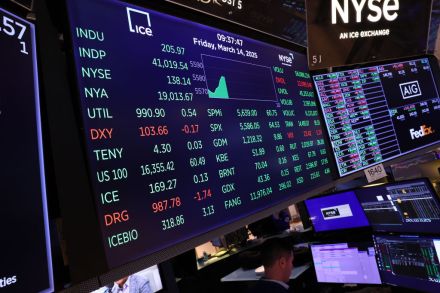
The stock market, traditionally a leading indicator, entered correction territory last week. But does that indicate that a recession is coming? Well, it’s an old saying on Wall Street that the market has predicted ten of the last three recessions. Markets hate uncertainty, and no one knows how President Trump’s efforts to use American tariffs to force our trading partners to lower theirs will turn out. But foreign trade is increasingly important to all countries, so it’s likely that, after some political Sturm und Drang, deals will be struck and international trade will continue the strongly upward path it has been on since the end of World War Two. By definition, a recession is two consecutive quarters of contraction.

shares

Trump’s war on Europe should not surprise anyone

Has there been a more cataclysmic year for US-Europe relations than 2025? It began with J.D. Vance’s “sermon” to EU leaders at the Munich Security Conference last month, in which he berated Western Europe for its policies on immigration and free speech. This year has also seen the growing threat of NATO falling apart after 76 years of peace in Western Europe, with the White House seemingly tilting toward Russia and Trump demanding that alliance members such as Germany, France, and the U.K. dramatically increase their defense spending. This week, as the Trump administration imposes tariffs on Europe and Europe retaliates, there are even signs of a full-scale trade war.

Europe

Why I am confident the Champagne tariff will not last long

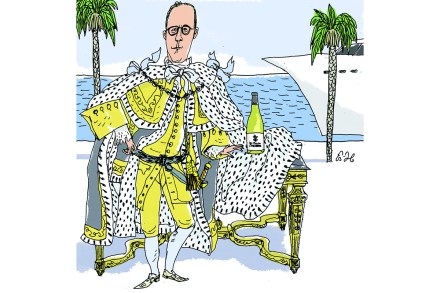
I have to begin this column with a glass of Pol Roger cuvée Winston Churchill. It’s fancy stuff, and — according to some — it’s a bit early in the day to be quaffing Champagne.  “How early is too early?” I’ve often wondered that. The jury is out but most of the best authorities say that any time before actually awakening is too early.   Why the shampoo (as David Niven was wont to denominate the beverage)?  It seemed like the appropriate expedient in response to a bulletin I received from a Trump-skeptical friend. It came in over the headline, “Trump’s first mistake.

palm beach wine champagne

The US has entered a bear market

Could it be that Donald Trump actually wants a bear market now? At some point, one was bound to happen on his watch — after all, US equities weren’t going to keep up their stunning gains from the past two years for the rest of his term. A market correction was inevitable, and it seems we’ve already seen that, as the S&P 500 dipped into correction territory this week. And a bear market was almost certainly coming, given that there have been 27 of them in the S&P index since 1928. Hartford Funds provides a good summary here, showing that the average decline in a bear market is 35 percent, and they typically last 9.6 months. By contrast, the average bull market lasts 2.6 years, with prices rising 110 percent. Overall, bear markets occur about every 3.

bear market

Will better-than-expected inflation numbers calm the markets?

Has Donald Trump’s return to the White House triggered a second round of inflation? Not yet, according to the Bureau of Labor Statistics, which revealed this morning that the consumer price index rose to 2.8 percent in February — 0.1 percent less than markets had expected. The rise is being described as "stable," as annualized core inflation (which excludes more volatile prices like food and energy) rose to 3.1 percent — also a smaller rise than expected. While inflation on the year is ticking up slightly, it remains in the ballpark of what has been expected.

Canada

Is Canada doing enough to tame Trump?

There’s such a thing as cutting off your nose to spite your face, and the tariff war between Canada and the US is starting to look like a prime example. On Monday, Ontario Premier Doug Ford announced a 25 percent surcharge on electricity exports to the US, affecting an estimated 1.5 million households and businesses in New York, Michigan, and Minnesota. Trump responded with all-caps outrage, raising the March 12 tariff on steel and aluminum imports from Canada from 25 to 50 percent — a move that would be devastating for Ontario’s auto sector. How, the President asked, could Canada stoop so low as to use electricity — a resource that impacts the daily lives of innocent people — as a bargaining chip and a threat?

China’s response to Trump’s tariffs marks a dramatic escalation

Might peace in Ukraine be prelude to an even more serious conflict between the United States of America and China? Is that a hysterical question? The deal-or-no-deal drama starring Donald Trump, Volodymyr Zelensky and European leaders has dominated the news in recent days, so much so that the latest clash between Washington and Beijing has gone all but unnoticed. Yet China’s official response to the Trump administration’s move to raise its tariffs on Chinese imports to 20 percent does appear to mark a dramatic escalation. "Exerting extreme pressure on China is the wrong target and the wrong calculation,’’ said China’s foreign ministry spokesperson Lin Jian. "If the US has other intentions and insists on a tariff war, trade war or any other war, China will fight to the end.

Canada can do more to address the fentanyl crisis

It was a field day for the Canadian freight industry on Monday. Every truck in the country, stuffed to the gills with product, was racing the clock to the border. The few drivers still available commanded ridiculous prices — up to $12,000 higher than normal. At the stroke of midnight, the 25 percent blanket tariff kicked in. Trucks that had yet to make it across the border hit the brakes and turned around. The party was over; the coaches became pumpkins again, it was time for Cinderella to go home. The whole week before, business owners, brokers and shippers were asking each other: "Have you seen anything official on this? Anything from the Canadian government?" They hadn't.

fentanyl canada

Was ‘free trade’ really working?

From our UK edition

29 min listen

Oren Cass, founder and chief economist of think-tank American Compass, sits down with Freddy Gray at the ARC conference in London. They react to the announcement by President Trump over the weekend of reciprocal tariffs: the decision by the US to match import duties levied by other countries.  What's the strategy behind Trump's decision? And what could the consequences be for American companies and for global trade? They also discuss the broad political consensus behind free trade in the US since the 1990s. Given the 'lived reality' that faced many American investors and companies - for example competing with Chinese Electric Vehicles - was the free trade really working anyway? Produced by Natasha Feroze and Patrick Gibbons.

Could Trump target Britain with tariffs?

From our UK edition

25 min listen

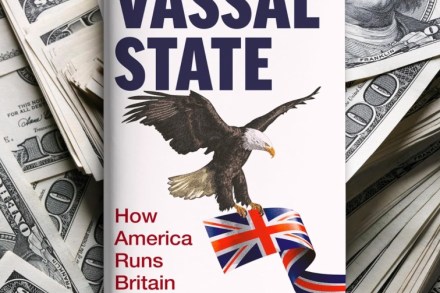
Angus Hanton, author of Vassal State: How America Runs Britain, joins Freddy Gray to talk about the economic relationship between Britain and America. As the world adjusts to the new US administration, every day seems to bring news of new potential tariffs. Is the UK a prime target for Trump? What could the impact of tariffs be? And what are the long-term questions facing British politicians about both the economic and political relationship with the US? Produced by Megan McElroy and Patrick Gibbons.

Europe should be careful in wishing for their own Trump

When I visited Toronto with a UK delegation last winter, conversation focused on the issues of immigration, housing and inflation that were contributing to the unpopularity of Justin Trudeau, who finally announced his resignation as prime minister last month. The prospect of Donald Trump’s return to the White House was the slumbering python in the chandelier above the conference table: I sensed our hosts preferred not to think about how bad it might turn out to be. Well, now they know. In response to Trump’s declaration of 25 percent tariffs on Canadian goods, plus 10 percent on imported energy, Trudeau retorted with tariffs on many billions worth of US products.

Trump

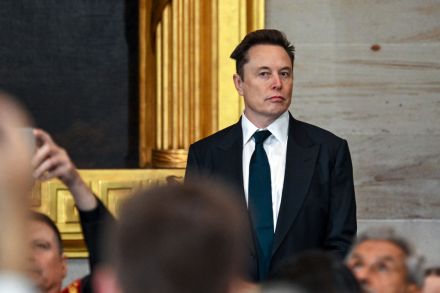
What’s next for DoGE fever?

Washington, DC has been struck with DoGE (Department of Government Efficiency) fever — just as everyone started getting over the bugs they all caught at from Trump’s inauguration. Elon Musk and his gang of twenty-something whiz kids are making their mark across the federal government, starting with USAID, which Musk has repeatedly criticized in strident terms as being the core of the corruption he’s seeking to root out.