Tariffs

Tariffs and the psychodrama of Trump diplomacy

A bleached white conference room, somewhere near Jeddah in Saudi Arabia. On one side sits Volodymyr Zelensky, the Ukrainian leader, in his soldier-boy outfit. On the other, Russian President Vladimir Putin in dark suit and tie. And in the middle, a beaming President Donald J. Trump. "People said this could never happen," he says, as Zelensky and Putin stare awkwardly at the floor. "But it’s a beautiful thing." A White House memo lands in inboxes across the world: "THE PEACEMAKER-IN-CHIEF..." Pure fantasy, perhaps, but Trump does have an almost cosmic ability to get what he wants – and he really wants to end the war in Ukraine. Last night, having spent weeks telling the world how "disappointed" he was with Putin, Trump abruptly announced "great progress" in US-Russia dialogue.

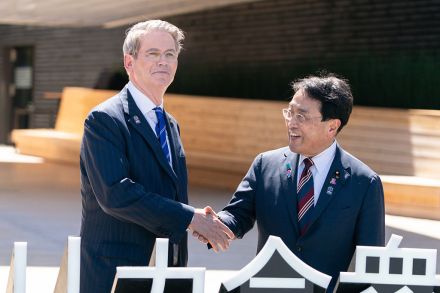
trump Steve Witkoff and Vladimir Putin shake hands (Getty)

Ann Coulter: On immigration, Trump 2.0 and the Epstein Files

Ann Coulter, an American author, lawyer and conservative media pundit, joined Freddy Gray on the Americano podcast last Friday to discuss why she backs the UK's Reform party, why she supports Trump in his second term, what's really going on with the Epstein files and more. Here are some highlights from their conversation. Why don’t politicians follow through on illegal immigration promises? Ann Coulter: Americans have been voting not to give illegals benefits, to deport them, to make sure they can't vote, for now almost half a century, and the politicians will never give it to us. That was what was so striking about Boris Johnson and Donald Trump. Oh my gosh, they really seemed to mean it.

Freddy Gray and Ann Coulter

The Art of the Dealmaker-in-Chief

Who really thought Donald Trump’s America was about to join the stampede of first-world powers promising to recognize Palestine at the United Nations?  "Wow!" He exclaimed this morning on Truth Social. "Canada has just announced that it is backing statehood for Palestine. That will make it very hard for us to make a Trade Deal with them."  All over the world, commentators convinced themselves that Trump’s expression of concern on Monday about "real starvation" in Gaza meant he was pivoting with global opinion and against Israel.  It turns out, however, that Team Trump is not for turning when it comes to the Middle East. Marco Rubio, the US Secretary of State, has accused the countries now embracing Palestinian statehood of falling for "Hamas propaganda".

Trump deals

Did Trump win the US-EU trade negotiations?

Trump has got almost everything he wanted in the trade deal between the United States and the European Union. Goods imported into the US from the EU will now be subject to tariffs of 15 percent - half the rate that Trump had threatened but far higher than existed prior to "Liberation Day" on April 2.  What has Ursula von der Leyen got in return? Nothing at all, other than the punitive tariffs being dropped. She has agreed to lowering tariffs on imports from the EU, in some cases to zero. She has also agreed to the EU buying more products from the US, including liquefied natural gas (LNG), making a mockery of the EU's net zero policy.

The truth about the Trump ‘trade deals’

They say three times makes a pattern. So what should we make of the President’s trade agreements, three of which he confirmed this week, as the August 1 deadline for "reciprocal tariffs” looms?  If there remained any confusion about his agenda, he helpfully laid it out in all caps. “I WILL ONLY LOWER TARIFFS IF A COUNTRY AGREES TO OPEN ITS MARKET. IF NOT, MUCH HIGHER TARIFFS!” he wrote on Truth Social. “USA BUSINESSES WILL BOOM!” Given the size of the lettering, and the similarities to the deals secured with Indonesia, the Philippines and Japan this week, we should take Donald Trump at his word on this one. Put simply: so long as other countries cut taxes for their businesses, he will hike taxes on American businesses ever so slightly less.

trump trade

Trump is in a good mood. What’s up?

 The President is usually set on "winning," but he has settled this week for a draw. Columbia University and the administration reached a settlement yesterday that, in theory, brings a months-long battle between the academics and politicos to an end.On the face of it, Columbia has still pulled the short straw. The university will pay a $200 million fine over three years to address the allegations that it was in breach of anti-discrimination laws, specifically in regards to the safety of Jewish students on campus.Moreover, Columbia has agreed to a "jointly selected independent monitor" that will watch over the university’s actions as it implements new student assessments and hiring policies.

Trump

Trump’s Japan deal is a hollow victory

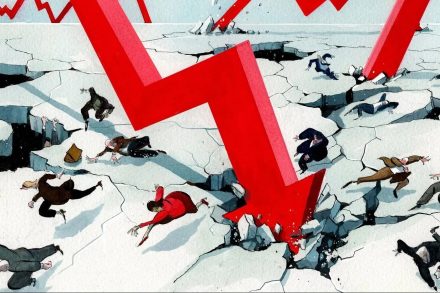
The reaction of markets to the US trade deal with Japan shows yet again that if you presage bad news with even worse news you can make people pathetically grateful at the outcome. Shares in Toyota surged by 14 percent at the news. Yet why, when the deal will see imports of Japanese cars to the US slapped with tariffs of 15 percent? Because back on "Liberation Day" in April,  Donald Trump announced that Japanese imports would be subject to 24 percent tariffs. Reactions to Trump’s reset in trade relations with the rest of the world have undergone wild swings in recent months. First, markets plunged.

Tariffs

Don’t bet on the Trump economy

The Trump White House took a victory lap on Monday, declaring in its newsletter that the American economy is back – back bigger and better than ever. Core inflation is down. Industrial production is up. Claims for unemployment dropped. Tariff revenue rose. The newsletter even cites the Wall Street Journal—otherwise in bad odor in the Trump White House – for decreeing that the American economy is “regaining its swagger.” Is it time to splurge on a fancy vacation? As it happens, I’m currently visiting Vermont where the number of tourists is distinctly lower than in previous years.

Economy

The Trump administration is practicing Carmen Sandiego economic theory

President Trump sent out another round of passive-aggressive tariff letters to foreign leaders Wednesay, which he posted to Truth Social so the world could marvel at his negotiating prowess. He worded each letter exactly the same, using Find and Replace to change country names, so Cockburn will just quote the Libya letter here: “It is a Great Honor for me to send you this letter in that it demonstrates the strength and commitment of our Trading Relationship, and the fact that the United States of America has agreed to continue working with Libya, despite having a significant Trade Deficit with your great Country. Nevertheless, we have decided to move forward with you, but only with more balanced, and fair, TRADE.

tariffs

Has Trump given up on tariff deadlines?

“TARIFFS WILL START BEING PAID ON AUGUST 1, 2025,” Donald Trump shared on Truth Social this morning. “There will be no change... No extensions will be granted. Thank you for your attention to this matter!” It’s a rather definitive statement from the President. But we’ve been here before. The original 90-day extension of “reciprocal tariffs” (better described as trade deficit figures with a percentage symbol attached) was also supposed to be a hard deadline. The President suggested only last week that there were no plans to push implementation back again. But here we are: a new date, a new deadline and a mixed market reaction.

tariff

Will the new ‘communist’ leader of South Korea abandon the US for China?

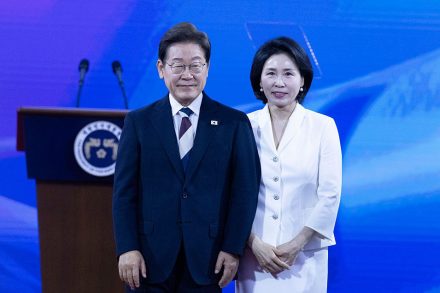
American divisions over politics look positively civil compared to the polarization that has gripped South Korea over the last few years. During the 2022 elections, Yoon Suk-yeol of the conservative People Power party (PPP) narrowly won the presidency over his liberal opponent Lee Jae-myung from the Democratic Party by a razor thin 0.73 percent. But Yoon hastened the demise of his own presidency when on December 3, 2024, he made the poor decision to declare martial law over baseless accusations that the National Assembly’s progressive opposition were collaborating with North Korea. Martial law lasted for only a few hours after both parties unanimously voted to lift the decree.

South Korea

Is ‘eating the tariffs’ good for business?

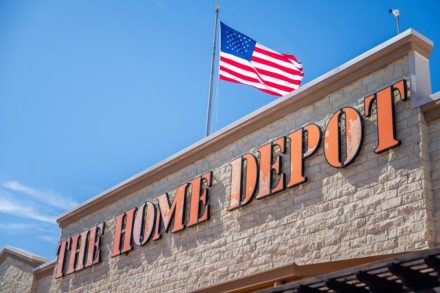
When President Trump told Walmart to “EAT THE TARIFFS,” he implied that to not do so was a profit-mongering conspiracy against the American people. He noted Walmart’s extensive trade relationships with China and its large profit margin. But Walmart maintained that tariffs made price rises unavoidable. And when Amazon flirted with noting on some of its products the precise amount of cost increases attributable to tariffs, Trump called Jeff Bezos to complain and Amazon backed away from its plan. After observing Trump’s hostility to Walmart and Amazon, Home Depot took a different approach and asked: what trade war? Unlike numerous major American corporations, Home Depot has not rescinded its 2025 guidance for investors because of the uncertainty from tariffs.

Tariffs will make America poorer

Is life worse today than it was 50 years ago? According to a Pew Research survey, 58 percent of respondents believe it is. Perhaps watching the doom and gloom of the nightly news gives the impression that times have never been worse. But the facts show otherwise.The world has never been richer, food has never been more abundant, and extreme poverty is at historic lows. We are fortunate to live in a country where the people have a strong work ethic and control a vast, resource-rich territory. Yet, even with those advantages, we rely on trade to access goods that America simply does not produce in abundance, like coffee and bananas. Perhaps we should ask a more nuanced question: is international trade good or bad?

Rand Paul

Is Trump’s unified Republican front fracturing over Russia?

For the most part, President Trump hasn’t had to worry too much about the loyalty of his fellow Republicans on Capitol Hill. Sure, he needed to make a trip to the other side of Pennsylvania Avenue to pressure a few Republican holdouts to support his “big, beautiful” package of tax cuts and spending cuts, but the rank-and-file has tended to blindly follow whatever the White House wants.  Yet over the last several days, a slight divide has emerged between Trump and Republicans – or more specifically, Trump and Senate Republicans – on Ukraine and Russia policy.

russia republican

Mark Carney rebuffs Trump’s marriage proposal

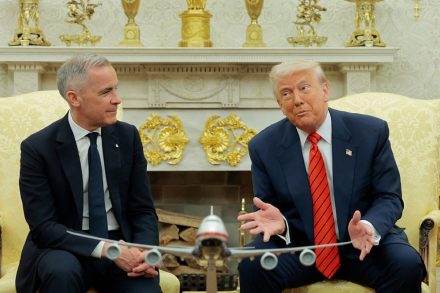
The White House press conference between President Trump and newly-elected Canadian Prime Minister Mark Carney shows that every generation gets the summit it deserves. World War Two had Yalta, the 1970s the Camp David Accords. Barack Obama had a beer with the cop who arrested Henry Louis Gates, Jr. And Trump bragged about the new 24-karat White House gold décor and said, about Canada, “I think we have a lot of things in common.” The half-hour press scrum veered between mutual respect and Trumpian disdain, while Carney struggled to get a word in, flopping his hands in his lap like fish on a deck. He called Trump a “transformational President” and said, “We’re stronger when we’re together.” Trump said, “I have a lot of respect for this man.

Carney
AI

Is the AI boom already over?

Is artificial intelligence a flash in the pan? Is the boom in tech shares, which exploded with the rise in public awareness of AI, doomed to go the way of other investment bubbles over the centuries? The answer to the first question is almost certainly no, and the answer to the second very likely yes. Investment bubbles do sometimes involve assets which have little intrinsic value, yet it is remarkable how often they begin as an entirely rational reaction to some new invention or development – an invention which outlasts the collapse of the speculative bubble, as if nothing had happened. You only have to look at a share chart and you would assume that railways went out of fashion in the 1840s, when a mad speculative umbrella collapsed.

Foreign governments have themselves to blame for Trump’s movie tariffs

Donald Trump has thrown another trade grenade. His latest idea – a 100 percent tariff on all foreign-made films – is crude, impractical and potentially disastrous for his frenemies in the Hollywood industry that he has suddenly decided to champion. Announcing the tariffs via Truth Social, Trump tried to paint movies produced overseas as a danger: not just to America’s film production industry, but national security too. “WE WANT MOVIES MADE IN AMERICA, AGAIN!" he thundered. Invoking national security to justify these tariffs is legally shaky. Practically, it’s not clear how you even impose tariffs on a complex, multi-national production like a modern movie. Films shot in Croatia, edited in the UK and funded by America pose an administrative nightmare.

marvel movie
jon voight movies

The problem with Trump’s plan to make American movies great again

Donald Trump is a cinephile, of sorts. Not since Ronald Reagan has there been a US President so visible in theater, with Trump making cameos in everything from Home Alone 2 to Zoolander. Yet just as Trump has been steadfast in his determination to Make America Great Again, so he has been equally keen to Make Hollywood Great Again, too. Initially, he appointed Sylvester Stallone, Mel Gibson and Jon Voight as “Special Ambassadors” to “a great but very troubled place.” Gibson and Stallone appear to have taken the honor on the chin, but Voight has been diligently organizing meetings and has now fed back his thoughts to the President. As a result, Trump has declared that he has his own, unorthodox plans to save the American motion-picture industry.

Deals, deals, deals vs China, China, China

How was your Liberation Month? It’s been almost 30 days since Donald Trump stood in the Rose Garden of the White House and announced a shocking set of massive tariffs on the world. The event caused huge convulsions in the economic universe: trillions were wiped off the stock market and, under huge pressure, Trump did agree to a 90-day pause on reciprocal tariffs. After that he exempted electrical goods, though his standard 10 percent remains, and the heads of most financial analysts are still spinning trying to figure out what it all means. Yet for all the angst and the apoplexy, yesterday the S&P 500 index closed just 1 percent down from where it was at the beginning of the month.

empty shelves

Is America in the grip of Empty Shelves panic?

The morning of President Trump’s 100th day in office brought fresh tariff melodrama with the coffee, eggs and toast, as a report emerged suggesting Amazon was considering listing the exact cost of a US tariff surcharge next to all goods purchased on the site. White House Press Secretary Karoline Leavitt immediately snarled from the podium that this was a “hostile and political act,” though it was really neither hostile nor political. Regardless, Amazon immediately rolled it back, claiming the story had been misreported by Punchbowl News.  “The team that runs our ultra low-cost Amazon Haul store has considered listing import charges on certain products,” a spokesman said.