Tariffs

Mark Carney rebuffs Trump’s marriage proposal

From our US edition

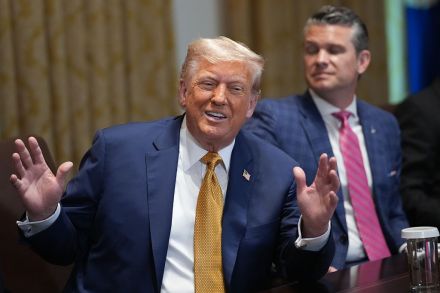
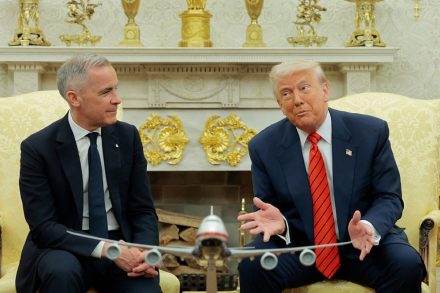
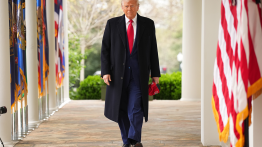
The White House press conference between President Trump and newly-elected Canadian Prime Minister Mark Carney shows that every generation gets the summit it deserves. World War Two had Yalta, the 1970s the Camp David Accords. Barack Obama had a beer with the cop who arrested Henry Louis Gates, Jr. And Trump bragged about the new 24-karat White House gold décor and said, about Canada, “I think we have a lot of things in common.” The half-hour press scrum veered between mutual respect and Trumpian disdain, while Carney struggled to get a word in, flopping his hands in his lap like fish on a deck. He called Trump a “transformational President” and said, “We’re stronger when we’re together.” Trump said, “I have a lot of respect for this man.

Carney
AI

Is the AI boom already over?

From our US edition

Is artificial intelligence a flash in the pan? Is the boom in tech shares, which exploded with the rise in public awareness of AI, doomed to go the way of other investment bubbles over the centuries? The answer to the first question is almost certainly no, and the answer to the second very likely yes. Investment bubbles do sometimes involve assets which have little intrinsic value, yet it is remarkable how often they begin as an entirely rational reaction to some new invention or development – an invention which outlasts the collapse of the speculative bubble, as if nothing had happened. You only have to look at a share chart and you would assume that railways went out of fashion in the 1840s, when a mad speculative umbrella collapsed.

Foreign governments have themselves to blame for Trump’s movie tariffs

From our US edition

Donald Trump has thrown another trade grenade. His latest idea – a 100 percent tariff on all foreign-made films – is crude, impractical and potentially disastrous for his frenemies in the Hollywood industry that he has suddenly decided to champion. Announcing the tariffs via Truth Social, Trump tried to paint movies produced overseas as a danger: not just to America’s film production industry, but national security too. “WE WANT MOVIES MADE IN AMERICA, AGAIN!" he thundered. Invoking national security to justify these tariffs is legally shaky. Practically, it’s not clear how you even impose tariffs on a complex, multi-national production like a modern movie. Films shot in Croatia, edited in the UK and funded by America pose an administrative nightmare.

marvel movie
jon voight movies

The problem with Trump’s plan to make American movies great again

From our US edition

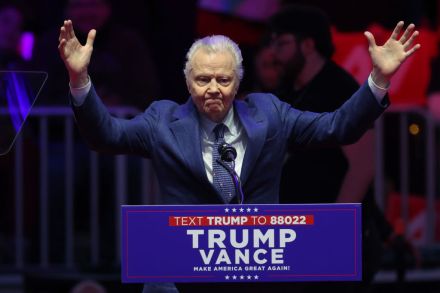
Donald Trump is a cinephile, of sorts. Not since Ronald Reagan has there been a US President so visible in theater, with Trump making cameos in everything from Home Alone 2 to Zoolander. Yet just as Trump has been steadfast in his determination to Make America Great Again, so he has been equally keen to Make Hollywood Great Again, too. Initially, he appointed Sylvester Stallone, Mel Gibson and Jon Voight as “Special Ambassadors” to “a great but very troubled place.” Gibson and Stallone appear to have taken the honor on the chin, but Voight has been diligently organizing meetings and has now fed back his thoughts to the President. As a result, Trump has declared that he has his own, unorthodox plans to save the American motion-picture industry.

Deals, deals, deals vs China, China, China

From our US edition

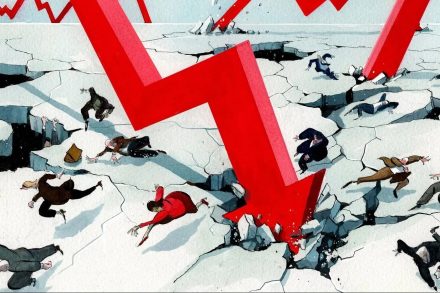
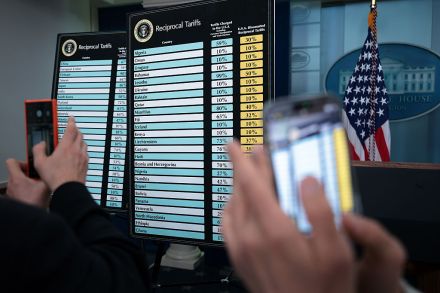
How was your Liberation Month? It’s been almost 30 days since Donald Trump stood in the Rose Garden of the White House and announced a shocking set of massive tariffs on the world. The event caused huge convulsions in the economic universe: trillions were wiped off the stock market and, under huge pressure, Trump did agree to a 90-day pause on reciprocal tariffs. After that he exempted electrical goods, though his standard 10 percent remains, and the heads of most financial analysts are still spinning trying to figure out what it all means. Yet for all the angst and the apoplexy, yesterday the S&P 500 index closed just 1 percent down from where it was at the beginning of the month.

empty shelves

Is America in the grip of Empty Shelves panic?

From our US edition

The morning of President Trump’s 100th day in office brought fresh tariff melodrama with the coffee, eggs and toast, as a report emerged suggesting Amazon was considering listing the exact cost of a US tariff surcharge next to all goods purchased on the site. White House Press Secretary Karoline Leavitt immediately snarled from the podium that this was a “hostile and political act,” though it was really neither hostile nor political. Regardless, Amazon immediately rolled it back, claiming the story had been misreported by Punchbowl News.  “The team that runs our ultra low-cost Amazon Haul store has considered listing import charges on certain products,” a spokesman said.

Josh Hawley talks Trump’s first 100 days: pro-life ‘needs to be a priority’

From our US edition

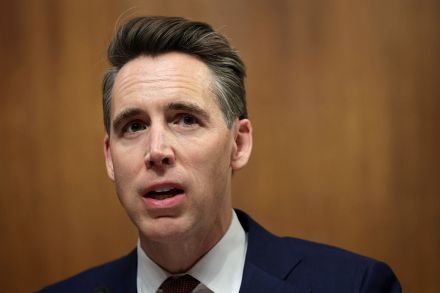
Senator Josh Hawley of Missouri has been one of Donald Trump’s fiercest allies on Capitol Hill. But since his easy re-election last November, he’s also been someone within the Republican party who demanded public commitments from Trump’s nominees on several issues of importance to him – areas of concern that include the influence of big tech, the encroaching role of China and a promise on the part of nominees with little or no record on the abortion issue to support pro-life policies. Senator Hawley spoke to me on the 100th day of Trump’s second presidency about what he’s seeing on tariffs, foreign policy and China.

hawley
trade

Was ‘Liberation Day’ just shock therapy?

From our US edition

With Treasury Secretary Scott Bessent announcing that a trade deal between the US and India could be imminent, it once again raises the possibility that Trump’s intended outcome is not the imposition of high, permanent tariffs – but that the measures announced on “Liberation Day” were really just shock therapy aimed at the ultimate liberalization of trade. It is significant that India was one of the countries which were originally put down for some of the higher tariffs: 26 percent was going to be the blanket rate on imports from India. South Korea, another country with which trade deal negotiations seem to be in an advanced state, was going to be subject to 25 percent tariffs.

How Liberation Day rocked Switzerland

From our US edition

When President Donald Trump gathered the world’s media to the White House Rose Garden to unveil America’s “Liberation Day,” Swiss viewers were cautious but optimistic.  Administration insiders had assured us that we had nothing to fear. During Trump’s first term in office, Switzerland had been the port in the storm of European opinion. As outsiders to the European Union, we were able to forge our own relationship with the American superpower. Our small alpine nation, with its population of 9 million, rose from the eighth largest foreign direct investor in the United States to the sixth. Swiss companies, like Nestle, Stadler and Novartis, ramped up their American operations, generating profits and jobs for both countries.

switzerland
globalization

Who cares about globalization?

From our US edition

Donald Trump’s “Liberation Day” was the culmination of a 30-year insurgency against the global economic system. It was the most fiscally significant event since lockdown. By the fiat of the President, tens of trillions of dollars were on the move; stock markets trembled; and the US-China relationship – the material basis of globalization – seemed at risk of permanently freezing over.  Yet just under a week later, tariffs were to be displaced in the news cycle by the case of a deported "Maryland man," Kilmar Abrego Garcia, and his possible gang affiliations. Only one of these events would prompt five Democratic lawmakers to drop everything for an urgent trip abroad.

How America can develop its own rare earth elements industry… safely

From our US edition

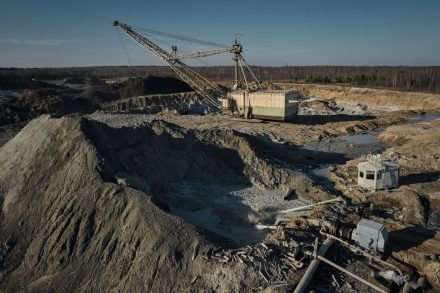
Give a country rare earth elements and it’ll have fighter jets, missiles and warships for a day. Force a country to extract and process its own rare earth elements and it’ll be safe from relying on countries run by unstable dictators forever.  Such is President Trump’s sensible line of thinking as he keeps up America's trade war with China. As China imposed export licensing restrictions on seven rare earth elements, or REEs, last week, Trump signed an Executive Order “launching an investigation into the national security risks posed by US reliance on imported processed critical minerals and their derivative products.” The administration is now pursuing a deal to procure REEs from Ukraine.

rare earth elements

How much hope did Trump offer Meloni?

From our US edition

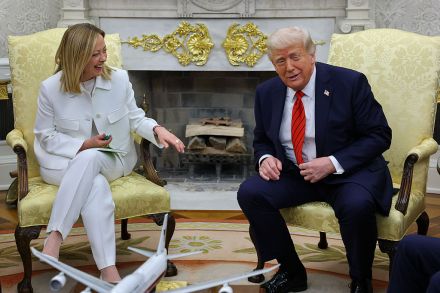
In early March Donald Trump said Elon Musk was doing “an amazing job.” Last week he said Governor Gretchen Whitmer of Michigan was doing an “excellent job.” On Thursday it was the turn of Italian prime minister Giorgia Meloni during her meeting at the White House. Trump declared that she was “doing a fantastic job.”  What Trump found so fantastic was never specified, but he tossed a variety of bouquets in Meloni’s direction. Not least was his vow that “there will be a trade deal, 100 percent” with the European Union. It was qualified, however, by Trump’s claim that he’s in no rush to strike a deal with Ursula “the West no longer exists as we knew it no longer exists” von der Leyen, the president of the European Commission.

meloni

China bans Boeing in targeted trade war shot

From our US edition

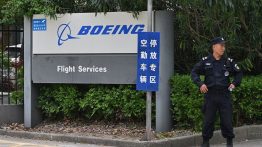
“If it ain’t Boeing, I ain’t going,” goes the old adage, championing the supposed superiority of the company’s planes on safety issues. If you are traveling in China in future that probably means that you won’t be going very far at all. The US aviation giant is emerging as one of the biggest losers of Donald Trump’s trade war. China has not merely applied punitive tariffs on the company’s planes; it has banned imports altogether. Even existing orders of planes appear to be affected by the ban. What’s more, the ban applies to Boeing itself rather than to general imports of US aircraft – it is personal. Boeing, already reeling from the crash of two 737 MAXs in Indonesia in 2018 and Egypt in 2019, lost $11.

The biggest threat to Trump is Trump

Although Republicans and Democrats have few things in common, there’s one American universal: we don’t like when you mess with our money. After Donald Trump’s erratic tariff tantrums have sent markets lurching, who knows how much stocks will have spiked or tanked between the typing of this paragraph and it seeing print. Some 62 per cent of Americans own stock; unsurprisingly, I do, too. A believer in the joys of denial, I’ve refused to even peek at my portfolio since the President’s ‘Liberation Day’. I guess not worrying my pretty head about my finances constitutes liberation of a kind. While never a Trumpster, I found the initial weeks of the 47th presidency exhilarating.

Portrait of the week: British Steel seized, army sent to Birmingham and slim told to stay home in Beijing

Home Parliament was recalled from its Easter recess to sit on a Saturday for the first time since the Falklands War of 1982 to pass a bill to take control of British Steel, which amounts to no more than the works at Scunthorpe owned by the Chinese company Jingye since 2020. Scunthorpe, which employs 2,700 directly and thousands indirectly, is the last plant in Britain capable of making virgin steel. The bill, passing through the Commons and Lords, received the Royal Assent on the same day. The race against time was to supply the blast furnaces with coal before they were ruined by going cold; supplies from the United States were unloaded at Immingham docks, 25 miles away. The Secretary of State for Business, Jonathan Reynolds, received powers to give orders to the board and staff.

Is Trump killing the American dream for mom-and-pops? 

From our US edition

He’s survived an assassination, bounced back from bankruptcy and – so far, at least – avoided all attempts to jail him. But Donald Trump’s most audacious feat is yet before him: to persuade Americans to pay more for their goods as their beloved businesses struggle – and then be grateful to him at the polls.  While tariffs threaten to raise prices across the board for consumers, small businesses with lower margins than their larger competitors are struggling. “Whether or not you support tariffs, or whether or not you think certain offices should be cut, I think overall, any kind of economic turbulence is uniquely burdensome for small businesses,” says Molly Day, the National Small Business Association’s vice president of public affairs.

What the left calls ‘chaos,’ the rest of us call ‘winning’

From our US edition

They never learn, the libs. Back in 2016, they provided hours of entertainment assuring themselves that Donald Trump would “never be president” (“take it to the bank,” said Nancy Pelosi, who in another galaxy, long, long ago was speaker of the House). Patriotic citizens, eager to instruct the public about the dialectic of hubris and nemesis, stitched together many joyful compilations of Hollywood celebrities, ditto-head news readers and Democratic politicians intoning that party line.  Then, after the impossible mutated into the inevitable and Trump was elected, the narrative shifted to “the walls are closing in on Donald Trump.” If it wasn’t Russia, Russia, Russia it was Stormy Daniels, putatively shady business deals or putative efforts at insurrection.

Tariff turmoil: the end of globalisation or a blip in history?

17 min listen

Globalisation's obituary has been written many times before but, with the turmoil caused over the past few weeks with Donald Trump's various announcements on tariffs, could this mark the beginning of the end for the economic order as we know it? Tej Parikh from the Financial Times and Kate Andrews, The Spectator's deputy US editor, join economics editor Michael Simmons to make the case for why globalisation will outlive Trump. Though, as the US becomes one of the most protectionist countries in the developed world, how much damage has been done to the reputation of the US? And to what extent do governments need to adapt? Produced by Patrick Gibbons.

First came the dire wolf – the wooly mammoth is next

From our US edition

With all the insane news this week surrounding President Trump’s tariff and trade drama, only one non-political story was significant enough to break through the news cycle: a Texas-based company called Colossal Biosciences has bred three dire wolves and is currently keeping them in a secret 2,000-acre natural habitat somewhere in the United States. That’s right: dire wolves. An extinct species. A beast so mythical that we only really know of it from Game of Thrones. In fact, as we learned in an interview with a comic book magazine, Game of Thrones creator George R.R. Martin has even visited the dire wolf reserve. There is a non-AI-generated photo of him online cradling a dire wolf pup and weeping tears of joy.  Immediately, skepticism blew up online.

Did Douglas Murray break Joe Rogan?

From our US edition

Douglas Murray and the end of ‘historians’ ‘It’s pretty hard to listen to somebody who says, “I don’t know what I’m talking about but now I’m gonna talk”’ Who gets to call themselves an expert? That’s the big question featured in a bruising episode of The Joe Rogan Experience, in which Rogan hosts The Spectator’s Douglas Murray and the libertarian comedian Dave Smith. Murray accuses Rogan of opening “the door to quite a lot of people who’ve now got a big platform, who’ve been throwing out counter-historical stuff of a very dangerous kind.” The nearly three-hour-long program begins with Murray asking if Rogan feels that his show has been “tilted one way” in its guest selection: Dave Smith v.