Tariffs

Tariff refunds are a nightmare for Trump’s economy

Donald Trump's second presidency began with a blaze of executive orders which horrified and impressed in equal measure. It also begged the question: if it really were so easy for a president to circumvent the legal obstacles and assert his will, how come none had behaved in this way before? A year on, we are learning the truth: no, a president can't just do what he likes, and there is a horrible price to pay if he tries. In the case of Trump's "Liberation Day" tariffs the notional bill is $166 billion. That is the sum that US Customs believes it will have to refund to importers who paid tariffs which were ruled unlawful by the Supreme Court in February. A computer portal to handle the refunds was set up this week, the administration of which adds more cost.

trump tariffs

Iran and America’s new protection racket

"Whoever rules the waves rules the world" – Alfred Thayer Mahan. Would Donald Trump have attacked Iran on February 28 if the Supreme Court had not ruled against his tariffs on February 20? The two issues may seem unrelated. Yet, as a fascinating piece by Captain John Konrad has pointed out, a closer inspection of Trump’s international agenda reveals his administration’s intense focus on trade, energy and maritime control – and that might help explain the otherwise inexplicable folly of the situation in the Strait of Hormuz.  Trump is determined to bring about an American Golden Age. That involves controlling gas and oil, aggressively reducing China’s expanding control of shipping lanes, and establishing US dominance over key maritime chokepoints.

Strait of Hormuz

The problem with Thomas Massie

Thomas Massie’s predicament, as he fends off a Trump-backed challenger – and Trump himself – in the Republican primary for his seat in Congress, is symbolic of the vexed relationship libertarians have with the right these days. Massie was not only a Tea Party Republican when he was first elected in 2012, he was a Ron Paul Republican, inspired by the longtime, philosophically libertarian Texas congressman who made his second bid for the GOP presidential nomination that year. The Commonwealth of Kentucky had sent Paul’s son, Rand, to the US Senate two years before, and its 4th congressional district put Massie in the House. Libertarians are natural junior partners in someone else’s enterprise ​Now Trump is trying to take him out.

Thomas Massie

MAGA-nomics is working

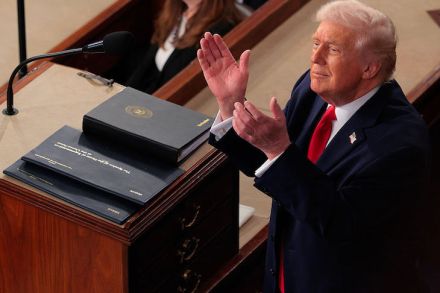
Donald Trump’s State of the Union address, the longest in history, served as a reminder of the relentless will and unstoppable energy he brings to the office of the presidency. In a coup de grâce he humiliated congressional Democrats, securing footage of them remaining seated en masse as they refused to accept that the role of the government is to prioritize American citizens. He gently chastised the Supreme Court judges, assembled in the front row, for declaring his tariff program unlawful last Friday.

MAGAnomics

The Supreme Court is right to reject Trump’s tariffs

At a rally in Georgia on Thursday night, President Trump declared that he couldn’t wait “forever” for the Supreme Court to rule on the legitimacy of his sweeping tariff policy. Whether or not the court was listening to his complaint, forever arrived today as it handed Trump a thumping defeat. It struck a blow not only for fiscal but also political sanity. Government intrusion upon the free enterprise system is bound to prove inimical to prosperity and liberty The language of the ruling was as lapidary as it was persuasive. “President asserts the extraordinary power to unilaterally impose tariffs of unlimited amount, duration and scope,” Chief Justice John Roberts wrote in the 6-3 opinion.

Trump’s Greenland caper will heighten inflation

On February 24, Donald Trump will deliver the first State of the Union speech of his second term as president. That impending date goes a long way toward explaining Trump’s avidity for annexing Greenland – sooner rather than later – as the centerpiece of his program for restoring an American golden age of imperial power. Nothing would please Trump more than to be able to declare mission accomplished when he addresses Congress in February. Far from backing away from the issue, Trump, who will travel to Davos next week, is doubling down. He seems convinced that he can cow European leaders into submission, but the more he badgers them, the greater the likelihood that they begin to resist.

Greenland

Donald Trump’s affordability blues

So President Donald Trump may have dozed off during his cabinet meeting on Tuesday. Who could blame him? Listening to Secretary of State Marco Rubio drone on about Russia would prompt souls less hardy than Trump to catch some shuteye.  What should be keeping Trump awake, or at least uneasy, is the shaky state of the American economy. The federal government may not be releasing much data about the economy, but the payroll processing company ADP is reporting that private employers cut 32,000 jobs last month. The losses were heavily concentrated among small employers who have been slammed by Trump’s capricious tariff policy.

donald trump affordability

Howard’s beginning: the luck of Lutnick

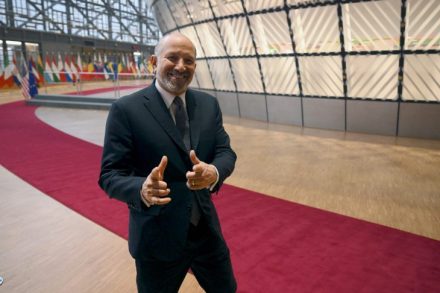
With Elon Musk no longer sleeping in a cot in Washington, only one member of the White House inner circle comes close to matching Donald Trump’s net worth: Commerce Secretary Howard Lutnick. Commerce is usually a mid-tier cabinet post; even fervent political observers would be hard-pressed to name previous officeholders. But Lutnick has been one of Trump’s most impactful advisors in this second term. His ideas about tariffs have greatly affected the world’s economy, and have influenced Trump’s mercurial tariff pronouncements. Plus, he’s worth about $3 billion himself. Even Treasury Secretary Scott Bessent, himself a billionaire, is only worth about half as much. Lutnick made his name as CEO of Cantor Fitzgerald, a major New York financial services company.

Howard Lutnick

Can Trump control inflation?

Notionally, Americans have never been better off. The ructions in tech stocks over the past few weeks cannot detract from the fact that the US economy has been outgunning other developed economies all century. The overall graph of real disposable income for Americans continues to trend upward, almost as if the sharp dip during the pandemic had not happened. That is certainly not true everywhere: in many countries, Covid has been followed by stagnation in GDP and wages. Yet, for all the wealth generated, many Americans simply do not feel that they are living in a thriving country. On the things that really matter, such as basic living costs, citizens at the lower end of the income scale feel their wages are increasingly inadequate. They are not imagining it.

cost

Is Trump becoming a lame duck?

No sooner did Democrats in the Senate reach a deal to end the federal government shutdown than a frenzy of liberal pearl clutching ensued. The Democrats should have held out longer, they argued. Healthcare subsidies could have been rescued. Donald Trump’s approval ratings were plunging. Golly, maybe the Democrats could even have driven the dreaded Trump from office? Jonathan Chait’s verdict in the Atlantic was not untypical: “Senate Democrats just made a huge mistake.” Don’t believe a word of it. The surprising thing isn’t that Democrats folded. It’s that they held out as long as they did. In the end, the moderate Democratic Senators, ranging from Pennsylvania’s John Fetterman to Nevada’s Catherine Cortez Masto, made the right call.

Is Trump’s $2,000 tariff dividend plan loopy?

It’s becoming increasingly taxing for Donald Trump to defend his tariff policy. His latest gambit is to float the prospect of a $2,000 rebate to Americans from the tens of billions that the federal government has collected in tariffs. But will this prove any more successful than his previous attempts to justify his loopy tariffs?With the Supreme Court apparently poised to strike down his tariffs as a form of revenue collection designed to perform an end-run around Congress, Trump is scrambling. As usual, bravado prevails. On Sunday, he declared, “A dividend of at $2000 a person (not including high income people!) will be paid to everyone,” the president said on Truth Social.” Trump also dismissed his detractors as “FOOLS!

Trump

Will the Supreme Court force Trump to repay tariffs?

The most important thing to know about the Trump administration’s defense of its hotly contested use of tariffs to bring allies and opponents to heel is not that it is a novel and unprecedented legal argument but rather a full-throated articulation of the campaign themes that got the president elected – in both 2016 and 2000.In its legal documents, and in the oral arguments that took place before the Supreme Court Wednesday, the Trump administration paints a picture of America under siege.Once thriving industrial towns in the Midwest hollowed out. Factories dismantled as supply chains have been moved offshore. Hostile foreign nations flooding the US with drugs and once productive workers turning to opioids and alcohol for solace as opportunities slip away.

Trump

Trump’s World Series wind-up

It’s thanks to good old Yankee bravado that baseball’s most important fixture is called the "World Series," even though it’s a thoroughly North American affair. Yet Major League Baseball, like the National Hockey League, is not restricted to the US – Canada joins in, too. Tonight, for instance, the Toronto Blue Jays will compete against the Los Angeles Dodgers in the first game of what should be a thrilling World Series, and the now-familiar Canadian-American sporting rivalry has been given added spice thanks to a certain man who happens to be President of the United States. Last night, Donald Trump, who relishes abrupt announcements, abruptly announced that he was suspending trade negotiations with Canada. The reason?

World Series

Trump cuddles Carney 

“Let me not to the marriage of true minds admit impediments,” William Shakespeare wrote in Sonnet 116, and he appears to have been prophetically talking about the very special relationship between President Trump and Canadian Prime Minister Mark Carney.  The first meeting between the two leaders a few months ago was friendly. But today’s press conference, before a tariff negotiation lunch, was essentially a cuddlefest. Carney called Trump a “transformative president.” Trump joked about the upcoming “US/Canada merger,” and said the two countries had “natural conflict and natural love,” like in any marriage.  The problem, Trump said, “is that they want a car company, and we want a car company. It’s a natural business conflict… nothing wrong with it.

Carney

Will Trump’s tariffs trash the film industry?

One feature of President Trump’s second term in office is that when he says he’ll do something, he usually does it, no matter how outlandish or cockamamie it might seem. So it has proved with his threat to impose 100 percent tariffs on any films that have been filmed outside the United States. He first said that he would do this in May, and many industry pundits rushed to say that his scheme was impractical, unworkable, etc. Yet veteran Trump watchers would know that once he has an idea, it will not rest. He has now repeated himself, with greater vigor, writing on Truth Social that “our movie making business has been stolen from the United States of America, by other Countries, just like stealing ‘candy from a baby.

tariffs

Bessent’s private message reveals a Milei gamble

The first lesson for Treasury Secretary Scott Bessent is that digital photography has totally changed politics, as wiser practitioners have long since realized. You might have got away with reading private communications in public 30 years ago, but you can no longer do so. The second lesson is that if you build an administration on the promise that you will always serve the American interest, certain foreign policy decisions become difficult. Bessent has been caught reading a message on his phone from Agriculture Secretary Brooke Rollins expressing her anger at the Trump administration’s deal to establish a $20 billion loan facility with Argentina, or "the Argentine" as Rollins prefers still to call it.

Bessent

Trump’s new pharma tariffs will punish Americans

Donald Trump has punished European pharmaceutical companies by imposing 100 percent tariffs on their branded products unless they are prepared to set up a manufacturing plants in the US. That is one way of putting it, but why is the issue of tariffs so often seen from the point of view of the producers and so rarely seen from the position of the consumers? Besides punishing drugs companies, the President has also whacked the American public – or at least that section of the population which relies on patented medicines made outside the US. The cost of treatment for many of these patients will soar as a result. Does Trump think that people will somehow fail to realize this?

Does Trump’s handshake deal with the EU put America first?

What’s really at stake in these trade deals? That is what we are slowly discovering as Donald Trump’s handshakes with America’s trading partners are turned into specific and detailed agreements. Today we are getting the details of one of the biggest deals struck so far: a trade agreement with the famously protectionist European Union, which agreed in principle to a deal back in July, with the caveat on both the US and EU side that taxes on key sectors were still up for discussion. Those discussions, it seems, have produced some details. Despite early threats that America would impose tariffs of 250 percent and 100 percent on EU imports of pharmaceuticals and semiconductors respectively, the headline duties for both have been reduced to 15 percent.

Donald Trump (Getty) eu

Can tariffs replace income taxes?

Can tariffs replace income taxes paid by Americans earning an income under $200,000 annually, as President Trump has suggested? We seem to have entered a new world in 2025, or rather, reincarnated an older America whose tax receipts were heavily built on tariff payments. U.S. Secretary of Commerce Howard Lutnick recently stated that tariffs could replace income taxes paid by Americans making up to $150,000 per year. And certain economic nationalists have urged that there is a vital causal connection here worth recalling in an “American system” of tariffs and protectionism, and the growth of American industry. They argue that America’s Gilded Age wasn’t regressive economically; in fact, the country exploded in growth, commerce and inventions.

Tariffs

The fog of tariffs

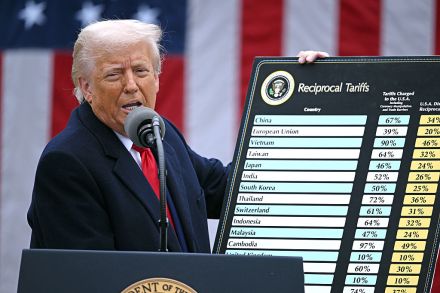
It was an all-caps kind of evening for the President. “RECIPROCAL TARIFFS TAKE EFFECT AT MIDNIGHT TONIGHT!” Donald Trump wrote on Truth Social last night, minutes before the clock struck 12am. “BILLIONS OF DOLLARS, LARGELY FROM COUNTRIES THAT HAVE TAKEN ADVANTAGE OF THE UNITED STATES FOR MANY YEARS, LAUGHING ALL THE WAY, WILL START FLOWING INTO THE USA. THE ONLY THING THAT CAN STOP AMERICA’S GREATNESS WOULD BE A RADICAL LEFT COURT THAT WANTS TO SEE OUR COUNTRY FAIL!” The Santa imagery is interesting, and fitting. For decades now, one could be forgiven for thinking some kind of magic was being conjured up, as consumer choice skyrocketed while prices plummeted at the same time, and once-deemed luxury items became accessible for the vast majority of households.

Tariffs